
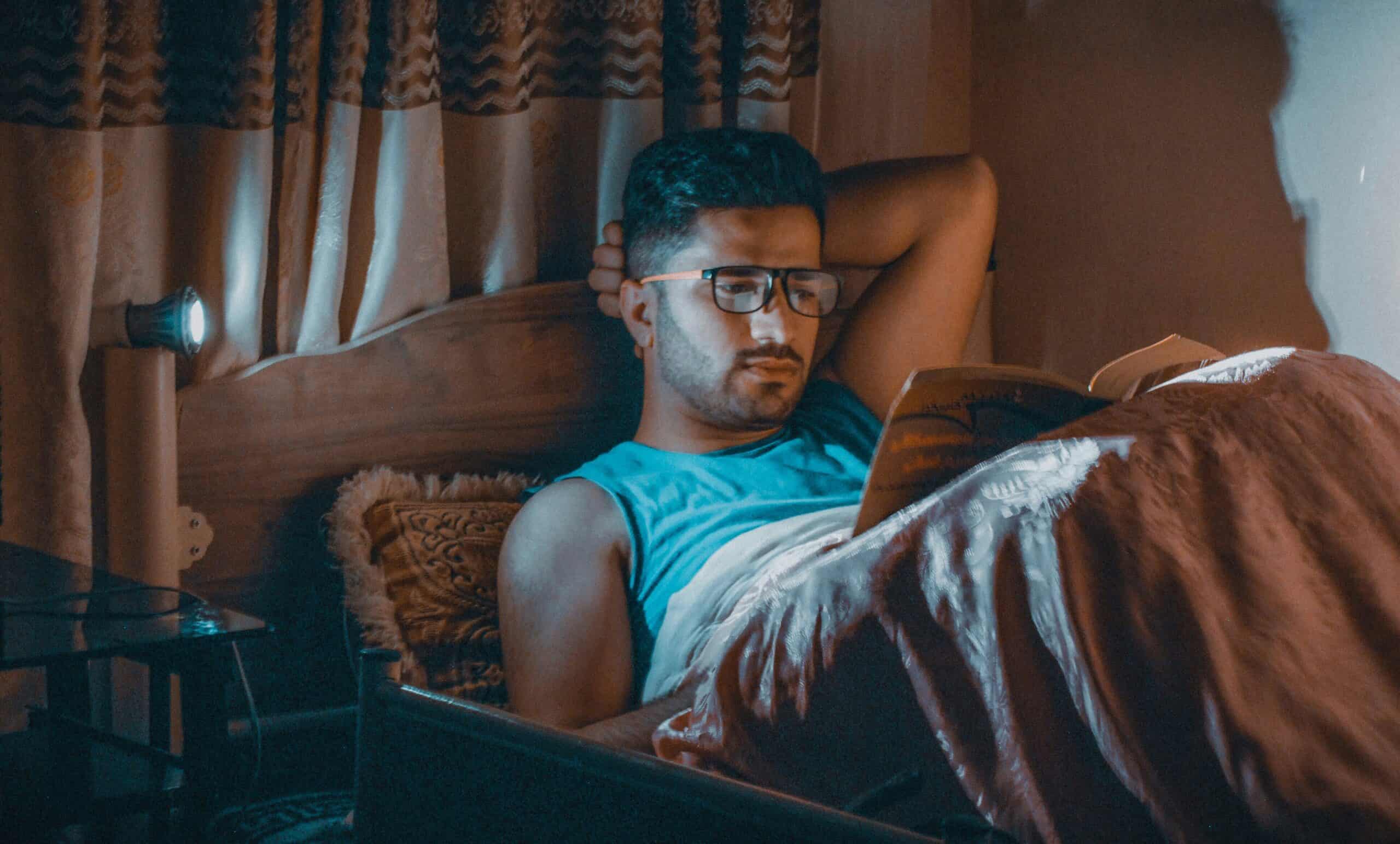
Reading in bed creates two problems that have nothing to do with the book. Your neck ends up craned forward for an hour, and the light you need is bright enough to keep you alert or your partner awake.
Both are solvable, and the solutions are separate. Support handles the posture, and light control handles the alertness and the person beside you.
Quick Verdict
A backrest pillow with arms holds you upright without your neck doing the work. A warm clip light aimed at the page rather than the room keeps the rest of the bedroom dark. Reading itself is generally a good wind-down, and the light and posture are what need managing.
Key Takeaways
- Propping on regular pillows pushes the neck forward
- Warm light suits evening reading better than cool
- Aimed light keeps the rest of the room dark
- Backlit screens are brighter than most reading lights
- Book weight matters more than people expect over an hour
- Reading in bed is fine, the setup is what causes problems
How We Picked
Neck position came first, since an hour with the head pushed forward is what produces the stiffness people blame on their pillow.
Light containment ranked next. A reading light that fills the room defeats the purpose in a shared bed and keeps you more alert than necessary.
Warmth of light mattered because evening exposure to bright cool light works against winding down, whatever you are reading.
Comfort over an hour counted rather than comfort in the first five minutes, which is when most setups still feel fine.
Backrest and Reading Pillows
Why It Stands Out
A backrest with arms supports your upper back and shoulders in an upright position, so your neck is not holding your head forward.
The arms matter more than the back. Resting your elbows means your arms are not holding a book at chest height for an hour.
Firm fill keeps the shape under sustained weight, where soft fill collapses and puts you back where you started.
Most include a pocket for the book and a phone, which removes reaching to a bedside table.
Worth Knowing
They take up space in the bed and have to go somewhere when you lie down.
Height matters against your headboard. Too tall and it pushes your head forward, which is the problem it was bought to solve.
Good for anyone reading more than twenty minutes. Skip soft-fill versions, and options sit in reading pillows.
Check Price on AmazonClip-On Book Lights
Why It Stands Out
A light clipped to the book illuminates the page and almost nothing else, which is what lets one person read while another sleeps.
Warm-toned models sit in an amber range that affects alertness less than the cool white many lamps produce.
Rechargeable versions with adjustable brightness let you use the minimum that works rather than a fixed output.
Worth Knowing
Cheap clip lights have a narrow beam that lights half the page, so you end up moving the light rather than reading.
Clip strength matters on a hardback, where a weak clip slides down the cover.
Good in shared beds. Skip single-brightness models, and lamp options sit in bedside lamps for reading.
Check Price on AmazonAdjustable Bedside Lamps
Why It Stands Out
An articulated lamp aims light at the page rather than filling the room, which a fixed shade cannot do.
Dimming lets you drop to the minimum that lets you read, and lower light is easier to stop reading under.
Touch controls mean adjusting without finding a switch in the dark.
Worth Knowing
Even an aimed lamp spills more light than a clip light, so this suits sleeping alone better than a shared bed.
Color temperature is worth checking. Many bedside lamps ship with cool white bulbs that suit a desk rather than an evening.
Good for reading alone. Skip cool white bulbs for evening use, and options sit in touch control bedside lamps.
Check Price on AmazonE-Readers With Warm Front Lighting
Why It Stands Out
Front-lit e-ink screens illuminate the page from the edge rather than shining at your eyes, which is a different arrangement from a tablet or phone.
Adjustable warmth lets you shift toward amber in the evening, and the brightness goes far lower than most phone screens allow.
They weigh a fraction of a hardback, which matters over an hour of holding something up.
Worth Knowing
A tablet or phone is a different device entirely, with a backlit screen at higher brightness and everything else on it competing for attention.
Even at the lowest setting an e-reader emits some light, so it is a reduction rather than a removal.
Good for evening reading and for shared beds. Skip backlit tablets for bedtime reading.
Check Price on AmazonBook Holders and Stands
Why It Stands Out
A stand holds the book at eye level so your neck stays neutral and your arms are not supporting weight.
For heavy hardbacks or long sessions, that removes the arm fatigue that makes people slide down the bed and crane their neck.
Adjustable arms position the book without you leaning toward it.
Worth Knowing
Stands are bulky and awkward to move when you want to sleep, which puts people off using them.
Page turning is more fiddly with the book clamped, which some readers find breaks the flow.
Good for heavy books and long sessions. Skip if you read short stretches, and neck support sits in cervical against reading pillows.
Check Price on AmazonNeck and Lumbar Support Cushions
Why It Stands Out
A small cushion in the lumbar curve keeps you upright without slumping, which is what pushes the head forward over time.
A separate neck roll supports the cervical curve while sitting up, which a flat pillow behind your head does not.
Both are small enough to move aside easily when you lie down, unlike a full backrest.
Worth Knowing
Too much lumbar support arches the back, which creates its own discomfort over an hour.
These supplement a backrest rather than replacing one, since neither supports the shoulders.
Good alongside a backrest or a padded headboard. Skip oversized lumbar rolls, and pillow options sit in bolster pillows.
Check Price on AmazonReading Setup at a Glance
| Item | Addresses | Suits shared beds |
|---|---|---|
| Backrest pillow | Neck and shoulder posture | Yes |
| Clip book light | Page lighting only | Best option |
| Adjustable lamp | Aimed light, dimming | Sleeping alone |
| Warm e-reader | Weight and low light | Yes |
| Book stand | Arm fatigue, eye level | Yes |
| Lumbar cushion | Slumping over time | Yes |
What to Look For
Support the shoulders, not just the head
Stacking pillows behind your head pushes your chin toward your chest. A backrest supporting the upper back keeps the neck neutral.
Aim the light rather than filling the room
A clip light or an articulated lamp puts light on the page. A general lamp lights the room and keeps you and anyone else more alert.
Choose warm over cool
Evening exposure to bright cool light works against winding down. Amber and warm white suit the last hour better.
Consider the weight of what you read
A heavy hardback held up for an hour causes the arm fatigue that leads to slumping. An e-reader or a stand removes it.
Reading Without Working Against Sleep
Use the lowest light that works
Brightness beyond what you need to read keeps you more alert. Dropping it toward the end of a session eases the transition.
Set a stopping point
A chapter, a page number, or a time. Reading until you cannot keep your eyes open leaves the light on and the book on your chest.
Keep phones out of it
A backlit screen at typical brightness is considerably brighter than a reading light, and everything else on the device competes for attention.
Read something that ends
Short chapters or a collection give natural stopping points, where a gripping novel produces the opposite of a wind-down.
Setting Up Against Your Headboard
What you have behind you changes which of these you need, and most people never consider it.
An upholstered headboard already provides some padding, so a lumbar cushion and a neck roll may be enough without a full backrest taking up the bed.
A wooden or metal headboard offers nothing, and a slatted one presses ridges into your back within twenty minutes. That is the case where a backrest earns its space.
No headboard at all means the wall, which is cold and hard and usually the worst starting point. A backrest with arms is close to necessary there.
Height matters as much as padding. A low headboard leaves your shoulders unsupported above it, and a very high one behind a backrest can push your head forward.
Measure from the mattress to where your shoulders sit when upright. That number tells you what height of backrest actually supports you rather than sitting below the point that matters.
Print Against E-Reader in Bed
No light emitted at all, and it needs an external light and holding up. Heavier books cause arm fatigue over a long session.
E-reader
Light, adjustable warm front lighting at very low brightness, and no page turning with two hands. It emits some light and needs charging.
Common Mistakes to Avoid
Stacking pillows behind your head
That pushes the chin forward and holds the neck bent for the whole session, which is what produces morning stiffness.
Using the overhead light
Bright ceiling light keeps you alert and lights the whole room. A clip light or aimed lamp does the job without either problem.
Reading on a phone
Brighter than a reading light, held closer, and full of other things wanting your attention. An e-reader or a book avoids all three.
Blaming the pillow for morning neck pain
An hour propped badly before sleep affects the neck more than the pillow underneath it afterward, and neck issues sit in waking with a stiff neck.
Recommended Reading
- reading pillows
- bedside lamps
- cervical against reading pillows
- touch control lamps
- morning neck stiffness
- bedtime routines
Frequently Asked Questions
Is reading in bed bad for you?
Reading itself is generally a good wind-down. The setup causes the problems: a bent neck for an hour and light bright enough to keep you alert.
What is the best position for reading in bed?
Upright with the upper back and shoulders supported, so your neck stays neutral. Stacking pillows behind your head pushes the chin forward instead.
What light should I use?
Warm and aimed at the page rather than the room. A clip light is the best option in a shared bed, and an articulated lamp works when sleeping alone.
Are e-readers better than phones for bedtime?
Considerably. Front-lit e-ink goes far dimmer than a phone screen, shifts toward amber, and does not have everything else on it competing for attention.
Why does my neck hurt in the morning?
An hour propped at a bad angle before sleep affects the neck more than people expect, and it often gets blamed on the pillow underneath afterward.
How do I read without waking my partner?
A clip light on the book lights the page and almost nothing else, and a warm e-reader at low brightness achieves something similar.
Should I stop reading before bed?
For most people it is a useful wind-down. Setting a stopping point and using the lowest workable light matters more than whether you read at all.
