
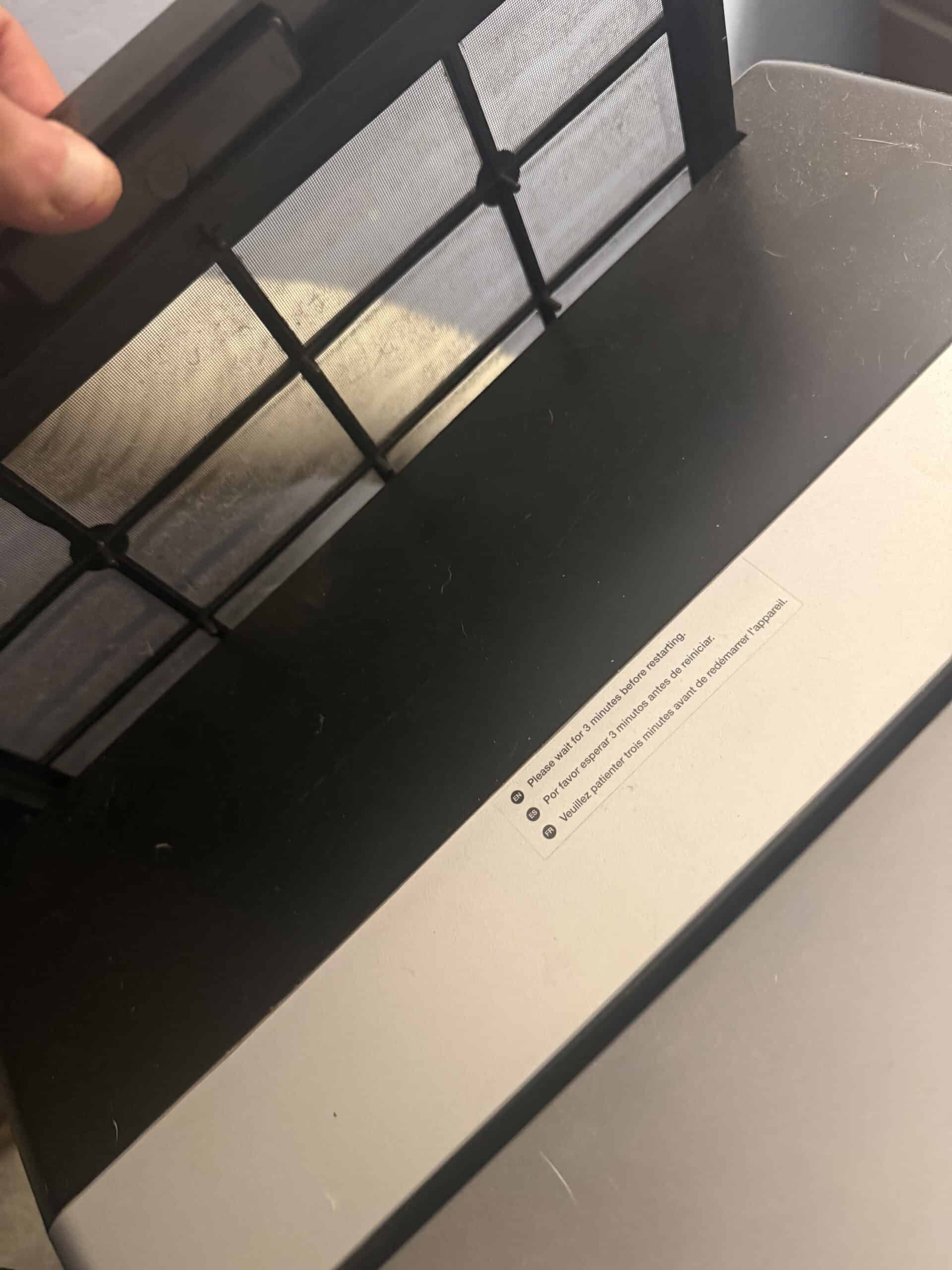
The filter is the most consequential maintenance job on a portable air conditioner and the most commonly ignored. A blocked one restricts airflow across the evaporator, which means less cooling and longer compressor runtimes for the same result. Manufacturers generally suggest cleaning every two weeks in heavy use, and the gap between that guidance and what people actually do is where most premature decline lives. Our note on how often you empty a portable AC covers what that neglect costs.
Filter Options at a Glance
| Type | What it does | Upkeep | Cost |
|---|---|---|---|
| Washable mesh, original | Blocks dust and hair | Rinse and dry | Included |
| Replacement mesh | Same, restored | Rinse and dry | Low |
| Activated carbon layer | Reduces odor | Replace periodically | Low |
| Cut-to-fit filter media | Universal fallback | Replace or wash | Lowest |
| Pre-filter mesh | Catches the coarse dust first | Rinse often | Low |
| Coil cleaning spray | Cleans behind the filter | Once a season | Low |
The short version: the washable filter your unit came with is usually all you need, and the question is whether it gets cleaned. Replacements matter when the original tears, warps, or stops seating properly.
How We Picked
Products are grouped by whether they restore airflow, add a function, or clean what sits behind the filter. Fit is weighted heavily, because portable AC filters are model-specific more often than buyers expect and a filter that does not seat properly lets unfiltered air past the edges. Humidifiers have the same replacement cycle, and our roundup of humidifier filters and wicks covers those.
Selections reflect materials and compatibility. Descriptions come from product research except where personal use is stated directly.
1. A Replacement Washable Mesh Filter, Best Overall
Why It Stands Out
Original mesh filters warp, tear at the frame, or lose their shape after enough cleaning cycles, and a filter that no longer seats lets dust straight through to the coils.
A direct replacement restores the airflow path for a fraction of what declining performance costs in runtime.
Worth Knowing
These are usually model-specific, so the unit’s model number matters more than the dimensions. A near-fit leaves gaps at the edges.
Availability drops once a unit is a few years old, which is a reason to buy a spare while the model is current. Our roundup of window kits and seals covers the other consumable part.
This suits any unit whose filter has aged. Skip it if the original is still flat and intact.
Check Price on Amazon2. Cut-to-Fit Filter Media, Best Universal Fallback
Why It Stands Out
Sheet filter material cut to the frame works when the manufacturer no longer stocks a replacement, which is the common situation on an older unit.
It costs very little and one sheet covers several changes.
Worth Knowing
Cutting accurately matters, since an undersized piece lets air bypass the filter entirely and an oversized one distorts and blocks flow.
Thicker media filters more and restricts airflow more, so match the thickness to the original rather than buying the densest available.
This suits discontinued models. Skip it if an exact replacement exists.
Check Price on Amazon3. An Activated Carbon Filter Layer, Best for Odor
Why It Stands Out
A carbon layer sitting behind the mesh reduces the musty smell some units develop, which is usually moisture in the airflow path rather than a fault.
It addresses the symptom cheaply while you deal with the moisture itself.
Worth Knowing
Carbon saturates and stops working, so this is a periodic replacement rather than a permanent fix.
A persistent smell usually means growth on the coils or in the drain path, which carbon masks rather than cures. Our note on bedroom dehumidifiers covers moisture handling.
This suits units with a mild smell. Skip it if the smell is strong, since that needs cleaning instead.
Check Price on Amazon4. A Pre-Filter Mesh, Best for Dusty Rooms
Why It Stands Out
A coarse pre-filter over the main one catches hair and larger dust first, so the primary filter clogs more slowly and the interval between cleanings stretches.
Rinsing a pre-filter is faster than removing and drying the main one, which makes frequent cleaning more likely to happen.
Worth Knowing
Adding a layer adds resistance, so a pre-filter that is too dense costs airflow rather than saving it. Coarse is the point.
It also needs cleaning more often than the filter it protects, which is only an improvement if you actually do it.
This suits dusty rooms and homes with pets. Skip it if airflow is already marginal.
Check Price on Amazon5. Coil Cleaning Spray, Best Behind the Filter
Why It Stands Out
Dust that gets past a filter settles on the evaporator coils, and a foaming cleaner lifts it without disassembly. That is where cooling performance quietly goes on an older unit.
A seasonal application addresses the part cleaning the filter cannot reach.
Worth Knowing
No-rinse formulations are the practical choice, since a portable unit has nowhere convenient for rinse water to go.
Coils are delicate and bend easily, so a soft brush and light pressure are the limit. Our note on where to put a portable AC covers keeping intake clear in the first place.
This suits units several years old. Skip it on a new unit with a clean filter history.
Check Price on Amazon6. A Spare Filter to Rotate, Best Practical Habit
Why It Stands Out
Two filters means one can dry properly while the other is in the unit, which removes the main friction: a washed filter needs hours to dry and the unit is wanted tonight.
That single change makes regular cleaning realistic rather than aspirational.
Worth Knowing
It only helps if both filters actually get used in rotation rather than one sitting in a drawer.
Storing the spare somewhere dry matters, since a filter kept in a damp cupboard is not an improvement.
This suits anyone who cleans the filter less often than they should. Skip it if you are already on schedule.
Check Price on AmazonHow Often I Actually Clean Mine
Manufacturers say every two weeks in heavy use. I check mine about every couple of months, and I would not recommend that to anyone.
It is not a considered position. I simply never think of it, and there is nothing about the unit that prompts you, so months go by. That is worth saying plainly because most advice on this assumes the reader is going to follow a schedule, and in my experience the schedule is the part that fails rather than the technique.
Five summers in and the unit still cools as well as it did, which I take as evidence that a small room in a dry climate is more forgiving than a hot humid one working the machine harder. It is not evidence that my interval is fine.
If I were fixing this, the spare-filter rotation is the change I would make. The reason cleaning gets skipped is that a washed filter needs to dry before it goes back, and the unit is wanted that night, so the whole job gets deferred to a better moment that never arrives.
What I cannot compare is carbon layers, pre-filters, or coil sprays, since I have used the filter the unit came with and nothing else. Those sections are research rather than experience.
What to Look For in a Replacement Filter
Does it match your model?
Portable AC filters are usually model-specific rather than sized generically. Work from the model number, since a filter that does not seat lets air past the edges unfiltered.
Is it washable or disposable?
Most originals are washable mesh, which is cheaper over time and requires the drying step. Disposable media removes that and adds an ongoing cost.
How dense is the material?
Denser filters catch more and restrict airflow more. Matching the original thickness is safer than assuming finer is better on a unit designed around a specific airflow.
Can you still get one?
Availability drops as models age. If the unit is current and you plan to keep it, a spare bought now costs little and solves a problem later.
Clean It or Replace It?
Clean it
A mesh filter that is flat, intact, and seats properly just needs rinsing and drying. That covers most situations and costs nothing.
Replace it
Tears at the frame, permanent warping, or a filter that no longer sits flush all mean air is bypassing it. At that point cleaning maintains a filter that is not filtering. Our comparison of whether portable ACs disturb sleep covers another factor in how hard yours works.
What Trips People Up
Putting a damp filter back
Moisture in the airflow path encourages growth, which is where musty smells start. Let it dry fully, which is the reason a spare helps.
Assuming the filter is the whole job
Dust that got past it sits on the coils. A clean filter over fouled coils still cools poorly, and coils need attention roughly once a season.
Buying a denser filter
Finer filtration restricts airflow, and these units are designed around a specific resistance. Match the original rather than upgrading.
Waiting for a reminder
Nothing on the unit tells you the filter is dirty. Tying it to something you already do monthly works better than intending to notice. Our roundup of hoses and insulation wraps covers the other neglected part of the setup.
Worth reading next: our note on what a portable AC costs to run overnight, our guide to whether one is worth it for a single room, our roundup of bedroom air conditioners, and a note on running a fan and AC together.
Portable AC Filter FAQ
How often should I clean a portable AC filter?
Manufacturers commonly say every two weeks during heavy use. Realistically most owners do it far less, and the consequence is gradual: reduced airflow, longer runtimes, and cooling that declines without any obvious fault. Tying it to an existing monthly habit works better than intending to remember.
What happens if I never clean it?
Airflow across the evaporator drops, so the unit cools less and runs longer for the same result. Dust also gets past a clogged filter and settles on the coils, which is harder to clean and where performance quietly goes on older units.
Can I wash a portable AC filter?
Most are washable mesh. Rinse under a tap, let it dry completely, and reinsert. Drying fully matters, since a damp filter in the airflow path encourages growth and is where musty smells usually start.
When should I replace rather than clean?
When the filter tears at the frame, warps permanently, or no longer sits flush in its slot. At that point air bypasses it at the edges, and cleaning maintains something that is not doing its job.
Are portable AC filters universal?
Usually not. They tend to be model-specific, so ordering from the model number is more reliable than matching dimensions. Cut-to-fit media is the fallback when a manufacturer no longer stocks a replacement.
Will a finer filter improve air quality?
It filters more and restricts airflow more, and these units are designed around a specific resistance. A denser filter can reduce cooling and increase runtime, so matching the original is safer than upgrading.
Why does my unit smell musty?
Usually moisture in the airflow path, often from a damp filter reinserted before drying or growth on the coils. A carbon layer masks it; cleaning the filter properly and treating the coils addresses the cause.
Do I need to clean the coils too?
Roughly once a season on an older unit. Dust that passes the filter settles there, and a no-rinse foaming cleaner lifts it without disassembly. Coils bend easily, so light pressure and a soft brush are the limit.
