
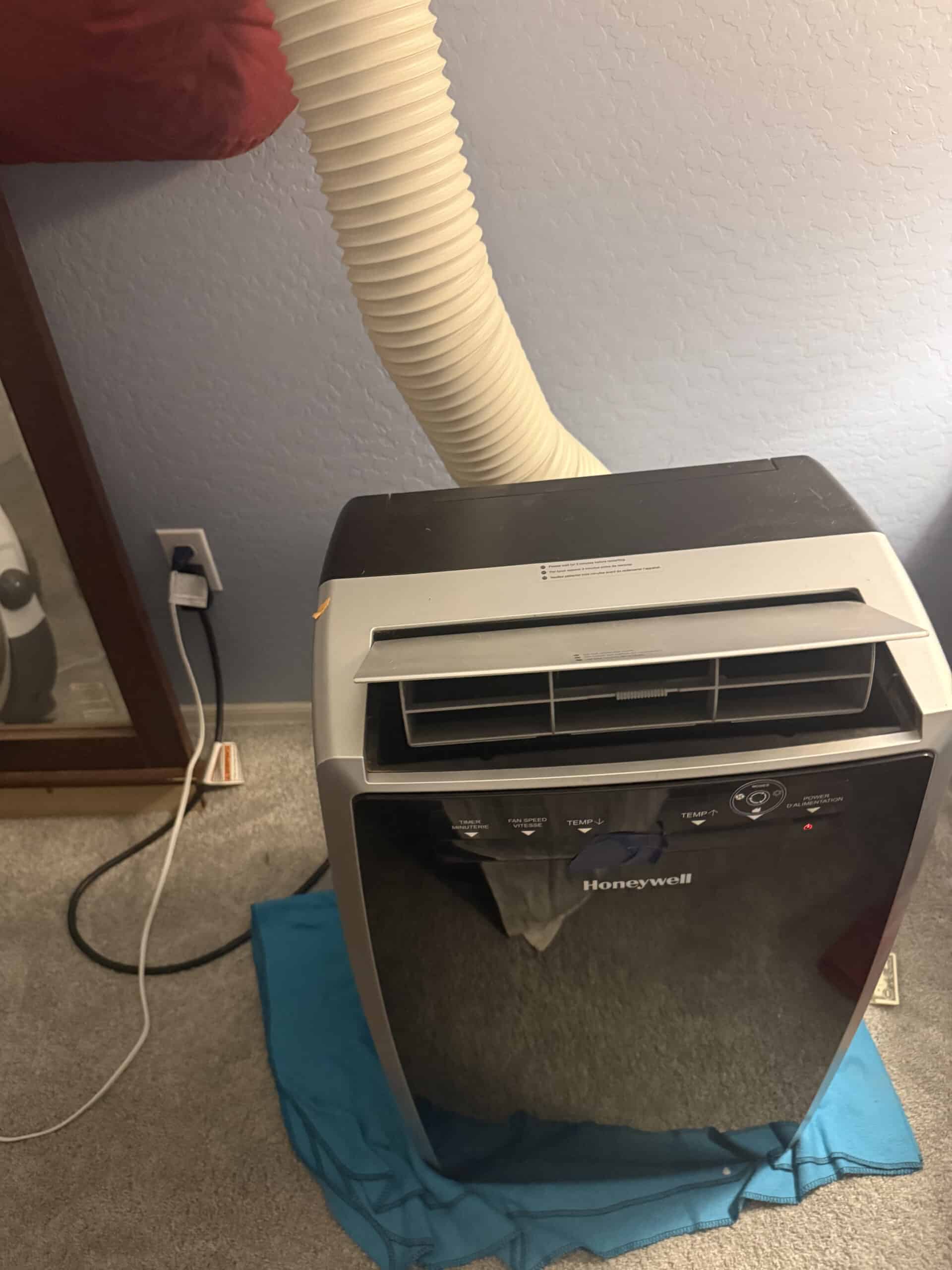
Portable air conditioners are generally expected to last somewhere between five and ten years, and the range is wide because usage varies enormously. A unit running four months a year in a bedroom is doing far less work than one running eight months in a living room. What shortens that life is mostly neglected maintenance and being asked to cool more space than the unit was sized for. Our roundup of bedroom air conditioners covers choosing one.
Quick Answer
Expect five to ten years from a portable AC used seasonally, with the filter being the single biggest variable you control. Units die from restricted airflow and undersizing far more often than from component failure.
Key Points
- Five to ten years is the usual range for seasonal use.
- A clogged filter makes the compressor work harder for less cooling.
- Undersized units run constantly and wear faster.
- Declining cooling is usually airflow, not a dying compressor.
- Winter storage conditions matter more than people expect.
What Actually Wears Out
The compressor is the expensive part and rarely the first to fail. What usually goes is the fan motor, the control board, or the unit simply becoming less effective as coils foul and airflow drops.
That last one is not really failure at all. A unit cooling poorly because its filter and coils are choked has not worn out, it has been neglected, and cleaning restores most of what was lost.
Genuine end of life looks different: the compressor short-cycling, refrigerant loss showing as steadily worse cooling despite a clean filter, or a control board that stops responding. At that point repair rarely makes economic sense against replacement.
The Filter Is the Whole Game
Most portable ACs have a washable mesh filter behind a removable panel, and it collects dust continuously. A blocked filter restricts airflow across the evaporator, which reduces cooling and makes the compressor run longer for the same result.
Manufacturers typically suggest cleaning it every two weeks during heavy use. Realistically most people do it far less, and the gap between the recommendation and the practice is where a lot of premature decline comes from.
It is a five-minute job: slide the filter out, rinse it under a tap, let it dry completely, slide it back. Putting a damp filter back is worse than leaving it dirty, since moisture in the airflow path encourages growth.
Sizing Determines Workload
An undersized unit runs essentially continuously in hot weather, which is the hardest possible duty cycle. It never reaches the setpoint, so it never cycles off, and every hour of running is wear.
Oversizing has its own problems, mainly short-cycling and poor humidity removal, but it is easier on the compressor than chronic undercapacity.
Room sealing feeds into this too. A unit fighting warm air coming in through a poor window seal is effectively undersized regardless of its rating. Our roundup of window kits and seals covers closing that gap.
Five Summers With Mine
I have run a single-hose portable air conditioner overnight through five Arizona summers, and I have not felt a drop in how well it cools. That is the honest report, and it is more useful than a manufacturer’s stated lifespan because it comes from actual hours rather than a spec sheet.
The filter is where I fall short of the advice. I clean it, and less often than I probably should. Realistically I check it about every couple of months, and I would not recommend that to anyone. It is not a decision so much as a thing I never think of until something reminds me.
Saying that plainly seems more useful than pretending otherwise, because the two-week guidance is what almost nobody follows. What I would take from my own case is that a unit in a dry climate, in a small room, cooling overnight rather than around the clock, tolerates more neglect than the same unit would working harder.
What I cannot tell you is how long it will last from here, or whether better filter discipline would have made a difference I have not noticed. Five years and still working is a data point rather than a prediction.
What Shortens the Life
Running it undersized
A unit that never reaches setpoint never cycles off. Continuous running in hot weather is the hardest duty cycle there is.
Ignoring the filter
Restricted airflow means longer runtimes for less cooling, which is compressor wear you are paying for twice.
Blocking the exhaust
A kinked or coiled hose raises back pressure and traps heat. Keep the run short and as straight as the room allows.
Storing it damp
Putting a unit away at the end of summer with moisture inside encourages growth over the winter. Run it on fan-only for a while first to dry the interior.
Is Declining Cooling a Sign of Failure?
Usually not. The first thing to check is the filter, then the coils behind it, then the window seal. Restricted airflow and infiltration between them account for most complaints about a unit that is not cooling like it used to.
If a clean unit with a good seal still cools poorly, that points more toward refrigerant loss, which is not a home repair on a sealed system. At that point the economics generally favor replacement.
Our note on where to put a portable AC covers placement issues that can look like poor performance.
Getting More Years Out of It
Clean the filter more often than I do. Keep the exhaust hose short and straight. Seal the window properly so the unit is not working against infiltration it caused. Dry the interior before winter storage and keep it somewhere that does not get damp.
None of that is difficult and all of it addresses the failure modes that actually shorten these units. The compressor is rarely the problem, and a unit that gets a clean filter and a sealed window will generally outlast one that gets neither, regardless of what either cost. Our note on whether portable ACs disturb sleep covers another thing that changes as a unit ages.
Related reading: our comparison of whether a portable AC is worth it for one room, our note on how often you empty one, our guide to what one costs to run overnight, and a roundup of hoses and insulation wraps.
Portable AC Lifespan FAQ
How many years should a portable AC last?
Five to ten years is the usual range for seasonal use, with the spread driven mostly by how many hours it runs and how well it is maintained. A bedroom unit running overnight for a few months a year sits at the longer end.
Why is my portable AC not cooling like it used to?
Check the filter first, then the coils behind it, then the window seal. Restricted airflow and warm air infiltration explain most of these complaints. A genuinely failing unit is less common than a neglected one.
How often should I clean the filter?
Manufacturers commonly suggest every two weeks during heavy use. Most people do it considerably less. It takes five minutes, and letting it dry fully before reinserting matters, since a damp filter in the airflow path encourages growth.
Does running it every night shorten its life?
Hours of operation are what wear a unit, so nightly use across a long summer is more demanding than occasional use. What matters more is whether it reaches setpoint and cycles off, since a correctly sized unit resting between cycles lasts longer than one running flat out.
Is it worth repairing an older portable AC?
Fan motors and control boards are sometimes economic to replace on a newer unit. Refrigerant loss on a sealed system generally is not, since the repair cost approaches the price of a replacement.
Does an undersized unit wear out faster?
Yes, because it never satisfies the thermostat and therefore never stops. Continuous operation in hot weather is the hardest duty cycle, which is why sizing to the room matters for longevity as well as comfort.
How should I store it over winter?
Run it on fan-only for a while to dry the interior, clean the filter, and store it somewhere dry rather than a damp garage or shed. Moisture sitting inside over months is a common cause of smells and growth the following season.
Do portable ACs lose refrigerant over time?
Sealed systems should not, and slow leaks do happen. The symptom is gradually worse cooling that persists after cleaning the filter and coils and checking the window seal. It is not a home repair, and on an older unit replacement is usually the sensible route.
