
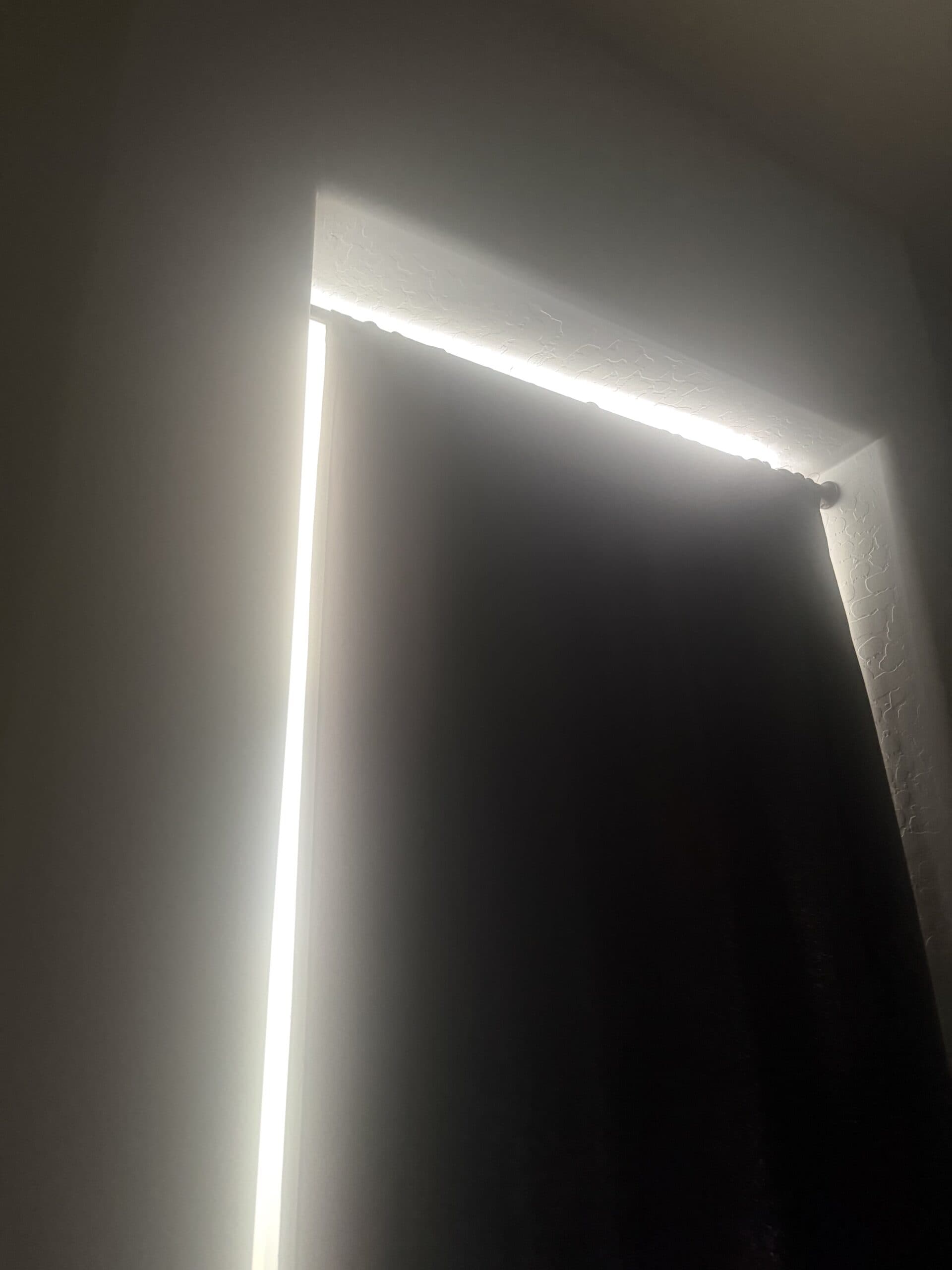
For some people, yes. Morning light is one of the signals that ends sleep naturally, and removing it entirely means waking depends on an alarm rather than on anything your body is reading.
Mine have been up three or four years alongside shutters, and the room still does not get especially dark because there are blinds rather than curtains on the sliding door. I have had insomnia since I was a teenager, so getting to sleep has always been the harder end for me rather than getting up.
A Quick Note
This covers light and sleep timing rather than medical advice. Persistent trouble waking, excessive daytime sleepiness, or sleep that never feels restorative are worth discussing with a doctor.
Quick Answer
Full darkness helps most people sleep better and can make waking groggier, since morning light suppresses melatonin and signals the end of the sleep phase. A sunrise alarm or opening the curtains immediately on waking addresses it.
What Light Does at Each End
| Time | Light effect |
|---|---|
| Evening | Suppresses melatonin, delays sleep onset |
| Overnight | Fragments sleep, reduces depth |
| Pre-dawn | Begins shifting the body toward waking |
| On waking | Suppresses melatonin, promotes alertness |
Blackout curtains address the first two of those and remove the second two entirely. That is a good trade for most people, and it is genuinely a trade rather than a pure gain.
Why Darkness Helps More Than It Costs
Light at night is disruptive in a way that morning light being absent simply is not. Streetlights, passing car headlights, and early summer dawns all fragment sleep, and that damage is considerably harder to recover from than a groggy first ten minutes.
Melatonin production is suppressed by light exposure, and even fairly modest amounts overnight affect it, which is the basis for the standard recommendation to keep a bedroom dark.
Sleep quality generally matters more than the smoothness of waking, since poor sleep affects the whole day and grogginess resolves within an hour.
So the honest framing is that darkness is worth having and the waking side needs handling separately, covered in blackout curtains for sleep.
Where I Sit With This
My problem has always been the falling asleep end rather than the waking end, so a dark room is straightforwardly useful for me.
The curtains and shutters together do a lot, and the sliding door with blinds on it means the room is dim rather than genuinely dark. I have not found that it makes getting up harder either way.
That is one person with a particular sleep history though. Someone whose difficulty is waking rather than falling asleep would likely have the opposite experience with the same setup.
One window also leaks glare from the sides during the day, which I have never bothered to fix, so the coverage is partial in more than one place, covered in stopping light leaking around blackout curtains.
What I would not claim is that my experience settles the question. My room is not fully blacked out, and the whole point is that it varies by which end of sleep gives you trouble.
Signs Darkness Is Working Against You
Sleeping through alarms
Regularly not hearing an alarm you used to wake to suggests the natural pre-waking signals have been removed.
Heavy grogginess
Sleep inertia lasting well beyond twenty minutes is worth noticing, particularly if it started after the room got darker.
Losing track of morning time
Waking with no sense of whether it is six or nine is a signal that light cues are absent entirely.
Weekend drift
Sleeping considerably later without an alarm, more than you used to, means the darkness is extending the sleep phase, covered in improving sleep quality naturally.
Why Grogginess Is Not Only About Light
Sleep inertia gets blamed on dark rooms and light is one factor among several, which is worth knowing before buying anything to fix it.
Which sleep stage you wake from matters most. Waking from deep sleep produces heavy grogginess regardless of how bright the room is, and waking from lighter sleep feels easy even in darkness.
Sleep debt compounds it. Someone chronically short on sleep wakes groggy in any conditions, and adding morning light to that situation helps at the margins rather than solving it.
Timing consistency does a great deal. Waking at the same time daily lets the body begin the process before the alarm, which is much of why weekends feel worse after a lie-in.
Alcohol and late eating both affect how the last hours of sleep go, and both produce grogginess people attribute to the bedroom.
So a dark room can contribute and it is rarely the whole explanation. Someone waking groggy after seven hours in a dark room and after seven hours in a bright one has a different problem, covered in why your alarm does not wake you up.
Keeping the Darkness and Fixing the Waking
A wake-up light alarm is the most direct answer. It brightens gradually in the period before your alarm time, reproducing the light cue that the curtains removed.
Opening the curtains immediately on waking works nearly as well and costs nothing, and getting outside within the first half hour does more still.
Consistent wake times matter more than either. A regular schedule builds an internal expectation that partially replaces the light cue.
And bright indoor light on waking helps in winter where outdoor light arrives late, covered in wake-up light alarm clocks.
Partial Darkness as a Middle Option
The choice is not only between full blackout and nothing, and a partial approach suits people who want the sleep benefit without losing the morning cue.
Leaving one window uncovered, or one curtain partly open, lets dawn light reach the room while the main light sources overnight stay blocked. That works well where the problem is a streetlight rather than the sun.
A sleep mask with ordinary curtains reverses the arrangement. Full darkness at your eyes while you sleep, and the room brightens with dawn so light is available the moment you take it off.
Timed automatic curtains open on a schedule, which gives complete darkness overnight and a light cue on a fixed timetable rather than a seasonal one.
Blackout on the window facing a street and lighter curtains on the window facing east is another version, and it is the arrangement that requires no ongoing effort.
None of these is as effective for sleep as full blackout, and each keeps something the darkness would otherwise remove, covered in sleep mask against blackout curtains.
Who Should Think Twice
Anyone whose main difficulty is getting out of bed rather than getting to sleep, since blackout removes a signal that was helping.
People with delayed sleep phase tendencies, where morning light exposure is part of the standard approach and removing it can make the pattern worse.
Anyone with seasonal mood changes, where morning light matters beyond sleep and a doctor is the right person to advise.
And shift workers get the opposite recommendation entirely, since darkness during daytime sleep is close to essential, covered in sleeping during the day for shift workers.
Related Reading
- blackout curtains for sleep
- wake-up light alarm clocks
- improving sleep quality
- mask against curtains
- falling asleep faster
- shift worker sleep
Frequently Asked Questions
Do blackout curtains make it harder to wake up?
For some people. Morning light is one of the signals that ends sleep, so removing it means waking depends entirely on an alarm rather than on anything your body is reading.
Is that a reason not to use them?
Usually not. Light disrupting sleep overnight causes more harm than absent morning light, and the waking side can be addressed separately.
What is the fix?
A sunrise alarm reproduces the light cue, and opening the curtains immediately on waking works nearly as well for nothing.
How do I know if it is affecting me?
Sleeping through alarms you used to hear, grogginess lasting well past twenty minutes, or sleeping considerably later at weekends than you used to.
Who should avoid full blackout?
Anyone whose difficulty is getting up rather than getting to sleep, people with delayed sleep phase tendencies, and anyone with seasonal mood changes.
Do shift workers need them?
Close to essential, since sleeping during daylight requires blocking a signal that would otherwise prevent sleep entirely.
Is grogginess always the curtains?
Rarely only that. Which sleep stage you wake from matters more, along with sleep debt, inconsistent wake times, alcohol, and late eating.
Does getting outside in the morning help?
Considerably. Outdoor light is far brighter than indoor light, and exposure within the first half hour of waking does more than any indoor alternative.
Sources
- American Academy of Sleep Medicine. Healthy Sleep Habits. https://sleepeducation.org/healthy-sleep/healthy-sleep-habits/
- National Institute of General Medical Sciences. Circadian Rhythms. https://www.nigms.nih.gov/education/fact-sheets/Pages/circadian-rhythms.aspx
- Sleep Foundation. Light and Sleep. https://www.sleepfoundation.org/bedroom-environment/light-and-sleep
Recommended Reading
See our note on making a bedroom dark.
