
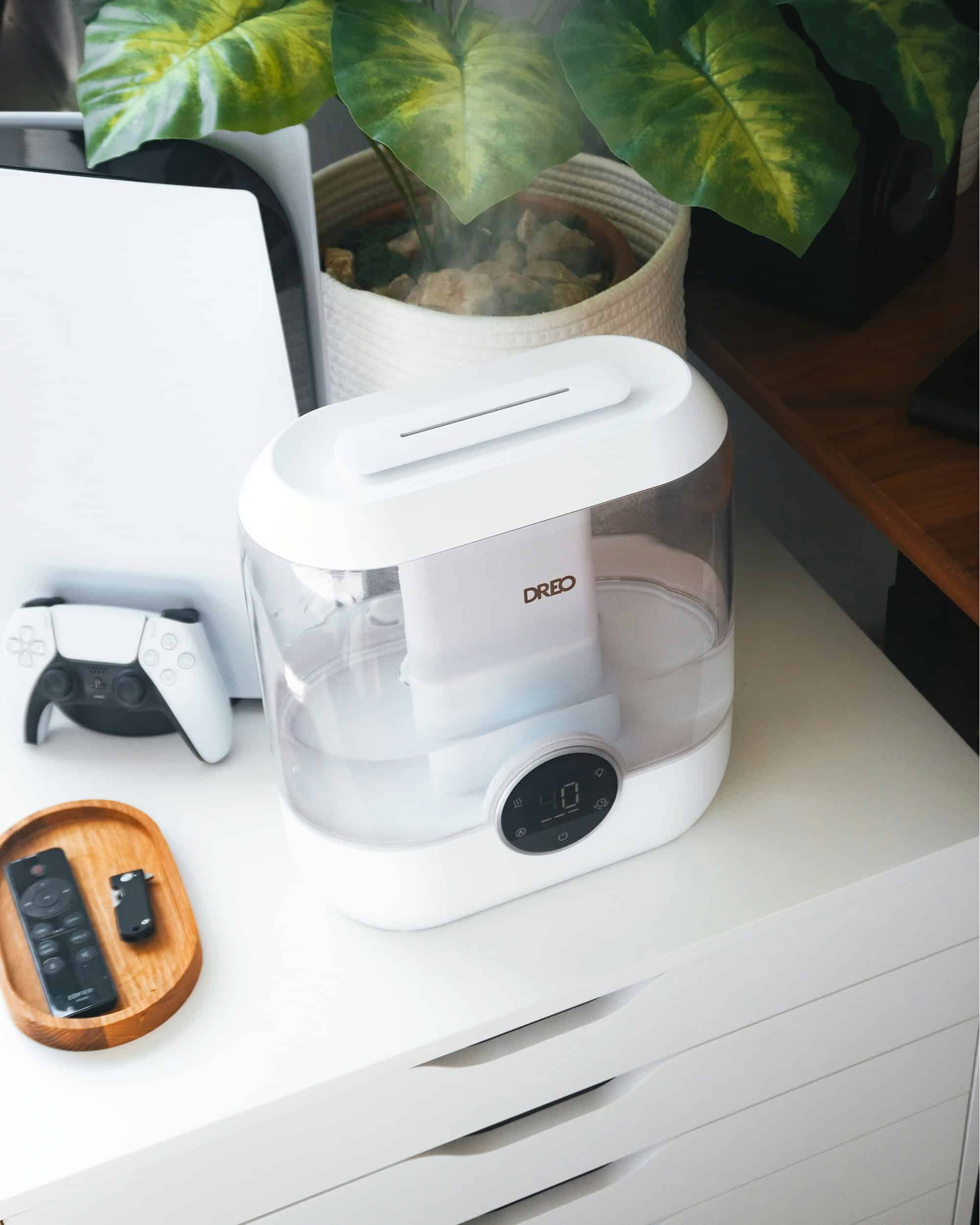
Humidifier filters are the part people discover after buying the machine, and the confusion is understandable because not every humidifier uses one. Evaporative models need a wick. Ultrasonic models generally do not.
Getting this wrong means either buying a filter you cannot use or running a machine that has needed one for months. Our roundup of bedroom humidifiers covers the machines.
What Each Type Needs
| Humidifier type | Filter needed | Replacement interval |
|---|---|---|
| Evaporative | Wick filter, essential | 1 to 3 months |
| Ultrasonic | None, or demineralization cartridge | 1 to 2 months if used |
| Warm mist | Usually none | Descaling instead |
| Whole-house evaporative | Large wick pad | Once or twice a season |
| Impeller | Sometimes a wick | Check the manual |
| Any type | Optional carbon insert | Varies by product |
How We Picked
Selections are grouped by humidifier type, since compatibility is the entire question and a filter for the wrong machine is useless regardless of quality.
Descriptions come from documented specifications rather than hands-on evaluation of every option.
1. OEM Wick Filters, Best Overall
Why It Stands Out
Manufacturer filters are cut to the exact dimensions and wicking capacity the machine was designed around, which affects output rather than only fit.
A wick that is slightly wrong reduces how much moisture the unit produces even when it physically fits.
Worth Knowing
Costs considerably more than third-party equivalents.
Availability drops once a model is discontinued. Our note on whether a dehumidifier helps you sleep covers seasonal use.
This suits current models under warranty. Skip it if the manufacturer no longer supplies them.
Check Price on Amazon2. A Multi-Pack of Third-Party Wicks, Best Value
Why It Stands Out
Wicks are consumables replaced several times a season, and buying a season’s worth at once costs a fraction of the same number bought individually.
Third-party filters for common models are widely made and generally adequate.
Worth Knowing
Quality varies between makers, and a poor wick collapses or channels water rather than distributing it.
Check the model number carefully, since similar machines use different sizes. Our roundup of bedroom dehumidifiers covers the opposite problem.
This suits heavy winter use. Skip it if the machine is under warranty terms requiring OEM parts.
Check Price on Amazon3. Demineralization Cartridges, Best for Ultrasonic Units
Why It Stands Out
Ultrasonic humidifiers disperse whatever is dissolved in the water, which is what produces the white dust that settles on furniture in hard water areas.
A demineralization cartridge reduces mineral content before the water is atomized.
Worth Knowing
Reduces rather than eliminates the problem, and distilled water is more effective.
Needs replacing on schedule to keep working. Our note on bedroom humidity control products covers targets.
This suits ultrasonic machines in hard water areas. Skip it if you use distilled water.
Check Price on Amazon4. Antimicrobial-Treated Wicks, Best for Slow Growth
Why It Stands Out
Wick filters sit permanently damp, which is exactly the condition mold and bacteria need, and treated versions slow that growth.
Useful where a machine runs continuously through a season rather than intermittently.
Worth Knowing
Slows growth rather than preventing it, so the replacement schedule still applies.
Costs more than untreated wicks. Our roundup of air purifiers covers air quality generally.
This suits continuous seasonal running. Skip it if you clean and replace on schedule anyway.
Check Price on Amazon5. A Whole-House Wick Pad, Best for Furnace Units
Why It Stands Out
Furnace-mounted humidifiers use a large evaporator pad that handles a whole house, replaced once or twice a heating season rather than monthly.
Neglecting it reduces output substantially, and it is the most commonly forgotten filter in a house.
Worth Knowing
Requires accessing the unit on the furnace, which some people prefer a technician to do.
Sizes vary considerably between models. Our note on how often to run a dehumidifier covers the reason.
This suits whole-house systems. Skip it for portable units.
Check Price on Amazon6. Descaling Solution, Best Alongside Any Filter
Why It Stands Out
Mineral scale builds inside every humidifier regardless of filter type, and a filter does nothing about deposits already in the tank and base.
Descaling restores output on machines people assume are failing.
Worth Knowing
White vinegar does much the same job for less.
Requires disassembly and a rinse cycle. Our roundup of apartment dehumidifiers covers moisture control.
This suits hard water areas. Skip it if you use distilled water throughout.
Check Price on AmazonWhich Machines Actually Need a Filter
Evaporative humidifiers pull air through a wet wick, so the wick is not an accessory but the component that produces the humidity.
Ultrasonic humidifiers use a vibrating plate to atomize water directly, which needs no wick at all.
That difference explains why some owners never buy a filter and others buy several a season, and why generic advice about humidifier filters confuses people.
Warm mist units boil water, which leaves minerals behind in the tank rather than dispersing them, so they descale rather than filter. Our note on cleaning a dehumidifier covers the categories.
Reading the Model Number
Filter compatibility is decided by a code most people never look for, and finding it saves a return.
The model number is usually on a label underneath the base or inside the tank compartment rather than on the packaging, which is long gone by the time a filter is needed.
Filter part numbers are separate from machine model numbers, and one manufacturer frequently uses a handful of filter sizes across a wide range of machines.
Third-party listings state compatibility by machine model, so the machine number is the thing to search rather than the filter code.
Photographing the label when the machine is new is a small habit that pays off every time a filter is needed, particularly for a unit stored away between seasons. Our roundup of dehumidifier during monsoon season covers the machines themselves.
Why Wicks Need Replacing So Often
Minerals gradually clog the material
Hard water leaves deposits that stiffen the wick and reduce absorption.
Output drops before failure
A clogged wick reduces humidity gradually rather than stopping suddenly.
Damp material grows things
A permanently wet wick is a growth medium regardless of treatment.
Smell is the late signal
A musty odor coming off a running humidifier means the wick is well past due for replacement.
Hard Water Changes Everything
Mineral content in ordinary tap water drives nearly every humidifier maintenance problem there is, from clogged wicks to white dust on furniture to scale built up in the tank.
Distilled water eliminates the issue entirely, at the cost of buying water continuously through the season, which is why most people never end up doing it.
Filtered water through a jug or tap filter helps somewhat, and it does not remove dissolved minerals the way distillation does.
In genuinely hard water areas, buying distilled water frequently works out cheaper across a whole season than the replacement filters and descaling solution it makes unnecessary. Our roundup of air quality monitors for bedroom covers capacity.
Seasonal Storage
Most humidifiers run for part of the year and sit in a cupboard for the rest, and how they go into storage decides what condition they come out in.
Storing a machine with any water left in it guarantees growth over months, and that is the most common reason a unit smells the moment it is switched on in autumn.
The wick should come out and be discarded rather than stored, since a damp filter left in a sealed machine is the worst possible combination.
A full clean followed by a complete air dry before the machine goes into a cupboard takes an afternoon at most and removes the problem entirely for next season.
Buying the first filter of the season at the same time is worth doing, because a machine that comes out of storage without one tends to get run anyway. Our note on sleep with allergies covers a similar routine.
Cleaning Matters as Much as Replacing
Public health guidance on humidifiers generally emphasizes regular cleaning, because a dirty machine disperses whatever is growing in it into the air you breathe.
Emptying the tank and drying it out daily rather than simply topping it up is the single most effective habit available.
Weekly cleaning of the tank and the base is the interval most commonly stated for periods of regular daily use.
Fitting a new filter into a dirty machine does not solve the underlying problem at all, since the growth is sitting in the reservoir rather than on the wick itself.
What to Look For
Your exact model number
Similar machines from one brand frequently use different filter sizes.
The right type for your humidifier
A wick is useless in an ultrasonic unit and a cartridge is useless in an evaporative one.
Multi-packs for consumables
Wicks are replaced several times a season and cost far less bought together.
A stated replacement interval
Something to schedule against rather than waiting for output to drop.
Common Mistakes to Avoid
Buying the wrong type entirely
Ultrasonic machines take no wick, and evaporative machines need one to work at all.
Running a wick past its life
Output falls gradually and the smell arrives well after the filter should have gone.
Replacing the filter instead of cleaning
Growth happens in the tank and base, which a new wick does nothing about.
Topping up rather than emptying
Standing water in a tank is where the problem starts.
Recommended Reading
See our roundup of white noise machines, our note on whether dehumidifiers disturb sleep, our roundup of closet dehumidifiers, and a roundup of quiet dehumidifiers.
Humidifier Filter FAQ
Does my humidifier need a filter?
Evaporative models need a wick, since it is the component producing the humidity. Ultrasonic models generally need none.
How often should I replace a wick?
Commonly every one to three months during regular use, sooner in hard water areas where minerals clog the material faster.
What is white dust?
Minerals from tap water dispersed by an ultrasonic humidifier. A demineralization cartridge reduces it and distilled water avoids it.
Are third-party filters fine?
Usually, for common models. Quality varies, and a poor wick channels water rather than distributing it, which reduces output.
Can I clean a wick instead of replacing it?
Rinsing removes some buildup and does not restore a clogged wick. They are consumables rather than cleanable parts.
Why does my humidifier smell?
Usually growth in the tank or on an overdue wick. Emptying and drying daily addresses the most common cause.
Should I use distilled water?
It eliminates mineral problems entirely. In hard water areas the cost frequently compares well against filters and descaling.
Does a new filter fix a dirty machine?
No. Growth happens in the reservoir and base, and cleaning those is what a new wick cannot substitute for.
