
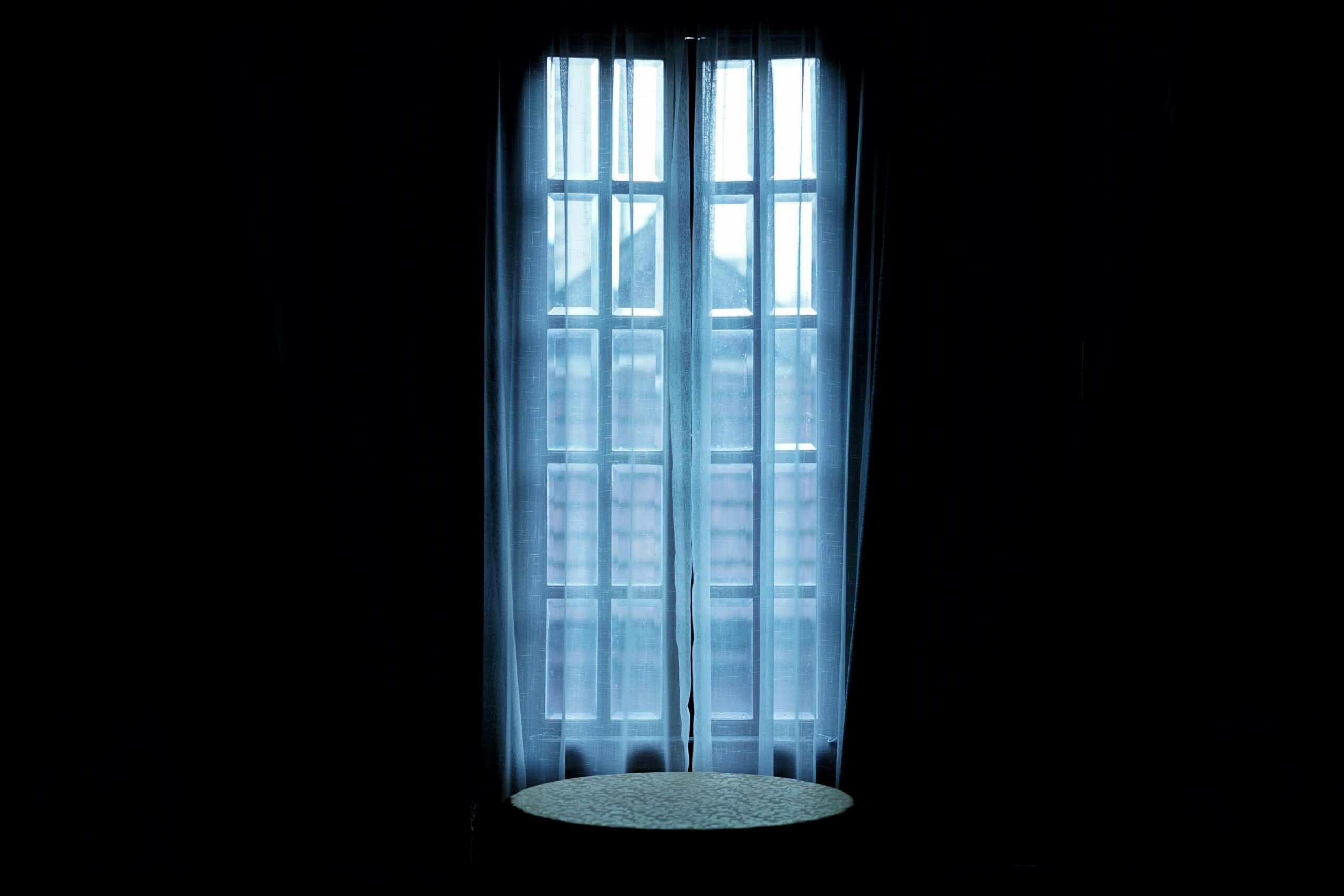
A sliding glass door is the hardest window in a bedroom to black out. It is wider than a standard window, it usually runs close to the floor, and whatever covers it has to move aside every time someone uses the door. Standard blackout panels are sized for windows, so they leave gaps at the sides and stop short at the bottom, which is exactly where light comes in on a door. Our roundup of blackout curtains for sleep covers ordinary windows.
Quick Verdict
An extra-wide floor-length panel set on a wrap-around track handles most sliding doors. Measure the full door width plus generous overlap on both sides, and decide before buying whether the covering needs to move daily or the door is effectively decorative.
Key Takeaways
- Door width plus overlap, not window sizing, decides the panel width.
- Floor-length matters more here than on a standard window.
- Side gaps are the main light path on a wide span.
- A door in daily use needs a covering that stacks aside cleanly.
- Blinds alone rarely produce full darkness on a glass door.
How We Picked
Products are grouped by how they mount and how they move, since a sliding door introduces the requirement that the covering get out of the way. Width and drop are treated as primary specifications rather than details, because standard sizing is what fails here.
Selections reflect documented dimensions and mounting options. Descriptions come from product research rather than from doors covered in a particular home.
1. Extra-Wide Floor-Length Panels, Best Overall
Why It Stands Out
Panels made specifically for patio doors run wider and longer than window curtains, which is what allows the overlap at the sides and the reach to the floor that a door needs.
Floor-length also matters more here than on a window, since a sliding door’s glass usually continues to near floor level and a short curtain leaves a bright strip along the bottom.
Worth Knowing
Wide panels are heavy, and a rod that handles window curtains may sag under a patio-door set. Check the rod or track weight rating alongside the panel size.
Puddling the fabric slightly on the floor blocks the bottom edge better than a curtain hanging just clear of it. Our note on how high to hang blackout curtains covers the top edge.
This suits most sliding doors. Skip it if the door is used constantly through the day.
2. A Wrap-Around Track System, Best for Side Light
Why It Stands Out
Tracks that curve back toward the wall at each end carry the fabric past the door frame rather than stopping level with it, which closes the side gap that straight rods leave open.
On a wide span that gap is the main light path, so this addresses the biggest problem rather than a marginal one.
Worth Knowing
Tracks generally mount to the ceiling or to a header above the door, which needs something solid to fix into and is usually not an option in a rental.
Curtains on a track also need the right heading type, so check compatibility before buying panels. Our guide to stopping light leaking around curtains covers the other gaps.
This suits owned homes wanting real darkness. Skip it if you cannot fix into the ceiling.
3. A Vertical Blackout Blind, Best for Daily Door Use
Why It Stands Out
Vertical blinds in a blackout fabric stack tightly to one side, which suits a door that opens several times a day far better than a heavy curtain does.
They also let you angle the vanes for partial light rather than choosing between open and closed.
Worth Knowing
Vertical blinds leak light between the vanes even in blackout material, so this is a room-darkening solution rather than a true blackout one. Anyone sleeping during daylight will notice the difference.
Vanes also swing and rattle in a draft from an open door. Our comparison of blackout curtains and blinds covers the trade in detail.
This suits doors in daily use. Skip it if you need genuine darkness.
4. A Panel Track Blind, Best Modern Alternative
Why It Stands Out
Panel tracks use wide fabric panels that slide past each other like the door itself, which handles a large span with fewer gaps than vertical vanes and looks less dated.
Blackout-rated panels also block considerably more light than vertical blinds do, because there are fewer joins.
Worth Knowing
Panels still overlap rather than sealing, so some light passes at the joins. Ordering with generous overlap reduces it.
These cost more than curtains and usually need measuring and ordering to size rather than buying off the shelf.
This suits wide doors where appearance matters. Skip it on a tight budget.
5. A Blackout Cellular Shade, Best Insulation
Why It Stands Out
Cellular shades trap air in their honeycomb structure, which matters on a sliding door because a large area of glass is a significant heat path in both directions.
Blackout-lined cells also block light well when fitted inside the frame with minimal edge gap.
Worth Knowing
A shade covering a door has to be raised entirely to use it, which is slower than sliding a curtain aside. On a door in regular use that becomes tiresome.
Inside-mount is what gives the tight fit, and that requires enough frame depth. Our note on whether blackout curtains block heat covers the thermal side.
This suits doors used rarely. Skip it for a main access door.
6. Layering Curtains Over Existing Blinds, Best Upgrade Path
Why It Stands Out
Most sliding doors already have blinds, and blinds alone rarely produce full darkness because light passes between and around the slats. Adding a blackout curtain over the top closes what the blinds leave open.
Layering also means keeping the daytime privacy and light control the blinds already provide.
Worth Knowing
The curtain has to mount outside the blind’s footprint or it will not close properly against the wall, which usually means a rod or track wider than the door.
Two layers on a door in daily use is twice as much to move aside. Our guide to layering blackout curtains covers the technique.
This suits doors that already have blinds. Skip it if you want a single covering.
Sliding Door Options at a Glance
| Option | Darkness | Door stays usable | Mounting |
|---|---|---|---|
| Extra-wide panels | Good to excellent | Yes, slide aside | Rod or track |
| Wrap-around track | Best | Yes | Ceiling or header |
| Vertical blackout blind | Moderate | Yes, stacks tightly | Above frame |
| Panel track blind | Good | Yes | Above frame |
| Cellular shade | Good | Must raise fully | Inside frame |
| Curtains over blinds | Good to excellent | Two layers to move | Outside existing |
What to Look For
How wide is the door, really?
Measure the full opening and add generous overlap at each side. Panels sized to the door itself stop level with the frame, and the gap at the edges is where the light comes in.
How far down does the glass go?
Sliding doors usually have glass to near floor level, so floor-length is a requirement rather than a style choice. A short curtain leaves a bright strip along the bottom.
How often does the door open?
A door used several times a day needs a covering that stacks aside quickly. A door that is effectively a window can take a shade or a heavier arrangement.
Can you mount above the frame?
Tracks and wide rods need something solid above the door. If the header is shallow or the ceiling is not accessible, that narrows the options considerably.
Curtains or Blinds on a Sliding Door?
The case for curtains
Fabric blocks light better than any slatted system, and a wide panel on a wrap-around track gets close to genuine darkness. It is also the cheaper route on a wide span.
The case for blinds
They stack tighter, tolerate a door in constant use, and allow partial light without opening fully. The trade is that vanes and slats leak light at every join, which matters most if you sleep during daylight. Our note on whether you need curtains with shutters covers the same question for a different covering.
Common Sliding Door Mistakes to Avoid
Buying window-sized panels
Standard blackout curtains are sized for windows. On a door they leave gaps at the sides and stop short at the bottom, which is where the light gets in.
Mounting the rod level with the frame
A rod ending at the frame edge means the fabric ends there too. Extending well past each side is what closes the gap on a wide span.
Expecting blinds alone to black out a door
Light passes between slats and around the edges regardless of the fabric rating. If the room needs to be dark, blinds are a starting point rather than a solution.
Forgetting the door has to open
A covering that takes two minutes to move gets left closed or left open. Match the arrangement to how often the door is actually used. Our roundup of room darkening shades covers the lighter-duty alternatives.
Recommended Reading
See our note on how long blackout curtains last, our guide to washing blackout curtains, our no-drill curtain rod picks, and a comparison of sleep masks and blackout curtains, and making a bedroom dark.
Sliding Door Blackout FAQ
What width curtains do I need for a sliding glass door?
Wider than the door itself, with generous overlap at each side. Panels sized exactly to the opening stop level with the frame, and that edge gap is the main light path on a wide span. Measure the opening and add extra rather than matching it.
Do blackout curtains work on patio doors?
Yes, and they need to be patio-door sized rather than window sized. Extra-wide floor-length panels on a rod or track extending past the frame handle a sliding door well, and standard window curtains do not.
Will vertical blinds black out the room?
Not fully. Light passes between the vanes and around the edges even in blackout fabric, so they darken a room rather than blacking it out. Anyone sleeping during daylight generally notices the difference.
Can I use curtains over existing blinds?
That is often the best upgrade, since the blinds keep daytime control and the curtain closes what they leave open. The rod or track needs to sit outside the blind’s footprint so the curtain closes flat against the wall.
How do I stop light at the bottom of the door?
Floor-length panels that just touch or slightly puddle on the floor. Sliding doors have glass close to floor level, so a curtain hanging clear of the ground leaves a bright strip along the bottom.
What about the sides?
A wrap-around track that curves back toward the wall carries the fabric past the frame, which straight rods cannot do. On a wide door the side gaps let in more light than any other path.
Do I need a special rod?
A rod rated for the weight and long enough to extend well past each side. Patio-door panels are heavy, and a rod sized for window curtains sags in the middle, which opens a gap at the top.
Will covering the door help with heat?
A large area of glass is a significant heat path, and blackout fabric or cellular shades both reduce it. Cellular shades insulate best because of the trapped air in the honeycomb structure.
