
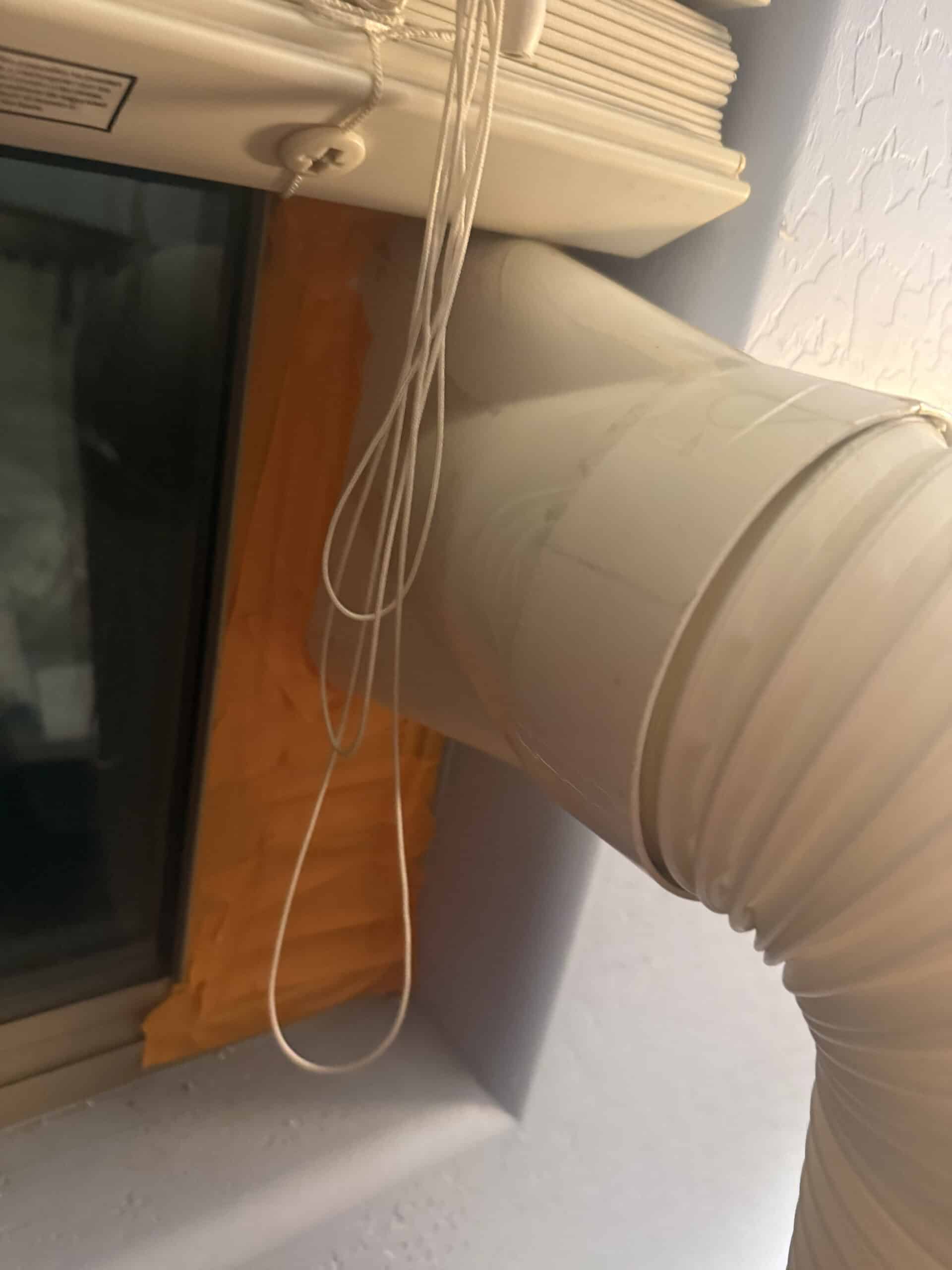
A portable air conditioner is only as good as the seal around its exhaust. The panel kits that ship in the box are sized to fit a range of windows rather than yours specifically, and the gaps left over let hot outside air back into the room the unit is trying to cool. That undoes a meaningful share of the work, and sealing it properly is the cheapest performance upgrade available. Our roundup of bedroom air conditioners covers the units themselves.
Quick Verdict
Start with the kit that came with the unit and seal whatever it leaves open. Foam strips handle small gaps, a fabric window seal handles awkward or casement windows, and a rigid insulated panel is the upgrade if you run the unit every summer.
Key Takeaways
- Included kits fit a size range rather than a specific window.
- Leaked air is the most common reason a portable AC underperforms.
- Foam and weatherstrip close the gaps a panel leaves.
- Fabric seals suit casement and crank windows a panel cannot.
- Rigid insulated panels beat thin plastic on heat transfer.
How We Picked
Products are grouped by the kind of window opening they solve, since a sliding sash, a casement, and a horizontal slider are three different sealing problems. Insulation value is weighted alongside fit, because a panel that seals perfectly and conducts heat is only solving half the issue.
Selections reflect construction and fit range as documented by manufacturers. Descriptions come from product research except where personal use is stated directly.
1. Foam Weatherstrip and Gap Filler, Best Overall
Why It Stands Out
Adhesive foam strip closes the gaps a factory panel leaves at the edges and where sections meet. It costs very little, needs no tools, and addresses the exact failure most people have without replacing anything.
Foam also compresses to fit irregular gaps, which is what makes it work where a rigid part will not.
Worth Knowing
Adhesive foam struggles on dusty or damp frames, so clean the surface before applying. It also degrades in direct sun over a season and is worth treating as an annual consumable.
Removing it can leave residue on painted frames, which matters in a rental. Test a small section first. Our roundup of window insulation kits covers the winter version of the same problem.
This suits almost every setup. Skip it only if your kit already seals perfectly.
Check Price on Amazon2. A Fabric Window Seal Kit, Best for Awkward Windows
Why It Stands Out
Zippered fabric seals attach around the whole window opening and let the hose pass through a zip, which handles casement and crank windows that rigid panels cannot fit at all.
They also let you open and close the window without dismantling anything, since the hose exits through the zip rather than through a fixed panel.
Worth Knowing
Fabric offers less insulation than a rigid insulated panel, so a sunlit window still transfers heat through it. It seals air rather than blocking heat.
The hook-and-loop attachment needs a clean frame to grip, and it leaves marks on some paint finishes. Our note on positioning a portable AC covers getting the rest of the setup right.
This suits casement windows and rentals. Skip it if a rigid panel fits your opening.
Check Price on Amazon3. A Rigid Insulated Panel, Best Performance
Why It Stands Out
Insulated foam-core panels cut to your window block heat transfer as well as air movement, which thin plastic kit panels do not. On a window that gets direct sun, that difference is noticeable.
Cut properly, they also fit far better than an adjustable panel sized for a range.
Worth Knowing
These need measuring and cutting, so there is a job involved rather than an unboxing. Getting the hose port in the right place matters and is not adjustable afterward.
A rigid panel also means the window stays shut for the season, which is fine for summer and inconvenient if you want fresh air occasionally.
This suits people running the unit all summer. Skip it if you want the window usable.
Check Price on Amazon4. An Adjustable Slider Kit, Best for Horizontal Windows
Why It Stands Out
Horizontal sliding windows need a tall narrow panel rather than the wide short one most units include, and slider-specific kits are sized for that orientation.
Many extend considerably further than the factory panel, which matters on a tall opening where the included kit leaves a large gap.
Worth Knowing
Longer panels flex in the middle and need support, otherwise they bow and open a gap exactly where you sealed one.
Check the hose port position against where your unit sits, since a port at the wrong end means routing the hose across the window. Our roundup of blackout curtains covers what else has to work around the same window.
This suits horizontal sliders. Skip it for standard sash windows.
Check Price on Amazon5. A Window Lock and Security Bar, Best Safety Addition
Why It Stands Out
A window held partly open by a panel cannot be locked normally, which is a genuine security consideration on a ground floor bedroom. A bar or lock secures the sash at the panel position.
It also stops the window sliding and breaking the seal you set up.
Worth Knowing
Anything that pins a window shut needs thinking about as an exit route. Consider which windows in the room can still open in an emergency.
Bars sized for the wrong track do nothing, so measure rather than buying generically.
This suits ground floor and accessible windows. Skip it upstairs where security is less pressing.
Check Price on Amazon6. Reflective Window Film, Best Supporting Fix
Why It Stands Out
Film on the glass reduces how much solar heat enters in the first place, which lowers the load on the unit rather than sealing anything. On a sun-facing bedroom that matters more than a marginal seal improvement.
It is also cheap and stays in place year-round.
Worth Knowing
Film darkens the room, which some people want and others do not. Check the light transmission figure rather than assuming.
Adhesive film can be difficult to remove cleanly from older glass. Static-cling versions are the rental-friendly alternative. Our note on whether blackout curtains block heat covers the fabric approach.
This suits sun-facing windows. Skip it if the room already stays dark.
Check Price on AmazonWindow Sealing at a Glance
| Product | Solves | Window stays usable | Best for |
|---|---|---|---|
| Foam weatherstrip | Gaps in an existing kit | No change | Almost everyone |
| Fabric seal kit | Awkward window shapes | Yes | Casement and crank |
| Rigid insulated panel | Air and heat transfer | No | All-summer use |
| Adjustable slider kit | Tall narrow openings | No | Horizontal sliders |
| Window lock or bar | Security and slipping | Partly | Ground floor |
| Reflective film | Solar heat entering | Yes | Sun-facing rooms |
My Setup and Where It Leaks
I have run a portable air conditioner in my bedroom for over five years. It is a single-hose unit and it sits between the window and the bed, which is where the room allows rather than where a diagram would put it.
I use the window kit that came with it. It does the main job and it is not a perfect seal. Air leaks in sometimes, and when it does I improvise something to close the gap rather than replacing the panel.
That is worth saying plainly because it is the normal experience. Factory kits are built to fit a range of window sizes, which means they fit most windows adequately and none exactly. Anyone finding gaps around theirs has not done anything wrong.
The practical lesson from five years of this is that the sealing is worth revisiting each season rather than setting up once. Panels shift, foam compresses, and a gap that was closed in June is often open by August.
What to Look For in a Window Kit
What kind of window is it?
Sash, horizontal slider, and casement each need a different approach, and a kit designed for one fits the others badly or not at all. This decides the category before anything else.
How big is the gap?
Measure what the existing panel leaves open at full extension. Small gaps need foam; large ones need a different panel.
Does it insulate or only seal?
Thin plastic stops air and conducts heat. Insulated foam core does both, and on a sunlit window the difference is worth the extra effort.
Will you still need the window?
Rigid panels mean the window stays shut all season. Fabric seals with a zip let you open it. That is a lifestyle question rather than a performance one.
Seal the Kit or Replace It?
Start by sealing
Foam strip and gap filler cost very little and fix the specific problem most people have, which is a factory panel that fits approximately. Try this before spending on anything larger.
When replacing makes sense
Windows the kit was never designed for, openings much larger than the panel extends to, and sun-facing rooms where heat transfer through thin plastic is the real issue. Our guide to cooling a bedroom covers the wider approach.
Common Sealing Mistakes to Avoid
Assuming the included kit seals properly
It is sized for a range of windows and fits yours approximately. Checking for gaps at the edges and between sections is the first thing to do after installation.
Sealing air and ignoring heat
A thin plastic panel in direct sun radiates heat into the room even with a perfect air seal. Insulated panels or reflective film address that separately.
Setting it up once and forgetting
Panels shift and foam compresses through a season. Rechecking the seal in midsummer often finds a gap that was not there in spring.
Blocking your only exit window
A rigid panel and a security bar together can pin a window shut. Think about which windows in the room can still open before committing. Our note on bedroom humidity control covers another appliance competing for the same window.
Recommended Reading
See our roundup of bedroom dehumidifiers, our note on what to change first if you sleep hot, our bedside fan picks, and a guide to cooling mattress pads, and cooling toppers and portable AC units, and continuous drain on a portable AC.
Portable AC Window Kit FAQ
Why does my portable AC struggle even with the kit installed?
Usually because the kit seals approximately rather than completely. Factory panels are sized to fit a range of windows, and the gaps left at the edges let hot outside air back in. Sealing those with foam strip is the cheapest fix available.
Can I use a portable AC with a casement window?
Not with a standard sliding panel, since casement windows swing rather than slide. A zippered fabric seal kit attaches around the whole opening and lets the hose pass through, which is the usual solution for crank and casement windows.
Is an insulated panel worth it over the plastic one?
On a sun-facing window, yes. Thin plastic stops air movement and conducts heat, so the panel itself becomes a warm surface radiating into the room. Foam-core panels block both, at the cost of cutting them to fit.
Do I need to seal around the hose too?
Where the hose passes through the panel, yes. Gaps at that point are a direct path for hot air, and they are easy to miss because the hose looks like it fits snugly. Foam or tape around the port closes it.
Will sealing the window make a noticeable difference?
Usually. A single-hose unit pulls air from the room and exhausts it outside, which creates negative pressure drawing outside air in through any gap available. Closing those gaps means less hot air replacing what the unit just cooled.
Can I still open the window?
With a fabric seal, yes, since the hose exits through a zip. With a rigid panel, the window stays in position for the season. That is worth deciding before buying, since it is a daily inconvenience rather than a technical one.
Is a window kit secure?
A window held partly open cannot be locked normally, which matters on a ground floor. Security bars sized to the track hold the sash in position and stop it sliding, though anything pinning a window shut needs weighing against emergency exit.
How often should I check the seal?
At least once mid-season. Panels shift with use and adhesive foam compresses and degrades in sun, so a seal that was tight in spring often has gaps by late summer. It takes a minute and it is the most commonly skipped maintenance on these units.
