
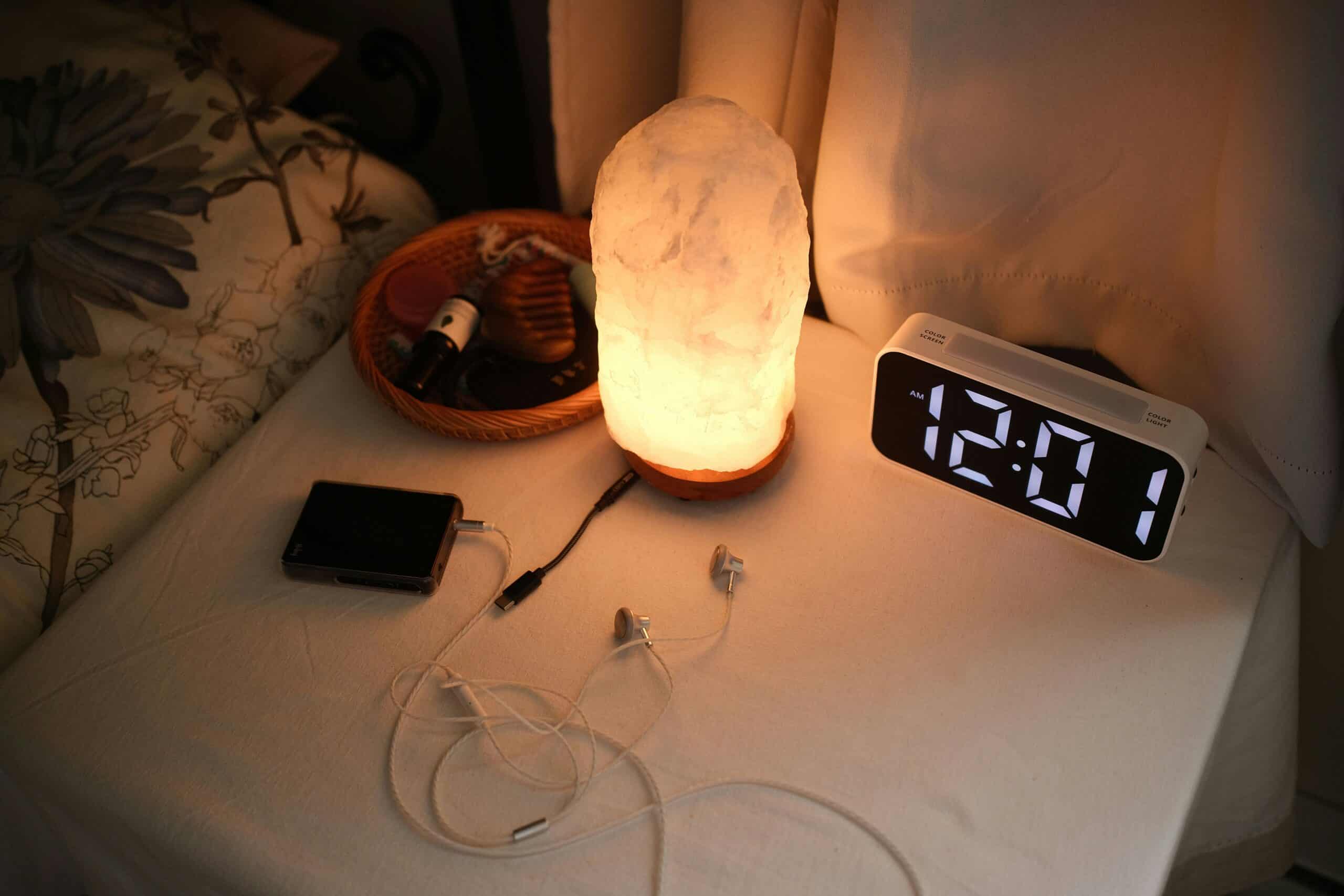
Cable management on a nightstand solves three problems at once: cords that fall behind the table when you let go of them, a tangle that collects dust under the bed, and a charging cable that ends up on the floor where it gets stepped on. The fix is almost always about anchoring the cable end near the surface rather than hiding the whole run. Our roundup of nightstand charging setups covers what plugs in.
The Short Version
Adhesive cable clips at the back edge of the nightstand stop cords escaping and cost almost nothing. Add a cable sleeve if several cords run to the same outlet, and a cord cover only where the run crosses open floor.
Key Points
- Anchoring the cable end matters more than hiding the run.
- Adhesive clips fail on textured or dusty surfaces.
- Sleeves bundle several cords into one manageable run.
- Floor crossings need a cover rather than a clip.
- Shorter cables solve more than any accessory does.
How We Picked
Products are grouped by where along the run they work: at the surface, behind the furniture, along the wall, and across the floor. Adhesion and cable diameter matter throughout, since most failures in this category are a clip that fell off or a channel the cable would not fit.
Selections reflect how each product handles the specific geometry of a bedside setup. Descriptions come from product research rather than from a particular nightstand.
1. Adhesive Cable Clips, Best Overall
Why It Stands Out
Small clips stuck to the back edge of the nightstand hold the cable end where you can reach it, which is the actual problem most of the time. A charging cable that stays put is worth more than a tidy run behind the furniture.
They cost very little and come in multipacks, so you can put one at the nightstand, one at the wall, and one at the outlet.
Worth Knowing
Adhesion is everything and it depends on the surface. Clean the spot with alcohol first and let the adhesive cure for a day before loading it, since most failures are clips applied to a dusty or polished surface and used immediately.
Removing them later can lift veneer or finish on soft wood, so test somewhere hidden if the nightstand matters to you. Our roundup of nightstands and bedside tables covers the furniture underneath.
This suits almost every setup. Skip it on heavily textured surfaces.
Check Price on Amazon2. A Cable Sleeve, Best for Multiple Cords
Why It Stands Out
A neoprene or braided sleeve wraps several cables into a single bundle, which turns a tangle behind the nightstand into one line. Where a lamp, a phone cable, and an alarm clock all run to the same outlet, this is what makes it look deliberate.
Bundling also reduces dust collection, since one thick run gathers far less than several thin ones lying loose.
Worth Knowing
Bundled cables are harder to change individually, so a sleeve suits a setup that has settled rather than one you are still adjusting.
Tightly bundled power cables can also retain heat, which matters more with chargers than with a lamp cord. Leave the bundle loose rather than compressed. Our roundup of bedside lamps with USB charging covers reducing the cord count at source.
This suits three or more cables. Skip it if you only run one.
Check Price on Amazon3. A Cord Cover Channel, Best for Floor Crossings
Why It Stands Out
Where a cable has to cross open floor between the nightstand and an outlet, a low-profile channel covers it and stops it being a trip hazard. That is the one place in a bedroom where loose cable is genuinely worth solving.
Channels also protect the cable from being pulled by a vacuum or a foot, which is what usually kills a charging cable.
Worth Knowing
Adhesive floor channels can mark or lift flooring when removed, and on carpet they generally do not stay put at all. Check what your floor is before ordering.
They also stay where you put them, so this suits a fixed furniture arrangement rather than a room you rearrange. Our roundup of bedroom rugs covers a softer way to handle the same crossing.
This suits cables crossing walkways. Skip it if the run stays behind furniture.
Check Price on Amazon4. A Cable Box or Cord Organizer, Best for the Power Strip
Why It Stands Out
A box hides the power strip and the coiled excess cable that always accumulates behind bedside furniture. Instead of a nest on the floor, there is one contained object.
It also keeps dust off the outlets themselves, which builds up faster behind furniture than anywhere else in a room.
Worth Knowing
Ventilation matters, since an enclosed box around a loaded power strip retains heat. Look for slots and avoid overloading what is inside.
Boxes need floor space behind the nightstand, which a bed pushed against a wall may not have. Measure the gap before buying.
This suits several plugs in one place. Skip it if space behind the nightstand is tight.
Check Price on Amazon5. A Magnetic Cable Holder, Best for Frequent Unplugging
Why It Stands Out
Magnetic holders let the cable end snap into place and pull away without any clip to thread. For a phone cable you handle every night, that is a faster interaction than a friction clip.
The magnet also holds a cable that a plain clip would let slip, particularly thicker charging cables.
Worth Knowing
These need a small metal ring fitted to the cable, which stays on it permanently. That is fine on a dedicated bedside cable and less so on one you carry between rooms.
Magnetic strength varies considerably, and a weak holder is worse than a clip. Our roundup of touch control bedside lamps covers the other thing you reach for in the dark.
This suits a cable you unplug nightly. Skip it for cables that travel with you.
Check Price on Amazon6. Shorter Cables and Right-Angle Adapters, Best Root Fix
Why It Stands Out
Most bedside cable mess is excess length. A cable sized to the actual distance removes the coil entirely, and a right-angle connector stops the plug sticking out where it gets knocked.
This costs about the same as the accessories and eliminates the problem rather than containing it.
Worth Knowing
Measure the real route rather than the straight line, since a cable has to go down the back, along the baseboard, and up to the outlet. Too short is worse than slightly long.
Right-angle adapters add a connection point, which is another thing that can work loose over time. Our note on bedside charging setups covers sizing a run properly.
This suits any setup with coiled excess. Skip it if your cables are already the right length.
Check Price on AmazonCable Management at a Glance
| Product | Where it works | Solves | Watch for |
|---|---|---|---|
| Adhesive clips | Nightstand edge | Cables falling behind | Surface and cure time |
| Cable sleeve | Behind furniture | Several cords tangling | Heat when compressed |
| Floor cord cover | Open floor | Trip hazard | Adhesive on flooring |
| Cable box | Behind nightstand | Power strip clutter | Ventilation and space |
| Magnetic holder | Surface | Nightly unplugging | Ring stays on the cable |
| Shorter cables | The whole run | Excess length | Measure the real route |
What to Look For in Cable Management
Where does the mess actually start?
Usually the cable end escaping behind the nightstand, or coiled excess on the floor. Identify which before buying, since clips fix one and shorter cables fix the other.
What surface are you sticking to?
Adhesive needs clean, smooth, and non-porous. Textured paint, raw wood, and anything recently polished are where clips fall off within a week.
Does the run cross a walkway?
If so, that section needs a cover rather than a clip. Everything else is tidiness; a cable across a path in a dark bedroom is a genuine hazard.
How many cables are there?
One cable needs a clip. Three or more want a sleeve and probably a box for the strip. Buying a sleeve for a single cord adds bulk for no benefit.
Hide It or Shorten It?
The case for hiding
Sleeves, boxes, and channels work with the cables you already own and handle a setup you cannot change. In a rental where the outlet is in an awkward place, this is what you have.
The case for shortening
Excess length is the root of most bedside cable mess, and a correctly sized cable removes it rather than containing it. It usually costs less than the accessories too. Our roundup of bedside reading lamps covers another way to reduce what plugs in at all.
Common Cable Management Mistakes to Avoid
Applying adhesive to a dusty surface
Clips fail because of what is under them. Clean with alcohol, let it dry, then apply and leave it a day before hanging a cable on it.
Bundling power cables tightly
Compressed bundles retain heat, which matters with chargers and adapters. Keep the sleeve loose rather than cinched.
Running a cable under a rug
It hides the cable and creates a wear point plus a heat trap. A proper floor channel is the right answer for a crossing.
Solving tidiness before safety
A cable across a walkway in a dark bedroom is the one part of this worth fixing first. Our guide to night lights covers seeing where you are going at 3am.
Related Reading
See our roundup of bedroom floor lamps, notes on alarm clocks, our sunset lamp picks, and a guide to choosing bedroom essentials.
Cable Management FAQ
How do I stop my charging cable falling behind the nightstand?
An adhesive clip at the back edge holds the cable end where you can reach it, which is the fix for the most common bedside annoyance. Clean the surface with alcohol first and let the adhesive cure for a day before putting any weight on it.
Do adhesive cable clips damage furniture?
They can lift veneer or finish on soft wood when removed, particularly if they have been in place a long time. Test on a hidden area first, and remove them slowly with gentle heat from a hairdryer rather than pulling.
Is it safe to run cables under a rug?
Better not to. A cable under a rug takes repeated pressure from footsteps, which wears the insulation, and any heat has nowhere to go. A proper low-profile floor channel handles a crossing without either problem.
Should I bundle all my bedside cables together?
Bundling is fine and worth keeping loose rather than tight, since compressed power cables retain heat. It also makes changing one cable harder, so it suits a setup that has settled rather than one you are still adjusting.
What is the tidiest bedside charging setup?
Fewer cables. A lamp with a built-in USB port removes a separate charger, and a correctly sized cable removes the coil. Accessories manage what remains, and reducing the count at source does more than any of them.
Are cable boxes safe with a power strip inside?
With ventilation and a sensible load, yes. Look for boxes with slots rather than sealed ones, and keep the total draw well within the strip’s rating. An enclosed box around an overloaded strip is worth avoiding.
How long should a bedside charging cable be?
Long enough to reach the outlet by the actual route, which means down the back of the nightstand and along the wall rather than in a straight line. Measure that path, then add a little. Excess beyond that is where the mess comes from.
Will magnetic cable holders work with any cable?
They need a small metal ring fitted to the cable end, which stays attached permanently. That suits a dedicated bedside cable and is less convenient for one you carry between rooms or use with different devices.
