
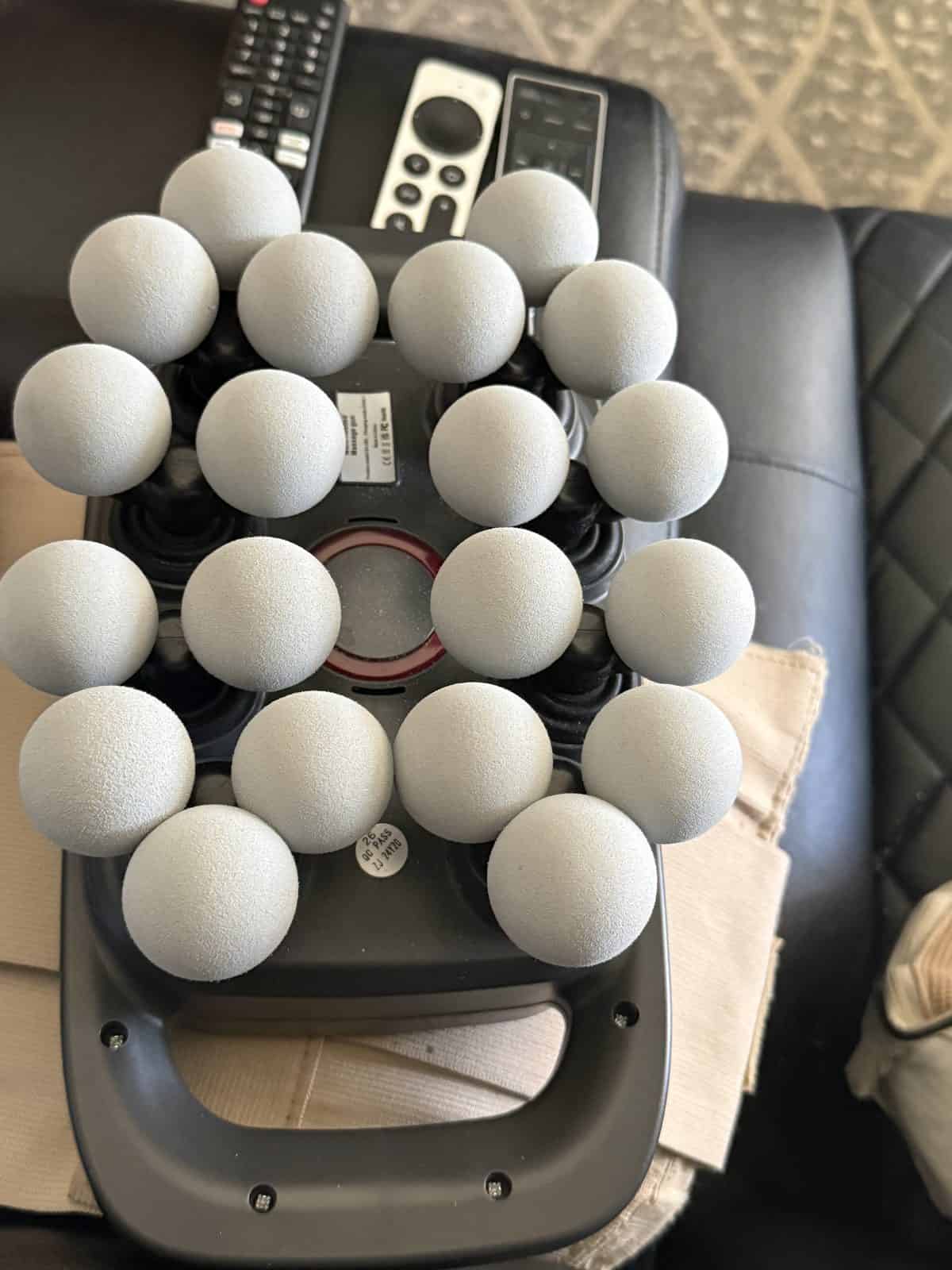
The best massage gun for most people is the TOLOCO EM26, a powerful, affordable percussion massager with a full set of heads and long battery life. The best massage guns use rapid percussion to loosen tight muscles, ease soreness, and aid recovery after activity. The right one for you comes down to power, noise, weight, and how easy it is to handle.
I own and use an all-purpose massage gun, so I can speak to this from real use. Mine is one of the larger, big-coverage designs, which I genuinely like for working over large areas like my back and legs. The honest trade-off is that being bigger, it is harder to handle and maneuver than a compact gun. It has a pretty decent battery life and is easy to use, which is most of what I want from one.
Quick Verdict
The TOLOCO EM26 is the best overall for value, with strong power and lots of heads for the price. For premium deep percussion and the best reach to your own back, the Theragun Prime stands out. For quiet operation in an apartment, the Hypervolt 2 is the calm pick.
Why Trust This Guide
I use an all-purpose massage gun regularly, so I know firsthand how power, size, and handling play out in real use. The specific models below are research-based, drawn from independent testing and manufacturer specifications cited in Sources, since I have not used every one. This guide is general information, not medical advice; if you have an injury or medical condition, check with your doctor before using percussion therapy.
Key Takeaways
- Massage guns use percussion to loosen tight muscles, ease soreness, and support recovery.
- Bigger, full-size guns cover large areas and hit harder but are heavier to handle.
- Compact guns are easy to maneuver and travel with but offer less power and reach.
- Battery life, noise, and handle ergonomics matter more day to day than peak specs.
- Avoid percussion on the neck, throat, bones, joints, and inflamed or injured areas.
Disclosure: RestRight is reader-supported. As an Amazon Associate, we earn from qualifying purchases made through links on this page, at no extra cost to you.
What I Use and the Size Trade-Off
My massage gun is a large, all-purpose model with a big head area, the kind built to cover a lot of muscle at once. For large areas like the back, glutes, and legs, that size is genuinely useful, since I can work a whole muscle group without chasing it around with a tiny tip. It has a pretty decent battery, so it does not die mid-session, and it is easy to use without fiddling with complicated controls.
The honest downside is handling. Because it is bigger, it is harder to maneuver into smaller spots and a bit more tiring to hold at certain angles than a compact gun would be. That trade-off, coverage and power versus maneuverability, is the main thing to weigh when you pick a massage gun, and it runs through the picks below. Much of my own tightness comes from desk work, which our guide to back pain from working from home addresses at the source. If your tension sits in your neck, a percussion gun is the wrong tool for that spot, and easing muscle tightness before bed can also help you unwind, as our guide on relaxing before bed covers.
How a Massage Gun Helps
A massage gun delivers rapid pulses that target muscles, help break up the feeling of knots, and ease soreness, mimicking some aspects of a deep-tissue massage at home. Research on percussion massage points to benefits for muscle recovery and short-term soreness relief, which is why athletes and physical therapists use them. Many people find a lower power setting is plenty for everyday use.
That said, percussion is not for everywhere on the body. Guidance is to skip areas that are acutely inflamed, bruised, or injured, since percussion can worsen those, and to avoid bones, joints, and the neck and throat. Used on the large muscle groups it is meant for, though, a massage gun is a simple, effective recovery tool. For broader recovery, our guide to mattresses for athletes and recovery covers the sleep side.
1. TOLOCO EM26 Massage Gun: Best Overall Value
The TOLOCO EM26 is the massage gun most people should start with. It is Amazon’s bestselling percussion massager, with a powerful motor, a deep amplitude for the price, a long list of head attachments, and strong battery life. For the money, it covers the essentials well.
Why It Stands Out
It delivers genuinely strong percussion and comes with around ten attachments to target different muscle groups, far more than premium guns include. The battery life is impressive, and the value is hard to beat. For a capable all-rounder without a premium price, it is the default pick.
Worth Knowing
The design feels a bit basic, and the touch controls can be slow to respond. Most included heads are on the firmer side, so gentle-massage options are limited.
Get the TOLOCO if you want strong performance and lots of heads on a budget. Skip it if you want premium finish or the quietest operation.
2. Therabody Theragun Prime: Best Premium
The Theragun Prime is the premium pick for deep percussion. It pairs a strong motor with a deep amplitude and the brand’s signature triangular handle, which makes reaching your own back and shoulders easier. It is built for people who use a gun often and want serious depth.
Why It Stands Out
The deep, powerful percussion feels stronger than most, and the triangle handle gives the best self-reach to hard-to-hit spots like the upper back. Build quality and app guidance are a step up, and it suits regular, demanding use. For premium deep-tissue work, it leads.
Worth Knowing
It is louder than quieter rivals at high speed and costs significantly more than budget guns. The power can be more than casual users need.
Choose the Theragun Prime if you use a gun often and want depth and reach. Skip it if you want quiet operation or a travel tool. For anyone with both tools already, using one alongside a TENS unit covers the sequencing.
3. Bob and Brad C2 Massage Gun: Best for Beginners
The Bob and Brad C2 is the pick for first-time buyers who want a known, friendly brand. Designed with input from two physical therapists, it offers enough speed control and useful heads in a simple, affordable package. It is FSA and HSA eligible, too.
Why It Stands Out
It is not chasing premium power; it wins on being simple, well-priced, and easy to live with for casual recovery. The PT design background, FSA eligibility, and quiet operation make it a low-risk starter. For occasional post-workout use, it is plenty.
Worth Knowing
It is not built for high pressure on dense quads and glutes. Heavy daily users will want a more powerful gun.
Get the C2 if you want a simple, affordable starter from a trusted brand. Skip it if you need maximum power for dense muscle.
4. Ekrin Athletics B37: Best Battery and Ergonomics
The Ekrin B37 is the pick for long sessions and comfortable handling. It is a full-size gun with near-premium power, an angled handle that reduces wrist fatigue, a long battery life, and a lifetime warranty. It hits well above its price.
Why It Stands Out
The angled handle solves the real problem of wrist strain during use, the battery lasts through long sessions, and the power rivals far pricier guns. The lifetime warranty makes it the lowest-risk premium-tier pick. For comfort and longevity, it stands out.
Worth Knowing
It runs on the louder side, as full-size powerful guns tend to. It is an investment over budget options, though less than the big names.
Choose the Ekrin B37 if handle comfort and battery life matter most. Skip it if you want the quietest gun or the lowest price.
5. Hyperice Hypervolt 2: Best Quiet
The Hypervolt 2 is the pick when quiet matters. It is a premium full-size gun with smooth, notably quiet operation, a comfortable straight handle, and a practical set of heads. It suits apartments and shared homes where percussion noise is a problem.
Why It Stands Out
It runs smoother and quieter than the more aggressive Theragun, which makes it easier to use while watching TV or near others. The straight handle is comfortable for quads, calves, and chest, and the build feels premium. For calm operation, it is the choice.
Worth Knowing
The straight handle gives less self-reach to the upper back than Theragun’s triangle. It is a premium-priced gun.
Get the Hypervolt 2 if quiet operation is your priority. Skip it if you want the easiest self-back access or a budget price.
6. Bob and Brad Q2 Mini: Best Compact
The Bob and Brad Q2 Mini is the pick for travel and easy handling. It is one of the lightest guns available, quiet, and comes with a travel case, making it ideal for gym bags and desk drawers. It trades top-end power for portability and convenience.
Why It Stands Out
At around a pound, it is genuinely pocketable and quiet, and the travel case makes it easy to carry. It handles quick work on calves, traps, and tight spots with no wrist strain. For portability and easy maneuvering, it is excellent, and it shows how much easier a small gun is to handle than a large one.
Worth Knowing
It lacks the power and reach of a full-size gun for dense muscle. The compact size means a smaller battery and less coverage per pass.
Choose the Q2 Mini for travel and easy handling. Skip it if you need strong percussion for large or dense muscle groups.
Massage Guns at a Glance
The features below come from each maker’s specifications and independent testing.
| Massage Gun | Class | Standout | Best for |
|---|---|---|---|
| TOLOCO EM26 | Budget full-size | Power, many heads, battery | Best value |
| Theragun Prime | Premium full-size | Deep percussion, reach | Premium depth |
| Bob and Brad C2 | Budget brand | Simple, FSA eligible | Beginners |
| Ekrin B37 | Full-size | Angled handle, battery, warranty | Comfort and battery |
| Hypervolt 2 | Premium full-size | Quiet, smooth | Quiet operation |
| Bob and Brad Q2 Mini | Compact | Light, portable, quiet | Travel |
How to Choose a Massage Gun
Size and Handling
Full-size and large all-purpose guns cover big muscle groups and hit harder, but they are heavier and harder to maneuver, as I find with my own. Compact guns are easy to handle and travel with but offer less power and reach. Match the size to where you will use it most.
Power and Amplitude
For general recovery and post-workout soreness, moderate power is plenty, while athletes working dense muscle daily benefit from higher stall force and deeper amplitude. More power is not always better for casual use. Pick the level your muscles actually need.
Noise
Quieter guns are easier to use near others or while watching TV, while powerful full-size guns tend to be louder. If you share a home, prioritize a quiet model. Noise affects how often you actually reach for it.
Battery and Heads
Long battery life means fewer charges between sessions, and a useful set of heads lets you target different muscles. A force meter or display is a nice extra. Look for the features you will use rather than the longest spec sheet.
Massage Gun vs Other Recovery Tools
When a Gun Wins
A massage gun wins for quickly working large muscle groups and reaching deep into tight spots after activity. The percussion covers ground fast. For post-workout legs, back, and glutes, it is efficient.
When to Reach for Something Else
For pinpoint trigger points, massage balls give more control, and for general stiffness, heat relaxes muscles gently, and a back stretcher helps a tight lower back. For the neck specifically, a gentler tool is safer than percussion. Different tools suit different jobs.
Massage Gun Safety
Where Not to Use It
Avoid percussion on the neck and throat, directly over bones and joints, and on areas that are inflamed, bruised, or injured, since it can worsen those. Keep the gun on muscle, not bone. This is the most important rule for safe use.
Start Gentle
Begin on a lower speed and lighter pressure, since many people find that is enough, and build up only if needed. Let the gun do the work rather than pressing hard. Easing in prevents soreness from the tool itself.
Keep Sessions Short
Spend only a short time on any one muscle rather than grinding away at a spot. A minute or two per area is plenty. If something hurts sharply, stop and check with a professional.
Check With a Doctor When Unsure
If you have an injury, a medical condition, or take blood thinners, ask a doctor before using percussion therapy. It is a recovery aid, not a treatment. When in doubt, get guidance first.
Recommended Reading
- massage balls trigger point relief
- heating pads for back and neck
- mattresses for athletes and recovery
- tens units for pain relief
- foot massagers bedtime relaxation
- acupressure mats for sleep and pain relief
- orthopedic pillows recovery
- back massagers
- muscle roller sticks
- cold therapy machines for recovery
Massage Guns FAQ
What is the best massage gun?
For most people, the TOLOCO EM26 is the best overall value, with strong power, many heads, and long battery life. For premium deep percussion, the Theragun Prime stands out, and the Hypervolt 2 is the quietest. The right pick depends on your budget, power needs, and noise tolerance.
Do massage guns actually work?
Research on percussion massage points to benefits for short-term soreness relief and muscle recovery, which is why athletes and physical therapists use them. In my own use, an all-purpose gun genuinely loosens tight muscles over large areas. They aid recovery rather than treat medical conditions.
Are bigger massage guns better?
Bigger, full-size guns cover more area and hit harder, but they are heavier and harder to handle, as I find with mine. Compact guns are easier to maneuver but less powerful. The best size depends on whether coverage or handling matters more to you.
Can I use a massage gun on my neck?
It is best not to use a percussion gun directly on the neck or throat, where it can affect sensitive areas. Use a gentler tool there instead, and keep the gun to larger muscles. Safety guidance favors muscle over bone and sensitive spots.
How long should I use a massage gun?
Keep it to a short time per muscle, around a minute or two, rather than grinding on one spot. Start gentle and build up only if needed. Short, regular use is safer and effective.
How much power do I need?
For general recovery and everyday soreness, moderate power is plenty, while athletes working dense muscle daily benefit from higher stall force. Many people find a low setting sufficient. Buy for your real needs, not the biggest number.
Is a massage gun or a massage ball better?
A massage gun covers large areas quickly and reaches deep, while a massage ball gives more control for pinpoint trigger points. Many people use both for different jobs. Choose based on whether you want broad coverage or targeted pressure.
When should I avoid using a massage gun?
Avoid it on inflamed, bruised, or injured areas, over bones and joints, and on the neck and throat. If you have a medical condition or take blood thinners, check with a doctor first. Percussion is for healthy muscle, not injury sites.
Related Reading
Explore more: massage tables. Also explore: neck traction devices.
Recommended Reading
See also our guides to massage tables.
This article is for general information and is not medical advice. Consult a qualified healthcare provider before using percussion therapy if you have an injury or medical condition.
