
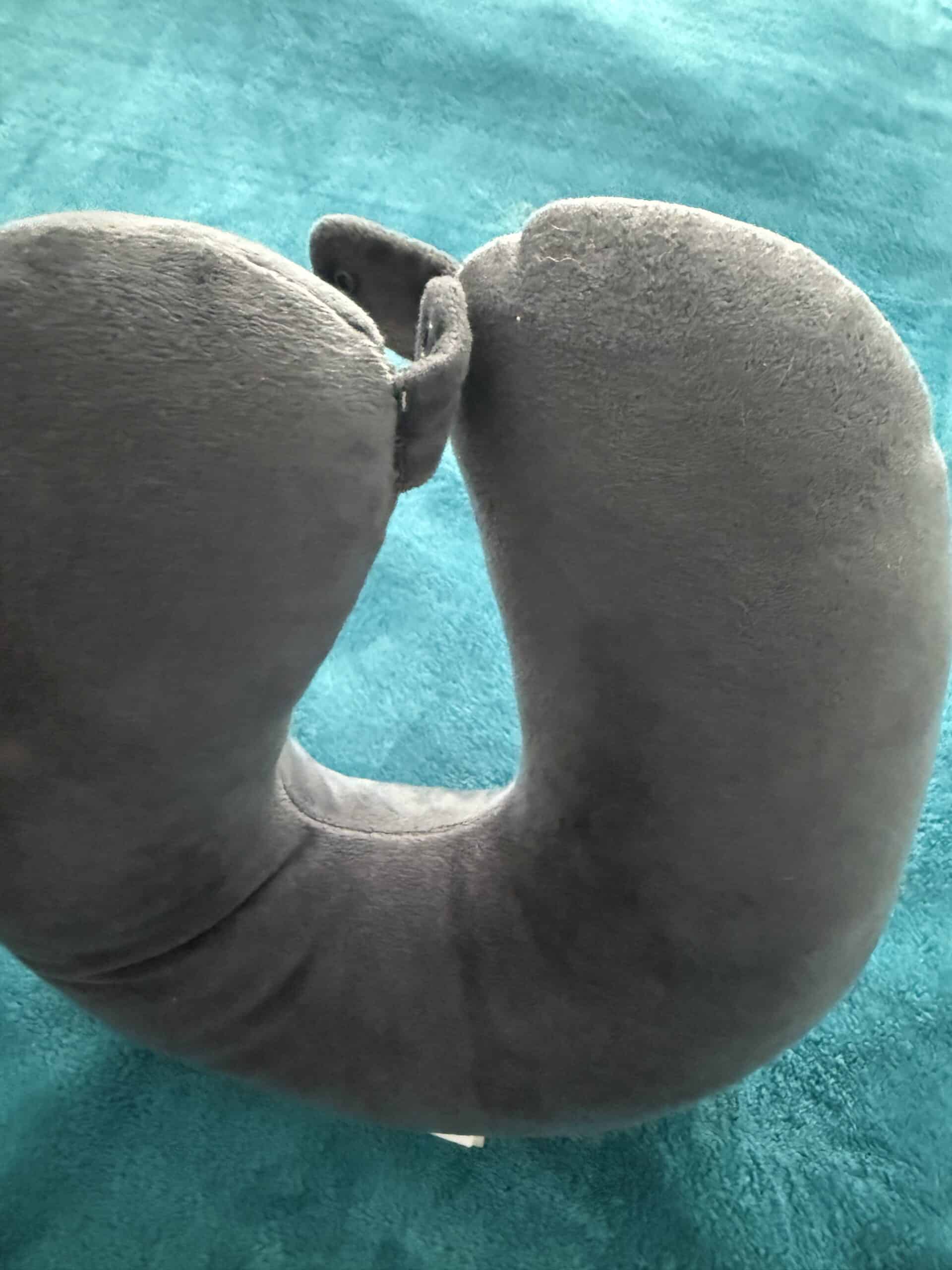
A travel pillow wraps most of the way around your neck, which is where a lot of blood flows close to the surface. Then it holds that heat against you because the material is dense and there is nowhere for air to move.
Mine is memory foam and it runs warm. That is a property of the design rather than a fault in the particular pillow, and five years has not changed it. Our note on what size travel pillow you need covers the sizing side. Our note on cleaning a travel pillow covers that in more detail.
Quick Answer
Memory foam is dense, conforms closely, and blocks airflow, which is a combination that traps heat. Larger pillows contact more of your neck and hold more of it.
Heat by Material
| Fill | Runs | Why |
|---|---|---|
| Memory foam | Warmest | Dense, conforms, no airflow |
| Gel-infused foam | Slightly cooler | Gel delays it rather than stopping it |
| Microbead | Cooler | Beads move, air passes between |
| Inflatable | Coolest | Least contact, air inside |
| Fiber fill | Moderate | Some airflow, less conforming |
| Buckwheat | Cooler | Hulls allow air movement |
Why Memory Foam Specifically
The property that makes memory foam supportive is the same one that makes it warm. It conforms to your shape, which means contact across the whole surface rather than at a few points.
Contact is how heat transfers, so full contact means full transfer into a material that then has nowhere to send it.
Foam is a closed enough structure that air does not move through it, and air movement is what carries heat away in ordinary bedding.
Memory foam also softens as it warms, which is part of how it works, and that means it becomes more conforming as it heats up rather than less. Our roundup of travel pillows for neck pain covers the support side of that trade.
Why It Feels Worse Over Time
The heat builds rather than arriving, which is why a pillow that felt fine at takeoff is uncomfortable two hours later.
Foam starts at cabin temperature and feels neutral on contact, then reaches your skin temperature within minutes and stops absorbing.
Moisture is the second stage. Sweat has nowhere to evaporate to under a dense pillow, so it stays against skin and produces the clammy feeling people describe as the pillow getting hot.
Movement matters too, since a pillow that shifts slightly lets air in and one that has settled into position does not.
That progression is why removing it briefly works so well. It resets both the temperature and the moisture in a way no material change achieves mid-flight.
Why the Neck Is the Worst Place
Blood flow near the surface
Major vessels run close to the skin there, which makes the neck an efficient place for the body to shed heat and a bad place to insulate.
Wrapped rather than under
A bed pillow touches the back of your head. A U-shaped pillow surrounds your neck on three sides.
Clothing already there
Collars, hoods, and scarves add layers in the same place, which people forget when blaming the pillow.
Cabin and car conditions
Aircraft and vehicle interiors are frequently warmer than a bedroom, and you are wearing outdoor clothing in them.
What Mine Does
It runs warm and has done consistently for over five years.
I would not describe that as a defect, because it is what memory foam does when wrapped around a neck. Any pillow of that material and shape would behave the same way.
The support has been the reason to keep it, and the heat is the cost that comes with the support rather than a separate problem.
What it means practically is that it is better on a cool flight than a warm one, and better in a car with air conditioning than without. Our note on sleeping on a plane covers the conditions.
Understanding that as a stacking problem rather than a single cause is what makes the practical fixes obvious. Each layer you can remove or reduce takes something off the total, and no single change solves it on its own.
Does Gel Infusion Help
Gel-infused foam absorbs heat initially, which produces a genuinely cooler feeling for the first stretch.
The gel then reaches your temperature and stops absorbing, at which point the pillow behaves like ordinary foam.
On a short journey that delay covers most of the trip and the feature earns its place. On a long flight it does not.
It is a real property rather than marketing, and the marketing tends to describe it as ongoing cooling when it is a delay. Our roundup of cooling pillows covers the same effect in bed pillows.
Cabin Conditions Make It Worse
Aircraft cabins are drier than almost anywhere else people sleep, and that changes how heat feels rather than how much there is.
Low humidity means sweat evaporates fast anywhere air reaches skin, so the contrast with the area under the pillow is sharper.
Cabin temperature is also frequently warmer than a bedroom, and passengers are usually in outdoor clothing rather than sleepwear.
Seats add their own heat, since upholstery behind your back and headrest around your head are both insulating layers you did not choose.
None of that is the pillow’s doing, and all of it stacks on top of a pillow that was already the warmest part of the arrangement. Our roundup of sleep gear for travelers covers the rest of the setup.
What Actually Reduces It
Choosing a different fill is the effective answer. Inflatable and microbead pillows run considerably cooler because both allow air movement and contact less.
A breathable cover helps somewhat, since a polyester cover over foam adds a second non-breathing layer while cotton or mesh does not.
Removing it periodically works better than any material change you could make, and a pillow taken off your neck for five minutes resets both the temperature and the moisture underneath it completely.
Sizing down reduces contact area, which reduces heat at the cost of support, and that is the trade at the center of this. Our note on packing a travel pillow covers the other size trade.
Working through those in order of what you can actually change on the day is more useful than replacing the pillow, since most of the heat is coming from the situation rather than the product.
Covers Matter More Than People Expect
The cover is what touches you, so its fabric determines the immediate feeling regardless of what is inside.
Velour and plush covers are common on travel pillows and are among the warmest options available.
Mesh panels or cotton covers move moisture and allow some airflow, which changes the experience without changing the fill.
A removable cover you can swap is worth looking for, since it is the one part of a foam pillow that can be improved after purchase.
A cover is also the one component you can change without replacing the pillow, which makes it the first thing worth trying on a pillow that otherwise suits you well.
Travel Pillow Heat FAQ
Why does my travel pillow get hot?
Memory foam is dense, conforms closely, and does not let air through. Wrapped around a neck where blood flows near the surface, that traps heat.
Is it a defect?
No. Mine has run warm consistently for over five years, and any memory foam pillow of that shape behaves the same way. It comes with the support.
Do gel-infused pillows stay cool?
They delay the warming rather than preventing it. Once the gel reaches your temperature it behaves like ordinary foam, which covers a short trip and not a long flight.
Which fill runs coolest?
Inflatable, then microbead and buckwheat. All three allow air movement and contact your neck less closely than foam does.
Does the cover make a difference?
More than people expect, since the cover is what touches you. Velour and plush are the warmest, and mesh or cotton allow some airflow.
Does size affect heat?
Yes. A larger pillow wraps more of your neck, and more contact means more heat with the same material.
What is the simplest fix?
Taking it off for a few minutes. Nothing about the material changes as quickly as removing the pillow does.
Should I buy a different type?
If heat matters more to you than support, yes. Inflatable gives up consistency and packs to nothing, and it is the coolest option available.
For the wider picture, see our guide to how to choose the right pillow for your sleep position.
