
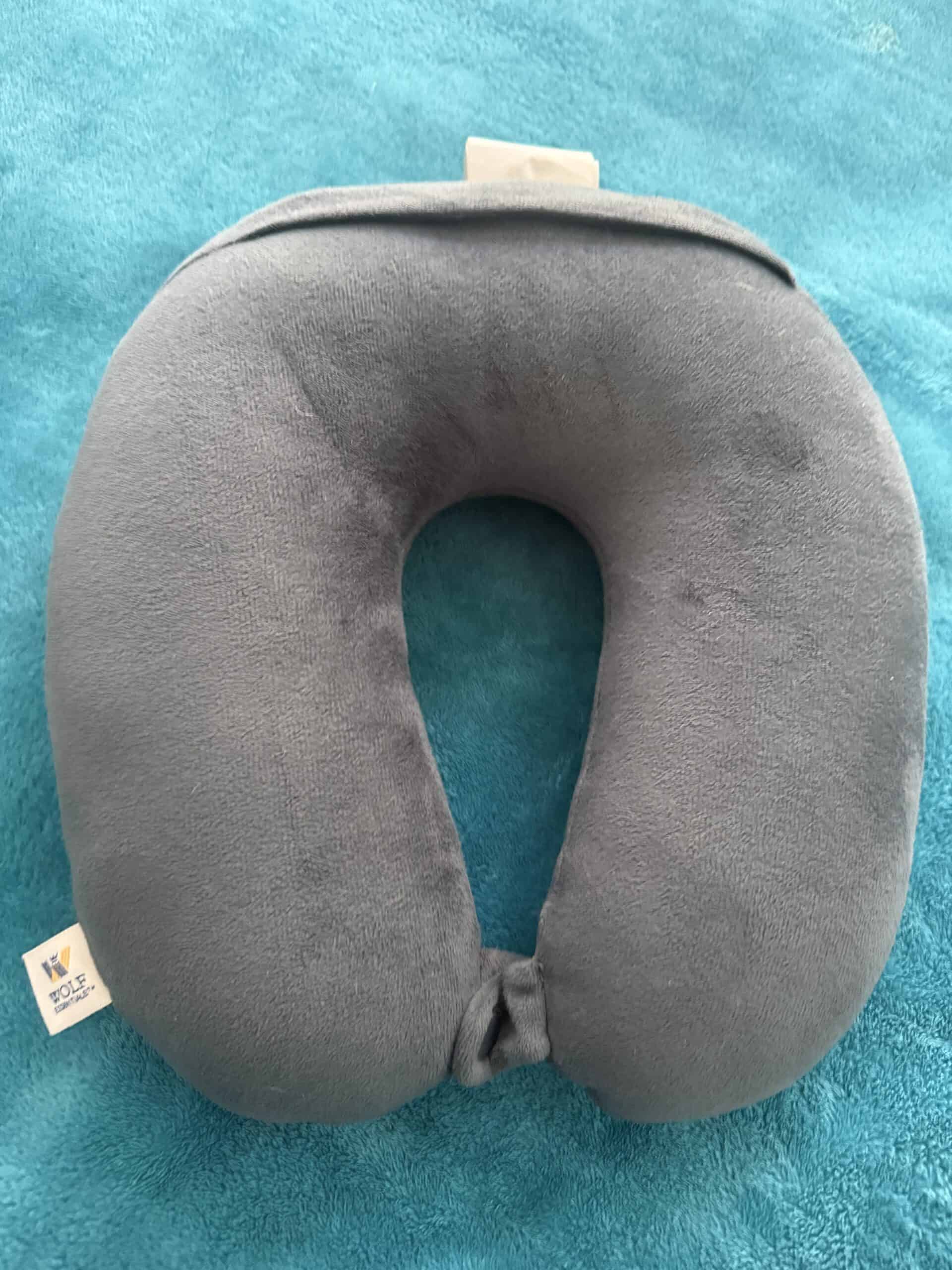
Whether a travel pillow can be cleaned properly is decided by whether the cover comes off, and plenty of them are sewn shut.
Mine is sewn, so it has never been washed. I spot clean it if there is an issue, and after more than five years there is no smell and nothing has gone wrong with it. Our note on why a travel pillow gets hot covers the material.
Quick Answer
Remove and machine wash the cover if it comes off. If it is sewn shut, spot clean the surface and air it, because foam should not be soaked or machine washed.
Method by Construction
| Type | Method | Limit |
|---|---|---|
| Removable cover | Machine wash the cover | Fill still cannot be washed |
| Sewn-shut foam | Spot clean, air out | Surface only |
| Inflatable | Wipe with damp cloth | Keep the valve dry |
| Microbead | Check the label, usually spot | Beads clump if soaked |
| Fiber fill | Sometimes machine washable | Fill can clump permanently |
Why Foam Cannot Be Washed
Memory foam absorbs water readily and holds it deep inside, where it does not evaporate on any reasonable timescale.
A soaked foam pillow can take days to dry, and mildew forms in the interior long before that finishes.
Agitation in a machine tears the cell structure, which destroys the support the pillow was bought for.
Wringing it out does the same damage faster. Neither is recoverable, which is why every foam pillow label says surface clean only. Our roundup of travel pillows for neck pain covers the construction.
What Actually Accumulates
Knowing what is on a pillow explains why airing works and washing is rarely necessary.
Skin oils are the main deposit, and they transfer wherever skin touches fabric, which on a U-shaped pillow is the inner curve rather than the whole surface.
Hair products are the second, and they are the reason the upper inner surface discolours before anywhere else on a pillow that otherwise looks new.
Moisture from sweat is third, and it is the one that causes smells, because it is the one that supports anything growing.
Dust and airborne particles settle on the outside and vacuum off easily, and they are the least of the four despite being the most visible.
Three of those four are surface deposits, which is why surface cleaning handles most of what a travel pillow accumulates. Our note on memory foam pillows covers the moisture side.
Spot Cleaning Properly
Use as little moisture as possible
A barely damp cloth rather than a wet one. The goal is lifting the mark without letting water reach the foam.
Blot rather than rub
Rubbing pushes the mark deeper into fabric and pills the surface.
Mild soap only
Dish soap diluted heavily. Anything harsh degrades foam and leaves residue that attracts dirt.
Dry fully before storing
Any dampness left in a pillow that then goes in a bag is how smells start. Our note on packing a travel pillow covers storage.
Why Mine Has Stayed Fine
Never washed, sewn shut, spot cleaned occasionally, and no smell after more than five years.
The reason is usage rather than anything I have done. A travel pillow gets used on journeys rather than every night, so the total hours against skin over five years is a fraction of what a bed pillow accumulates in one.
It also spends most of its life dry and stored rather than in a warm bed collecting moisture.
That is worth stating because the advice written for bed pillows gets applied to travel pillows and reads as more urgent than the situation warrants. Our note on pillows for side sleepers covers the bed version.
Covers You Can Add
A sewn-shut pillow can still be given a washable layer, which is the fix people overlook.
Generic travel pillow covers exist in standard U shapes and slip over most pillows, converting a sewn pillow into one with a removable surface.
A pillowcase works in a pinch and slides around, which is more annoying on a neck pillow than on a bed pillow because it moves as you do.
The cost is heat. Any added layer is another barrier to airflow on a pillow that is already the warm part of the arrangement.
For occasional travel that trade is not worth it, and for weekly use it is worth considering before replacing a pillow that otherwise works fine. Our roundup of travel pillows for road trips covers alternatives.
Airing Does Most of the Work
Moisture and odor are the two things that build up, and both respond to air rather than to cleaning.
Leaving a pillow out of its bag between trips, somewhere with airflow, prevents nearly everything people eventually try to wash out.
Sunlight helps and it fades fabric over time, so a shaded spot with moving air beats a sunny windowsill.
A few hours after a trip is enough, and it matters most after a long flight where the pillow has been against skin for hours.
That is also why a pillow used only for travel behaves so differently from one used nightly, and why the two need different amounts of attention despite being made of the same material.
If It Already Smells
Air it first for a full day before trying anything else, since that resolves most cases without moisture.
Baking soda sprinkled on the surface, left for several hours and vacuumed off, absorbs odor without wetting anything.
Fabric sprays sit on the surface and mask rather than remove, and they add moisture to a pillow you are trying to keep dry.
A smell that survives all of that is usually inside the foam, at which point the pillow is done rather than dirty. Our note on what size travel pillow you need covers replacing it.
Working through those steps in order costs nothing and resolves nearly every case, which is worth doing before concluding a pillow needs replacing.
Buying With Cleaning in Mind
A removable cover is the single feature that makes a travel pillow maintainable, and it is worth prioritizing if you travel often.
Zips should be smooth and hidden, since an exposed zip against your neck is uncomfortable and a cheap one fails on a pillow handled frequently.
Machine washable covers beat hand wash only, because a cover that is inconvenient to clean gets cleaned as rarely as a sewn one.
Sewn-shut pillows are not a bad purchase for occasional travel, which is what mine has shown over five years. For weekly use, the cover matters. Our roundup of sleep gear for frequent travelers covers heavy use.
Getting that right at purchase saves every trip afterward, which is the whole reason it is worth thinking about before buying rather than after.
Matching the pillow to how often you travel is the decision that makes all of this straightforward.
Cleaning a Travel Pillow FAQ
Can you wash a travel pillow?
The cover, if it comes off. The foam itself cannot be washed, because it absorbs water deep inside and machine agitation destroys the cell structure.
What if it is sewn shut?
Spot clean the surface and air it. Mine is sewn, has never been washed, and has stayed fine over five years of occasional travel.
How do I spot clean it?
Barely damp cloth, heavily diluted mild soap, blotting rather than rubbing, and let it dry completely before it goes back in a bag.
Why does foam get ruined by washing?
Water sits inside where it cannot evaporate, and mildew forms before it dries. Machine agitation tears the structure that provides the support.
How do I get rid of a smell?
Air it for a full day first, then baking soda on the surface, vacuumed off after several hours. Sprays mask and add moisture you do not want.
Do travel pillows need cleaning as often as bed pillows?
Considerably less. A travel pillow is used on journeys rather than nightly, so five years of it is a fraction of what a bed pillow sees in one.
Should I buy one with a removable cover?
If you travel often, yes, since it is the only feature that makes one properly maintainable. For occasional use, sewn shut has been fine for me.
When should I replace it instead?
When a smell survives airing and baking soda, since that means it is inside the foam, or when the support has flattened and no longer holds your head.
For the wider picture, see our guide to how to choose the right pillow for your sleep position.
