
Fifteen to twenty minutes suits most people starting out, extending with familiarity, and finishing one to two hours before bed rather than immediately before it. The gap matters more than the duration.
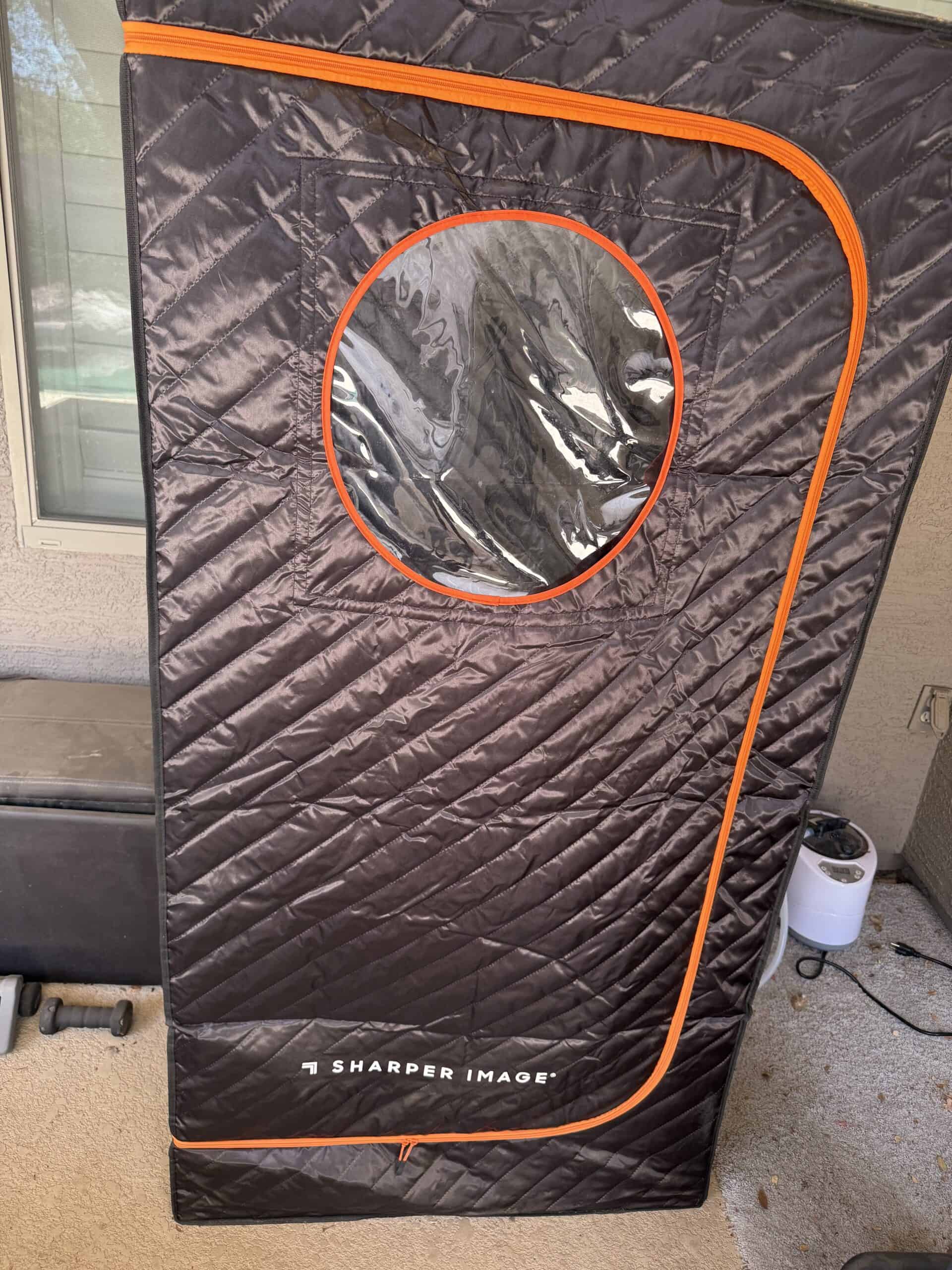
Mine run twenty to thirty minutes and it gets very hot. I use a tent-style unit multiple times a week and have done for over a year, so that length reflects being accustomed to it rather than a starting point.
A Quick Note
This covers general use rather than medical advice. Sauna use is not appropriate for everyone, and anyone with a heart condition, blood pressure issues, or who is pregnant should speak to a doctor first. Dizziness, nausea, or feeling unwell means stopping regardless of how long you have been in.
Quick Answer
Start at ten to fifteen minutes and build. Twenty to thirty is common for experienced users. Leave one to two hours before bed so your core temperature has time to drop, since that decline is what supports sleep onset rather than the heat itself.
Session Length by Experience
| Stage | Typical session | Notes |
|---|---|---|
| First few sessions | 10 to 15 minutes | Judge tolerance, hydrate well |
| Building up | 15 to 20 minutes | The commonly recommended range |
| Accustomed | 20 to 30 minutes | Only if it stays comfortable |
| Any stage | Stop early | Dizziness, nausea, headache |
Tolerance varies enormously between people and it is not a measure of fitness or resilience. Hydration, medication, alcohol, recent food, and ambient conditions all affect how a given length feels on any particular day.
The Gap Matters More Than the Length
Heat raises your core temperature, and the useful part happens afterward when it falls. That drop mirrors the natural decline that signals sleep onset.
The commonly cited window for warm bathing is one to two hours before bed, which is roughly how long the temperature drop takes to arrive.
Going straight from a session to bed works against that. You are still shedding heat, and lying down under bedding traps what you are trying to lose. For the hardware side of this, see our portable sauna picks.
Which means a twenty-minute session two hours out beats a forty-minute session at bedtime, and the underlying mechanism sits in whether portable saunas help you sleep.
How I Have Settled On Mine
Twenty to thirty minutes is where I ended up, and I did not start there. That length works for me because I use it regularly enough to be accustomed to the heat.
Recovery and sleep were both reasons I bought it, and the session length suits the recovery side as much as the sleep side.
What I would not do is present that as a target for someone starting. Beginning at thirty minutes because someone else does it is how people end up feeling unwell in a hot enclosed space.
The heat-up wait pushes sessions earlier in the evening than they would otherwise happen, which conveniently produces the gap the research supports, covered in how long a portable sauna takes to heat up.
That is accidental rather than planned, and it is probably part of why the timing has worked out for me.
Cooling Down Properly
A cool shower afterward speeds the temperature drop, which shortens the gap you need before bed.
Cold plunging immediately after is popular and it is a different proposition entirely, since the shock response raises alertness in a way that can work against sleep.
Sitting somewhere cool for ten minutes before dressing lets the initial heat shed properly rather than trapping it under clothes.
A cool bedroom is what allows the decline to continue, and a warm room prevents it regardless of what you did earlier, covered in cooling a bedroom for better sleep.
Hydration Around the Session
Drink beforehand, not only afterward. Starting a session already short on fluid is how a manageable length becomes uncomfortable.
Fluid loss in a sauna is substantial and easy to underestimate, since sweat evaporates rather than accumulating the way it does during exercise.
Dehydration disrupts sleep independently of anything the sauna does, so drinking afterward matters for the thing you were trying to improve.
Alcohol before or during a session is specifically advised against, since it impairs both temperature regulation and blood pressure control.
Signs to Stop Early
Dizziness or lightheadedness
The most common warning, and it often appears when standing rather than while sitting. Getting out slowly matters as much as getting out.
Nausea or headache
Both indicate the body struggling with heat load, and neither of them improves by continuing the session.
Stopping sweating
A concerning sign rather than a sign of adaptation, since it can indicate the cooling response failing.
Confusion or difficulty concentrating
A serious warning that warrants getting out immediately and cooling down, and medical attention if it does not resolve quickly.
Racing or irregular heartbeat
Reason to get out immediately, and reason to speak to a doctor before further sessions, covered in whether portable saunas are safe.
Why Tolerance Varies Day to Day
The same twenty minutes can feel routine one evening and difficult the next, and that is normal rather than a sign anything is wrong.
Hydration going in is the largest factor. A day where you drank little leaves you starting with less margin, and the session feels longer at the same duration.
Food timing affects it. A large meal shortly before diverts blood flow to digestion at the same time heat is diverting it to the skin, which is why sessions feel harder after dinner than before.
Exercise earlier in the day compounds heat load, since you may still be carrying fluid loss and elevated core temperature hours later.
Medication matters and is easy to overlook. Several common types affect blood pressure, temperature regulation, or sweating, and that is worth a conversation with a doctor or pharmacist rather than something to work out by trial.
Illness, even mild, lowers tolerance noticeably. A session that felt fine last week is not a commitment for this week, and adjusting down on a bad day is the correct response rather than a setback.
Frequency Rather Than Duration
Several shorter sessions across a week tend to suit people better than occasional long ones, and that matches how sauna use works in cultures where it is routine.
For sleep specifically, consistency of an evening routine may contribute as much as the heat does, since doing the same thing at the same time is itself a sleep signal.
Daily use is common among regular users and it is not necessary for the benefits, and building up gradually is the sensible approach either way.
Routine construction generally sits in creating a bedtime routine for better sleep.
Related Reading
- saunas and sleep
- portable sauna safety
- heat-up time
- cooling a bedroom
- bedtime routines
- falling asleep faster
Frequently Asked Questions
How long should a sauna session be before bed?
Fifteen to twenty minutes for most people, extending with familiarity. Finishing one to two hours before bed matters more than the duration itself.
Why leave a gap before bed?
Your core temperature drops after heat exposure, and that decline supports sleep onset. Going straight to bed means lying down while still shedding heat.
Is thirty minutes too long?
Not for someone accustomed to it who stays comfortable. It is too long as a starting point, and building gradually from ten to fifteen minutes is the sensible route.
Should I shower afterward?
A cool shower speeds the temperature drop and shortens the gap you need before bed. Cold plunging is different, since the shock response can raise alertness.
How much should I drink?
Before as well as after. Fluid loss is easy to underestimate since sweat evaporates rather than accumulating, and dehydration disrupts sleep on its own.
Is daily use fine?
It is common among regular users and not necessary. Several shorter sessions across a week suit most people better than occasional long ones.
Why does tolerance change day to day?
Hydration, food timing, exercise earlier in the day, medication, and even mild illness all affect it. A length that felt fine last week is not a commitment for this week.
When should I stop a session early?
Dizziness, nausea, headache, an irregular heartbeat, or stopping sweating. All are reasons to get out regardless of elapsed time, and the last two warrant medical advice.
Sources
- Sleep Foundation. Bathing Before Bed. https://www.sleepfoundation.org/sleep-hygiene/bathing-before-bed
- American Heart Association. Sauna Use and Heart Health. https://www.heart.org/en/healthy-living/healthy-lifestyle/sauna-use-and-heart-health
- Mayo Clinic. Heat Exhaustion. https://www.mayoclinic.org/diseases-conditions/heat-exhaustion
