
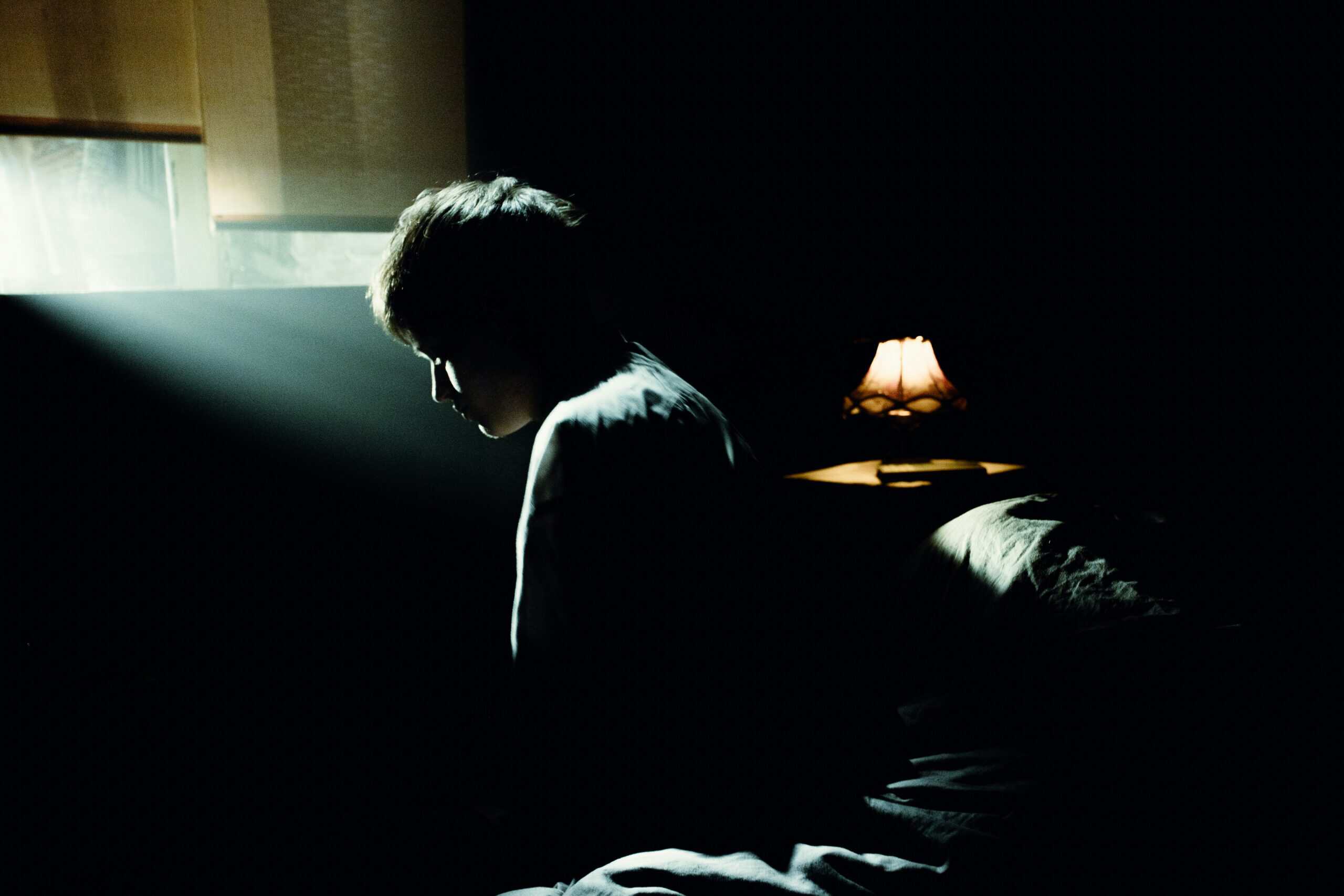
They are sudden partial arousals out of deep non-REM sleep in which someone appears terrified, screams or thrashes, and is not actually awake. What are night terrors doing differently from nightmares is almost everything, and the practical consequence is that the usual comforting response does not reach the person at all.
That distinction is the thing most parents need first. Our guide to why you have nightmares covers the dream-based experience this gets confused with.
What you are seeing during an episode maps onto what is happening underneath.
| What you observe | What is happening | What to do |
|---|---|---|
| Sudden scream early in the night | Partial arousal from deep sleep | Go in, stay calm, do not wake |
| Eyes open but unfocused | Movement online, awareness offline | Do not expect recognition |
| Sweating, racing heart, flushed | Autonomic surge | Nothing, it settles on its own |
| Not responding to your voice | Not awake to receive it | Stop trying to reassure |
| Thrashing or pushing you away | Reflexive, not directed at you | Keep hands off, clear the space |
| Getting out of bed | Overlaps with sleepwalking | Guide gently, secure the room |
| Calm again within minutes | Deep sleep re-established | Let them sleep, say nothing |
| No memory the next morning | Never encoded | Do not question them about it |
Medical Disclaimer
This article is general information about a common childhood parasomnia. It is not medical advice and it cannot assess an individual case. Episodes beginning in adulthood, causing injury, or occurring alongside other symptoms need medical evaluation. Speak with a doctor or a sleep physician rather than relying on general reassurance in those situations.
Quick Answer
A night terror is an arousal from deep non-REM sleep, usually in the first third of the night. The person looks frightened but is asleep, has no dream to recall, and will not remember it. Most children outgrow them. Comforting does not work and is not needed.
Why Comforting Does Not Work
This is the part that is hardest to accept while standing in a dark bedroom, and it is the single most useful thing to know.
The person is not awake. They are in a state where movement, vocalization and the body’s alarm response are all running while the systems that would receive comfort are still asleep.
So a soothing voice gets no response, a hug may be pushed away, and asking what is wrong produces nothing. None of that means the episode is worse than it looks.
Mayo Clinic describes sleep terrors as episodes in which a person appears frightened and is difficult to awaken, with no recollection afterward, and advises against attempting to wake them.
What you actually do is stay close, keep the space safe, and wait. The episode ends on its own and the person returns to sleep without ever having surfaced.
How It Differs From a Nightmare
The two get treated as the same thing with different intensity, and they come from opposite halves of the night.
A nightmare is a REM dream. It has narrative content, the person wakes fully, they can describe it, and comfort genuinely helps because there is someone there to comfort.
A night terror is a deep non-REM arousal. There is no narrative, no waking, no description, and no memory. The terrified appearance is a physiological display rather than a response to anything.
Timing separates them reliably. Deep sleep dominates the first part of the night and REM the later hours, so an early-evening episode with screaming and an unresponsive child is almost always the arousal type.
Our guide to understanding sleep cycles covers why the night is structured that way.
The Same Family as Sleepwalking
The American Academy of Sleep Medicine classifies sleep terrors among the non-REM disorders of arousal, together with sleepwalking and confusional arousals.
That grouping explains a lot of what families notice. The same child often does more than one of them, sometimes in the same episode, because they are variations of one event rather than separate conditions.
It also means they share triggers, and the triggers are where you have influence. Insufficient sleep is the main one, followed by irregular timing, illness and fever, a full bladder, pain, and anything else that disturbs deep sleep.
Our guide to fixing your sleep schedule covers steadying the timing, which addresses two triggers at once.
Vocalization without the fear display is the milder relative. Our guide to why you sleep talk covers that one.
Scheduled Awakenings
Where episodes happen at a predictable time, this is the one technique with a real mechanism behind it.
The idea is to rouse the person lightly a short while before their usual episode time, enough to shift the depth of sleep without fully waking them, then let them settle again.
Doing that for a run of consecutive nights interrupts the pattern. It works because it moves the transition the arousal happens at rather than because it treats anything.
It requires a predictable time to work against. Keeping a simple log of when episodes occur for a couple of weeks is the prerequisite, and it is also useful if you end up seeing a doctor.
Stopping there is reasonable. If episodes are infrequent and nobody is getting hurt, safety measures plus adequate sleep is a complete plan and there is nothing further to do.
Adults Are a Different Case
Almost everything written about night terrors is written for parents, which leaves adults who have them poorly served.
The mechanism is identical. What differs is the outlook and what tends to sit underneath it.
Adult episodes are less likely to resolve on their own, more likely to result in injury because an adult moves with more force, and more likely to have something else driving them. That last point is the useful one, because it means there is often something to treat.
Breathing interruptions, restless legs, reflux, pain, certain medications and alcohol all fragment deep sleep and can produce arousals in someone who never had them as a child. An assessment looks for those rather than at the behavior alone.
So an adult with night terrors should not read the reassuring childhood framing and conclude there is nothing to do. The reassurance is accurate for children and does not transfer.
When to Take It Further
- Episodes beginning in adulthood. Not a continuation from childhood.
- Any injury. To the sleeper or anyone else.
- Leaving the bedroom or the house. Safety changes the calculation.
- Most nights rather than occasionally. Frequency itself is a reason.
- Snoring, gasping or pauses in breathing. A treatable driver.
- Daytime sleepiness in a child. Suggests the nights are costing more than they appear.
- Episodes late in the night. Different timing points somewhere else.
Breathing interruptions deserve particular attention, because each one is a potential arousal and treating them can resolve the parasomnia entirely. Our guide to telling whether snoring is sleep apnea covers recognizing that.
The Sleep Foundation describes sleep terrors as most common in young children and typically resolving as they grow, with medical assessment warranted where episodes are frequent, injurious or persist into adulthood.
Worth reading next: our guide to creating a bedtime routine covers protecting sleep length, which is the intervention that does the most here, and our guide to how sleep changes with age covers why deep sleep proportions shift over a lifetime and why these episodes fade.
Frequently Asked Questions
What are night terrors?
Sudden partial arousals from deep non-REM sleep, usually early in the night, in which someone appears terrified, may scream or thrash, and is not actually awake. There is no dream to recall and no memory afterward. The American Academy of Sleep Medicine groups them with sleepwalking as disorders of arousal.
How are they different from nightmares?
Nightmares are REM dreams with narrative content that the person wakes from and can describe, where comfort helps. Night terrors are deep non-REM arousals with no narrative, no waking and no memory. Timing separates them: deep sleep dominates early, REM dominates later.
Should I wake them?
No. Mayo Clinic describes sleep terrors as difficult to wake from and advises against attempting it, since waking produces confusion and prolongs the episode. Stay close, keep the space safe, and wait for it to pass on its own.
Why does comforting not help?
Because the systems that would receive it are still asleep. Your voice gets no response and a hug may be pushed away, which is reflexive rather than directed at you. That is not a sign the episode is worse than it looks.
Will my child grow out of them?
Usually. The Sleep Foundation describes sleep terrors as most common in young children and typically resolving with growth. Safety measures and consistent adequate sleep are the plan in the meantime, and no treatment is generally needed.
What are scheduled awakenings?
Rousing the person lightly a short while before their usual episode time, for a run of consecutive nights, to shift the sleep transition the arousal occurs at. It needs a predictable pattern to work against, so keeping a log of episode times comes first.
Do they mean something is psychologically wrong?
No. These are transition events in sleep architecture, not expressions of distress or trauma. Insufficient sleep raises their frequency, which is true of nearly every parasomnia and is not the same thing as a psychological cause.
When should I see a doctor about them?
See a doctor if episodes begin in adulthood, if there has been any injury, if the person leaves the bedroom or the house, if episodes happen most nights, or if there is snoring, gasping or breathing pauses alongside them. Episodes late in the night rather than early are also worth raising.
Sources
- American Academy of Sleep Medicine. Non-REM disorders of arousal.
- Mayo Clinic. Sleep terrors: symptoms and management.
- Sleep Foundation. Night terrors in children and adults.
