
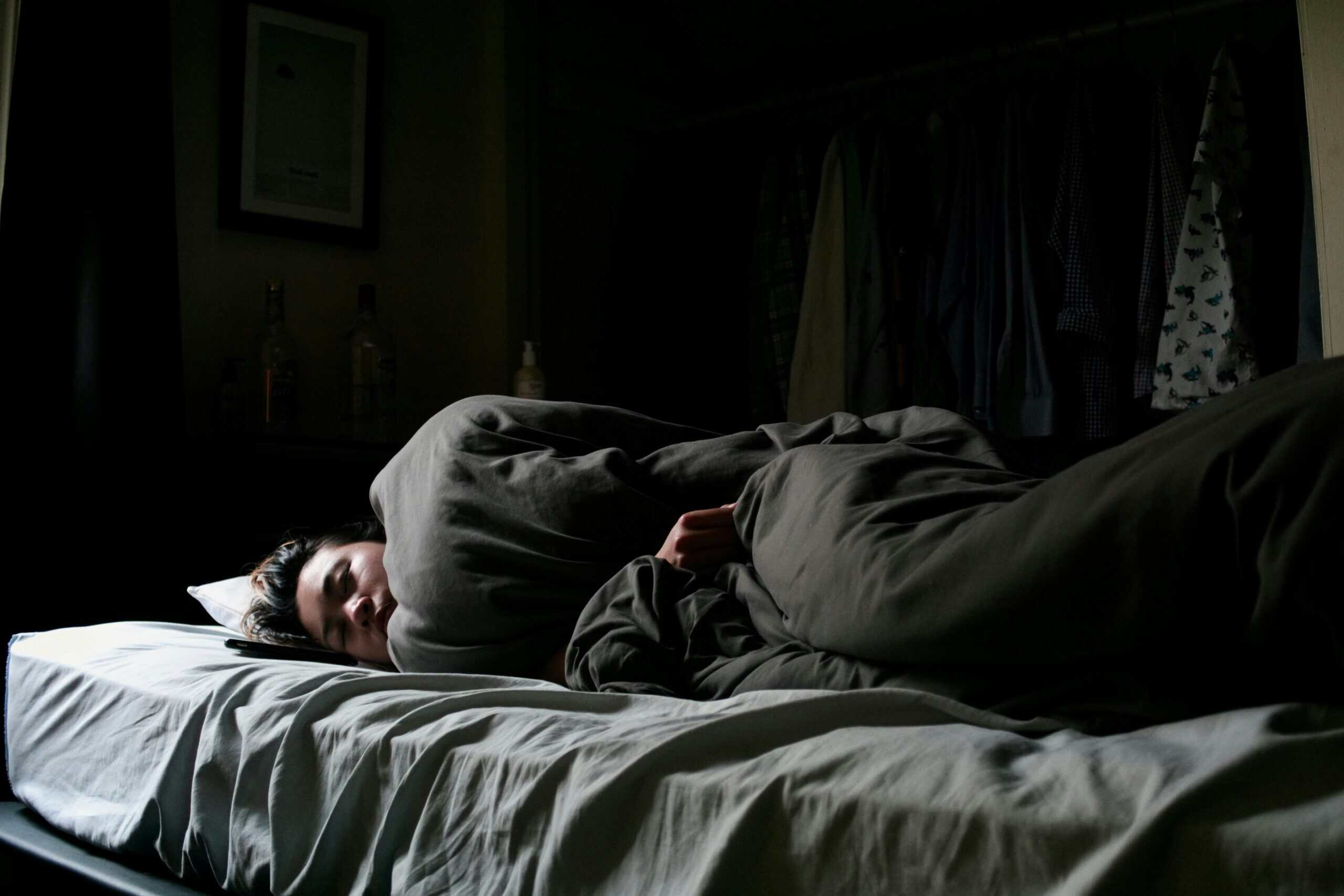
It is the loss of the muscle paralysis that normally accompanies REM sleep, so dreams get physically acted out instead of only experienced. What is REM sleep behavior disorder in practice is someone punching, kicking, shouting or leaping from bed while dreaming, and it is the one parasomnia where a medical assessment is the whole point rather than an optional extra.
The mechanism is a normal feature of sleep failing. Our guide to understanding sleep cycles covers the stage involved.
Medical Disclaimer
This article is general information about a diagnosable sleep disorder. It is not medical advice, it cannot diagnose anyone, and it cannot tell you what a diagnosis would mean for you. Suspected REM sleep behavior disorder needs evaluation by a sleep physician or a neurologist, and confirming it requires a recorded sleep study rather than a description of the behavior.
Quick Answer
During REM sleep, muscle tone is normally switched off. In this disorder that suppression fails, so dream content is enacted. Episodes come later in the night, the dream is usually vivid and recalled, and injury to a bed partner is the most common reason people seek help.
Key Takeaways
- It is the opposite failure to sleep paralysis, which is atonia lasting too long.
- Dreams are recalled and match the observed behavior.
- Episodes occur later in the night, when REM is concentrated.
- It is more common with increasing age.
- Bed partner injury is the usual presenting complaint.
- Diagnosis requires a recorded sleep study, not a history alone.
- An established association with neurodegenerative conditions makes assessment important.
| Feature | REM sleep behavior disorder | Sleepwalking or night terrors |
|---|---|---|
| Sleep stage | REM | Deep non-REM |
| Timing | Later in the night | First third |
| Dream recall | Vivid and detailed | None |
| Behavior matches the dream | Yes, closely | No dream to match |
| Eyes | Usually closed | Open, unfocused |
| Leaves the bed | Sometimes, abruptly | Often, and walks |
| Waking them | Usually wakes readily, oriented | Difficult and confusing |
| Typical age | Older adults | Children |
What Atonia Does and What Happens Without It
REM sleep is when the brain generates its most vivid narrative imagery, and it comes with a built-in safeguard.
Voluntary muscle tone is actively suppressed throughout REM. The eyes move and the diaphragm keeps breathing, and the rest of the body is functionally disconnected from whatever the dream is doing.
The American Academy of Sleep Medicine classifies REM sleep behavior disorder as a REM parasomnia characterized by dream enactment together with the absence of that normal muscle suppression.
Without atonia, the connection is restored at the worst possible moment. A dream involving running produces running, and one involving a fight produces punches thrown in a dark bedroom.
This is the mirror image of sleep paralysis, where atonia persists briefly after waking instead of releasing during sleep. Same mechanism, failing in opposite directions.
What It Actually Looks Like
The behavior is often forceful
Punching, kicking, sitting bolt upright, shouting, swearing, and throwing oneself out of bed. It tends to be more violent than sleepwalking, and it happens without warning.
The dream matches
Someone woken during an episode can usually describe a dream that fits what they were doing, frequently one involving being attacked, chased or defending someone.
They wake up oriented
Unlike a deep sleep arousal, a person roused from an episode is generally lucid and knows where they are. That difference is diagnostically useful.
Someone else usually notices first
The affected person often has no idea. Our guide to why you have nightmares covers the dream side that they do experience.
Why Assessment Is the Point
Most parasomnias call for safety measures and trigger management. This one calls for an appointment, and there are three separate reasons.
The first is injury. Fractures, lacerations and head injuries occur to both the sleeper and the person beside them, and that risk continues nightly until something changes.
The second is that several treatable things can produce or unmask the same picture. Certain antidepressants and other medications are recognized contributors, and other sleep disorders can mimic it, so what looks like this may be something else with a simpler answer.
The third is the association with neurodegenerative disease. The National Institute of Neurological Disorders and Stroke describes REM sleep behavior disorder as associated with certain neurodegenerative conditions, including Parkinson’s disease.
That association is well established in sleep medicine, and it is stated here plainly rather than omitted or softened. What it means for any individual person is not something an article can determine, and pretending otherwise in either direction would be dishonest.
It is also precisely why the evaluation belongs with a sleep physician or a neurologist. They can assess the whole picture, which is a conversation worth having rather than a search result worth interpreting alone.
Getting It Confirmed
A description of the behavior is not enough to establish this, which surprises people who feel the pattern is obvious.
Confirmation requires overnight recording that captures muscle activity during REM sleep, demonstrating the absence of normal atonia. That is the finding, rather than the dramatic behavior itself.
Mayo Clinic describes diagnosis of REM sleep behavior disorder as involving a physical and neurological examination together with a sleep study recording brain, eye and muscle activity overnight.
Our guide to what happens in a sleep study covers what that night involves, and our guide to getting a sleep study ordered covers the referral route.
Take an account from whoever witnesses the episodes. Their description of what they see and how often carries real weight, and it is information the sleeper cannot provide.
Increasing age is a factor in who this affects, and our guide to how sleep changes with age covers the wider architectural shifts.
Making the Bedroom Safe Meanwhile
- Clear the area beside the bed. Nightstands, lamps and hard edges.
- Pad the floor. Falling out of bed is a common injury route.
- Consider lowering the mattress. Onto the floor if episodes are forceful.
- Secure windows and lock doors. Some episodes involve leaving the bed abruptly.
- Remove anything sharp or heavy. Including anything kept under the bed.
- Discuss sleeping separately for now. Temporarily, and without treating it as a failure.
- Keep a log of episodes. Dates, what happened, any injury.
The separate-bedrooms conversation is the one people resist and it is often the most protective thing available in the short term. Framing it as a measure until the assessment happens makes it easier.
Alcohol and sleep deprivation both affect REM architecture, so neither helps here. Our guide to how alcohol affects sleep covers that.
Related Reading
Frequently Asked Questions
What is REM sleep behavior disorder?
The loss of the muscle paralysis that normally accompanies REM sleep, so dreams are physically acted out. The American Academy of Sleep Medicine classifies it as a REM parasomnia defined by dream enactment together with absent muscle suppression during that stage.
How is it different from sleepwalking?
Stage and timing. Sleepwalking is a deep non-REM arousal early in the night with no dream content and no memory. This occurs in REM, later in the night, with a vivid recalled dream that matches the behavior, and the person generally wakes oriented rather than confused.
Why does it need a doctor when other parasomnias do not?
Three reasons: the injury risk continues every night, several medications and other sleep disorders can produce or mimic the same picture, and there is an established association with certain neurodegenerative conditions. All three are reasons for assessment rather than for managing it at home.
What is the link with Parkinson’s disease?
The National Institute of Neurological Disorders and Stroke describes the disorder as associated with certain neurodegenerative conditions including Parkinson’s disease. The association is well established. What it means for any individual is a question for a neurologist rather than something an article can answer.
Can medication cause it?
Certain antidepressants and other medications are recognized contributors, and that is one of the practical reasons an evaluation matters. A review of what someone is taking is part of the assessment, and it is not something to change without medical advice.
Can it be diagnosed from the behavior alone?
No. Mayo Clinic describes diagnosis as involving physical and neurological examination together with an overnight sleep study recording brain, eye and muscle activity. The finding is absent muscle suppression during REM, not the behavior itself, however characteristic it seems.
What can we do tonight?
Clear hard objects from beside the bed, pad the floor, secure windows, and consider lowering the mattress if episodes are forceful. Discuss sleeping separately as a temporary measure until the assessment happens, since that removes the most common injury route entirely.
When should I see a doctor about it?
Promptly, as soon as the pattern is recognized, and without waiting for an injury to make the decision. Ask for a referral to a sleep physician or a neurologist, and bring an account from whoever witnesses the episodes along with a log of what has happened.
Sources
- American Academy of Sleep Medicine. REM sleep parasomnias and dream enactment.
- National Institute of Neurological Disorders and Stroke. REM sleep behavior disorder and associated conditions.
- Mayo Clinic. REM sleep behavior disorder: diagnosis.
