
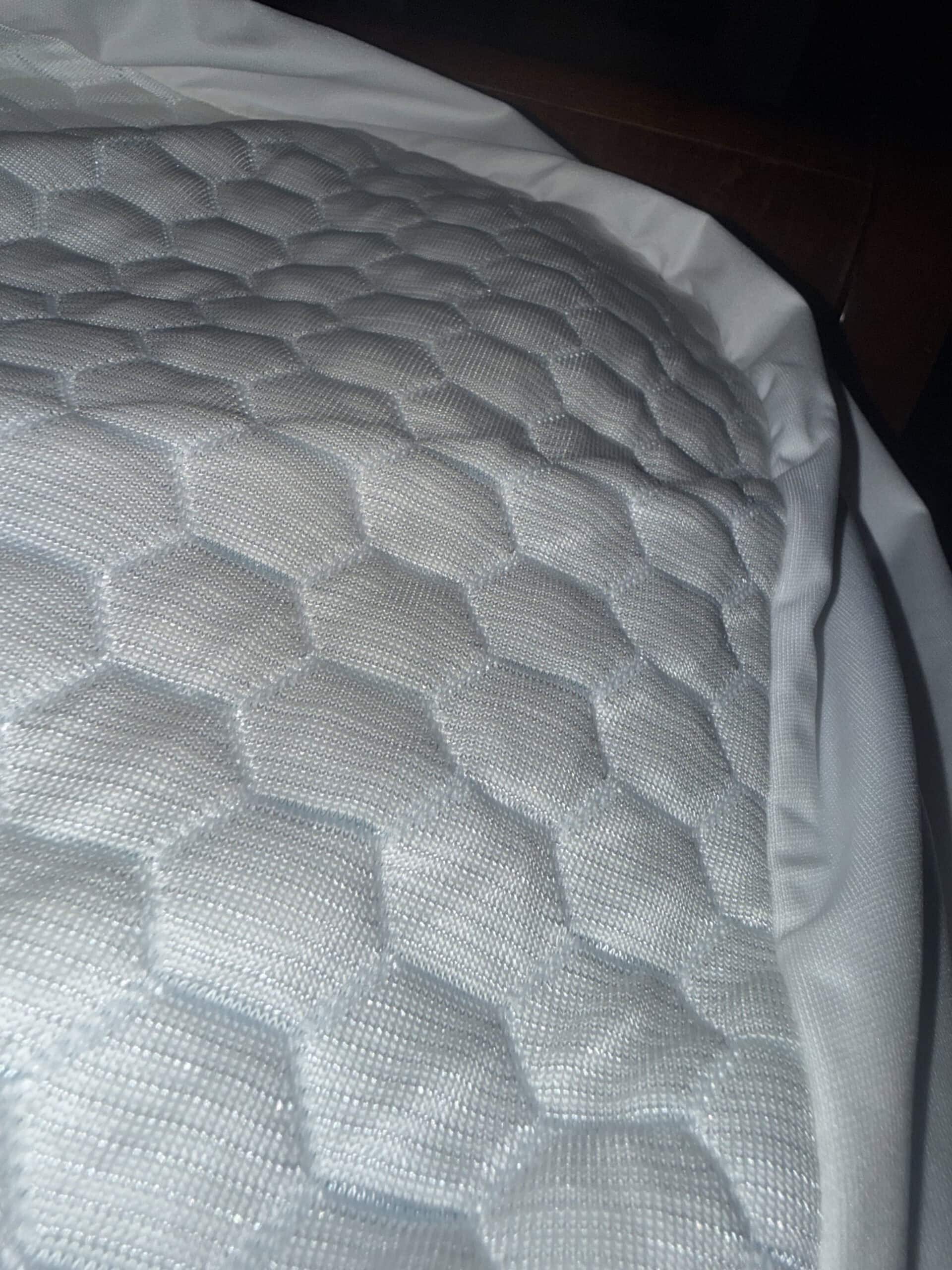
People ask this expecting an answer about the cooling wearing out, as though the gel runs down or the technology has a shelf life. That is not how any of these materials fail. What actually degrades is the structure, and a compressed topper cools less because air moves through it less, not because anything stopped working.
The distinction matters because it changes what you look for. A topper losing its cooling is usually a topper losing its loft, and that is visible. Our roundup of cooling toppers for year-round use covers choosing one.
Quick Answer
The cooling materials themselves do not expire. Toppers lose effectiveness when foam compresses and airflow drops, typically over several years, and body impressions that do not recover are the clearest sign.
Key Points
- Gel and infusions do not deplete or wear out.
- Compression reduces airflow, which reduces cooling.
- Permanent body impressions are the main indicator.
- Covers and bedding can mask cooling entirely.
- Acclimatization makes people think it stopped when it did not.
What Actually Degrades
Foam compression
Open-cell foam relies on air moving through its structure. Years of body weight compress that structure, and the same material with less loft moves less air. The cooling was always about airflow rather than about the foam being cold.
Loss of resilience
Foam that no longer springs back leaves a permanent depression where you sleep, which is both a comfort issue and a cooling one. A body sitting lower in a compressed hollow also has less surface exposed to moving air.
What does not degrade
Gel infusions are dispersed through the foam and do not migrate out. Phase-change materials cycle indefinitely rather than being consumed. Copper and graphite infusions are inert.
The practical upshot
A topper that feels warmer after several years has usually flattened rather than expired. Our note on whether cooling toppers work covers the mechanism.
Mine After Three or Four Years
My cooling topper has been on the bed three or four years, stays on year-round, and I have not noticed it cooling any less than it did at the start.
That is a perception rather than a measurement, and it is worth saying plainly because a gradual decline is exactly the sort of thing you would not notice. What I can say is that nothing changed abruptly and there was no point where I thought it had stopped doing its job.
It also still feels the same underfoot, in the sense that it made the bed slightly softer when I put it on and it still does. If it had compressed substantially I would expect that to have gone.
The context is that my mattress runs hot and the topper is there to deal with that rather than to make the bed cold. It has been consistent at the job I gave it, across several Arizona summers.
What I cannot tell you is how a topper behaves at seven or eight years, or how phase-change versions age differently from gel foam, since I have only run the one.
Signs It Has Actually Flattened
A permanent impression
A visible dip where you sleep that is still there after the bed has been empty for hours. This is the clearest indicator.
Feeling the mattress through it
If pressure points that the topper used to relieve have returned, the material is no longer doing its structural job either.
Uneven thickness
One side noticeably thinner than the other, common where one person sleeps in the same place nightly.
Crumbling or tearing
Foam breaking down physically at the edges or corners means the end regardless of how it feels. Our note on how long a mattress topper lasts covers timelines.
Things That Look Like Failure and Are Not
Acclimatization is the most common. A cooling surface is most noticeable when it is new, because the contrast with what you had before is fresh. Six months later the same surface feels ordinary, and people conclude it stopped working when their reference point moved.
Bedding is the second. A thick mattress protector, a heavy waterproof cover, or dense sheets sit between you and the topper and can cancel most of the effect. Adding a protector is a frequent and unrecognized cause.
Seasonal change is the third. A topper that felt effective in spring can feel inadequate in July because the room got hotter, not because the topper changed. Our comparison of toppers for hot sleepers covers that boundary.
Testing It Yourself
Strip the bed and look at the topper in daylight with nothing on it. A topper in good condition sits level; one that has compressed shows a visible trough where you sleep, and the edges will look thicker than the middle.
Press down in the worn area and in an unused corner, and compare how quickly each springs back. A noticeable difference in recovery is the material telling you it has lost resilience, which is the property that both comfort and airflow depend on.
This takes two minutes and settles a question people otherwise spend months wondering about. Our note on getting used to a cooling topper covers the opposite end of ownership.
Extending the Life
Rotate it end to end every few months so the compression is not always in the same place, which matters most for a single sleeper who does not move around.
Use a breathable protector rather than a waterproof one where possible, since waterproof layers block the airflow the topper depends on.
Let it air occasionally. Stripping the bed and leaving the topper uncovered for a few hours helps moisture leave the foam, which otherwise accumulates in a material that traps it. Moisture in foam reduces airflow the same way compression does, and it is easier to fix.
Our note on cleaning a mattress topper covers doing it without damaging the material.
How Long They Typically Last
Common guidance puts mattress toppers in the range of three to five years, with denser and higher-quality foam at the longer end and thin budget versions shorter.
Weight, frequency of use, and whether the topper is rotated all shift this considerably. A guest bed topper used occasionally outlasts a nightly one by years, which is why published lifespans vary so widely and why none of them predict your particular case.
The mattress underneath matters too. A topper on a sagging mattress compresses unevenly because it is filling a dip rather than sitting flat, and that shortens it. Our note on when to replace a mattress covers the layer below.
Cooling Topper Longevity FAQ
Does the gel in a cooling topper wear out?
No. Gel is dispersed through the foam rather than being a coating that rubs off, and it does not migrate out or deplete. What changes over years is the foam structure around it, which is a compression issue rather than a cooling one.
How long should a cooling topper last?
Commonly three to five years, with quality and use shifting it considerably in both directions. A topper used nightly by a heavier sleeper on a sagging mattress will be at the short end of that.
Why does my topper feel less cool than it used to?
Often acclimatization rather than degradation, since the contrast was strongest when it was new. Check also whether you added a mattress protector or changed sheets, since a layer between you and the topper cancels much of the effect.
How can I tell if it is worn out?
Look for a permanent body impression that is still visible hours after the bed has been empty, uneven thickness across the surface, or the return of pressure points the topper used to relieve. Those are structural rather than perceptual.
Can I revive a compressed topper?
Not meaningfully. Airing and rotating help prevent further uneven compression and will not restore loft that has already gone. Once the foam has lost resilience, replacement is the realistic option.
Does a mattress protector affect cooling?
Considerably, particularly waterproof ones, which block the airflow the topper relies on. A breathable protector is a better match if you need protection, and this is one of the most common reasons a topper seems to have stopped working.
Should I rotate my cooling topper?
Yes, end to end every few months, since compression concentrates where you sleep. Most toppers cannot be flipped because only one surface has the cooling construction, so rotating is the available option.
Does leaving it on year-round shorten its life?
Not by itself. Continuous use accumulates compression faster than seasonal use simply because it is used more, and a topper left on all year is doing the job it was bought for rather than wearing out prematurely.
Recommended Reading
See our note on choosing a mattress.
