
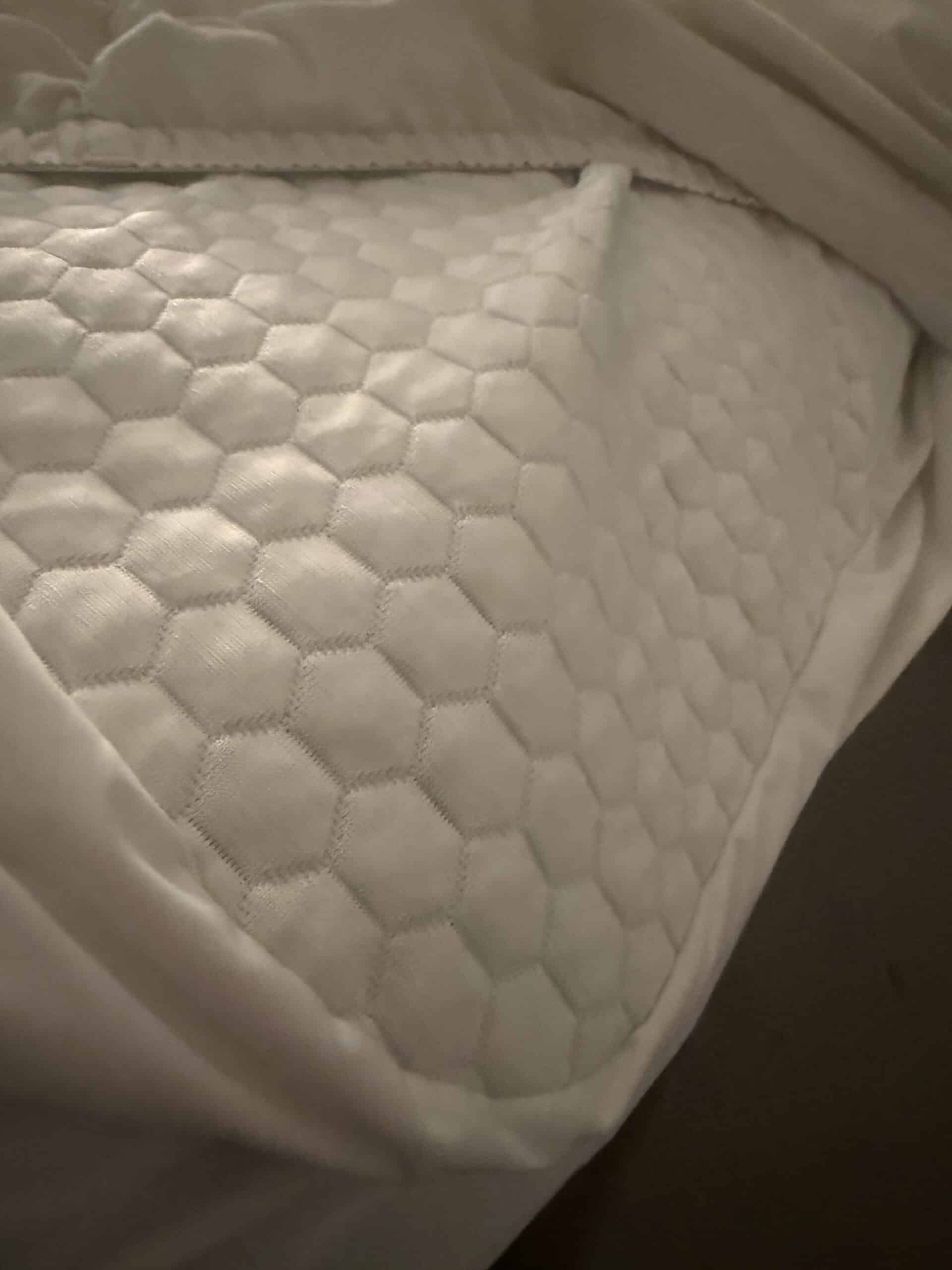
A mattress topper does not treat insomnia. It can remove a physical obstacle, discomfort, heat, or a surface that makes turning over unpleasant, and removing an obstacle is not the same as addressing the disorder. That distinction matters because insomnia has established clinical treatments, and buying bedding instead of pursuing them delays the thing that actually helps. Our note on whether mattress toppers are worth it covers the wider category.
Medical Disclaimer
This is general information about bedding, not medical advice. Chronic insomnia is a recognized sleep disorder with established treatments, and persistent difficulty sleeping should be discussed with a doctor or a sleep specialist rather than managed through product purchases.
Key Takeaways
- Toppers address physical comfort, not the disorder itself.
- Heat and pressure are the two obstacles bedding can remove.
- The AASM identifies CBT-I as first-line treatment for chronic insomnia.
- Comfort improvements are worth having and are not a treatment.
- Persistent sleeplessness warrants a clinical conversation.
How We Picked
Toppers are grouped by which physical obstacle they remove, since that is the honest scope of what bedding does. No product here is selected for any effect on insomnia itself, because that is not something a topper can claim.
Selections reflect materials and construction. Descriptions come from product research except where personal use is stated directly.
1. A Gel Memory Foam Topper, Best for Heat
Why It Stands Out
Sleeping hot is one of the more common physical reasons for waking, and gel-infused foam moves heat away from the surface where it builds against you.
Foam also contours, which reduces pressure points for anyone who wakes from discomfort rather than from wakefulness itself.
Worth Knowing
Cooling here means slowing heat buildup rather than producing cold, so expect a less hot bed rather than a transformed one.
Foam softens the surface, which suits some sleepers and not others. Our roundup of toppers for hot sleepers covers the heat question directly.
This suits people who wake feeling hot. Skip it if temperature is not the issue.
2. A Pressure-Relieving Foam Topper, Best for Discomfort
Why It Stands Out
Waking because a hip or shoulder aches is a physical problem with a physical answer, and a contouring topper distributes weight rather than concentrating it.
Side sleepers on firm mattresses are the clearest case, since the shoulder takes load a firm surface does not yield to.
Worth Knowing
Pain that wakes you consistently is worth raising with a doctor rather than treating as a bedding problem, since bedding is one of several possible causes.
Softer surfaces suit some conditions and worsen others. Our roundup of toppers for side sleepers covers matching to position.
This suits pressure-point waking. Skip it if the mattress is already soft.
3. A Latex Topper, Best for Movement
Why It Stands Out
Latex responds quickly rather than holding a shape, which makes turning over easier for anyone who shifts position frequently through the night.
It also sleeps cooler than memory foam without needing gel or perforation added.
Worth Knowing
Latex firms the surface rather than softening it, so it suits a soft mattress better than a firm one.
It costs considerably more and is heavy enough to make bed-making awkward. Our comparison of toppers and mattress pads covers the categories.
This suits restless sleepers on soft beds. Skip it on an already firm mattress.
4. A Thin Cooling Fabric Topper, Best Minimal Change
Why It Stands Out
For anyone whose mattress is otherwise right, a thin cooling layer addresses surface temperature without altering feel, support, or how the bed behaves.
Changing as little as possible has its own value when you are trying to identify what actually affects your sleep.
Worth Knowing
The cool sensation equalizes with body temperature after you settle, so it is most noticeable when you first lie down.
These add no cushioning, so they do nothing for pressure. Our note on how thick a topper should be covers the trade.
This suits beds that are nearly right. Skip it if you need cushioning too.
5. A Wool Topper, Best for Moisture
Why It Stands Out
Waking clammy is a different complaint from waking hot, and wool moves moisture away rather than only addressing temperature.
It also moderates in both directions, which suits a bedroom that swings between seasons.
Worth Knowing
Wool needs periodic fluffing to keep its loft, which is more upkeep than foam.
It warms rather than cooling, so it is the wrong choice if heat is the obstacle. Our roundup of cooling mattress pads covers warmer sleepers.
This suits clammy waking. Skip it if you sleep hot.
6. A Firm Support Topper, Best for Sagging Beds
Why It Stands Out
A denser topper adds a supportive layer over a mattress that has softened, which addresses waking from a bed that no longer holds you level.
It is considerably cheaper than replacing a mattress that is otherwise serviceable.
Worth Knowing
A topper cannot fix genuine sagging, since it conforms to the dip underneath rather than bridging it. This helps a bed that has softened, not one that has failed.
If the mattress has a visible depression, replacement is the honest answer. Our note on whether toppers help a sagging mattress covers the limit.
This suits a softening bed. Skip it if the mattress is genuinely worn out.
Toppers by Obstacle at a Glance
| If you wake because | Topper type | Realistic effect |
|---|---|---|
| You feel hot | Gel or open-cell foam | Less heat buildup |
| A hip or shoulder aches | Pressure-relieving foam | Weight spread wider |
| Turning over is effortful | Latex | Faster response |
| You feel clammy | Wool | Moisture moved away |
| The bed feels dished | Firm support topper | Helps softening, not sagging |
| None of the above | None | Bedding is not the obstacle |
What Sleep Gear Has Actually Done for Me
I have had chronic insomnia since I was a teenager, and over the years I have accumulated a lot of sleep equipment: a cooling topper, a cooling blanket, a gel pillow, blackout curtains, fans, an air conditioner, sleep masks.
Honestly, none of it has made a noticeable difference to the insomnia itself. Maybe the blackout curtains a little, and I would not want to overstate that either. The topper has been on the bed for three or four years and I like it, and I could not tell you that it changed how well I sleep.
That is worth saying on a page like this, because the category is sold on the implication that the right bedding fixes sleeplessness. In my experience it does not. What good bedding does is remove reasons to be uncomfortable, which is genuinely worth having and is a smaller claim than the one being made in most marketing.
If you are lying awake, the mattress is usually not why. Discomfort keeps you awake once you are already awake, and that is the part a topper addresses. Whatever is causing the wakefulness is a separate question and a better one to take somewhere qualified.
What I cannot compare is latex, wool, or firm support toppers, since I have used one cooling topper. Those sections come from research rather than experience.
What Actually Treats Insomnia
Chronic insomnia has established clinical treatment. The American Academy of Sleep Medicine identifies cognitive behavioral therapy for insomnia, usually shortened to CBT-I, as the recommended first-line treatment for chronic insomnia in adults, ahead of medication.
CBT-I addresses the behaviors and thought patterns that maintain insomnia rather than the sleeping environment. That is a different mechanism from anything bedding does, and it is the reason a comfortable bed and untreated insomnia can coexist indefinitely.
Sleep hygiene measures, consistent timing, limiting screens before bed, and a dark cool room, are commonly recommended alongside it. Bedding contributes to the last of those and is one input among several.
None of that makes comfort worthless. It makes comfort a supporting condition rather than a treatment, which is the honest framing for anything sold in this category.
What to Look For
What actually wakes you?
Heat, pressure, or a dished mattress are bedding problems. Lying awake with no physical complaint is not, and a topper will not change it.
Is the mattress the right firmness?
A topper adjusts the surface within limits. If the mattress is badly wrong for you, a layer on top is a compromise rather than a fix.
Would you notice the difference?
Change one thing at a time. Adding a topper, a new pillow, and a fan in the same week tells you nothing about which mattered.
Have you spoken to anyone?
If sleeplessness is persistent, a doctor or sleep specialist is the useful step. Bedding can wait; the clinical conversation generally should not.
Comfort or Treatment?
What bedding does
Removes physical obstacles. A cooler, better-supported surface means fewer reasons to wake once you are already asleep, and that is a real benefit.
What it does not do
Address why you cannot fall asleep or why you wake and stay awake. That is the disorder rather than the environment, and it responds to clinical treatment rather than to purchases. Our guide to choosing a mattress topper covers selection on comfort grounds.
Common Misconceptions
That the right bedding fixes insomnia
Comfort removes obstacles and does not treat the disorder. People with excellent bedding have insomnia, and people with poor bedding sleep fine.
That buying more helps more
Accumulating sleep products makes it harder to tell what works. Change one variable and give it a couple of weeks.
That discomfort is always the cause
Discomfort keeps you awake once awake. It rarely explains why you were awake in the first place.
That trying products is a reasonable first step
For persistent insomnia it delays effective treatment. Bedding is worth improving and it is not where to start. Our note on blackout curtains for sleep covers another environmental input.
Recommended Reading
See our note on whether cooling toppers actually work, our guide to how long a topper lasts, our roundup of toppers for back pain, and a note on a topper versus a new mattress, and choosing a mattress.
Insomnia and Bedding FAQ
Can a mattress topper help with insomnia?
It can remove physical obstacles like heat or pressure that make sleep less comfortable, which is worth having. It does not treat insomnia itself, and persistent difficulty sleeping is worth discussing with a doctor rather than addressing through bedding purchases.
What actually treats chronic insomnia?
The American Academy of Sleep Medicine identifies cognitive behavioral therapy for insomnia as the recommended first-line treatment for adults, ahead of medication. It addresses the behaviors and thoughts maintaining insomnia rather than the sleep environment.
Is my mattress causing my insomnia?
Occasionally a genuinely uncomfortable bed contributes, particularly if you wake with pain or feeling hot. More often discomfort keeps you awake once you are already awake rather than causing the wakefulness. If you sleep poorly on other beds too, the mattress is unlikely to be the cause.
Should I try bedding before seeing a doctor?
For occasional poor sleep with an obvious physical cause, addressing that is reasonable. For persistent insomnia, trying products first delays treatment that works, so the clinical conversation is the better starting point.
Do cooling toppers help you fall asleep faster?
A cooler sleeping surface is generally more comfortable, and a cool room is part of standard sleep hygiene advice. Whether that translates into falling asleep faster varies considerably between people and is not something a product can promise.
How long should I try a topper before judging it?
A couple of weeks, and change only one thing at a time. Adding several sleep products at once makes it impossible to tell what helped, which is a common reason people end up with a lot of equipment and no clear answer.
Will a topper help if I wake up in pain?
It may, if the pain is from pressure against a surface that is too firm. Pain that wakes you consistently is worth raising with a doctor regardless, since bedding is one of several possible causes and not usually the most likely.
When should I see a doctor about sleep?
When difficulty sleeping persists over weeks, affects how you function during the day, or comes with symptoms like loud snoring, gasping, or unrefreshing sleep despite adequate time in bed. Those warrant assessment rather than an environmental fix.
Sources
- American Academy of Sleep Medicine. Clinical Practice Guideline for the Pharmacologic Treatment of Chronic Insomnia in Adults. https://aasm.org/clinical-resources/practice-standards/practice-guidelines/
- National Heart, Lung, and Blood Institute. Insomnia. National Institutes of Health. https://www.nhlbi.nih.gov/health/insomnia
