
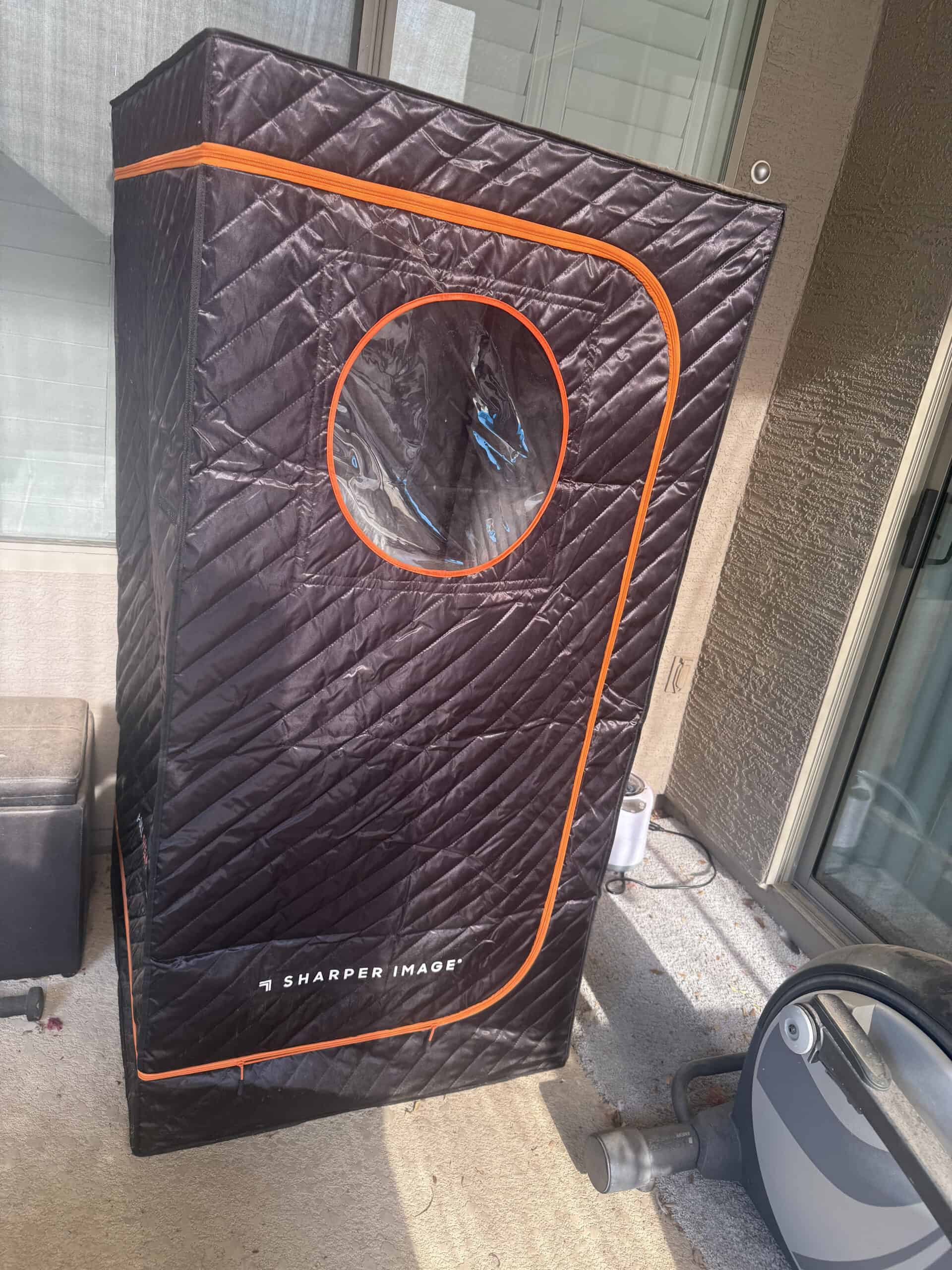
Mine is a one-person steam tent with a metal frame and a viewing window, it lives in the backyard, and it cost under a hundred dollars. I use it several times a week, twenty to thirty minutes a session, mostly for recovery and because heat before bed helps me wind down. The unit before this one lasted six months before its wiring burnt out, which is the part of this category nobody puts in a product description.
A portable sauna is a collapsible enclosure with its own heat source, either a steam generator that sits outside the tent or infrared panels built into the walls. The best portable saunas are the ones that heat reliably and keep doing it, because in this price range the failure point is almost always the electrics rather than the fabric. Our guide to whether portable saunas help you sleep covers the reason most people buy one. For a first unit on a tight budget, our roundup of portable saunas under $100 covers what that price actually buys.
The Short Version
A one-person steam tent is the entry point and it works. Infrared runs drier and heats differently. Two-person units are bigger than most people need. Whichever you pick, the electrics decide how long you keep it, so treat cord routing and moisture as the real maintenance rather than the cleaning.
How We Picked
Units are grouped by heat type, capacity, and how they pack away, since those decide the experience more than the fabric does. Heat-up time and electrical durability are weighted heavily because they are the two things that determine whether a portable sauna gets used and whether it survives.
My own unit aside, this is built from product documentation and the failure patterns owners report. Where something is mine, the article says it is mine.
1. A One-Person Steam Tent With a Generator Pot, Best Overall
Why It Stands Out
This is the common shape and the one I own. A small electric pot sits outside the tent, boils water, and pipes steam in through a hose. You sit inside on a chair with your head out of the top, which sounds undignified and works fine. The kit that goes around the unit is a shorter list than the market suggests, covered in our sauna accessories roundup.
Steam heat feels hotter at the same temperature than dry heat does, so the sessions are effective without the unit needing to reach the numbers a traditional sauna does. The pot is also the cheapest component to replace if it fails, which matters given how these units tend to die.
Worth Knowing
The heat-up wait is the honest complaint. It is long enough that you plan around it rather than deciding on impulse, and our note on portable sauna heat-up times covers what to expect. The other trade is cleaning: steam means moisture, and moisture means the interior needs drying and wiping rather than just zipping shut. That is the part of ownership I like least.
This suits anyone starting out. Skip it if you want dry heat.
Check Price on Amazon2. A Far Infrared Portable Sauna, Best for Dry Heat
Why It Stands Out
Infrared units heat through panels sewn into the tent walls rather than by filling the space with steam. The air stays dry, the surfaces stay dry, and cleanup afterward is a wipe rather than a drying-out routine. If space is the constraint, an infrared sauna blanket does a similar job in a cupboard-sized package.
They also tend to reach usable temperature faster, since there is no water to bring to a boil first. For anyone whose main frustration is waiting, that difference is the reason to look here.
Worth Knowing
Dry heat feels different and some people find it less satisfying at the same reading on a thermometer. The panels are also integrated into the tent, so a panel failure is a whole-unit problem rather than a replaceable part.
This suits people who want less cleanup and a faster start. Skip it if steam is what you are after.
Check Price on Amazon3. A Two-Person Portable Sauna, Best for Sharing
Why It Stands Out
Larger tents fit two chairs and give one person considerably more room to sit comfortably rather than upright and still. If sessions are something you do with a partner, the shared version changes what the thing is for.
The extra volume also means less of a sauna-shaped box around you, which some people find easier to sit in for longer.
Worth Knowing
More volume takes longer to heat and costs more to run, and the footprint when set up is significant. Storage is a real consideration if it does not live permanently in one spot.
This suits couples and anyone who finds single tents cramped. Skip it if you are the only one using it, since the wait gets longer for no benefit.
Check Price on Amazon4. A Collapsible Frame Sauna Tent, Best for Storage
Why It Stands Out
Some frames break down into a bag in a couple of minutes and others fight you. For anyone without space to leave a sauna standing, the difference between those two decides whether the thing gets used at all.
Fast-folding designs also travel, which matters if the sauna moves between a garage in winter and a yard in summer.
Worth Knowing
Frames that collapse easily also flex more when set up. Mine stays assembled outdoors, so I have not put a folding frame through repeated cycles, and repeated folding is where these joints wear.
This suits apartments and shared spaces. Skip it if the sauna has a permanent home, in which case frame rigidity is worth more.
Check Price on Amazon5. A Tent With a Viewing Window and Arm Openings, Best for Long Sessions
Why It Stands Out
A window makes the enclosure feel considerably less like a bag you are sitting in, and mine has one. Arm openings let you hold a drink or a phone without unzipping and dumping the heat you have been waiting on.
Both features address the same problem, which is that twenty to thirty minutes inside a sealed tent is a long time with nothing to do.
Worth Knowing
Every opening is a place heat escapes and a seam that can fail. Arm ports in particular need decent elastic or they leak steam continuously.
This suits longer sessions and anyone who gets restless. Skip it if your sessions are short.
Check Price on Amazon6. A Hard-Shell or Barrel Style Unit, Best Step Up
Why It Stands Out
Rigid units hold heat far better than fabric, last longer, and feel like a piece of equipment rather than a tent. If a portable sauna has become a regular habit and the fabric version is wearing out, this is where the category goes next.
Better insulation also means shorter heat-up times and more stable temperatures once you are in.
Worth Knowing
The price is several times a tent, and portability mostly disappears. These are moved rarely and stored never, so they need a spot they can keep.
This suits committed users with somewhere to put it. Skip it if you are still working out whether you will use a sauna regularly.
Check Price on AmazonPortable Saunas at a Glance
| Type | Heat | Cleanup | Best for |
|---|---|---|---|
| One-person steam tent | Wet, from a generator pot | Needs drying out | Starting out |
| Far infrared tent | Dry, from wall panels | Wipe down | Faster start, less mess |
| Two-person tent | Either | More surface to dry | Sharing sessions |
| Collapsible frame | Either | Same as its heat type | Storing between uses |
| Window and arm openings | Either | Same as its heat type | Longer sessions |
| Hard-shell or barrel | Usually dry | Minimal | Committed regular use |
What to Look For in a Portable Sauna
How are the electrics built?
This is the question I would ask first now, and it is the one product pages answer least. Cord thickness, strain relief where the cord enters the housing, and whether the controller is sealed all matter more than the fabric or the frame.
How long does it take to heat?
Long enough that it changes how you use it. A unit that takes half an hour becomes something you plan; one that takes ten minutes becomes something you decide on. Neither is wrong, but know which you are buying.
Where will it live?
Indoors, steam has to go somewhere and that somewhere is your walls. Mine is outside for exactly that reason, and our guide to putting a portable sauna outside covers what outdoor use asks of you.
Does it come with a chair?
Most do, and the included chair is usually adequate rather than good. Check whether yours is included before assuming, since a tent without one is not usable as sold.
Steam vs Infrared
The case for steam
It feels hotter at a lower reading, the generator pot is a separate replaceable part, and the units are generally cheaper. Mine is steam and a year in I would buy steam again.
The case for infrared
Dry heat, faster to temperature, and nothing to dry out afterward. If the cleaning routine is what would stop you using a sauna regularly, that is a strong argument, because the sauna you do not maintain is the one you stop using.
What Trips People Up
Underestimating the moisture
Steam units put out a lot of it, and a tent zipped shut wet develops a smell quickly. Leaving it open to dry after each session is the whole maintenance routine and skipping it is how units get unpleasant.
Running the cord badly
Given how my first unit failed, this is where I would put the attention. Keep connections off the ground, away from where water collects, and use a cord rated for outdoor use if the sauna is outside.
Expecting a traditional sauna
These do not reach the temperatures a wood-lined room does, and the experience is different. They produce a real sweat and a real wind-down; they do not reproduce a spa.
Sitting too long early on
Start shorter than you think and build up. Our guide to session length before bed covers timing, and portable sauna safety covers hydration and who should talk to a doctor first.
Related Reading
See our picks for recovery tools at bedtime, a guide to winding down in the evening, our cold therapy picks, and notes on building a bedtime routine.
Portable Sauna FAQ
Do portable saunas actually work?
They produce a genuine sweat and a genuine warming effect, which is what most people want from one. They do not reach the temperatures of a traditional wood-lined sauna, so the experience is milder. For wind-down and recovery use, that difference matters less than the price gap suggests.
How long does a portable sauna take to heat up?
Longer than most people expect, and it varies with heat type and ambient temperature. Steam units have to boil water first, so they are the slower of the two. Plan the session rather than deciding on the spot.
Can I use a portable sauna indoors?
Infrared units, generally yes. Steam units put moisture into the room and that has to go somewhere, so a bathroom or a garage suits them better than a bedroom. Mine lives outdoors for this reason.
How long do portable saunas last?
The fabric outlasts the electrics in most cases. My first unit failed at the wiring inside six months while the tent itself was fine, and that pattern is common enough that cord and controller quality is worth more attention than the tent material.
Do you need a chair?
Yes, and most units include one. The tent is designed around sitting upright with your head through the opening at the top, so without a chair there is no usable position.
How often can you use a portable sauna?
Several times a week is common and is what I do. Hydration is the practical limit rather than frequency, and anyone with a heart condition, blood pressure concerns, or a pregnancy should talk to a doctor before starting.
Is a portable sauna worth it for sleep?
For a lot of people the warming and cooling cycle helps with winding down, which is the reason I bought mine. It is one input among several rather than a fix on its own.
What does a portable sauna cost to run?
Less than most people assume, since these are small heating elements running for under an hour. The heat-up phase draws the most, so shorter sessions in an already-warm unit cost less than starting cold each time.
