
Higher and wider than the window itself, which is where most of the light leak comes from. Mounting close to the ceiling and extending the rod well past the frame on both sides closes the gaps that a window-sized installation leaves open. For more on this, see our guide to covering a sliding door.
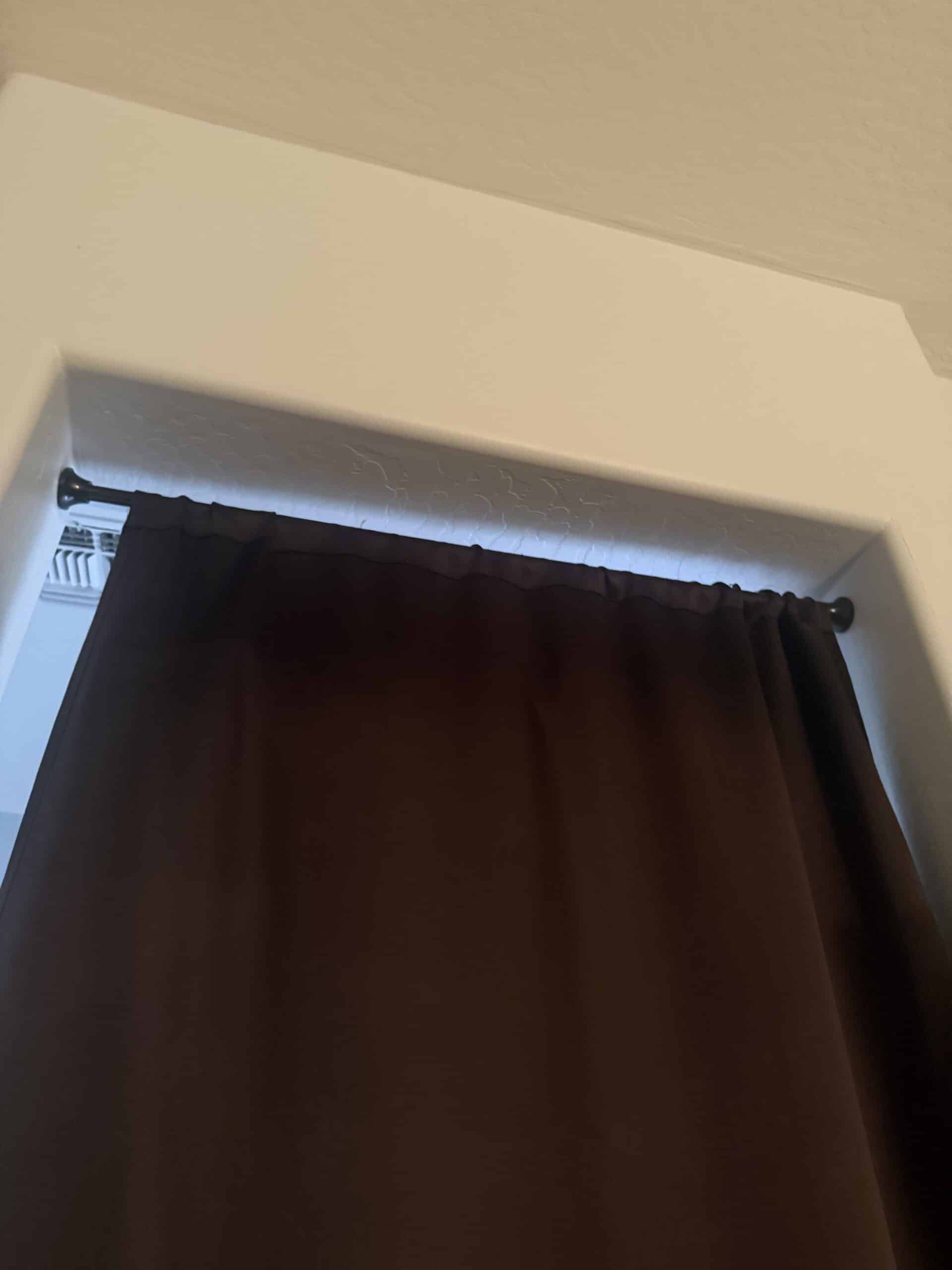
Mine are mounted two ways. Some are fitted into the shutters, sitting right above them, and one panel hangs from a rod at the top of a high doorway. The high mounting on that one is not a decorating choice so much as what the doorway required.
Quick Answer
Mount the rod four to six inches below the ceiling, or as close as the space allows. Extend it eight to twelve inches past the frame on each side. Panels should reach the floor or the sill with no gap. Height and width matter more than fabric quality for blocking light. For more on this, see our guide to floor-length panels.
Where Light Actually Gets In
| Gap | Fix |
|---|---|
| Above the rod | Mount higher, closer to the ceiling |
| Sides of the panel | Extend the rod past the frame |
| Between panel and wall | Wraparound rod or side channels |
| Between two panels | Overlap them in the middle |
| Below the hem | Floor length rather than sill length |
Almost none of that list is about the fabric itself. A high-quality blackout panel hung tight against a window leaks considerably more light than an ordinary one hung generously.
The Height Rule
The usual guidance is four to six inches below the ceiling, or roughly halfway between the top of the window frame and the ceiling where that gap is large.
Mounting right at the window frame leaves a gap above the rod where light spills straight over the top, and that gap sits directly in your eyeline from a bed.
Higher mounting also makes a room look considerably taller, which is why the same advice turns up in decorating guidance for reasons that have nothing to do with sleep at all.
Where a ceiling-mounted track is actually possible, that removes the top gap entirely and is much the most complete version of this approach, covered in stopping light leaking around blackout curtains.
Width Matters More Than People Expect
A rod that stops at the window frame guarantees light at both edges, since the panel has nowhere at all to sit except directly across the glass.
Extending the rod eight to twelve inches past the frame on each side lets the panel rest against solid wall rather than window, and that overlap is what actually closes the side gap.
Panel width should total roughly two to two and a half times the window width, so the fabric still gathers and covers properly when drawn rather than stretching completely flat.
Flat-stretched panels leak at every edge and look wrong, which is the most common installation mistake, covered in blackout curtains for sleep.
How Mine Are Mounted
The shutter-fitted panels sit right above the shutters, which means the mounting height was decided by the shutters rather than by me.
That arrangement works reasonably well because the shutters themselves block a good deal on their own, so the curtain is only handling whatever gets past them rather than doing the entire job.
The rod-hung panel sits at the top of a high doorway, which makes it high mounting by default. It happens to be the right height for all the reasons above, and it ended up there simply because that is where the doorway is.
The room ends up dim rather than fully dark, and the sliding door with blinds rather than curtains is the main reason for that, covered in whether you need blackout curtains with shutters.
One window does still leak glare in from the sides, which is squarely the width problem rather than the height one.
Length Options
Floor length
Best for light blocking and the standard recommendation. The hem should touch or sit within half an inch of the floor.
Puddled
Extra length pooling on the floor blocks the bottom edge completely and collects dust, which matters if you wash rarely.
Sill length
Acceptable where furniture or a radiator sits below the window, and it leaves a gap that light finds.
Apron length
Ending a few inches below the sill is the worst of both, since it neither reaches the floor nor sits neatly at the sill.
Inside Mount Against Outside Mount
The decision that sits underneath all of this is whether the curtain hangs inside the window recess or on the wall around it, and the two behave completely differently.
Inside mounting fits the panel within the frame. It looks tidy, suits deep recesses, and leaves the window ledge usable.
It also guarantees light leak. A panel sitting inside the recess has frame on both sides and above, and light entering at any angle passes around the edges rather than being blocked by them.
Outside mounting puts the rod on the wall above and beyond the frame, so the panel overlaps solid wall on every side. That overlap is the entire mechanism for blocking edge light.
The tradeoff is appearance and space. An outside-mounted panel takes up wall, sits proud of the window, and needs somewhere to stack when open.
For sleep specifically, outside mounting wins clearly enough that it is worth accepting the aesthetic cost. Inside mounting is the choice when the window is decorative rather than something you are trying to black out.
Combining both is the belt-and-braces version, with a blind or shutter inside the recess and a blackout panel outside it, and that arrangement handles more light than either alone.
Hardware That Helps
Wraparound rods curve back toward the wall at each end, which closes the side gap without needing any extra panel width at all.
Side channels or magnetic strips seal the panel edge against the wall, and they are the most complete fix for stubborn side leak.
Ceiling-mounted tracks remove the top gap and suit rooms where the wall above the window is shallow.
Double rods let a blackout panel sit behind a decorative one, which handles the aesthetic objection without compromising the blocking, covered in no-drill blackout curtain rods.
Renting and No-Drill Options
Tension rods fit inside the window recess, which is easy to do and guarantees side leak, since the panel then sits entirely within the frame.
Adhesive hooks can hold a lightweight rod above the frame, and heavy blackout fabric tests their limits quickly.
Command-style brackets properly rated for the weight are the more reliable version of this, and blackout panels are considerably heavier than they look.
Where drilling is genuinely impossible, accepting that a recess-mounted panel will leak at the sides and adding a sleep mask is a reasonable compromise, covered in sleep mask against blackout curtains.
Related Reading
- stopping light leaks
- blackout curtains for sleep
- no-drill rods
- curtains against blinds
- how long they last
- curtains with shutters
Frequently Asked Questions
How high should you hang blackout curtains?
Four to six inches below the ceiling, or roughly halfway between the frame and ceiling where that gap is large. Mounting at the frame leaves a gap light spills through.
How far past the window should the rod extend?
Eight to twelve inches on each side. That lets the panel rest against wall rather than window, which is what closes the side gap.
How wide should the panels be?
Roughly two to two and a half times the window width in total, so the fabric still covers when drawn rather than stretching flat.
Floor length or sill length?
Floor length for light blocking, with the hem touching or within half an inch. Sill length works where furniture sits below and it leaves a gap.
Does the fabric matter less than the mounting?
For light blocking, yes. A good panel hung tight to a window leaks more than an ordinary one hung high and wide.
What if I cannot drill?
Tension rods inside the recess are easy and guarantee side leak. Weight-rated adhesive brackets above the frame work better, since blackout fabric is heavier than it looks.
Inside or outside the window recess?
Outside, for sleep. A panel inside the recess has frame on every side and light passes around the edges. Outside mounting overlaps solid wall, which is the whole mechanism.
What fixes stubborn side leak?
Wraparound rods that curve back to the wall, or side channels and magnetic strips that seal the panel edge against it.
Recommended Reading
See our note on making a bedroom dark.
