
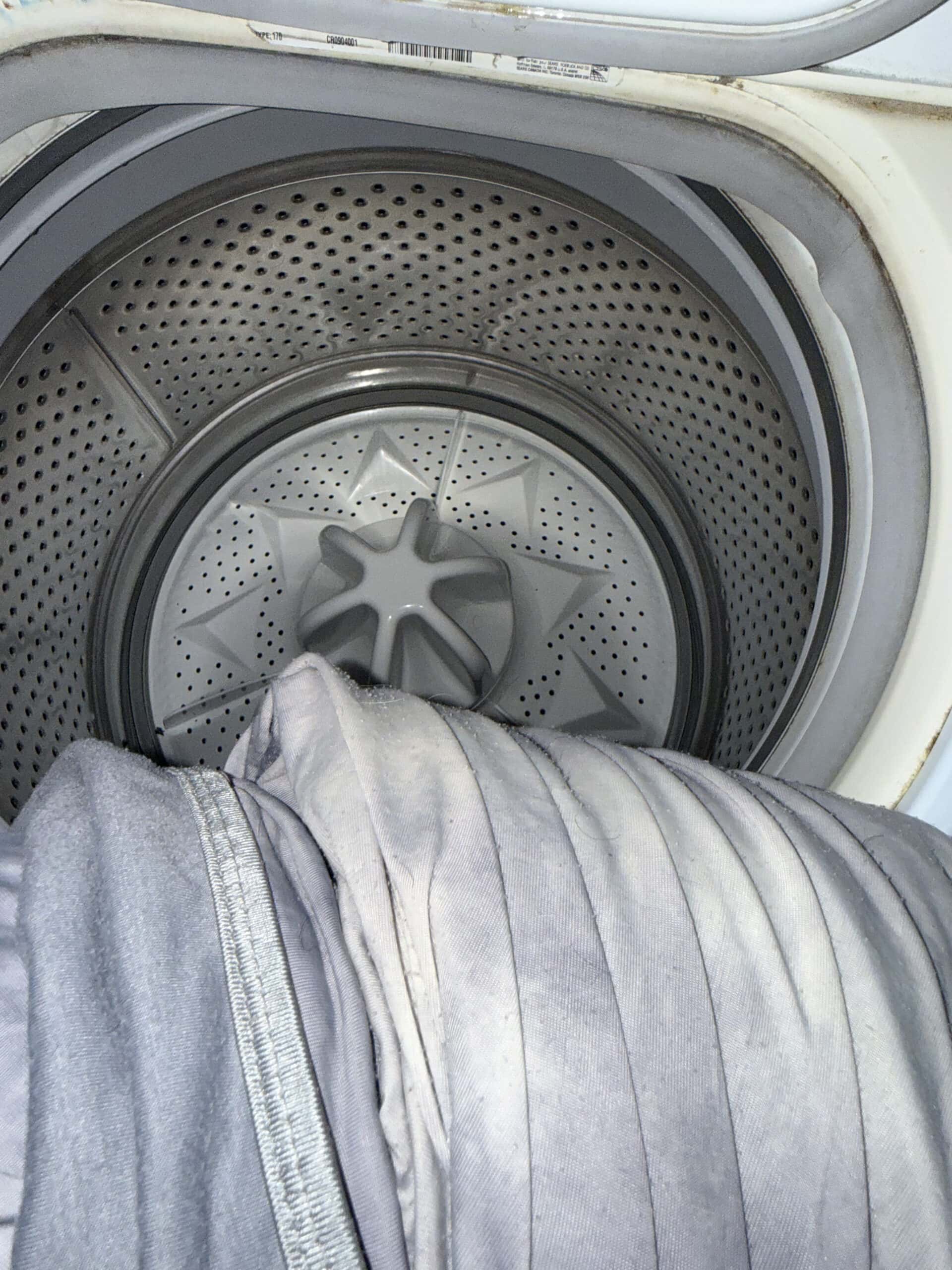
Cold water, gentle cycle, mild detergent, and air dry or the lowest heat setting. The fibers that make a cooling blanket cool are the ones heat and fabric softener damage, so the washing rules exist to protect the thing you bought it for.
Mine has been through the wash and comes out fine. The one thing I have noticed is that it feels slightly off for the first night afterward, then goes back to normal.
Quick Answer
Wash cold on gentle with a mild detergent. Skip fabric softener and dryer sheets entirely, since both coat the fibers and reduce cooling. Air dry where possible. Wash every one to two weeks with normal use.
What Damages the Cooling
| Mistake | What it does |
|---|---|
| Hot water | Degrades fibers and any coating |
| Fabric softener | Coats fibers, blocks moisture wicking |
| Dryer sheets | Same coating effect, plus residue |
| High heat drying | Damages elastic and synthetic fibers |
| Bleach | Breaks down fibers and any treatment |
| Overloading the machine | Abrasion against other items |
The underlying pattern is that anything which either coats or heats the fabric works directly against cooling, and those two categories cover very nearly every washing mistake people make.
Why Softener Is the Worst of Them
Cooling blankets work by moving both heat and moisture away from your skin, and that requires the fibers to stay open and absorbent rather than coated.
Fabric softener works by depositing a thin waxy layer on fibers, which is what produces the soft feel. That layer is exactly what blocks moisture from moving through.
The effect accumulates across washes rather than appearing at once, so a blanket that seems to be losing its cooling may have been softened into it gradually.
Dryer sheets do the same thing by a different route, which is why both get ruled out rather than just one, covered in why cooling blankets stop feeling cool.
The First Night After Washing
Mine feels a bit different for the first night after a wash, and then it settles back to exactly how it was before.
I would not read very much into that at all. Any fabric feels slightly different fresh out of the machine, and both the drape and the surface texture change until it has been slept under once.
What matters is that it recovers rather than staying off, which is the difference between a normal post-wash adjustment and actual damage.
A blanket that feels worse after washing and stays that way is telling you something else, usually softener buildup or heat damage, covered in whether cooling blankets actually work.
How Often
Every one to two weeks with regular use
Body oils and sweat build up on the surface, and that buildup reduces the fiber contact that cooling depends on.
More often in summer
Heavier sweating means faster accumulation, so a blanket in constant use through hot months benefits from a shorter interval.
Less often if used over a top sheet
A sheet between you and the blanket takes most of the contact, which extends how long the blanket stays clean.
Immediately after illness
Standard hygiene practice, and worth doing even though it means one hot-adjacent wash, covered in how often to wash your sheets.
Drying Matters More Than Washing
Heat does considerably more damage in a single dryer cycle than several gentle washes ever do, which makes drying the step most worth getting right.
Air drying flat or over a rack is best, and hanging a heavy wet blanket over a thin line can stretch it out of shape.
If a dryer is unavoidable, the lowest heat or air-fluff setting with the blanket removed while still slightly damp limits the exposure.
Dryer balls are fine where dryer sheets are not, since they work mechanically rather than by depositing anything on the fabric.
Stripping Softener Buildup
If a blanket has already been washed with softener several times, the buildup is worth trying to remove before writing the blanket off.
White vinegar is the usual approach. Half a cup to a cup in the rinse cycle, with no detergent, helps break down the waxy residue that softener leaves behind.
Run it on cold and expect to repeat it. One cycle rarely clears months of accumulation, and two or three spaced across normal washes works better than one aggressive attempt.
Do not combine vinegar with bleach or with detergent containing bleach, since the combination produces harmful fumes rather than cleaner fabric.
Baking soda in the wash cycle is sometimes suggested alongside, and it addresses odor more than residue, so it solves a different problem than the one you are chasing.
The vinegar smell rinses out completely once dry, which is the question people usually have before trying it.
If several vinegar rinses produce no improvement, the loss is probably fiber wear rather than coating, and no washing routine recovers that.
Material Differences
Bamboo viscose and Tencel blankets are the most sensitive to heat and agitation, and they benefit most from cold gentle washing.
Polyester and nylon cooling fabrics tolerate washing better in general, and they are the ones where softener buildup shows up most obviously.
Phase-change treatments and applied cooling coatings are the least durable, since those sit on the fabric rather than being part of the fiber.
Weighted cooling blankets add a further constraint, since the fill weight can damage a domestic machine and many need commercial washing, covered in cooling weighted blankets.
Before the First Wash
A few checks at the start save trouble later, and most of them take a minute.
Read the care label rather than assuming, since cooling blankets vary more between materials than ordinary bedding does and manufacturer instructions override any general rule.
Check for a mesh bag recommendation. Some lighter cooling fabrics snag easily, and washing inside a bag prevents the machine drum and other items catching the weave.
Wash it on its own the first time, or with similar items only. Zips, hooks, and heavier fabrics all abrade a lightweight blanket during a cycle.
Fasten anything on other items in the load, since an open zip is the most common cause of pulls and snags in fine synthetic fabrics.
Expect some initial shedding or a faint chemical smell on a new blanket, both of which usually clear after the first wash and are not signs of a defect.
And keep the label rather than cutting it off, because the washing instructions become impossible to recall three years later when it matters.
When Washing Will Not Fix It
Persistent loss of cooling after several correct washes usually means softener buildup, which sometimes clears with a vinegar rinse and sometimes does not.
Pilling and thinning are mechanical wear rather than dirt, and washing does nothing for either.
A blanket that has been through high heat may have permanently damaged fibers, which no amount of correct washing afterward reverses.
Three to five years is a reasonable working life for most cooling blankets, so declining performance at that point is age rather than care, covered in how long a cooling blanket lasts.
Related Reading
- how long they last
- why they stop feeling cool
- do they actually work
- what makes a blanket cooling
- cooling blankets
- washing sheets
Frequently Asked Questions
How do you wash a cooling blanket?
Cold water, gentle cycle, mild detergent, no fabric softener, and air dry or lowest heat. Those rules exist to protect the fibers that make it cool.
Why can’t I use fabric softener?
It deposits a waxy layer that blocks moisture moving through the fibers, which is the mechanism cooling depends on. The effect builds up across washes.
Can I put it in the dryer?
Lowest heat or air-fluff only, and better to air dry. Heat does more damage in one dryer cycle than several gentle washes do.
Why does it feel different after washing?
Fabric drape and surface both change fresh out of the machine, and it usually settles after a night. A blanket that feels worse and stays that way is a different problem.
How often should I wash it?
Every one to two weeks with regular use, more often in summer, and less often if you sleep with a top sheet between you and the blanket.
Can I use bleach on it?
No. Bleach breaks down the fibers and any cooling treatment applied to them, and the damage is not reversible.
How do I strip softener buildup?
Half a cup to a cup of white vinegar in the rinse cycle with no detergent, repeated across two or three washes. Never combine vinegar with bleach.
What if it has stopped cooling?
Softener buildup is the usual cause and a vinegar rinse sometimes clears it. Pilling, thinning, and heat damage are wear rather than dirt.
Recommended Reading
See our note on cooling a bedroom for better sleep.
