
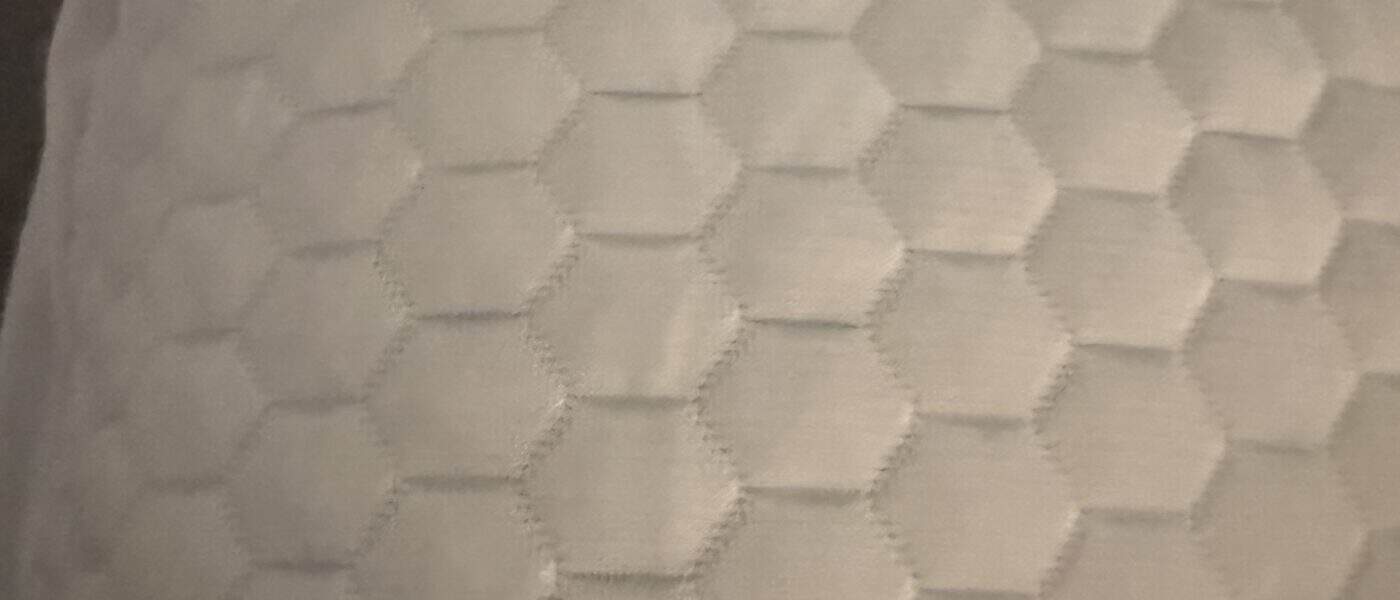
My cooling mattress topper is two to three years old and still doing its job. That is a useful data point for a question that usually gets answered in vague ranges, because I can tell you what a topper’s life actually looks like in nightly use rather than in theory. Toppers do not last forever, and how long yours lasts depends on the type, how you use it, and how you care for it. Here is what actually determines the number.
Key Takeaways. Getting the most from one starts with choosing the right topper thickness.
- Mine has lasted two to three years and still works well.
- Lifespan depends on the topper type, use, and care.
- Foam toppers compress over time, which is the usual end of life.
- Signs of wear are sagging, flattening, and lost cooling or support.
- Good care, like a protector and rotation, extends the useful life.
What My Own Topper Tells Me
A real number to anchor the question.
My cooling topper has been on my bed for two to three years, used every night, and it still does what I bought it for. That puts a concrete floor under the vague ranges you usually see. It is not a fresh topper anymore, but it has not failed either, which suggests a useful life comfortably in the multi-year range for a topper that gets nightly use.
That matches the general expectation that a decent topper lasts a few years rather than one season or a decade. Mine is proof that a topper can hold up to steady use for a good while, which is central to whether the purchase is worth it in the first place.
Yours may run shorter or longer depending on the factors below, but a few years of real service is a reasonable thing to expect. Whether a mattress topper is worth it covers how that lifespan feeds into the value.
Type Drives the Number
The single biggest factor in how long a topper lasts.
Different topper materials wear at different rates. Foam toppers, including memory foam and cooling foam, gradually compress under nightly weight, which is the most common way a topper reaches the end of its life. Denser foam generally resists this longer than cheap, low-density foam, which can flatten quickly. Other materials, like latex or fiber-filled toppers, have their own wear patterns and lifespans.
Because the material matters so much, a blanket answer to how long toppers last is not very useful. A high-quality dense foam topper and a bargain thin one can differ by years. When you buy, the density and quality of the material are the best predictors of how long it will serve you.
This is why paying a little more for a well-made topper often works out cheaper over time. cooling mattress pads covers reading quality before you buy.
How You Use It Matters
The same topper lasts different lengths in different situations.
Nightly use wears a topper faster than occasional use, which is obvious but worth stating, because a guest-room topper used a few nights a month will outlast a primary-bed topper by a wide margin. Body weight plays a role too, since more weight compresses foam faster. And whether the same spot takes the load every night, versus the wear being spread out, affects how evenly the topper ages.
Mine is on my primary bed, used every night, so it is in the harder-use category, and it has still lasted two to three years. A topper in lighter service could reasonably last longer. Matching your expectation to your actual use gives you a more honest number than any general figure.
The takeaway is that use is a variable, not a constant, and your mileage genuinely will vary with how hard the topper works.
The Signs a Topper Is Done
How to know when yours has reached the end rather than guessing by age.
Age is a rough guide; the real test is condition. A topper is finished when it has flattened or sagged so it no longer adds the feel it once did, when it holds a permanent body impression that does not recover, or when it has stopped delivering its main benefit. For a cooling topper, that means it no longer sleeps cool; for a soft topper, it no longer feels soft.
Watch for the specific benefit you bought it for fading. When my cooling topper stops sleeping cool, that is the signal it is done, regardless of the number of years on it. A topper can look intact and still have lost its function, so judge by how it performs, not just how it looks.
Replacing it at that point restores the fix rather than limping along with a topper that no longer works. Condition beats the calendar.
Making a Topper Last Longer
Simple care that extends the useful life.
A mattress protector over the topper keeps sweat, oils, and moisture out of the foam, which slows breakdown and keeps it hygienic. Rotating the topper periodically, where its design allows, spreads the wear so one area does not compress far ahead of the rest. Following the manufacturer’s care guidance on cleaning avoids damaging the material.
None of this makes a topper immortal, but it meaningfully stretches the years of useful service and protects the benefit you paid for. Good care is the difference between a topper that lasts a couple of years and one that lasts a few more.
Given that a topper is already an affordable fix, a little care makes it an even better value over time. Mattress pads and protectors cover the protective layer.
Setting a Realistic Expectation
The honest bottom line.
Expect a good mattress topper in nightly use to last a few years, with mine hitting two to three and still going as a real-world reference point. A higher-quality topper, lighter use, and good care push that longer; a cheap topper, heavy nightly use, and no protection pull it shorter. There is no single number, but the multi-year range is a fair expectation for a decent topper.
Judge the end of life by condition rather than the calendar, replace when the benefit fades, and care for it to stretch the years. That way the topper stays a good-value fix rather than something you replace too soon or suffer with too long. Mattress topper vs new mattress covers the bigger replacement question.
Recommended Reading
See whether a mattress topper is worth it, cooling mattress pads, and mattress topper vs new mattress.
How Long Mattress Toppers Last FAQ
How long do mattress toppers last?
Expect a few years in nightly use. Mine is a cooling topper that has lasted two to three years and still works, which is a fair real-world reference. Quality, use, and care move the number in both directions, so there is no single answer.
What makes a topper wear out?
Mostly compression. Foam toppers gradually flatten under nightly weight, which is the usual end of life. Denser, higher-quality foam resists this longer than cheap thin foam, which can flatten quickly. The material is the biggest factor in lifespan.
Does how I use it change how long it lasts?
Yes. Nightly use wears a topper faster than occasional use, and more body weight compresses foam faster. A guest-room topper used a few nights a month will outlast a primary-bed one. Mine is on my main bed in nightly use and still reached two to three years.
How do I know my topper is worn out?
Judge by condition, not age. It is done when it has flattened or sagged, holds a permanent impression, or stops delivering its benefit. For my cooling topper, the signal is when it no longer sleeps cool, regardless of the years on it.
Can I make a mattress topper last longer?
Yes. A mattress protector keeps moisture and oils out of the foam, rotating it spreads the wear, and following care instructions avoids damage. None of this makes it last forever, but it meaningfully stretches the useful years.
Do cooling toppers lose their cooling over time?
They can, as the material ages and compresses. When a cooling topper stops sleeping cool, that is its end of life even if it looks intact. A topper can lose its function while still appearing fine, so go by performance.
Is a two to three year lifespan good?
For a topper in nightly use, it is reasonable and spreads the cost enough to make the value clear. Against the low price relative to a mattress, a few years of service is a solid return, especially with a little care to extend it.
Should I replace a topper on a schedule?
No, replace it by condition. Some toppers last longer than others, so a fixed schedule either tosses a good one early or keeps a dead one too long. When the benefit fades, replace it; until then, keep using it.
Explore more: our guide: how to choose a mattress.
