
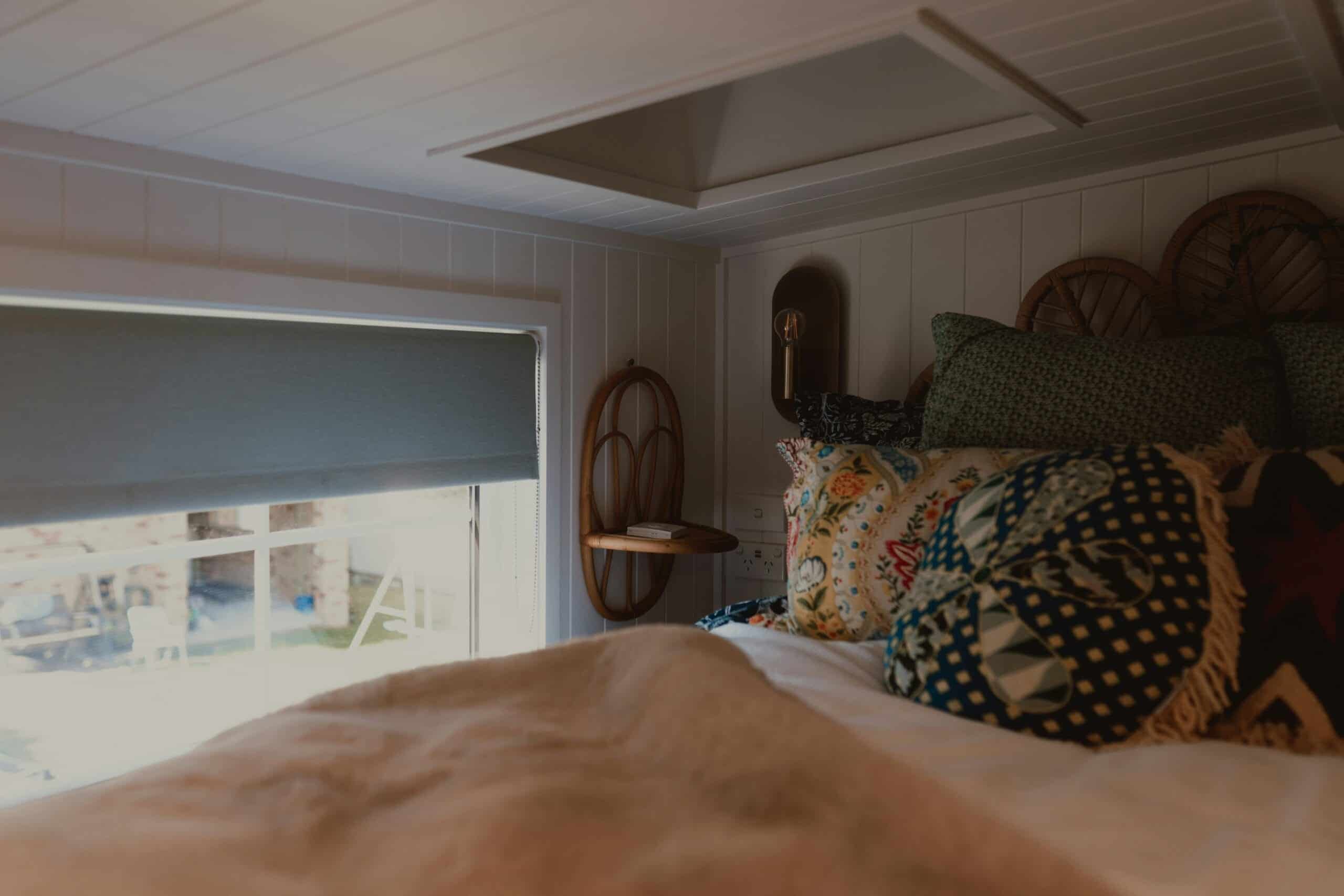
Curtains and shades both block light, but they do it differently. Curtains hang from a rod above the window and gather the light at the edges; shades mount inside or directly over the window frame and seal off the light at the source. For sleep purposes, well-installed shades win by a meaningful margin. The light leak around curtain edges is the streetlight stripe across the ceiling at 4 a.m.; properly fitted shades don’t have that gap.
The category splits into a few designs worth understanding before buying. Roller shades unroll from a top bar and roll back up neatly. Roman shades fold horizontally as they lift. Cellular (honeycomb) shades use air pockets between layers for both light blocking and modest insulation. Pleated paper shades are inexpensive temporary options. Each works; the choice depends on aesthetics, budget, and whether window insulation matters alongside light blocking.
The picks below cover the main approaches at different price points, with notes on installation and what each handles best.
Quick Verdict
- Best for: shift workers, light sleepers, parents of small children whose nap schedules depend on dark rooms, anyone whose bedroom faces east and gets early sunrise light.
- Skip if: the existing curtains already provide sufficient darkness, or natural morning light helps with your wake-up routine.
Disclosure: RestRight is reader-supported. As an Amazon Associate, we earn from qualifying purchases made through links on this page, at no extra cost to you.
How We Chose These Room Darkening Shades
Four selection criteria drove the picks:
Real light blocking, not just “darkening” marketing. Many products labeled room darkening allow significant light through the fabric itself. Picks selected for materials that actually block visible light rather than just dimming it.
Edge fit that minimizes light leak. The fabric matters less than the installation. Picks selected for designs that minimize the gap between shade and window frame when properly installed.
Cordless or wand operation. Corded shades have been phased out of new manufacturing due to child-safety concerns. Picks here use cordless or wand-based operation that’s safer in households with kids or pets.
Installation appropriate for most renters and owners. Some shades require permanent window-frame drilling; some clip on temporarily. Picks include both, with notes on which fits which housing situation.
Shades work alongside the rest of the sleep environment. Our coverage of the complete cool-bedroom framework for hot nights covers the temperature side of the same problem (windows are both light and heat sources). For broader morning-light effects, see how screens affect sleep and the best wake-up light alarm clocks for managing both natural and artificial light cues.
Decision Matrix: Which Shade for Which Window
| Your Situation | Roller Shade | Cellular Honeycomb | Roman Shade | Temporary Pleated Paper | Outdoor Roller |
|---|---|---|---|---|---|
| Renter, no permanent installation | Workable | Workable | Workable | Best fit | Skip |
| Bedroom window, sleep-focused | Best fit | Best fit | Best fit | Workable | Skip |
| Insulation matters (cold climate) | Workable | Best fit | Skip | Workable | Skip |
| Aesthetic-focused, formal bedroom | Workable | Workable | Best fit | Skip | Skip |
| Outdoor patio or covered area | Skip | Skip | Skip | Skip | Best fit |
| Tight budget, immediate need | Workable | Skip | Skip | Best fit | Skip |
1. Achim Cordless Blackout Roller Shade: Best Overall Roller
The Achim cordless roller is a value-tier roller shade that handles the main job (blocking light) without complications. Coated fabric blocks essentially all visible light through the material itself. Cordless spring-loaded operation lifts and lowers the shade with a gentle pull. The mounting brackets accept either inside-frame or outside-frame installation, so the shade fits most window setups. Several sizes available in widths that match standard window dimensions; cut-to-size custom options through the manufacturer for non-standard windows.
Best for
- Standard bedroom windows where roller shade aesthetic fits the room.
- Buyers who want straightforward installation and operation.
- Renters with permission to install inside the window frame.
Skip if
- You want insulation alongside light blocking.
- You prefer the softer look of roman or cellular shades.
2. Chicology Cordless Honeycomb Cellular Shade: Best for Insulation Plus Darkening
Cellular (honeycomb) shades have a pleated structure that creates air pockets between the front and back fabric layers. The air pockets do two things at once: block light through the layered structure, and provide modest insulation against window heat loss and gain. For cold-climate bedrooms or rooms with poor window insulation, the dual function justifies the premium over basic roller shades. The Chicology cellular shade is the mid-tier option with reasonable build quality and pricing.
Best for
- Bedrooms in cold climates where window heat loss is a real comfort issue.
- Setups where light blocking and energy efficiency are both priorities.
- Older homes with single-pane windows that need any insulation help available.
Skip if
- You live in a moderate climate where window insulation doesn’t matter.
- Budget is the primary driver (cellular shades cost more than rollers).
3. SBARTAR Cordless Roman Shade: Best Aesthetic Pick
Roman shades fold horizontally as they lift, producing the soft draped look that fits formal bedrooms better than the harder lines of roller shades. The SBARTAR cordless roman shade includes a blackout fabric liner behind the visible patterned face fabric. The combination provides both the aesthetic and the light blocking without the trade-off most people assume. Available in several patterns and colors; the dark-toned options block more residual light than light-toned options.
Best for
- Aesthetic-focused bedrooms where the shade is part of the room’s design.
- Setups where the existing decor calls for fabric drape rather than vinyl-look rollers.
- Master bedrooms where appearance matters alongside function.
Skip if
- Maximum light blocking is the only goal and aesthetics don’t matter.
- You want simple raise-and-lower operation without the fabric fold complexity.
4. Redi Shade Original Blackout Pleated Paper Shade: Best Temporary Option
The Redi Shade is the pleated paper shade that goes up in five minutes with no tools. Adhesive strips attach to the window frame; pull the shade down to the desired length and cut. The paper material blocks light effectively and stays in place for months of normal use. The trade-off is appearance (it looks like a temporary paper shade because it is one) and durability (it doesn’t last for years like fabric or vinyl shades). For rentals, immediate move-in situations, hotel-room-on-business-travel use, or as a bridge while you decide on permanent shades, this is the right answer.
Best for
- Renters who can’t install permanent shades.
- Immediate-need situations (new baby, shift work just started, sun glare problem).
- Travel use in places with poor window coverings.
Skip if
- You want a long-term shade that lasts for years.
- The bedroom is permanent and you can install proper shades.
5. Coolaroo Cordless Exterior Roller Shade: Best for Patio and Outdoor
Outdoor roller shades address a different but related problem: covered patios, sunrooms, or porches where direct sunlight makes the space unusable during peak hours. The Coolaroo exterior shade mounts to overhangs and rolls down to block sun while still allowing air circulation. Not for windows in the conventional sense, but for the bedroom-adjacent outdoor spaces where bright sun control matters. Multiple sizes and openness factors available; check the openness rating against your specific need.
Best for
- Bedrooms with attached covered patios where sun and glare reach the bedroom.
- Sunrooms used as guest sleeping spaces.
- Outdoor seating areas where afternoon sun makes the space too hot to use.
Skip if
- You need indoor window shades; outdoor shades have different durability and visual considerations.
- There’s no attached outdoor structure to mount to.
Installation: Inside Mount Versus Outside Mount
The single biggest factor in how much light a shade blocks is whether it’s installed inside the window frame or outside (above the frame).
Inside mount: the shade fits within the window frame opening. Cleaner appearance, but the shade is slightly narrower than the window opening, which creates small gaps on either side where light leaks through. Best for aesthetic reasons; not best for maximum darkness.
Outside mount: the shade installs above the window frame and extends past the frame on both sides. Less clean appearance because the shade is visibly larger than the window, but no edge light leak. Best for sleep-focused dark rooms where maximum light blocking is the goal.
For sleep purposes specifically, outside mount is the right choice. Combining outside-mount shades with side blackout panels (small fabric extensions along the sides of the window) eliminates essentially all light penetration. The combination produces darkness that lets the body’s circadian rhythms work as designed; for the broader sleep-environment context, see how to improve sleep quality naturally.
What “Blackout” Versus “Room Darkening” Actually Means
The marketing terminology is inconsistent across brands. Generally, blackout indicates fabric that blocks essentially all light through the material itself. Room darkening indicates fabric that blocks most light but allows some diffuse transmission. The visible difference matters when the goal is creating a dark sleeping environment.
Properly installed blackout fabric on outside-mount shades creates a dark room that doesn’t change with outside light conditions. Room darkening fabric in the same installation creates a noticeably less dark room, especially during direct morning or evening sun exposure. For light-sensitive sleepers, the blackout designation matters; for general use, room darkening is often sufficient.
The same logic extends to the broader bedroom environment. Bedside lamps in the evening should be warm-toned and low-lumen for sleep purposes; see our coverage of the best bedside lamps for reading before bed. Daytime light cues matter too; for shift workers managing inverted schedules, see how to sleep better on night shift.
Frequently Asked Questions
What’s the difference between blackout shades and room darkening shades?
Blackout shades block essentially all light through the fabric; room darkening shades block most light but allow some diffuse transmission. The terminology isn’t standardized across brands.
Can shades replace blackout curtains for sleep?
Yes, often better than curtains can. Properly installed outside-mount shades eliminate the edge light leak that curtains struggle with. Some sleepers combine both for maximum darkness.
Are cordless shades safer than corded?
Yes, particularly in households with children or pets. Corded shades pose a known strangulation risk that has driven the industry toward cordless designs. Most new shades sold are cordless by default.
Can I install shades myself?
Most home shades are designed for DIY installation with basic tools (drill, level, screwdriver). Inside mount typically takes under an hour per window; outside mount can take longer if you need to find studs for heavy shades.
Will shades damage the window frame?
Properly installed mounts use small screw holes that are easily filled if you remove the shade later. Adhesive-mount temporary shades don’t damage the frame at all.
How do I clean room darkening shades?
Most fabric shades clean with a vacuum brush attachment for routine dust. Vinyl and plastic shades wipe clean with a damp cloth. Avoid soaking fabric shades; check manufacturer instructions for spot-cleaning specific stains.
Do shades insulate as well as curtains?
Cellular (honeycomb) shades insulate better than most curtains due to the air-pocket structure. Single-layer roller and roman shades insulate less than heavy thermal curtains. The right choice depends on whether insulation or maximum light blocking is the priority.
What if my windows are not standard sizes?
Most shade manufacturers offer cut-to-size or custom sizing for non-standard windows. The premium over standard sizes varies; budget more for very large or very small windows.
