
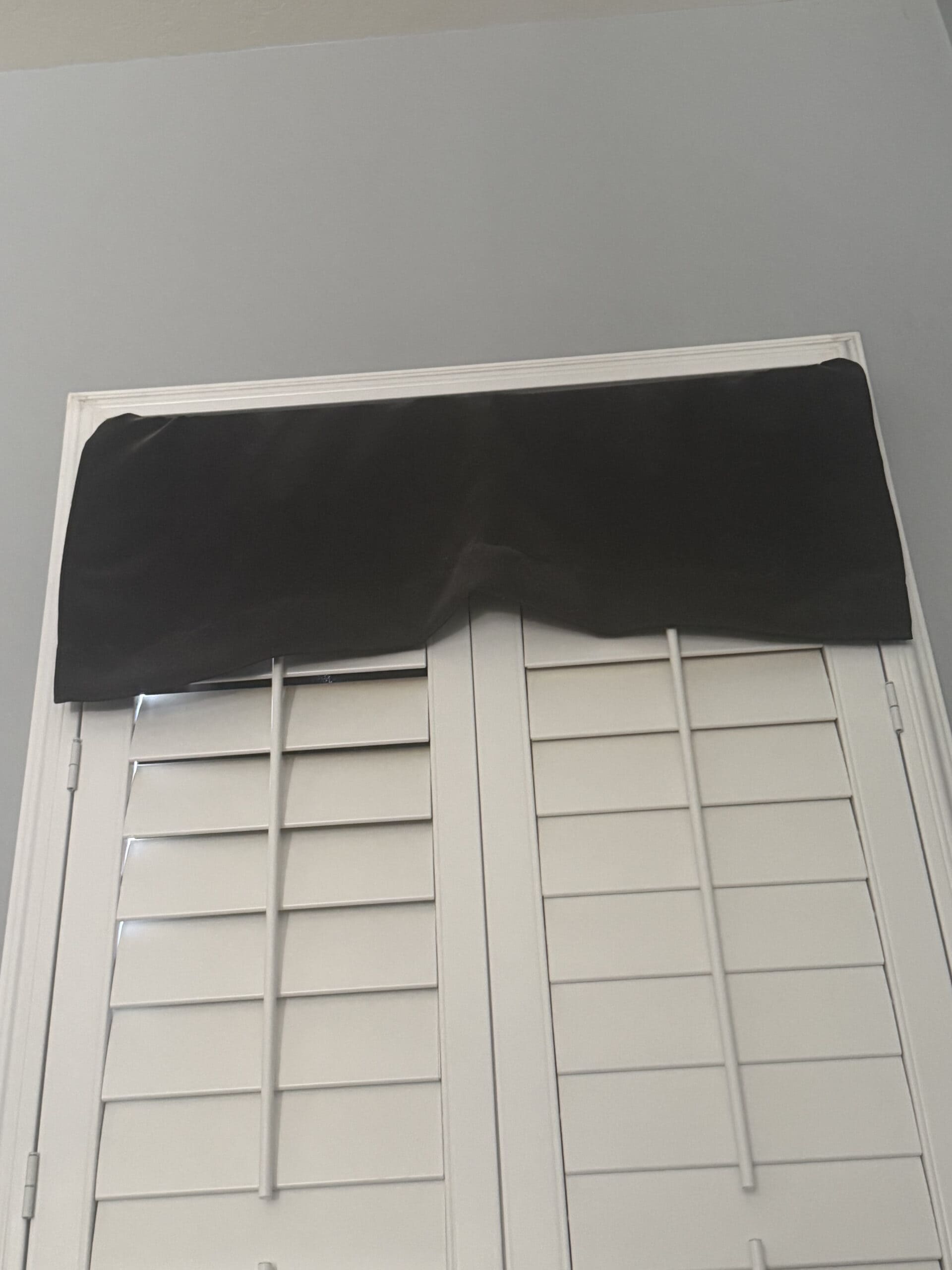
Darkness does not average. A room with excellent blackout on three windows and blinds on a fourth opening is as bright as the fourth opening allows, because light from one source fills the whole room.
That is my situation and I stopped trying to fix it. The room I sleep in has blackout curtains, some on rods stopping a foot or two above the floor and some fitted into shutters, and a sliding glass door with blinds. The door decides how dark the room is. Our guide to making a bedroom dark covers the full approach.
Quick Answer
Find the brightest remaining source rather than improving what you already have. One uncovered or poorly covered opening sets the floor for the entire room.
Why One Gap Beats Everything Else
Light entering a room scatters off walls, ceiling, and pale surfaces, so it does not stay near the window it came from. A single bright edge lights the whole space.
Eyes adapt to darkness over roughly twenty to thirty minutes, becoming dramatically more sensitive. A gap that looks trivial when you walk in is obvious once adapted.
That combination is why upgrading already-good curtains produces no improvement while the actual source is untouched.
The diagnostic is straightforward: lie in bed at the time you sleep, wait twenty minutes without looking at a phone, and see what is brightest. Our note on stopping light leaking around blackout curtains covers the edges.
Where the Remaining Light Usually Comes From
Blinds rather than curtains
Blinds mounted inside a frame leak at every slat edge and around the perimeter. This is my situation with the sliding door.
Sliding and patio doors
Large openings, and the covering has to clear the door to use it. The hardest case in most homes.
Under the bedroom door
Hallway light through the gap under a door is frequently brighter than anything from outside.
Electronics
Standby LEDs on televisions, chargers, and alarm clocks become obvious once your eyes adapt. Our roundup of door draft stoppers covers the door gap.
Doorways Are the Overlooked One
Light from inside the house is frequently brighter than anything outside, and it arrives through a gap almost nobody covers.
The gap under a bedroom door lets hallway light straight in at floor level, and it reflects up off pale flooring into the room. A hallway light left on overnight makes a well-curtained room noticeably brighter.
Doorways without a door at all are the harder version. I have curtains hanging over a doorway leading to a bathroom and a closet, on a tension rod, and that arrangement handles an opening that would otherwise be permanently uncovered.
A draft stopper along the base of a door solves the floor gap cheaply and does something for sound at the same time.
Checking this is easy: stand in the hallway with the bedroom door closed at night and see how much light is visible from the other side. Our roundup of doorway curtains covers the openings without doors.
Why Shutters Do Not Solve It
Shutters look like they should be the definitive answer and they are not. They control light beautifully during the day and leave gaps at the louvres and around the frame at night.
I have curtains fitted into shutters on some windows, which is the combination that works: the shutter handles the daytime and the curtain handles the darkness.
Shutters alone, or blinds alone, produce a dim room rather than a dark one. Anything mounted inside the frame has an edge, and every edge is a light path.
Our note on whether you need blackout curtains with shutters covers that pairing.
The Cheap Fixes Worth Trying First
Before any track system or new curtains, a few things cost almost nothing and address the most common leaks.
Move the rod higher and wider. Mounting well above the frame and extending several inches past it on each side removes the top and side gaps, which are where most light enters. That is a screwdriver rather than a purchase.
Close the middle gap. Where two panels meet they leave a vertical line, and overlapping them or clipping them together removes it entirely.
Cover the electronics. Standby LEDs on a television, a charger, or an alarm clock are trivial individually and obvious once your eyes have adapted. A piece of tape handles each one.
Deal with the door gap, using a draft stopper or by turning off the hallway light rather than covering the gap at all.
Those four take an evening and handle most of what people try to solve by buying better curtains. Our note on how high to hang blackout curtains covers the mounting.
What Mine Actually Costs Me
The curtains have been up three or four years and are the standard type rather than thermal. They have faded slightly, which is what happens to fabric absorbing sunlight daily.
They work well on the windows they cover. The sliding door with blinds is where the light comes in, and no amount of improving the curtains changes that.
Fixing it properly would mean a track system across the door opening, which is a real project rather than a purchase.
I have not done it, and the room stays dim rather than dark. Given that my sleep problem is falling asleep rather than being woken, the difference has not been worth the work. Our roundup of blackout curtains for sliding glass doors covers the proper fix.
Whether Dim Is Actually a Problem
For most people, dim is enough. A room where you can make out furniture outlines but not read is dark enough to sleep well in.
Where total darkness genuinely matters is shift work, a window facing a streetlight, or an early sunrise arriving hours before you want to wake.
It is also worth knowing that a completely dark room removes the morning light that helps you wake naturally, which is why some people find blackout curtains make mornings harder.
Deciding which you need before spending is the useful step, since the measures taking a room from dim to fully dark cost considerably more than everything before them. Our note on whether blackout curtains make waking harder covers that trade.
What a Sleep Mask Solves
A mask handles at the eyes what a room may never handle at the window, for a fraction of the cost and none of the installation.
I have sleep masks and they cover exactly the gap my room leaves: dim, with one opening I am not going to re-engineer.
They also travel, which no curtain does, and work in hotels and spare rooms where you control nothing.
The limitation is tolerance. Some people cannot sleep with anything on their face, and a poorly fitted mask presses on the eyes or slides off during the night. Our roundup of sleep masks covers fit.
Dim Bedroom FAQ
Why is my room still bright with blackout curtains?
Something else is letting light in. Light scatters through a whole room, so one uncovered opening sets the brightness regardless of how good the curtains elsewhere are.
How do I find the source?
Lie in bed at your usual time, wait twenty minutes without looking at a phone so your eyes adapt, then look for the brightest point. Gaps invisible on entry become obvious.
Do blinds work as well as curtains?
No. Mounted inside a frame, they leak at every slat edge and around the perimeter. That is exactly why my room is dim rather than dark.
What about shutters?
Excellent for daytime light control and not for darkness, since louvres and frame edges both leak. Curtains fitted into shutters is the combination that works.
Is a sliding door fixable?
With a track system across the opening, which is a project rather than a purchase. I have not done it, and a sleep mask covers the difference for me.
Do blackout curtains fade?
Mine have faded slightly over three or four years. Fabric absorbing daily sunlight changes over time, which is expected rather than a defect.
Is dim good enough?
For most people, yes. Being able to see furniture outlines but not read is enough to sleep well. Shift work, streetlights, and early sunrises are the real exceptions.
Should I just use a sleep mask?
It is the cheapest answer and it travels. Fit decides whether it works, since a mask that presses on the eyes or slips off helps nobody.
For the wider picture, see our guide to how to cool a bedroom for better sleep.
