
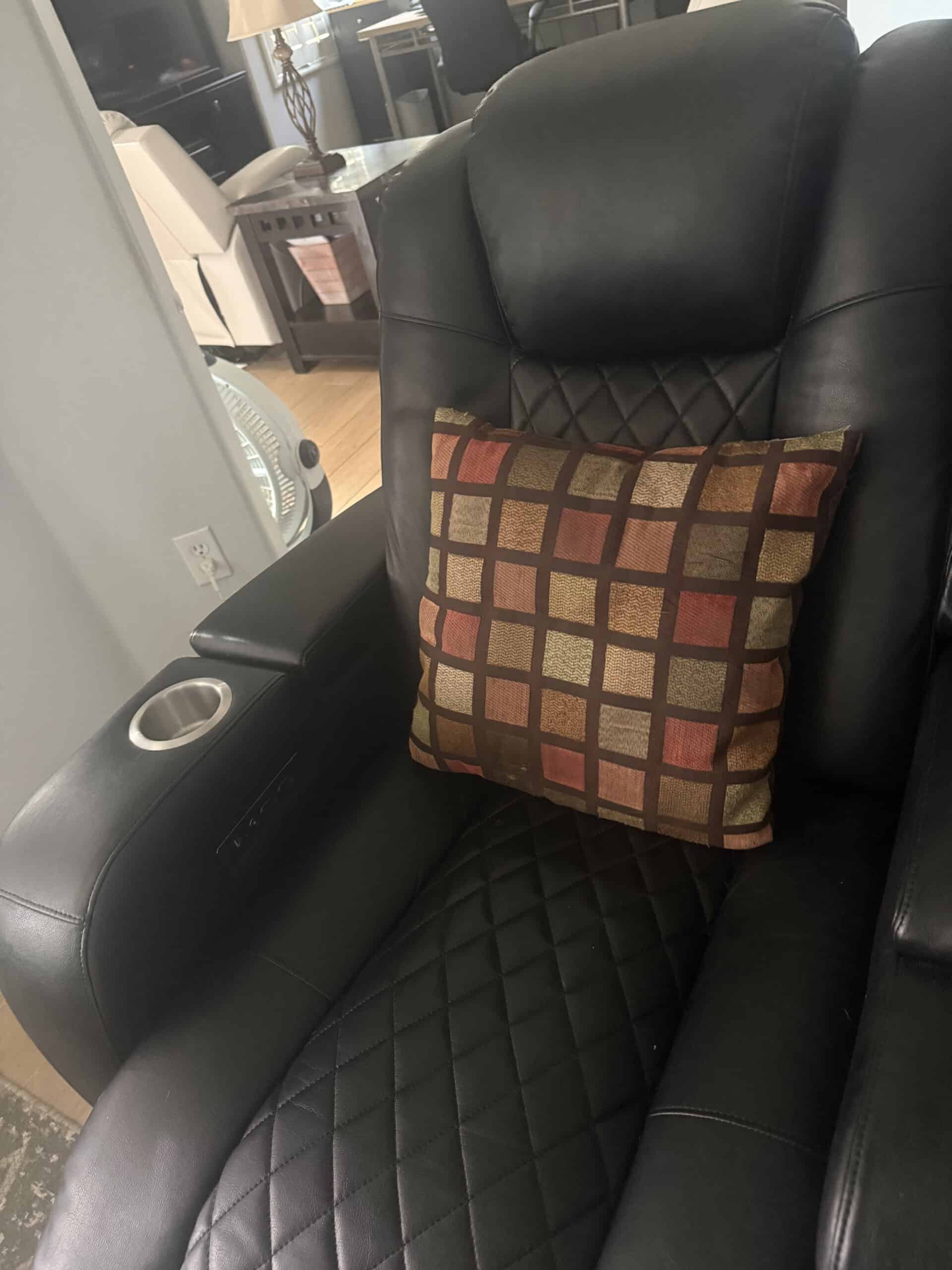
It depends entirely on whether you mean a nap or every night. Short periods in a reclined chair are unremarkable. Sleeping upright as a permanent arrangement is a different question, and it is one worth raising with a doctor rather than settling from an article.
I nap in mine and have never spent a full night in it, with no stiffness or numbness afterward. Everything below about overnight use is research rather than my own experience. Our roundup of recliners for sleeping covers the chairs.
Medical Disclaimer
This is general information rather than medical advice. Anyone sleeping in a recliner because lying flat is uncomfortable, or because of breathing difficulty, reflux, or pain, should discuss that with a doctor. Needing to sleep upright can itself be a symptom worth investigating.
The Position at a Glance
| Factor | Reclined sleeping |
|---|---|
| Acid reflux | Head elevation generally helps |
| Breathing and congestion | Upright can ease both |
| Post-surgical recovery | Frequently recommended by surgeons |
| Circulation in the legs | Depends heavily on chair position |
| Spinal alignment | Fine at a good angle, poor at a bad one |
| Long-term as the only bed | Worth a conversation with a doctor |
Naps Are a Different Question
A twenty or thirty minute nap in a reclined chair is not something health guidance treats as a concern.
The position is comparable to resting on a sofa, which nobody considers a medical decision.
Mine is naps only and there has been no stiffness or numbness from it, which is what I would expect from short sessions in a chair that supports the head properly.
What changes the picture is duration and frequency. Eight hours every night in the same position is a different demand on the body than half an hour in the afternoon. Our roundup of recliners for napping covers short sessions.
Where Reclined Sleeping Genuinely Helps
Elevating the head is a standard recommendation for acid reflux, since gravity keeps stomach contents where they belong rather than letting them travel upward.
Breathing conditions and congestion frequently improve upright, which is why people with a heavy cold end up in a chair.
Surgeons commonly recommend reclined sleeping after certain shoulder, chest, and abdominal procedures, because getting in and out of a flat bed involves movements the recovery does not allow.
Some people with sleep apnea find symptoms less severe in a partially upright position, though that is not a substitute for prescribed treatment.
In all of those cases the recliner is solving a specific problem, and the position is the point rather than a compromise. Our note on pillows for acid reflux covers the bed-based alternative.
The Circulation Question
Position matters more than the chair
Legs elevated is different from legs down with knees bent.
Sitting upright all night is the concern
A barely reclined chair leaves legs dependent for hours.
Full recline is closer to lying down
Which is why infinite-position chairs get recommended for this.
Existing conditions change it
Circulatory issues make this a doctor conversation rather than a preference.
Spinal Alignment Depends on Setup
A recliner at a good angle with proper head support keeps the spine in reasonable alignment, and that is what the adjustments exist to achieve.
A chair set poorly does the opposite. A headrest pushing the head forward flexes the neck for hours, and unsupported lumbar leaves the lower back unsupported through the night.
That is the difference between people who report waking up fine and people who report stiffness, and it is usually setup rather than the chair itself.
Falling asleep in a chair not set up for it is the common version, since nobody adjusts a recliner properly before dozing off accidentally.
For deliberate overnight use, spending time getting the position right is worth considerably more than the chair’s price bracket. Our note on whether you need a pillow in a recliner covers head support.
When Needing the Chair Is the Signal
Someone who prefers a recliner is in a different situation from someone who cannot lie flat.
Difficulty breathing when lying down is a recognized symptom with several possible causes, and it is one doctors ask about directly.
Reflux severe enough to prevent flat sleeping is worth treating rather than working around, since chronic exposure has its own consequences.
Pain that only allows an upright position points at something specific rather than at a mattress preference.
In each case the recliner is managing a symptom, and the symptom is the thing that warrants attention. Our note on wedge pillows for recovery covers the causes.
The Bed Alternative
Almost everything a recliner offers for sleeping can be achieved in a bed, and that is worth knowing before treating the chair as the only option.
A wedge pillow elevates the head and torso at a similar angle, and it costs a fraction of a recliner while letting you keep a mattress underneath.
Adjustable bed bases do the same thing with more control, raising head and legs independently in a way most recliners cannot.
The advantage of either is that you keep the ability to change position through the night, which is the main thing a chair takes away.
Where a recliner still wins is getting in and out, which is exactly why surgeons recommend them during recovery rather than recommending a wedge. Our note on how to use a wedge pillow covers the setup.
Practical Downsides Nobody Mentions
Recliners restrict movement, and healthy sleep involves shifting position throughout the night in ways a chair does not allow.
That restriction is part of why pressure points become noticeable over a full night when they never appear during a nap.
Temperature is the other one. Upholstery holds heat against your back and legs with none of the airflow a mattress and bedding arrangement provides.
Getting up in the night is also more involved from a reclined chair than from a bed, particularly a power chair that has to cycle through its travel.
None of those is dangerous. They are the reasons a recliner tends to produce lighter sleep than a bed, which some people find suits them anyway.
Bedding matters in a chair too, and a light blanket handles the temperature problem better than pulling a heavy one over upholstery that already traps heat. Our note on choosing a mattress covers the surface comparison.
Common Mistakes to Avoid
Treating naps and overnight the same
Half an hour in a chair is not eight hours in one, and guidance differs accordingly.
Sleeping barely reclined
Nearly upright leaves the legs dependent for hours, which is the circulation concern.
Not setting the chair up
Most stiffness comes from headrest and lumbar position rather than the chair itself.
Working around a symptom
Needing to sleep upright for breathing, reflux, or pain is worth investigating rather than accommodating.
Sources
Mayo Clinic, on gastroesophageal reflux and sleeping position. American Academy of Sleep Medicine, on sleep position and sleep quality. National Heart, Lung, and Blood Institute, on breathing difficulty when lying flat. American Academy of Orthopaedic Surgeons, on post-surgical positioning and recovery.
Sleeping in a Recliner FAQ
Is sleeping in a recliner bad for you?
Naps are unremarkable. Every night as a permanent arrangement is a different question, and one worth raising with a doctor rather than settling from an article.
Do you sleep in yours?
Naps only, never a full night. No stiffness or numbness from it. Everything about overnight use here is research rather than experience.
Does it help with acid reflux?
Head elevation is a standard recommendation for reflux, since gravity keeps stomach contents down. A wedge pillow achieves the same thing in bed.
What about circulation?
Position matters more than the chair. Sitting nearly upright leaves the legs dependent for hours. Full recline is closer to lying down. Existing circulatory conditions make this a doctor question.
Why do I wake up stiff?
Usually setup rather than the chair. A headrest pushed forward flexes the neck for hours, and unsupported lumbar leaves the lower back working all night.
Is it normal after surgery?
Frequently recommended after certain shoulder, chest, and abdominal procedures, because getting in and out of a flat bed involves movements the recovery does not permit.
Why is sleep lighter in a recliner?
Restricted movement, pressure points that build over hours, and upholstery holding heat with no airflow. None is dangerous, and together they produce lighter sleep.
When should I see a doctor?
If you cannot lie flat because of breathing difficulty, reflux, or pain. Needing to sleep upright is itself a symptom worth investigating rather than working around.
