
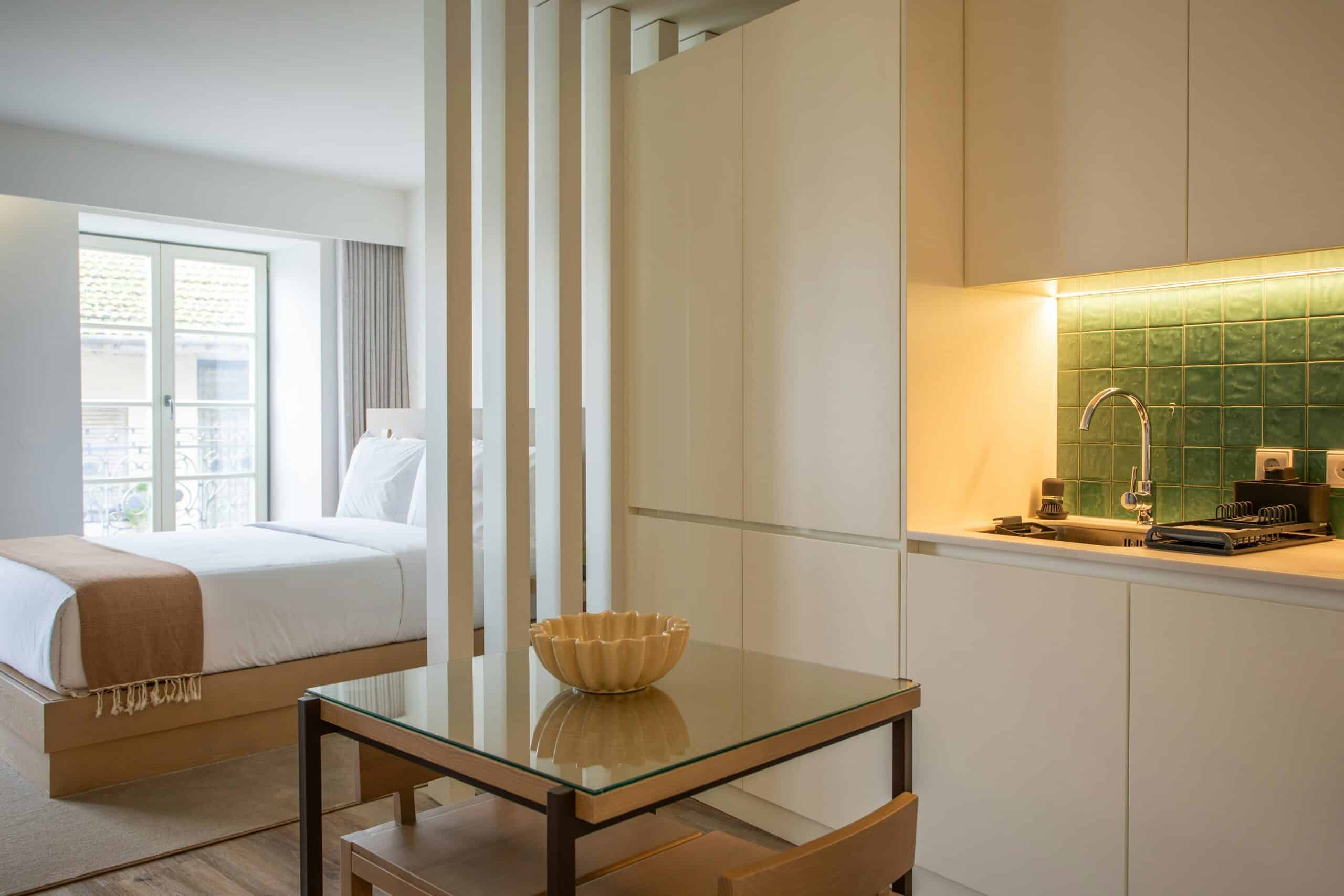
In a studio your bed sits in your kitchen, your office, and your living room. That creates a specific problem: your brain stops associating the space with sleep because you use it for everything else all day.
The fixes divide into two jobs. Some create physical separation so the bed feels like a different zone, and others handle the light and noise that a single room concentrates around you.
Quick Verdict
Buy separation before you buy comfort. A room divider or a curtain track costs less than most bedding and does more for sleep in a studio. Add blackout coverage on the windows and something to mask street noise, since one room means every disturbance reaches your bed.
Key Takeaways
- Visual separation matters more than square footage
- Working from bed weakens the sleep association fastest
- Studios concentrate light and noise into one space
- Under-bed storage frees floor area you cannot get elsewhere
- Folding and vertical furniture beats standard pieces
- A tension curtain track works where a divider will not fit
How We Picked
Separation came first. Anything that makes the bed feel like a distinct zone does more for sleep quality in a studio than an upgrade to the bed itself.
Footprint decided the rest. A product occupying floor area has to earn it twice in a studio, once for its function and once for the space it removes.
Renter compatibility ruled out permanent installation. Tension systems, freestanding pieces, and adhesive mounting cover what most studio dwellers can actually do.
Noise handling counted because a studio gives you no interior rooms. Street noise reaches your bed directly.
Room Dividers and Folding Screens
Why It Stands Out
A screen between your bed and the rest of the room creates a boundary your brain reads even when the space behind it is three feet wide. You stop seeing your desk from your pillow.
Folding designs collapse when you want the room open, which suits a studio that hosts people occasionally.
Solid panels block more light than fabric and cost more floor depth. Fabric screens fold thinner and let light through.
They also hide the unmade bed from the rest of your living space, which affects how the room feels during the day.
Worth Knowing
Screens tip. In a small space you will brush past one regularly, and lightweight versions fall.
They block airflow as well as sight, which matters in a warm studio where one window does all the ventilation.
Buy this if you have three or four feet of depth to give up. Skip in the smallest studios where a curtain does the same job in two inches.
Ceiling-Mounted Curtain Tracks
Why It Stands Out
A curtain on a track separates a sleeping area without taking floor space. Closed it defines a room, and open it disappears against the wall.
Tension rod systems mount between walls without drilling, which covers renters who cannot install a ceiling track.
Blackout fabric on the divider does double duty, blocking both sight and any light coming from the living side of the room.
Worth Knowing
Curtains block sound poorly. They handle sight and light and do almost nothing about noise from the other side.
Tension systems need two opposing walls at the right distance, which not every studio layout offers.
Buy this for the smallest spaces where a screen will not fit. Skip if you need sound separation, and blackout fabric options sit in blackout curtains.
Under-Bed Storage
Why It Stands Out
The area under your bed is the largest unused space in a studio. Moving off-season clothes and spare bedding there removes a dresser from the floor.
Fewer items in your sightline from bed reduces the visual clutter that keeps some people alert at night.
Rolling containers slide out from the side, which suits a bed pushed against a wall where you cannot reach the far end.
Worth Knowing
Bed frame clearance decides what fits. Measure before buying, since containers advertised as under-bed vary by several inches.
Storing things you use daily under a bed adds friction to your routine. Reserve it for seasonal and spare items.
Buy this in any studio with a raised bed frame. Skip for platform beds sitting flat on the floor, and options sit in under-bed storage.
Blackout Coverage That Works With One Window
Why It Stands Out
A studio often has one window doing everything: light, ventilation, and view. That window sits close to your bed by definition.
Full blackout coverage matters more here than in a bedroom, since there is no second room to retreat to when the light comes up.
Rods extending past the frame remove the side gaps that panels hung inside a recess always leave.
Worth Knowing
Blocking the only window means blocking your ventilation. In a warm studio that trade needs thinking about.
Renters who cannot drill need tension or adhesive mounting, which limits how far a rod extends.
Buy this for any studio with morning sun. Skip full blackout if the window is your only airflow in summer, and mounting options sit in no-drill curtain rods.
White Noise Machines
Why It Stands Out
One room means street noise, hallway sound, and neighbors all arrive at your bed with nothing in between. Masking raises the background so individual sounds stop standing out.
A machine also covers the sound of your own space, including a fridge cycling six feet from your pillow.
Continuous fan-based sound avoids the loop that becomes noticeable in recorded tracks over a long night.
Worth Knowing
Masking works better than blocking here, since a studio gives you no structural separation to improve.
Volume needs care in a small room. A machine three feet from your head runs louder than intended.
Buy this in any studio on a noisy street. Skip looping app recordings for full nights, and options sit in white noise machines.
Compact Bedside Lighting
Why It Stands Out
Studios rarely have a bedside table. Clamp lights and wall-mounted sconces put controllable light next to your bed without a piece of furniture.
Separate bedside lighting also lets you turn off the overhead, which is what tells your brain the room has switched from living space to sleeping space.
Warm dimmable options matter more in a studio, where the same light serves cooking, working, and winding down.
Worth Knowing
Clamp lights need something to clamp to. A bed frame with no headboard leaves you mounting to the wall instead.
Adhesive wall mounts fail under weight over time, particularly in humid rooms.
Buy this if your overhead light is your only option. Skip table lamps in studios without surface space, and options sit in bedside lamps.
Studio Sleep Setup at a Glance
| Item | Floor space cost | Renter friendly |
|---|---|---|
| Folding screen | 3 to 4 feet of depth | Yes |
| Curtain track divider | Almost none | With tension mounting |
| Under-bed storage | None, frees space | Yes |
| Blackout curtains | None | With no-drill rods |
| White noise machine | Minimal | Yes |
| Clamp lighting | None | Yes |
What to Look For
Separate before you upgrade
A divider costs less than most bedding and does more for sleep in one room. Buy the boundary first.
Measure the depth you can lose
Screens need three or four feet. In a tight studio a curtain achieves the same separation in two inches, and that difference decides the purchase.
Check your mounting options
Tension systems need two opposing walls at the right distance. Adhesive fails under weight. Work out what your walls allow before choosing.
Protect the window trade
Full blackout on your only window blocks ventilation too. In a warm studio that may mean a sleep mask instead of full coverage.
Rebuilding the Sleep Association
Equipment creates separation. Habits are what make your brain treat the bed as a sleeping place again, and in a studio those matter more than in a home with a bedroom door.
Keep the bed for sleep. Eating, working, and watching things from it all teach your brain that the bed is a general-purpose surface, which is exactly the signal you want to avoid.
Change the lighting at a fixed time each evening. Turning off the overhead and switching to a warm bedside light marks a transition the room cannot mark for you.
Close the divider every night, even when nobody is visiting. The gesture is the point rather than the privacy.
Put work things out of sight. A laptop closed and moved, rather than sitting open across the room, removes the visual reminder that your bed shares a space with your job.
Make the bed each morning. In a studio it is the largest object you see all day, and an unmade bed in your peripheral vision invites you back into it at three in the afternoon.
Screens Against Curtains
Folding screens
Solid, freestanding, and movable. They block more light and cost real floor depth, and they tip in a space where you brush past them daily.
Curtain dividers
Almost no floor cost, and they disappear when open. They block sight and light and do nothing about sound, and they need suitable walls to mount between.
Common Mistakes to Avoid
Working from the bed
Using your bed as a desk weakens the association between that space and sleep faster than any environmental factor. A chair anywhere else in the room is worth the floor space.
Buying a better mattress first
In a studio the room is usually the constraint rather than the bed. Separation, light, and noise all matter more than an upgrade you sleep on.
Blocking the only window completely
Airflow and darkness compete when one window does both. A mask plus partial coverage often beats full blackout in a warm room.
Ignoring the noise you make
A fridge, a laptop fan, and a radiator all sit within a few feet of your pillow in a studio. Masking handles what you cannot move, and the wider approach sits in choosing bedroom essentials.
Recommended Reading
- bedroom essentials
- blackout options
- sound masking
- reclaiming floor space
- fold-away sleeping
- why the couch feels easier
Part of our guide to improving sleep quality naturally.
Related: sleep products for people who work from home.
Frequently Asked Questions
How do I separate a sleeping area in a studio?
A folding screen if you have three or four feet of depth, and a ceiling or tension curtain track if you do not. Both create the visual boundary that matters more than actual square footage.
Does working from bed affect sleep?
It weakens the association between that space and sleeping, which is the specific problem studios create. A chair elsewhere in the room is worth the floor space it costs.
What should I buy first for a studio bedroom?
Separation. A divider or curtain costs less than most bedding and does more, since the room rather than the bed is usually the constraint.
How do I block light with only one window?
Extend the rod past the frame on both sides, since light enters at the edges. Blocking your only window also blocks ventilation, so a sleep mask sometimes works better in summer.
Do curtain dividers block noise?
Barely. Fabric handles sight and light, and sound passes through almost unaffected. Masking with a white noise machine is the practical answer in one room.
Is a Murphy bed worth it in a studio?
It removes the bed from the room during the day, which solves the separation problem completely. The cost and installation rule it out for many renters.
Where do I put things without a dresser?
Under the bed for seasonal and spare items, which is the largest unused space in a studio. Keep daily items accessible, since retrieving them from under a bed adds friction.
