
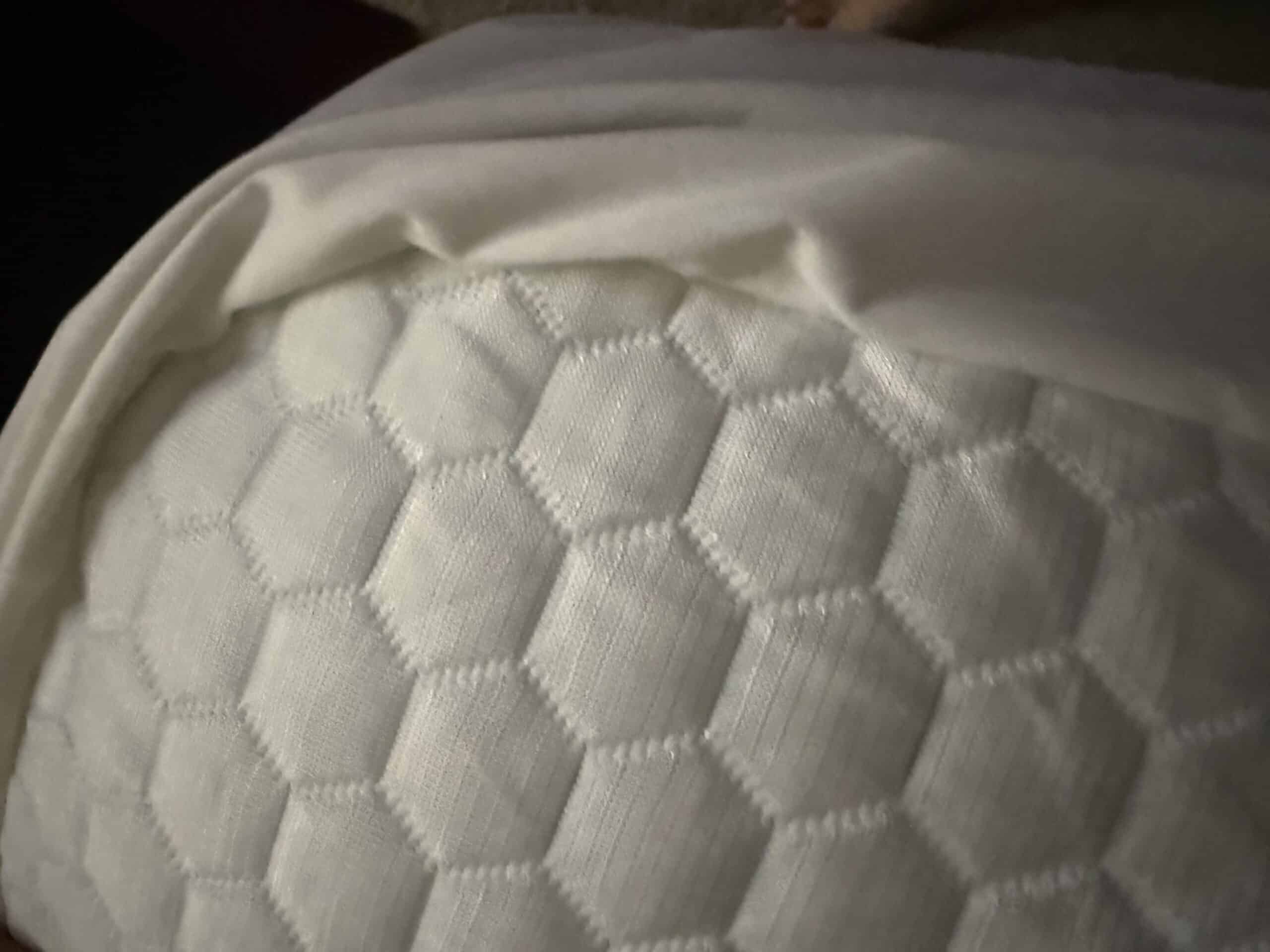
People ask about weight and the real problem is shape. A topper is large, floppy, and wants to fold in the middle while you are carrying it, which makes a light one harder to handle than its weight suggests.
Mine is a cooling topper I have had three or four years. It is not heavy at all, a little thick, and a little awkward, and none of that has ever been a problem. Our roundup of cooling toppers covers the category.
Quick Answer
Weight varies mostly by material and thickness. Latex is heaviest, memory foam sits in the middle, and fiber and down alternative are lightest. Handling difficulty tracks size and floppiness rather than weight.
Roughly What to Expect
| Material | Relative weight | Handling |
|---|---|---|
| Latex | Heaviest by a clear margin | Dense, holds shape, two people |
| Memory foam | Moderate | Folds in the middle when carried |
| Gel-infused foam | Slightly above plain foam | Similar to memory foam |
| Fiber fill | Light | Bulky rather than heavy |
| Down alternative | Lightest | Easy, compresses readily |
| Wool | Moderate | Dense but manageable |
Why Weight Is the Wrong Question
A topper is roughly the footprint of a mattress, which means it is unwieldy before it is heavy.
Foam and fiber both fold under their own weight when lifted from one edge, so the thing you are carrying reshapes itself halfway across a room.
That is what makes changing sheets on one annoying rather than difficult, since you are lifting a corner while trying to get fabric underneath a layer that keeps sagging.
Mine is a little awkward for exactly that reason and it is not heavy, which is a fair description of most toppers below the latex end. Our note on keeping a topper from sliding covers the related handling problem.
Thickness and Weight Are Not the Same Signal
A thick topper and a heavy one are different things, and conflating them leads people to wrong conclusions about what they are buying.
Thickness is about how much material sits between you and the mattress, which is what changes how the bed feels.
Density is how much that material weighs per unit of volume, and it is what determines support and how long the topper holds up.
A thick low-density topper can weigh less than a thin dense one and will compress under you far more, which is the version people find disappointing.
Mine is a little thick without being heavy, which puts it in the moderate-density range that most cooling toppers occupy. Our note on whether toppers are worth it covers the value question.
What Actually Adds Weight
Material density
Latex is considerably denser than foam of the same thickness, which is why it dominates the heavy end.
Thickness
Weight scales with it. A thicker topper in the same material is proportionally heavier and considerably bulkier.
Bed size
The largest single factor. The same product across a larger footprint is more of it.
Absorbed moisture
Foam holds moisture from humidity and sweat, and an old topper in a damp climate weighs more than it did new. Our note on how long a topper lasts covers ageing.
When Weight Genuinely Matters
Moving house is the clearest case, and a latex topper on a large bed is a two-person item rather than an awkward one.
Rotating or flipping the mattress underneath means lifting the topper off first, which is a job you do periodically rather than never.
Adjustable bed frames have stated weight limits covering everything on them, and a heavy mattress plus a heavy topper can approach that.
Anyone with limited strength or mobility should weigh this before buying, since the topper has to come off for sheet changes regardless of how rarely you move house. Our note on choose a mattress covers the routine.
Knowing which of those applies to your situation is what turns a specification into a decision, since most people never move a topper after the day it goes on the bed.
Handling One on Your Own
Fold it in half rather than carrying it flat, which halves the footprint and stops it sagging in the middle.
Roll foam from one end instead, which is how they arrive and what they tolerate best.
Drag rather than lift where the floor allows it, since a topper slid across a bed takes no effort at all compared with lifting one.
Do sheet changes from the corners rather than trying to lift the whole thing, which is the version that makes a topper feel heavier than it is.
Weight on the Mattress Underneath
A topper adds load to whatever it sits on, and that matters in two situations people rarely consider.
An older mattress already showing sagging gets a little more weight distributed across it, which does not cause the sagging and does not help it either.
Slatted bed bases have their own limits, and a heavy mattress with a heavy topper on widely spaced slats is asking more of them than the mattress alone.
Neither is a common failure, and both are worth a moment’s thought before adding the heaviest category of topper to an old setup.
For anything below the latex end, the additional load is modest enough that it rarely enters the calculation at all. Our note on telling if a topper is worn out covers ageing.
Compressed Delivery Changes Nothing
Foam toppers arrive vacuum-compressed in a box, which makes the delivery weight the same and the package far easier to move.
Once expanded it will not go back, so the manageable box is a one-time convenience rather than a property of the product.
Expansion takes time and the topper reaches full loft over hours rather than minutes, which is worth knowing before assuming a thin arrival is a defect.
That is also why moving house with an expanded foam topper is harder than the original delivery suggested it would be. Our roundup of toppers for hot sleepers covers the options.
Handled that way, a topper stops being a two-person job and becomes a mildly annoying one, which is where mine has always sat.
Weight Against What You Are Buying It For
Heavier generally means denser, and denser generally means more support and a longer life, so weight is partly a proxy for quality within a material.
Across materials it tells you very little. A heavy latex topper and a light fiber one are different products rather than better and worse versions of the same thing.
Cooling toppers sit wherever their base material sits, since the cooling comes from gel infusion or construction rather than from anything that changes the weight much.
Mine is unremarkable on weight and that has never been a reason to think about it, which is probably the right outcome for this particular specification. Our note on how many cooling things you need covers where it sits in a setup.
Mattress Topper Weight FAQ
How heavy is a mattress topper?
Depends mostly on material and bed size. Latex is heaviest, memory foam moderate, and fiber and down alternative lightest. Mine is a cooling topper and is not heavy at all.
Is a heavier topper better?
Within a material, heavier usually means denser and longer-lasting. Across materials it tells you almost nothing, since latex and fiber are different products rather than better and worse.
Why is mine hard to move if it is not heavy?
Size and floppiness rather than weight. A topper folds in the middle when lifted from one edge, which is what makes it awkward rather than difficult.
Can one person handle it?
Most, yes. Fold or roll it rather than carrying it flat, and drag it across the bed rather than lifting where you can.
Does it get heavier over time?
Slightly, since foam absorbs moisture from humidity and sweat. It is not dramatic and it is part of why an old topper feels different from a new one.
Does weight matter for an adjustable bed?
It can. Adjustable frames have weight limits covering everything on them, and a heavy mattress plus a heavy topper can approach the stated figure.
Are compressed toppers lighter?
No, the packaging is just easier to move. Once expanded it stays expanded, so the manageable box is a one-time thing rather than a property of the topper.
Should weight affect what I buy?
Only if you will be moving it often or have limited strength, since it comes off for sheet changes. Otherwise material and thickness matter far more.
