
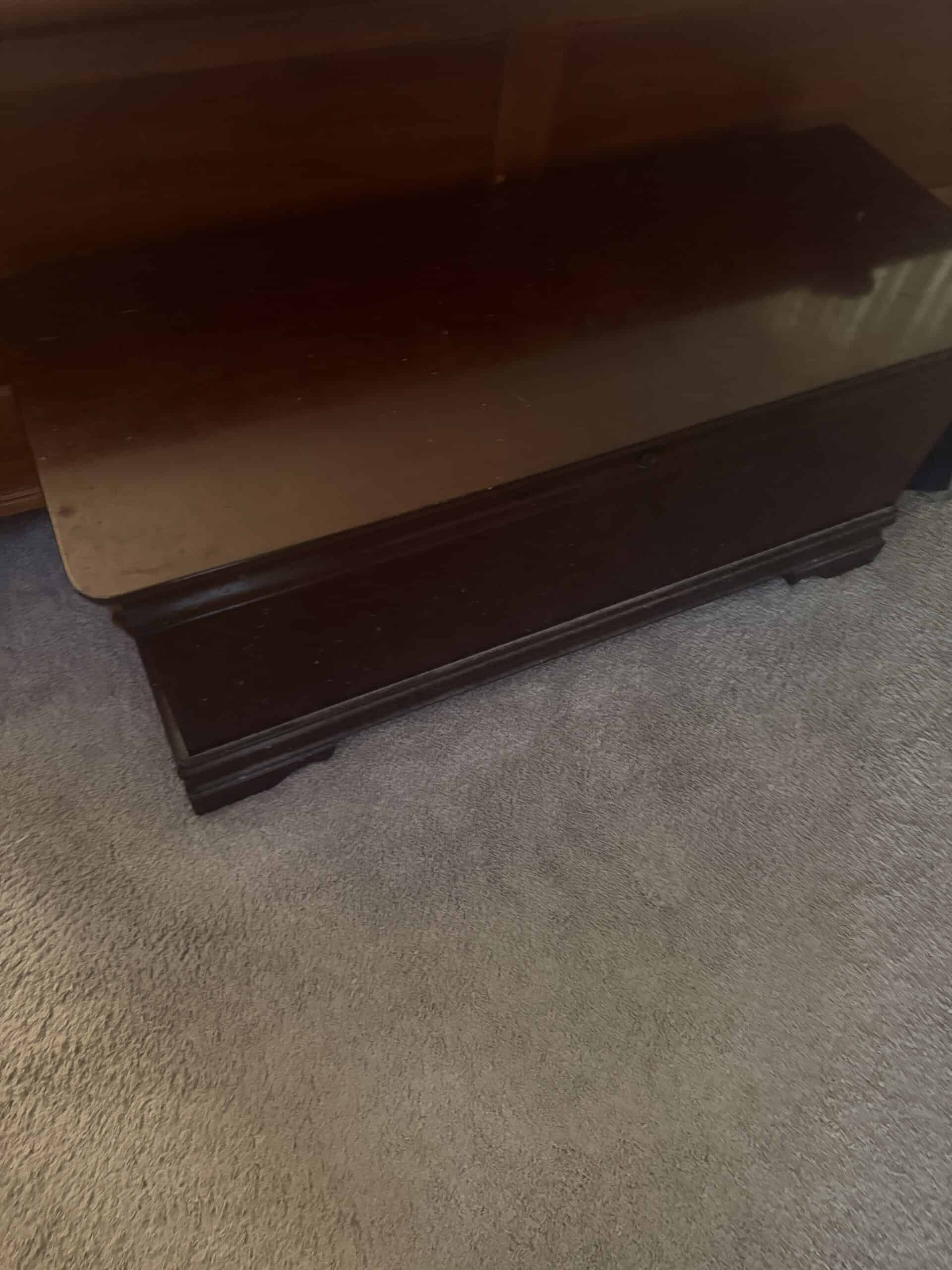
If it has storage inside, usually yes. A bench without storage is a place to sit that most people never sit on, and a bench with a lid is bedroom storage that happens to look like furniture.
Mine holds clothes I do not wear often, plus spare sheets and blankets that are not currently on the bed. That is the whole case for it as far as I am concerned.
Quick Answer
Worth it in a bedroom with limited closet space, where the storage inside justifies the footprint. Not worth it in a small room where the bench blocks the walkway, or if you are buying one purely to sit on.
What You Get Against What You Give Up
| Gain | Cost |
|---|---|
| Contained storage for bulky items | Floor space at the foot of the bed |
| Somewhere to put clothes down | Can become a permanent clothes pile |
| A place to sit while dressing | Rarely used for that in practice |
| Visual anchor for the room | Walking clearance |
| Keeps spare bedding accessible | Lid access blocked if things sit on top |
The honest test is whether you actually have something worth putting inside it. Without that, you are buying a fairly large object whose only job is to define the end of a bed.
Why the Storage Version Is a Different Product
An open bench and a storage bench look similar and solve completely different problems.
Open benches are seating and surface, nothing more. They suit larger bedrooms where the room can comfortably absorb the footprint and the look of it is genuinely the point.
Storage benches effectively replace a chest of drawers or a closet shelf, occupying a footprint that would otherwise be dead space at the foot of the bed.
In a bedroom without much closet, that trade is straightforwardly good, covered in bedroom storage for people with no closet.
What Mine Actually Holds
Clothes I do not use all the time is the main category in there. Things worth keeping around and not worth giving up prime closet space to.
The rest of it is bedding. Spare sheet sets and blankets that are out of rotation, which are exactly the sort of thing that has no natural home anywhere else in a bedroom.
That second use is the one I would highlight to anyone considering a bench. Bedding is bulky, soft, and only accessed occasionally, which matches almost exactly what a bench interior is good at holding.
It also means the seasonal bedding swap has an obvious home rather than taking up a whole closet shelf, covered in how often to replace sheets.
I would not have bought one purely to sit on, and I do not really use it that way in practice.
When It Is Not Worth It
Small bedrooms
Clearance at the foot of the bed is the first thing to measure. Anything under about thirty inches of walkway makes a room feel cramped, and a bench eats into that directly.
Under-bed storage already used
If you have drawers or boxes under the bed, a bench adds capacity you may not need for the space it takes.
Beds against a wall
A bed with the foot toward a corner or a wall leaves no room for a bench, and the geometry decides it before preference does.
If you want seating
A chair is more comfortable, more likely to be used, and easier to move, covered in sleep setups for a studio apartment.
The Clothes Pile Problem
This is the failure mode nearly everyone reports, and it is worth naming before buying.
A flat surface at bed height sitting near where you undress becomes the default landing spot for clothes that are neither clean nor dirty, and once that pattern starts it very rarely stops on its own.
On a storage bench that outcome is worse than on an open one, since a pile sitting on the lid blocks the storage underneath and the bench quietly stops being storage at all.
The fix is having somewhere else obvious for that particular category of clothes to go, which is a habit to build rather than a thing to purchase.
What Bench Storage Is Bad At
Knowing the limits before buying prevents the common outcome of a bench that holds nothing useful.
It is one large void. Anything you need to keep separated ends up in a heap unless you add boxes or dividers inside, which then eat the capacity you bought it for.
Access is all or nothing. Reaching something at the bottom means unloading what is above it, so anything used weekly belongs somewhere else entirely.
Upholstered interiors are unlined on many models, meaning raw wood or fabric against whatever you store. Bedding picks up a musty smell from that faster than people expect.
Weight matters if the lid is heavy or the hinge is basic, since a bench packed full is harder to open and the hinge takes the strain every time.
And humidity is worth considering in a bedroom, because a closed box holding textiles with no airflow is a reasonable environment for mildew if the room ever runs damp.
The things it handles well are the mirror image of all that: bulky, soft, seasonal, and accessed a few times a year rather than a few times a week.
Choosing One That Works
Measure the walkway first, then the bed width, and buy a bench slightly narrower than the bed rather than trying to match it exactly.
The lid mechanism matters more than it sounds like it should. A hinged lid on a soft-close hinge stays open by itself while you reach in, and a loose lid you have to hold with one hand makes the storage annoying enough that it goes unused.
Height should sit at or slightly below mattress height, since a bench standing taller than the bed looks wrong from the doorway and blocks the view of the bedding.
And check the interior dimensions rather than the exterior, because upholstered benches lose a surprising amount of internal volume to padding and framing, covered in end of bed storage benches.
Alternatives Worth Considering
Under-bed storage boxes cost far less and hold considerably more, at the cost of being awkward to reach and effectively invisible until the moment you need something from them.
A blanket ladder holds spare throws in a very narrow footprint, and it does nothing at all for clothes or for folded sheets.
A chest of drawers gives far more organized storage if the wall space for one exists, since drawers separate categories properly where a bench interior remains one large undivided void.
Bed risers combined with boxes turn dead space under the bed into real usable capacity without adding any furniture to the room at all, covered in under-bed storage.
Related Reading
- end of bed storage benches
- under-bed storage
- storage without a closet
- bed risers
- nightstands
- sleep gear for apartments
Frequently Asked Questions
Is an end of bed bench worth the space?
With storage inside, usually yes in a bedroom short on closet space. Without storage, it is seating that most people never actually sit on.
What should I keep in one?
Bulky, soft, infrequently accessed items. Spare bedding and out-of-rotation clothes suit a bench interior better than anything you need daily.
How much clearance do I need?
Around thirty inches of walkway at the foot of the bed. Measure that before the bench, since the walkway decides whether one fits at all.
Will it become a clothes pile?
Frequently, and on a storage bench that blocks the lid and defeats the purpose. Having somewhere else obvious for worn-once clothes is the actual fix.
What size bench should I get?
Narrower than the bed rather than matching it, and at or slightly below mattress height so it does not block the view of the bedding.
Is under-bed storage better?
Cheaper and higher capacity, and considerably more awkward to reach. A bench wins on accessibility and loses on cost per cubic foot.
What is bench storage bad at?
Anything needing separation or frequent access. It is one large void where reaching the bottom means unloading the top, so it suits bulky seasonal items rather than daily ones.
Does the lid mechanism matter?
More than people expect. A lid you have to hold open makes the storage annoying enough that it stops getting used.
