
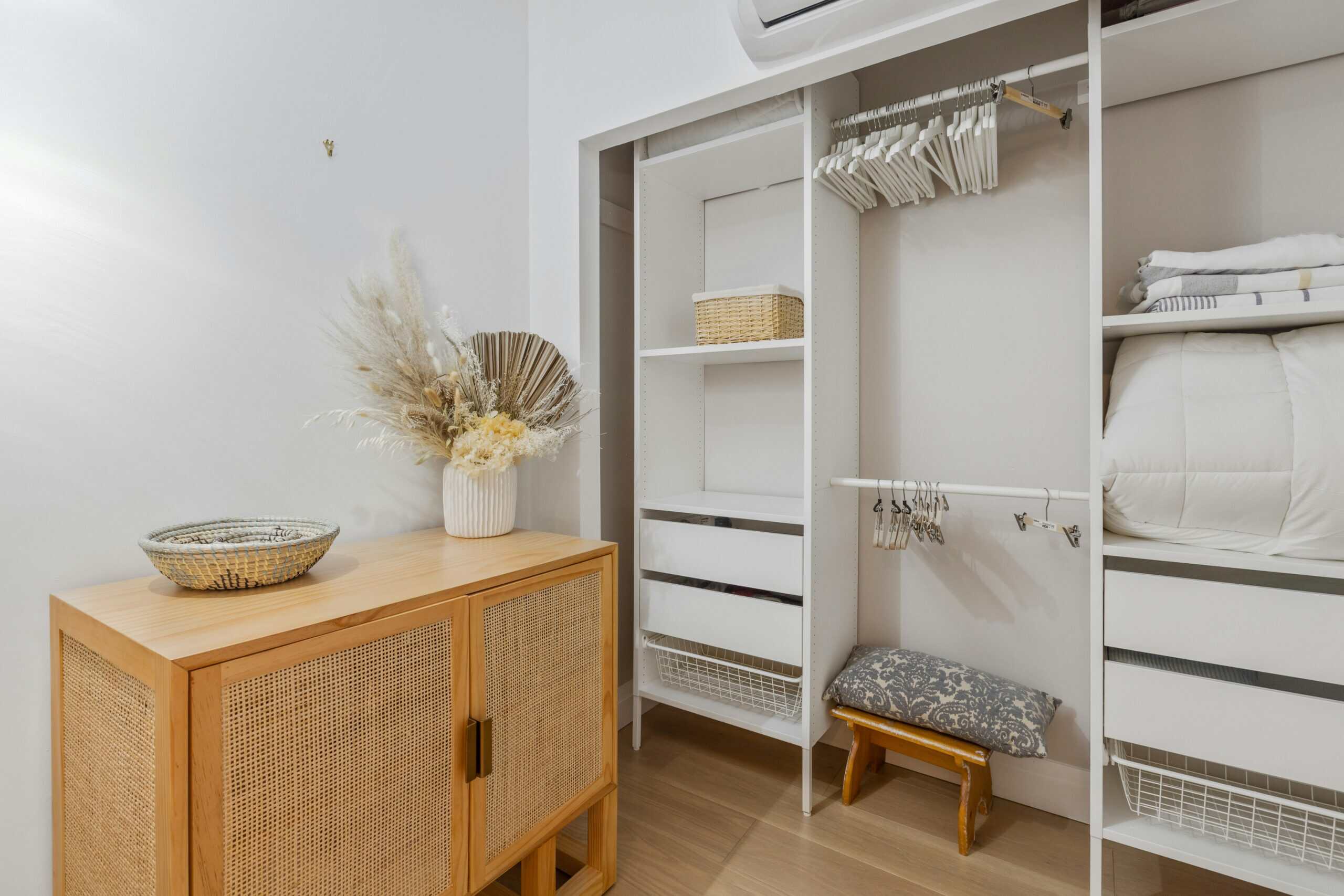
Older apartments, converted rooms, and plenty of city rentals have bedrooms with no closet at all. Everything a closet would do has to happen with freestanding furniture, and the space it takes comes out of the room.
The approach that works is separating what needs hanging from what can fold. Hanging demands a specific kind of storage, and folded clothes fit almost anywhere, including places you are not currently using.
Quick Verdict
Start with a garment rack for what must hang, then use under-bed space for folded and seasonal items before adding any furniture. A wardrobe is the tidiest answer and the most expensive in both money and floor area, so it comes last rather than first.
Key Takeaways
- Hanging clothes are the constraint, folded clothes are flexible
- Under-bed space is the largest unused volume in most bedrooms
- Freestanding racks cost far less than wardrobes and look less finished
- Vertical space above head height is almost always empty
- Fabric covers keep dust off open storage
- Wall-mounted rails need studs and permission
How We Picked
Hanging capacity came first, since that is the job a missing closet leaves undone. Folded storage has alternatives and hanging does not.
Footprint mattered because every piece takes room from a bedroom that was designed to have a closet elsewhere.
Renter compatibility ruled out permanent solutions. Freestanding and tension-mounted options cover people who cannot build or drill.
Dust protection counted. Open storage in a bedroom collects dust and lint on clothes that would sit clean behind a door.
Freestanding Garment Racks
Why It Stands Out
A rack replaces the hanging rail a closet would have provided, which is the specific thing missing. Everything else about a closet has substitutes.
Heavy-duty versions carry a full wardrobe of coats and suits, and the difference between a cheap rack and a solid one is entirely in the tube gauge and joint design.
Double-rail models hold roughly twice as much in the same footprint, which suits shorter items like shirts and folded trousers.
They assemble in minutes, disassemble for moving, and cost a fraction of a wardrobe.
Worth Knowing
Cheap racks sag in the middle and the wheels fail first. Weight rating is the number that matters, and thin tubing bends permanently once loaded.
Everything is on display, including the clothes you were not proud of buying. A fabric cover solves that and adds cost.
Best as the first purchase in a closet-less bedroom. Skip lightweight racks entirely, and small-room planning sits in sleep setups for studio apartments.
Under-Bed Storage
Why It Stands Out
The area under a bed is the largest unused volume in most bedrooms and it costs nothing to start using.
Folded clothes, seasonal items, and spare bedding all live there perfectly well, which removes a whole dresser’s worth of demand from the floor.
Rolling containers pull out from the side, which matters when a bed sits against a wall.
Worth Knowing
Frame clearance decides what fits, and containers advertised as under-bed vary by several inches. Measuring beats assuming.
A platform bed sitting flat on the floor offers nothing, and bed risers create the clearance where the frame allows it.
Best in any bedroom with a raised frame. Skip for platform beds without risers, and options sit in under-bed storage.
Portable Wardrobes With Covers
Why It Stands Out
A fabric wardrobe over a metal frame combines a hanging rail, shelves, and a cover that keeps dust off. It is the closest thing to an actual closet without construction.
Zip fronts hide contents completely, which changes how a bedroom reads compared with an open rack.
They cost considerably less than furniture and come apart flat for moving.
Worth Knowing
Fabric wardrobes have a reputation for sagging and collapsing, and that comes down to frame quality rather than the concept. Steel tube frames hold, and plastic connectors do not.
Zips are the common failure point, and a zip that fails leaves you with an open rack you paid extra for.
Best where dust protection and appearance matter on a budget. Skip plastic-connector frames, and closet lighting sits in closet and wardrobe lighting.
Freestanding Wardrobes and Armoires
Why It Stands Out
A solid wardrobe is the permanent answer. It holds hanging clothes, shelves, and drawers behind doors, and it looks like furniture rather than a solution.
Interior configurations vary widely, and choosing one matched to your hanging-to-folded ratio matters more than the exterior.
They hold value and survive moves, unlike fabric alternatives.
Worth Knowing
They are expensive, heavy, and take a substantial footprint. In a small bedroom that is a real trade against floor space.
Getting one into an upstairs bedroom is a genuine consideration, and flat-pack versions solve delivery and take hours to build.
Tall furniture should be anchored to a wall. Tip-over incidents involving furniture are a recognized hazard, particularly where children are in the home.
Best where the arrangement is long term and budget allows. Skip in very small bedrooms where the footprint costs too much.
Wall-Mounted Rails and Shelving
Why It Stands Out
A rail mounted to the wall uses vertical space and takes no floor area, which is the opposite trade from every freestanding option.
Track systems let you add shelves and rails at whatever heights suit what you own, effectively building a closet on an open wall.
Space above head height goes unused in almost every bedroom, and shelving there holds what you reach for rarely.
Worth Knowing
Hanging clothes are heavier than people estimate, and a rail carrying a full load needs mounting into studs rather than drywall anchors.
This requires drilling and permission, which rules it out for many renters.
Best for owners and renters with permission on a solid wall. Skip drywall-only mounting for hanging loads.
Storage Benches and Trunks
Why It Stands Out
A bench at the end of the bed holds folded clothes and bedding inside while giving you somewhere to sit and put on shoes.
In a room with no closet, furniture doing two jobs is worth more than furniture doing one.
They also close, which keeps contents out of sight in a room where much of the storage is open.
Worth Knowing
Access requires clearing whatever is sitting on top, so these suit items you need weekly rather than daily.
Hinged lids can drop on hands. Slow-close or supported hinges are worth having, particularly with children around.
Best for bedding, seasonal items, and anything folded. Skip for daily-use clothing, and options sit in end-of-bed storage benches.
Storage Options at a Glance
| Option | Holds | Floor space | Renter friendly |
|---|---|---|---|
| Garment rack | Hanging | Moderate | Yes |
| Under-bed containers | Folded, seasonal | None | Yes |
| Portable wardrobe | Hanging and folded | Moderate | Yes |
| Freestanding wardrobe | Everything | Large | Yes, heavy |
| Wall rail and shelving | Hanging and folded | None | No, needs drilling |
| Storage bench | Folded, bedding | Small | Yes |
What to Look For
Count what actually needs hanging
Coats, suits, dresses, and shirts need a rail. T-shirts, knitwear, and most casual clothing fold fine, and folding shrinks the rail you need.
Use free space before buying furniture
Under the bed and above head height are both empty in most bedrooms. Filling those first often removes the need for a dresser entirely.
Check weight ratings on anything hanging
A full rail of winter coats is heavier than it looks, and cheap racks and drywall anchors both fail under that load.
Decide how much you want on display
Open racks are cheapest and put everything in view. Covers and doors cost more and make a room read as finished rather than temporary.
Building It in the Right Order
Adding storage piece by piece costs less and prevents buying furniture you did not need.
Start by sorting what you own into hanging and folding. That single step usually reveals the rail you need is shorter than you assumed, and it costs nothing.
Then fill the free space. Under the bed and any shelf above head height are both empty, and moving folded and seasonal items there often clears the equivalent of a dresser.
Buy a rack third, sized to what genuinely has to hang after the sort. This is the piece that replaces the missing closet.
Add a cover only if dust or appearance bothers you after living with it for a few weeks. Plenty of people find an open rack fine and save the money.
A wardrobe or wall system comes last, once you know what the previous steps left unsolved. Most people never reach this stage.
Open Racks Against Enclosed Storage
Open racks
Cheapest, quickest to access, and everything is visible. Clothes collect dust and the room looks less settled.
Enclosed storage
Keeps dust off, hides contents, and costs more in money and footprint. It also slows access slightly, which matters for daily items.
Common Mistakes to Avoid
Buying a wardrobe first
It is the most expensive option in money and floor space. A rack plus under-bed storage handles the same clothes for far less, and leaves room to add later.
Choosing a rack on price
Thin tubing bends permanently under a full load and the wheels fail within months. Weight rating is the specification that separates the two.
Hanging everything
Most casual clothing folds without harm, and folding lets it live under a bed or in a bench rather than needing rail space.
Skipping wall anchoring on tall furniture
Tall wardrobes and shelving units tip, and that is a recognized hazard in homes with children. Anchoring kits ship with most units and often go unused, and bedroom setup generally sits in choosing bedroom essentials.
Recommended Reading
- under-bed options
- storage benches
- lighting open storage
- small-room layouts
- creating under-bed clearance
- what a bedroom needs
Part of our guide to improving sleep quality naturally.
Frequently Asked Questions
What do I do if my bedroom has no closet?
Buy a garment rack for what must hang, then use under-bed space for folded and seasonal items. A wardrobe is the tidiest answer and the most expensive in both money and floor area.
Are fabric portable wardrobes any good?
The concept works and the frame decides it. Steel tube frames hold a full load, and plastic connectors sag and eventually collapse.
How much can a garment rack hold?
Heavy-duty steel racks carry a full wardrobe of coats. Cheap thin-tube racks bend permanently under the same load, so weight rating is the specification to check.
Can I mount a rail to the wall instead?
Yes, into studs rather than drywall anchors, since hanging clothes are heavier than people estimate. It needs drilling and permission, which rules it out for many renters.
What should I hang and what should I fold?
Coats, suits, dresses, and shirts hang. T-shirts, knitwear, and most casual clothing folds fine, and folding lets it live under a bed instead of using rail space.
How do I keep dust off open storage?
A fabric cover over a rack, or a portable wardrobe with a zip front. Clothes on an open rail in a bedroom collect dust and lint over weeks.
Do I need to anchor a tall wardrobe?
Yes. Tall furniture tips, which is a recognized hazard particularly with children in the home. Most units ship with anchoring hardware that frequently goes unused.
