
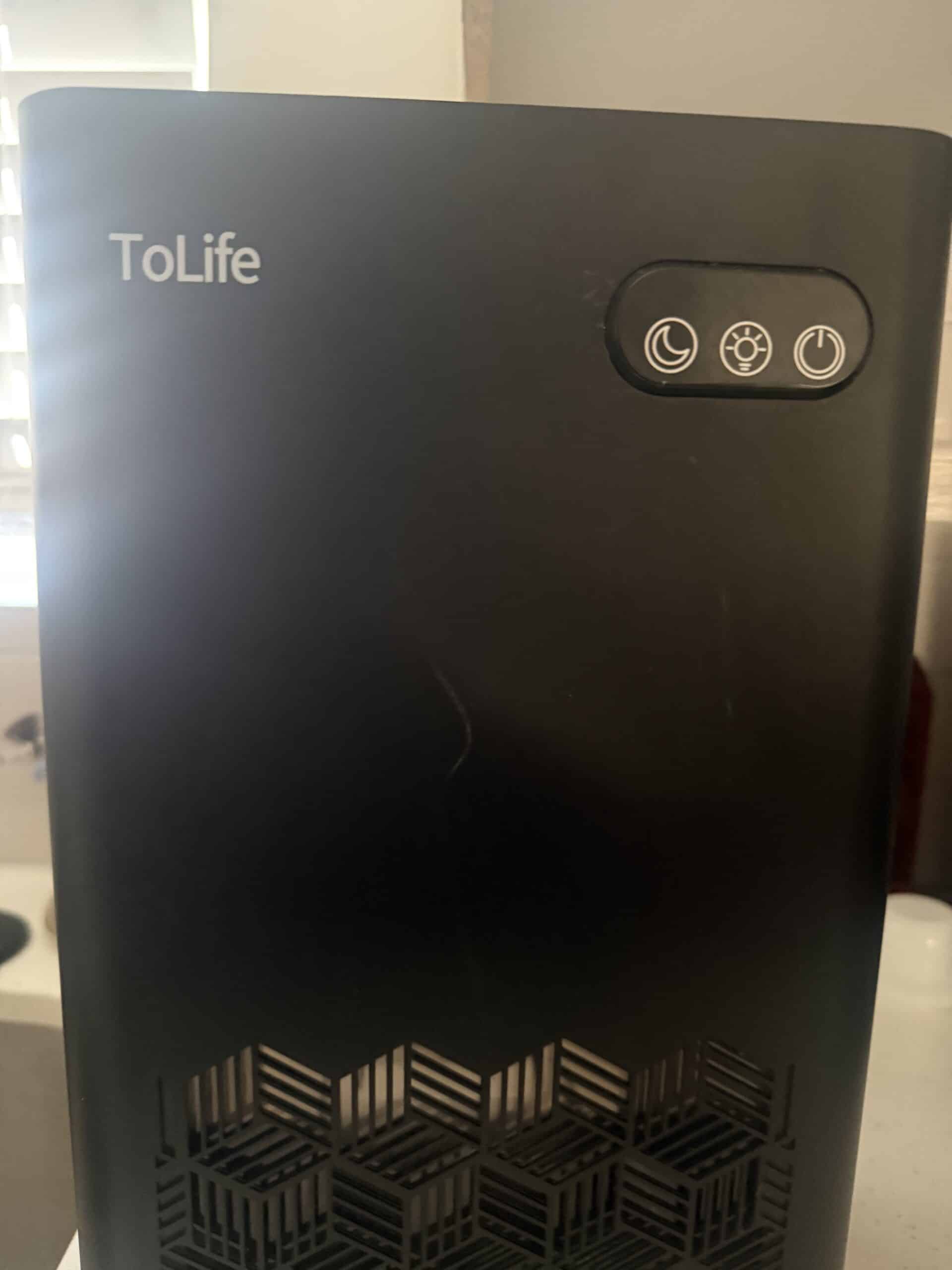
Away from the bed, clear of walls, and off a hard floor if you can manage it. Placement affects how well a dehumidifier works and how much you notice it running, and the second one is what sends people back to the shop.
Quick Answer
Give it several inches of clearance on all sides for airflow, keep it away from the bed so the noise fades, and put something under it on hard flooring to stop vibration transmitting. Central placement works better than a corner.
A Quick Note
This covers appliance placement rather than medical advice. Damp patches, visible mold, or symptoms that worsen at home need proper assessment rather than being managed by moving an appliance around.
What Placement Affects
| Factor | Best placement |
|---|---|
| Airflow and efficiency | Several inches clear on all sides |
| Perceived noise | Far from the bed as the room allows |
| Vibration | On a mat, not bare hard floor |
| Coverage | Central rather than cornered |
| Tank access | Somewhere you can reach daily |
| Safety | Level surface, cord out of walkways |
Give It Room to Breathe
A dehumidifier pulls air in and pushes it back out, and blocking either side makes it work harder for less result.
Most manufacturers specify clearance, commonly six to twelve inches around the intake and exhaust. Pushed against a wall, the unit recycles its own dried output rather than drawing from the room.
That shows up as a unit running constantly with a tank that fills slowly, which people usually read as undersizing when it is actually placement.
Corners are the worst case for the same reason, and they also amplify noise, covered in whether dehumidifiers disturb sleep.
Distance From the Bed Matters More Than the Model
Perceived volume drops quickly with distance, and in a bedroom the difference between beside the bed and across the room is usually only a few feet.
That few feet does more for sleep than choosing a quieter unit does, and it costs nothing.
Direct airflow is the other consideration. A dehumidifier exhausts slightly warm dry air, and having that blowing toward the bed all night is unpleasant even though the room overall improves.
Pointing the exhaust away from where you sleep handles it, and quieter model options sit in quiet dehumidifiers.
Hard Floors Transmit Everything
A compressor unit vibrates, and on tile or hardwood that vibration passes into the floor and travels through the room as a low hum.
The same unit on carpet is noticeably quieter, because the carpet absorbs what the hard floor conducts.
An anti-vibration mat, a piece of dense foam, or even a folded towel underneath addresses it for almost nothing. This is the single cheapest noise fix available.
It matters more in apartments, where the floor is also someone else’s ceiling, covered in dehumidifiers for apartments.
Where the Moisture Is Coming From
Placement works better when it accounts for where moisture enters the room rather than only where the appliance fits.
An ensuite bathroom is the usual source in a bedroom. Steam migrates through a doorway long after a shower, and a unit positioned to intercept that does more than one on the far side of the room.
Windows are the second. Condensation forming on cold glass overnight signals moisture concentrating there, though the unit itself belongs away from the curtains rather than under them.
People are a source too. Two adults breathing in a closed room overnight release a meaningful amount of moisture, which is why bedroom humidity peaks in the early hours rather than at bedtime.
Drying laundry indoors overwhelms any of this. A single load releases more water into a room than a bedroom dehumidifier is sized to handle comfortably.
Central Beats Cornered for Coverage
Air circulates better around a unit with space on all sides, so a dehumidifier nearer the middle of a room treats the whole room faster.
That is rarely practical in a bedroom, where the middle is where you walk. The workable version is against the longest wall rather than in a corner, with clearance behind it.
Near a doorway is a reasonable compromise in a small home, since air moves through doorways and the unit can partially serve an adjacent space.
Whether you need whole-room coverage at all depends on your climate, covered in dehumidifiers during monsoon season.
The Compromise Most Bedrooms Force
The ideal placement and the possible placement are rarely the same, and knowing which factor to sacrifice makes the decision easier.
Airflow clearance is the one to protect. A unit that cannot draw air properly underperforms in a way you cannot fix by running it longer, so give up other things before you give up the gap around it.
Distance from the bed is the next priority in a bedroom, since noise is what makes people stop using an appliance that was otherwise working.
Central placement is the first to sacrifice. A unit against the long wall with clearance behind it does nearly as well as one mid-floor, and mid-floor is not a real option in a room you walk through at night.
Vibration is the cheapest to solve, so it should never be the reason for a bad position. A mat costs almost nothing and lets you put the unit where the other factors want it.
In a small bedroom, a workable answer is often the far corner of the longest wall, pulled six inches out, on a mat, with the exhaust pointed away from the bed. That is not textbook and it satisfies the things that matter most.
Practical Constraints People Forget
You have to empty it
A unit tucked behind furniture is one you will stop emptying. Put it somewhere reachable, since during a wet season that is a daily job, and a tank you have to move furniture to reach is a tank that overflows.
It needs an outlet
Running an extension across a bedroom floor is a trip hazard at night. Placement is limited by where power actually is.
It must sit level
Tilted units can leak and some will not run at all. Thick carpet can be enough to unlevel a small unit, which a board underneath fixes.
Continuous drain needs gravity
A drain hose only works running downhill to a drain, which usually decides placement entirely, and running frequency sits in how often to run a dehumidifier.
Places to Avoid
Directly beside the bed, where noise and exhaust are both at their worst.
Wedged into a corner or against a wall, which restricts airflow and makes the unit work harder while sounding louder.
Behind curtains or under a windowsill, where fabric blocks intake and the unit spends its time fighting condensation forming on cold glass rather than treating the room air.
Next to a radiator or heater, since warm air changes what the unit reads and pushes it to run when the room does not need it. The same applies to placing it directly in front of an air conditioning vent.
Related Reading
- bedroom dehumidifiers
- does a dehumidifier help you sleep
- worth it in a dry climate
- humidity control products
- air quality monitors
- quiet fans for sleeping
Part of our guide to cooling a bedroom for better sleep.
Frequently Asked Questions
Where should you put a dehumidifier in a bedroom?
Away from the bed, with several inches of clearance on all sides, and on a mat if the floor is hard. Against the longest wall beats a corner.
How much clearance does it need?
Commonly six to twelve inches around intake and exhaust. Pushed against a wall, a unit recycles its own dried output instead of drawing from the room.
Does putting it in a corner reduce how well it works?
Yes, on both counts. Airflow is restricted and corners amplify noise, so a unit there runs harder and sounds louder than the same unit in open floor space.
Should it go on carpet or hard floor?
Carpet absorbs vibration that hard floors conduct into the room. On tile or wood, a mat or dense foam underneath is the cheapest noise fix available.
How far from the bed?
As far as the room allows. Perceived volume drops quickly with distance, and a few feet does more for sleep than buying a quieter model.
Can I put it near a window?
Not ideal. Curtains block intake and the unit ends up fighting condensation forming on the glass rather than treating the room.
Does it matter which way the exhaust points?
Yes. A dehumidifier exhausts slightly warm dry air, and having that directed at the bed all night is unpleasant even while the room overall improves.
Does it need to be level?
Yes. Tilted units can leak and some refuse to run at all, and thick carpet is enough to unlevel a small unit without it being obvious.
Sources
- United States Environmental Protection Agency. Mold and Moisture Control. https://www.epa.gov/mold/mold-course-chapter-2
- United States Department of Energy. Energy Saver. https://www.energy.gov/energysaver/home-cooling-systems
