
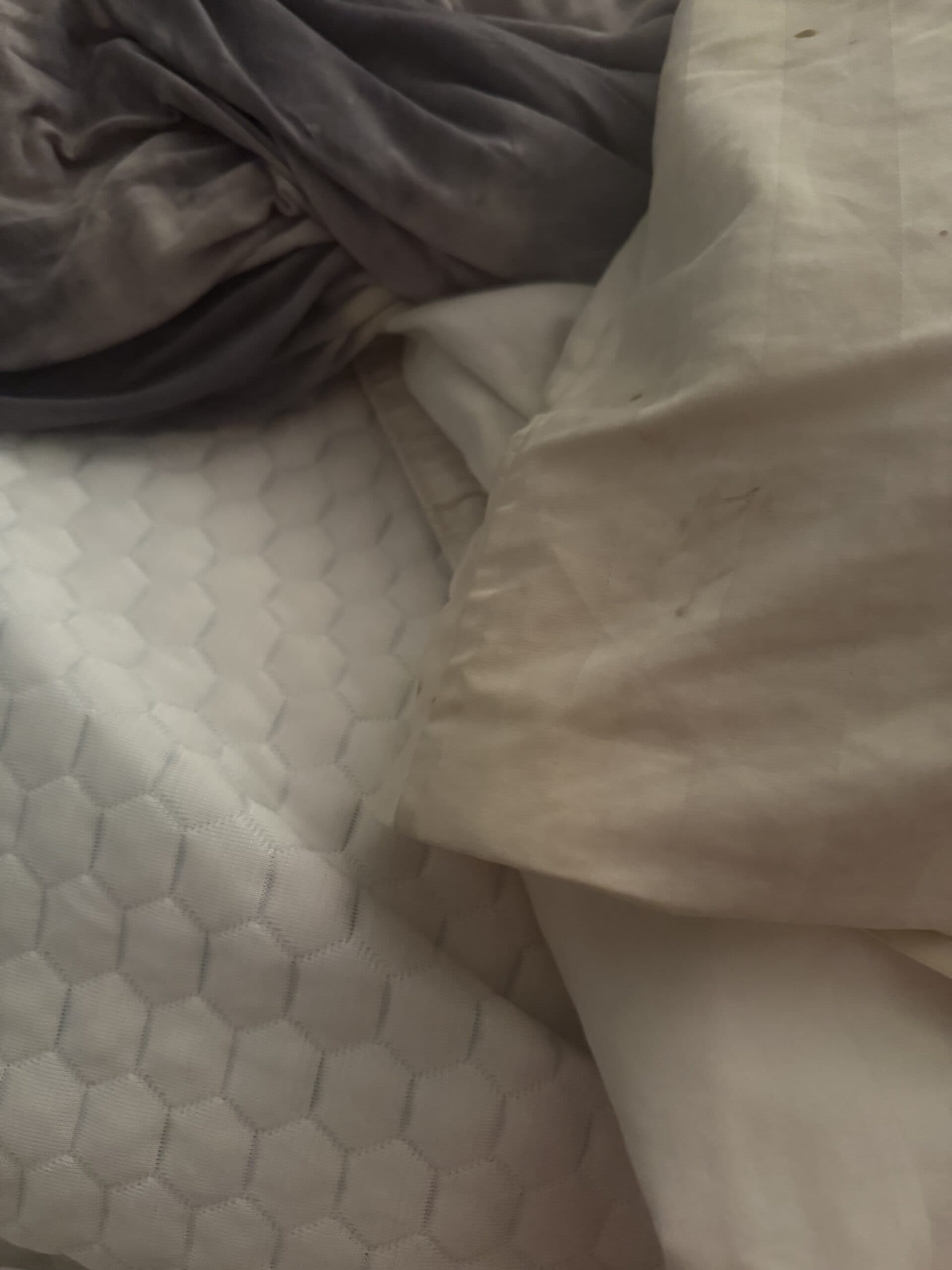
Desert heat is a different problem from humid heat, and the bedding that suits one works against the other. Dry air lets sweat evaporate freely, which means your body can cool itself efficiently if the bedding gets out of the way. The job is moving heat away rather than wicking moisture, and that changes what matters.
The layer against your skin does the most work. In a climate where nights stay warm well past midnight, a heavy comforter cancels everything underneath it, and the cheapest useful change is usually the blanket rather than the mattress.
My Experience
I sleep in Arizona and my setup came together over time rather than in one purchase: cooling pillows first, then a dehumidifier, then a cooling blanket, then a cooling topper. Around two hundred and fifty dollars across those.
The blanket makes the most difference by a clear margin. If I were starting again it would be the first thing I bought rather than the third.
The seasonal change is smaller than people expect. I sometimes swap sheets for summer, and the major change is that I stop using my comforter entirely. Blackout curtains stay up year round. A portable air conditioner comes out in summer only, and I run it overnight rather than through the day.
The dehumidifier is the one I would qualify. I do not know that it helps with heat, and it does help with humidity, which is a real thing and a different thing. In a dry climate that distinction matters more than it would elsewhere.
Quick Verdict
Start with the blanket, since it touches you and costs least. Add a cooling pillow for head heat. A topper addresses the mattress without replacing it. Dropping the comforter in summer costs nothing and does more than most purchases.
How We Picked
Heat transfer mattered more than moisture wicking, since dry air handles evaporation on its own. Materials that conduct heat away from the body outperform those designed to move sweat.
Breathability ranked next. Anything that traps a layer of warm air against you undoes what the rest of the setup is doing, which is why weight and weave matter as much as fibre.
Washability counted because desert dust gets everywhere and bedding needs frequent cleaning. Anything requiring special care gets washed less often than it should.
We left out heavyweight winter bedding entirely, since desert winters rarely justify it and the storage cost is real in an apartment.
Cooling Blanket
Why It Stands Out
The layer directly against you, and the one that decides whether everything underneath gets a chance to work. Cooling blankets use materials that conduct heat away rather than trapping it, which is the opposite of what a comforter does.
Cost is the other argument. A cooling blanket is a fraction of a topper and a small fraction of a mattress, so the wrong guess is inexpensive and the right one is obvious within a night or two.
Worth Knowing
Weight varies more than the marketing suggests, and a heavier cooling blanket can still trap warmth. Lighter is generally better in dry heat.
Some lose their cooling feel after repeated washing, which is worth checking against the care instructions. The pattern is covered in why cooling blankets stop feeling cool.
Best for anyone starting from scratch in a hot dry climate. Skip only if you already sleep cold, where it becomes unnecessary.
Check Price on AmazonPercale Cotton Sheets
Why It Stands Out
Crisp, loosely woven, and breathable in a way sateen is not. Percale lets air move through rather than sitting against the skin, which suits dry heat particularly well.
It also gets better with washing rather than worse. Percale softens over time while keeping its structure, and it dries fast in low humidity.
Worth Knowing
The crisp feel divides people. Anyone who prefers a silky surface will find percale too papery, and the comparison sits in percale against sateen.
It wrinkles more visibly than sateen. That is cosmetic and it bothers some people every morning.
Best for hot dry sleepers who want maximum airflow. Skip if you like a smooth heavier drape against the skin.
Check Price on AmazonLinen Sheets
Why It Stands Out
The most breathable common bedding fibre, with a loose open weave that moves air freely. Linen also handles temperature swings well, which matters where desert nights drop substantially after dark.
Durability is the long-term argument. Linen outlasts cotton by a wide margin and softens considerably over the first year.
Worth Knowing
Expensive up front, and the texture is rough until it has been washed several times. Plenty of people give up before it softens.
It also wrinkles heavily by design, which is part of the look rather than a defect.
Best for anyone buying once and keeping it for years. Skip if you want softness immediately or dislike visible creasing.
Check Price on AmazonCooling Mattress Topper
Why It Stands Out
Addresses heat coming from the mattress across your whole torso, which is the largest contact area and the slowest to change temperature. Gel foam and open-cell constructions move heat sideways rather than letting it build.
It is also the cheaper test of whether the mattress is the problem. If adding one solves it, you have avoided replacing the mattress entirely.
Worth Knowing
The effect is gradual rather than immediate, so judging it after one night tells you very little. Give it a fortnight.
A thick mattress protector over the top insulates it and removes much of what you paid for. Whether the mattress itself needs replacing sits in topper against a new mattress.
Best for memory foam mattresses, which retain more heat than most constructions. Skip until the cheaper layers are in place.
Check Price on AmazonGel Cooling Pillow
Why It Stands Out
Head heat concentrates into a small area with nowhere to go, which is why most people notice the pillow before anything else. Gel infusions and perforated foam move that heat away faster than plain foam does.
The effect is immediate rather than gradual, which makes it the easiest purchase to evaluate.
Worth Knowing
No cooling pillow stays cold all night. They delay the surface warming rather than preventing it, and most people still flip them, just less often.
Loft matters as much as cooling for anyone with neck pain, covered in choosing a pillow for your position.
Best for anyone who flips their pillow looking for a cold side. Skip if your head stays comfortable and the heat is elsewhere.
Check Price on AmazonLightweight Summer Quilt
Why It Stands Out
The replacement for a comforter rather than an addition to one. A thin quilt gives the psychological comfort of being covered without the insulation that makes a comforter unusable in summer.
Most also wash easily and dry quickly, which matters where dust means frequent laundering.
Worth Knowing
Some people need weight to sleep and find a thin quilt insufficient regardless of temperature. That is a real preference rather than something to override.
Fill matters more than thickness. A thin synthetic can trap more heat than a slightly thicker cotton one.
Best for anyone who wants covers in summer without the heat. Skip if you sleep uncovered anyway, where it is a purchase with no job.
Check Price on AmazonDesert Bedding at a Glance
| Item | What it addresses | Priority |
|---|---|---|
| Cooling blanket | The layer against your skin | Buy first |
| Percale or linen sheets | Airflow and drying | Buy second |
| Cooling pillow | Head heat | Buy second |
| Cooling topper | Mattress heat | Buy third |
| Summer quilt | Replacing a comforter | Seasonal swap |
| Blackout curtains | Daytime heat gain | Year round |
What Desert Heat Changes
Evaporation works in your favour
Dry air lets sweat evaporate freely, so moisture-wicking matters less than in humid climates. Heat conduction is the property to prioritise.
Nights stay warm longer
Surfaces and structures release stored heat for hours after sunset, so a bedroom can be warmest well after dark. Bedding has to work through that rather than just at bedtime.
Daytime heat gain matters
A room that bakes all afternoon starts the night hot. Blackout curtains address that before bedding has to, covered in whether blackout curtains block heat.
Dust means frequent washing
Desert dust gets into everything, and bedding needs washing more often than in milder climates. Anything requiring delicate care ends up washed less than it should be.
Seasonal Swaps Worth Making
Dropping the comforter in summer is the change that costs nothing and does most. A comforter over a cooling topper cancels a large part of what the topper is doing.
Sheet weight is worth changing too, though the difference is smaller than the covers. Percale or linen in summer and something heavier in winter suits most desert homes.
Air conditioning is the other seasonal item. Running it overnight rather than continuously matches when you actually need it, and the wider setup sits in keeping a bedroom cool in summer.
What Bedding Cannot Fix
A hot room limits everything. Cooling bedding moves heat from your body into the surrounding air, and warm air gives it nowhere to go. Airflow does more than any purchase in a genuinely hot bedroom.
Humidity is a separate variable, and in a dry climate it is rarely the problem. Where it is, that needs its own solution rather than better bedding, covered in whether a dehumidifier helps sleep.
Night sweats that soak bedding are different from feeling warm, and that pattern is worth raising with a doctor rather than solving with purchases.
Recommended Reading
- the order worth buying in
- the full cooling setup
- sheets built for heat
- what a topper delivers
- pillows for head heat
- the room itself
Related: bedding for hot and humid climates.
Frequently Asked Questions
What bedding is best for a desert climate?
Breathable sheets in percale or linen, a cooling blanket rather than a comforter, and a cooling pillow. Dry air handles evaporation, so heat conduction matters more than moisture wicking.
Should I use a comforter in summer in the desert?
Most people are better off without one. A comforter over cooling layers cancels much of what they do, and a lightweight quilt gives the feeling of being covered without the insulation.
Is linen or cotton better for hot dry weather?
Linen breathes more and lasts longer, and it costs more and stays rough until washed several times. Percale cotton is the cheaper option with most of the airflow benefit.
Do I need a dehumidifier in a dry climate?
Usually not for heat. Dehumidifiers address moisture rather than temperature, which matters in humid climates and does little in dry ones outside a rainy stretch.
What should I buy first?
The blanket. It sits directly against you, costs less than a topper or mattress, and is the easiest change to reverse if it does not suit.
Do blackout curtains help with heat?
They reduce daytime heat gain, which means the room starts the night cooler. That matters more in desert climates where afternoon sun loads a room for hours.
Will cooling bedding work without air conditioning?
Partly. These products move heat into the surrounding air, so a hot room limits them. Airflow from a fan does more than any bedding purchase when the room itself is hot.
