
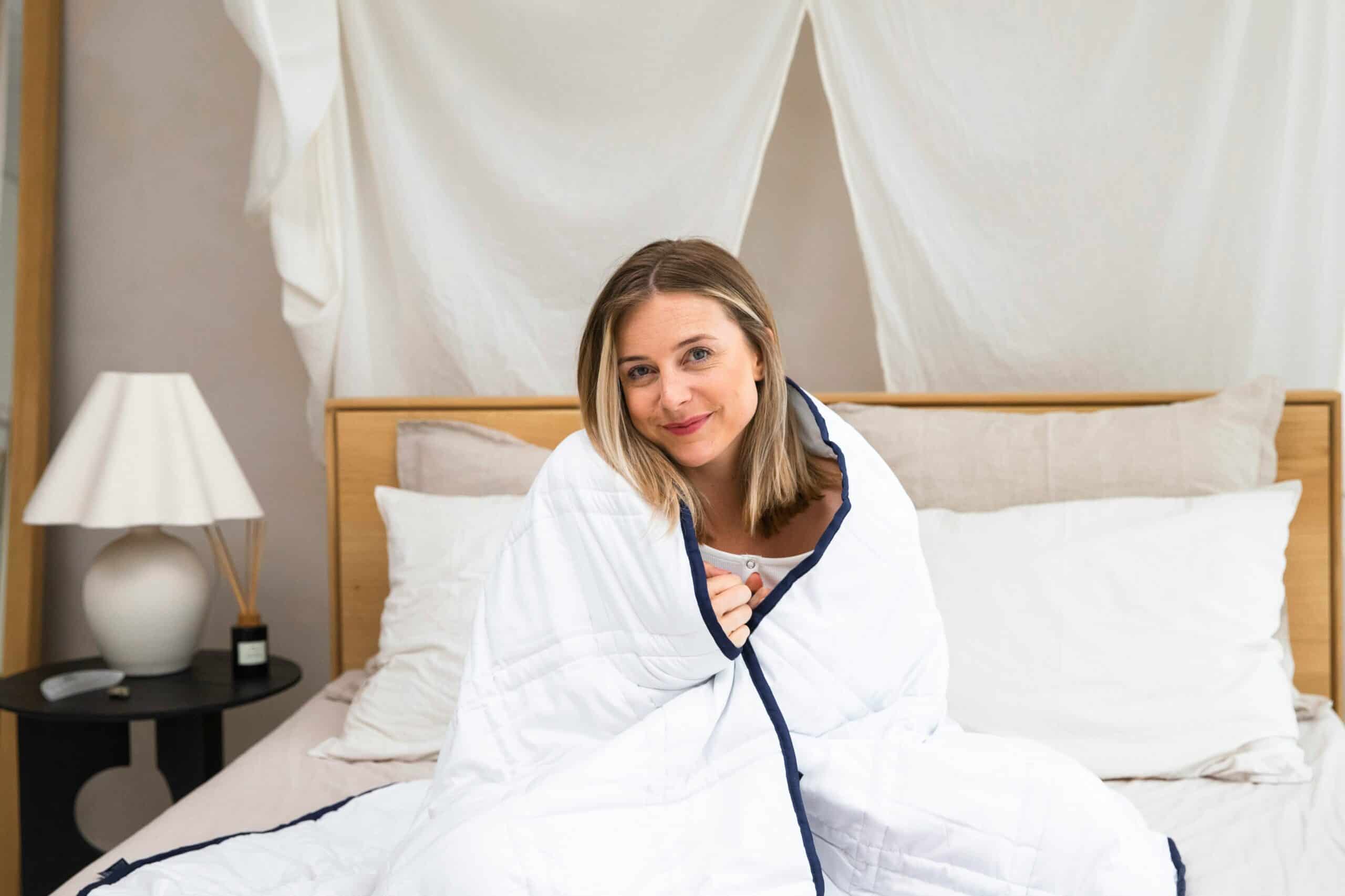
Comparing options? See our best weighted blankets for kids roundup. Wondering whether a weighted blanket is worth it, and how to pick one that actually helps you wind down? A weighted blanket works by spreading gentle, even pressure across your body, a sensation that many people find calming at bedtime. Choosing one comes down to four things: the right weight for your body, the fill material, a fabric that suits how warm you sleep, and a size that fits you rather than the bed. Our weighted blanket picks show what good options look like once you know what to want.
Key takeaways
- Weighted blankets use deep pressure to create a calming, hugged sensation.
- A common guideline is a blanket around 10 percent of your body weight.
- Glass beads run cooler and quieter; plastic pellets are cheaper but bulkier.
- Hot sleepers should prioritize breathable fabric or a cooling design.
- Size the blanket to your body, not the bed, so the weight stays on you.
How Weighted Blankets Work
The appeal is not magic; it is a documented sensory effect. Knowing the mechanism makes the buying choices clearer. It also sets honest expectations for what a blanket can and cannot do. The pressure is steady and broad rather than tight, which is what makes it feel soothing instead of heavy.
Deep Pressure Stimulation
The even weight creates what is often called deep pressure stimulation, a firm, distributed sensation similar to a steady hug. Many people find this pressure relaxing and report falling asleep more easily under it. The effect is comfort-oriented, not a medical treatment. The sensation is often compared to the calm of being swaddled or held, which is why people reach for it at bedtime.
What It Can and Cannot Do
A weighted blanket can make bedtime feel calmer and cozier, which supports winding down. It is not a cure for a sleep disorder or an anxiety condition, and it works best as one part of a good sleep routine. Set expectations around comfort rather than treatment.
Pick the Right Weight
Weight is the single most important choice, since it determines whether the blanket feels soothing or restrictive. Too light and you barely notice it; too heavy and it feels confining. There is a simple starting point.
The 10 Percent Guideline
A widely used starting point is a blanket around 10 percent of your body weight, give or take a couple of pounds. A person near 150 pounds usually starts around 15 pounds of blanket. Our full weighted blanket weight guide breaks down the numbers and exceptions.
When to Adjust
Go a little lighter if you are sensitive to pressure, new to weighted blankets, or buying for an older adult. Some people prefer slightly more weight for stronger pressure, though going too heavy feels oppressive and restricts movement. Comfort, not a formula, is the final test. If you fall between two weights, most people do better sizing down than up.
Sleep Position Plays a Part
Back sleepers spread the weight over a wider area and sometimes prefer a touch more, while side sleepers concentrate it on a narrower profile and often find the standard guideline plenty. Stomach sleepers should be cautious, since weight on the torso can press on the chest. Let your usual position nudge the choice within the guideline.
Choose the Fill: Glass Beads vs Plastic Pellets
The weight inside comes from small beads or pellets, and the type changes the feel. Both work, but they sleep differently. This choice affects temperature, noise, and bulk.
Glass Beads
Fine glass beads are dense, so they add weight without much bulk and distribute smoothly across the body. They run cooler and quieter, and they make for a thinner, more even blanket. Most quality weighted blankets use them for these reasons. They also let the blanket lie flatter, which feels less bulky across the body.
Plastic Pellets
Plastic poly pellets are larger and cheaper, which keeps the price down but adds bulk and a slight rattle. They can also trap a bit more heat than glass beads, and the larger pellets are easier to feel through a thin cover. The full trade-off is covered in our glass beads vs plastic pellets guide.
Fabric and Temperature
How warm you sleep should steer the cover choice, since a weighted blanket adds a layer that can hold heat. Match the fabric to your body. This is the difference between cozy and sweaty.
If You Sleep Hot
Breathable cotton, bamboo, or a dedicated cooling cover keeps the blanket from trapping heat against you. Glass-bead fills help here too, since they hold less warmth than plastic. Our cooling weighted blanket picks focus on hot sleepers.
If You Sleep Cold
A plush minky or fleece cover adds warmth along with the weight, which suits cooler bedrooms. Pair it with the rest of your bedding for the season. A reversible cover gives you both options in one blanket, with a cool side for summer and a warm side for winter. That flexibility is handy in a bedroom that swings between seasons.
Size and Sharing
Sizing a weighted blanket is different from sizing a regular one. The goal is even pressure on your body, not full bed coverage. That changes how you measure.
Size to the Person
Choose a blanket roughly the size of your body so the weight stays on you instead of sliding off the bed. An oversized weighted blanket pulls itself to the floor and loses its even pressure. Pick the size that matches your frame, then the weight by the guideline. A throw-sized weighted blanket suits one person on a couch or bed without overhanging the edges. Choosing for a child works differently, and the guidance on when they are appropriate sets limits the usual ten percent rule does not cover.
Sharing With a Partner
One weighted blanket rarely works for two, since the right weight differs per person and the blanket shifts toward whoever moves. Many couples use separate weighted blankets sized to each body. A regular comforter over the top can keep the bed looking unified. Some brands sell two matching blankets for exactly this reason.
Who Should Be Cautious
Weighted blankets suit most healthy adults, but a few groups should take care or check with a professional first. This is about safe use, not alarm. A short list covers it.
Children and Older Adults
Young children need pediatric guidance, a much lighter blanket, and the ability to remove it themselves, and weighted blankets are not for infants. Frail older adults should also start light and be able to move the blanket off easily. When in doubt, ask a healthcare provider.
Health Conditions
Anyone with a respiratory condition, sleep apnea, or limited mobility should check with a doctor before using a weighted blanket. The key safety point is being able to move the blanket off without help. If that is a concern, a lighter option or a different approach is wiser.
| Factor | What to look for |
|---|---|
| Weight | Around 10 percent of your body weight |
| Fill | Glass beads for cooler, quieter, thinner feel |
| Fabric | Breathable or cooling if you sleep hot |
| Size | Matched to your body, not the bed |
Recommended read: Ready to compare models? See our best weighted blankets and best weighted blankets for anxiety. Still deciding? Our weighted vs regular blanket guide helps.
How Weighted Blankets Fit a Sleep Routine
A blanket is one piece of good sleep, not the whole picture. It works best alongside the basics. Think of it as a comfort layer on a solid foundation.
Pair It With Good Habits
Consistent sleep and wake times, a cool dark room, and a wind-down routine do the heavy lifting for sleep. A weighted blanket adds a calming sensory cue on top of those habits, but it cannot outweigh a noisy, bright, or overheated room. Fix the environment first, then let the blanket do its part. Our guide to sleep aids covers the wider toolkit.
Give It a Few Nights
The pressure can feel unusual at first, so try the blanket for several nights before judging it. Many people warm to the sensation once it becomes familiar. If it still feels confining after a week, a lighter weight usually fixes it. Trying it during a relaxed evening on the couch first can ease the transition.
Caring for a Weighted Blanket
A weighted blanket lasts for years with a little care, but washing it is different from washing a regular throw. The weight and fill set some rules. A quick check of the label saves the blanket.
Washing and Drying
Many weighted blankets come with a removable, machine-washable cover, which is the easiest part to keep clean. The weighted insert often has a weight limit for home machines, so heavier blankets may need a commercial washer or spot cleaning. Always follow the care label, since glass-bead and pellet fills react differently to heat.
Keeping It in Shape
Look for box-stitched construction, which holds the fill in even pockets so the weight cannot bunch to one side. A blanket that shifts its fill loses the even pressure that makes it work. Storing it folded rather than crushed also helps the fill stay distributed. Smaller, closely spaced stitch pockets generally hold the fill more evenly than large ones.
Common Weighted Blanket Mistakes
Most disappointment comes from a few avoidable choices. Watch for these before you buy.
Buying too heavy ranks first. A blanket well above the guideline feels restrictive and can disturb sleep rather than help it, so start near 10 percent of your body weight and adjust. Heavier is not better.
Sizing to the bed instead of the body is the next trap. An oversized weighted blanket slides to the floor and pulls its pressure off you, which defeats the purpose. Match the blanket to your frame.
Ignoring temperature leaves hot sleepers sweating under a heat-trapping cover. Choose breathable fabric or a cooling design and a glass-bead fill if you run warm. The right materials keep the blanket usable year-round.
Sharing one blanket between partners rarely satisfies either person. The correct weight differs per body, and the blanket drifts toward whoever moves. Separate blankets sized to each person work better.
Skipping the adjustment period leads people to give up too soon. The pressure feels strange the first night or two, so try it for several nights. Comfort usually grows with familiarity.
Frequently Asked Questions
How do I choose a weighted blanket?
Start with the weight, aiming for around 10 percent of your body weight, then pick a glass-bead or plastic-pellet fill. Choose a breathable fabric if you sleep hot, and size the blanket to your body rather than the bed. Comfort is the final test.
What weight weighted blanket should I get?
A common guideline is about 10 percent of your body weight, give or take a couple of pounds, so a 150-pound person often starts near 15 pounds. Go lighter if you are sensitive to pressure or new to weighted blankets. Avoid going much heavier, which feels restrictive. If you land between two weights, sizing down is usually the safer call.
Do weighted blankets actually help with sleep and anxiety?
Many people find the deep, even pressure calming, which can make winding down easier and bedtime feel cozier. The effect is comfort-oriented rather than a medical treatment. A weighted blanket works best alongside good sleep habits, not as a replacement for care.
Are glass beads or plastic pellets better?
Glass beads are denser, so they add weight without bulk and run cooler and quieter, which is why most quality blankets use them. Plastic pellets are cheaper but bulkier and can trap more heat. Glass beads are the better choice for most buyers.
Do weighted blankets sleep hot?
They can, since they add a layer, but breathable cotton or bamboo covers, cooling designs, and glass-bead fills reduce heat buildup. Hot sleepers should prioritize these features. A cooling-specific weighted blanket is the safest pick if you run warm.
Can two people share a weighted blanket?
Usually not well, because the ideal weight differs per person and the blanket shifts toward whoever moves. Most couples use separate weighted blankets sized to each body. A regular comforter on top can keep the bed looking unified.
Are weighted blankets safe?
They are safe for most healthy adults who can move the blanket off themselves. Young children, infants, frail older adults, and people with respiratory conditions, sleep apnea, or limited mobility should check with a healthcare provider first. Being able to remove it independently is the key safety point.
Where can I learn more about sleep and weighted blankets?
The National Sleep Foundation publishes guidance on sleep hygiene and bedding. The Mayo Clinic covers sleep habits and when to seek help for sleep problems.
Related Reading
Explore more: weighted blankets for kids, heated mattress pad vs electric blanket, how to choose bedroom essentials, weighted blanket vs heated blanket, bedspreads and blanket sets, and how to choose the right mattress topper.
Recommended Reading
See also our guides to door draft stoppers for quiet bedrooms, and weighted blanket vs heated blanket.
