
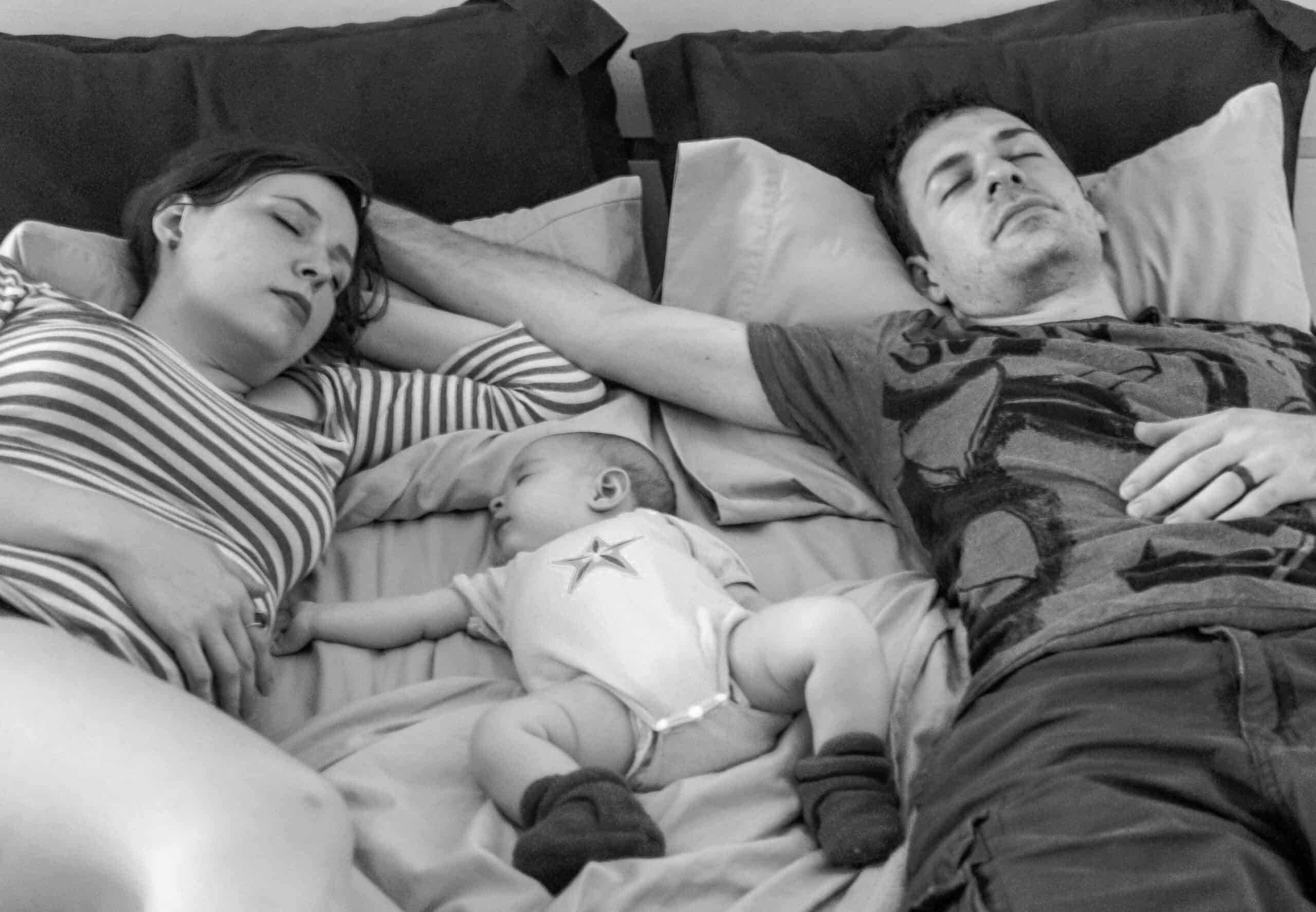
New parents do not have a sleep problem you can fix. You have a sleep pattern imposed on you, broken into two and three hour blocks for months. The products that help make each block count and make getting back to sleep faster.
| Problem | What helps |
|---|---|
| Waking fully every time | Dim red night light, no overhead |
| Taking 30 minutes to resettle | Sleep mask, sound masking |
| Both parents waking | Vibrating alarm, separate duvets |
| Feeding in the dark | Motion-sensor floor light |
| Neck and back pain from feeding | Support pillow, upright chair |
| Daytime naps failing | Blackout coverage, mask |
Key Points
- Light exposure during night feeds is what stops you resettling
- Red and amber light disturbs sleep pressure less than white
- Only one parent needs to wake for most night events
- Daytime sleep needs blackout, since your body clock resists it
- Feeding posture causes neck and shoulder pain within weeks
- Persistent sleep problems past the newborn stage deserve a doctor
Part of our guide to improving sleep quality naturally.
How We Picked
Resettling speed drove the list. The difference between falling back asleep in five minutes and thirty minutes, four times a night, is over an hour of sleep.
Light management ranked highest within that. Bright light at two in the morning signals morning to your body, and everything after that fights it.
Single-parent waking mattered next. Most night events need one person, and gear that keeps the other asleep doubles the household’s total rest.
Physical support counted because feeding posture creates pain that outlasts the newborn stage.
Red and Amber Night Lights
Why It Stands Out
Red and amber wavelengths affect melatonin less than white or blue light. A dim amber lamp gives you enough to see for a feed or a change without telling your body the night is over.
Low output matters as much as color. Anything bright enough to read comfortably is brighter than you need at two in the morning.
Plug-in and rechargeable versions both work, and a light you can carry between rooms suits a household where the feeding spot moves.
Worth Knowing
Many products marketed as warm still emit plenty of blue. Look for genuinely red or amber output rather than a warm white bulb.
Dimmable is worth having, since the level you need for a change is higher than the level you need for a feed.
Buy this before anything else on the list. Skip white night lights entirely, and the mechanism sits in using red light in your bedroom.
Motion-Sensor Floor Lights
Why It Stands Out
A low strip light that comes on when you swing your legs out of bed lights the floor without lighting the room. You see where you are walking and nothing else brightens.
Automatic activation means you never reach for a switch while holding a baby, which is when people turn on the overhead by accident.
Placed under a bed or along a hallway baseboard, the light stays below eye level for everyone.
Worth Knowing
Sensor sensitivity varies, and one that triggers on a pet crossing the room wakes you for nothing.
Battery versions need recharging on a schedule you will forget. Plug-in models suit permanent placement.
Buy this if you navigate to another room at night. Skip in a single room where a bedside light covers it.
Blackout Coverage for Daytime Sleep
Why It Stands Out
Sleeping when the baby sleeps means sleeping in daylight. Your body clock resists that, and darkness is the main thing that helps.
Full blackout on a bedroom window turns an impossible afternoon nap into a workable one, which matters more in the first months than nighttime coverage does.
Portable travel blackout panels handle a nursery or a spare room without permanent installation.
Worth Knowing
Light enters at the edges rather than through fabric. A rod extending past the frame does more than heavier material.
Blocking a window blocks ventilation too, which matters in a warm room where a baby also sleeps.
Buy this if you nap during the day. Skip inside-recess mounting, and options sit in blackout curtains.
Sleep Masks
Why It Stands Out
A mask covers light you cannot control: a partner’s phone, a hallway light, and daylight during an afternoon nap. It costs a fraction of window treatments and travels.
For the parent trying to sleep while the other handles a feed, a mask plus earplugs makes the difference between waking and staying under.
Contoured designs let you open your eyes underneath, which some people find less confining during a short nap.
Worth Knowing
Many parents want to hear the baby, which rules out combining a mask with full ear blocking for the on-duty parent.
Masks shift on people who move. Wide adjustable straps hold better than thin elastic.
Buy this for the off-duty parent and for daytime naps. Skip full sound blocking if you are the one listening, and options sit in sleep masks.
White Noise Machines
Why It Stands Out
Steady sound masks the household noises that wake a lightly sleeping parent: a floorboard, a door, a partner moving.
It also covers the sounds a baby makes that are not actually a wake-up. Newborns are noisy sleepers, and parents wake to grunts and shifts that need no response.
Machines with a fixed volume avoid the auto-adjusting behavior that changes level during the night.
Worth Knowing
Keep volume moderate and the machine away from where a baby sleeps. Health guidance consistently recommends a low level and distance from the crib.
Continuous fan-based sound avoids the loop that becomes noticeable in recorded tracks over a long night.
Buy this if minor household noise wakes you. Skip high volumes near an infant, and options sit in white noise machines.
Support Pillows for Feeding
Why It Stands Out
Feeding posture is the cause of neck, shoulder, and lower back pain that shows up in the second month and stays. A support pillow raises the baby to you instead of you bending down.
Wraparound designs support your arms as well, which matters during a twenty-minute feed at three in the morning when your arms are already tired.
Firm fill holds position. Soft pillows compress under weight and put you back into the posture you were avoiding.
Worth Knowing
These are for supported feeding while you are awake and are not sleep surfaces. Never leave an infant on one unattended or asleep.
Washable covers matter more than the shape, given what happens during feeds.
Buy this before the pain starts rather than after. Skip soft-fill versions, and posture-related pain sits in waking with a stiff neck.
What to Look For
Protect the dark
Every white light you turn on at two in the morning costs you resettling time. Red and amber output is the single highest-value change.
Wake one person, not two
Most night events need one parent. Masks, earplugs for the off-duty parent, and separate duvets keep the other one asleep.
Set up for daytime sleep too
Naps in daylight are harder than night sleep and matter more in the first months. Blackout and a mask both apply.
Fix posture before it hurts
Feeding pain builds over weeks. A support pillow bought in month one prevents what a physiotherapist treats in month three.
What Changes Month by Month
The gear that matters shifts as the pattern does, and buying everything at once wastes money on things you need later or never.
In the first six weeks feeds run every two or three hours around the clock. Night lights, a support pillow, and blackout for daytime naps carry almost all the value here.
Between two and four months many babies consolidate some night sleep. That is when shift sleeping starts working, and when masks and earplugs for the off-duty parent earn their place.
Past four months the wakes are usually fewer and less predictable. Your own resettling speed becomes the limiting factor rather than the number of interruptions, which puts light control and sound masking back at the top.
Recovery runs behind all of it. Sleep debt accumulated over months does not clear in a weekend, and most parents notice they feel worse than the current schedule suggests they should.
Shared Waking Against Shifts
Both parents waking
Feels fair and halves nobody’s sleep. Two exhausted people function worse than one rested and one tired.
Shift sleeping
One parent takes the early night and the other takes the late shift, so each gets an unbroken block. Gear that keeps the off-duty parent asleep is what makes this work, and setups for mismatched schedules sit in bedroom gear for different schedules.
Common Misconceptions
That you should sleep when the baby sleeps
Useful advice that ignores daylight. Without blackout and a mask, most people lie awake for the whole nap window.
That a dim white light is fine
White and blue light suppress melatonin at low levels. Dim red or amber does considerably less, and the difference shows in how fast you resettle.
That both parents should wake every time
Two half-rested people cope worse than one rested and one tired. Alternating full blocks beats sharing every wake.
That exhaustion is just the deal
Sleep deprivation with new parenthood is expected, and persistent insomnia, low mood, or trouble sleeping even when the baby sleeps is worth raising with a doctor. Those are common and treatable, and general sleep difficulty sits in being tired but unable to sleep.
Worth reading next: red light at night covers the mechanism behind the biggest change here, blackout curtains handle daytime naps, and gear for different schedules covers shift sleeping. For getting back to sleep, falling back asleep after waking and rebuilding a schedule are the relevant guides.
Frequently Asked Questions
What helps new parents sleep better?
Red or amber night lights, blackout coverage for daytime naps, and gear that lets only one parent wake. Resettling faster after each wake matters more than the wakes themselves.
Why can’t I fall back asleep after a night feed?
Usually light exposure. White and blue light suppress melatonin even at low levels, and a dim red or amber lamp lets you see without signaling morning.
Should both parents wake for night feeds?
Generally not. Two half-rested people function worse than one rested and one tired, and alternating unbroken blocks works better for most households.
How do I nap during the day?
Blackout the room and use a mask, since your body clock resists daytime sleep and darkness is the strongest counter. Sound masking helps for household noise.
Is white noise safe around a baby?
At moderate volume and placed away from where the baby sleeps. Health guidance consistently recommends low levels and distance from the crib.
Why does my neck hurt after feeding?
Bending toward the baby for twenty minutes several times a day. A firm support pillow raises the baby toward you and prevents pain that otherwise builds over weeks.
When should I talk to a doctor?
If you cannot sleep even when the baby does, or if low mood, anxiety, or persistent insomnia continue past the newborn stage. Those are common and treatable rather than something to endure.
