
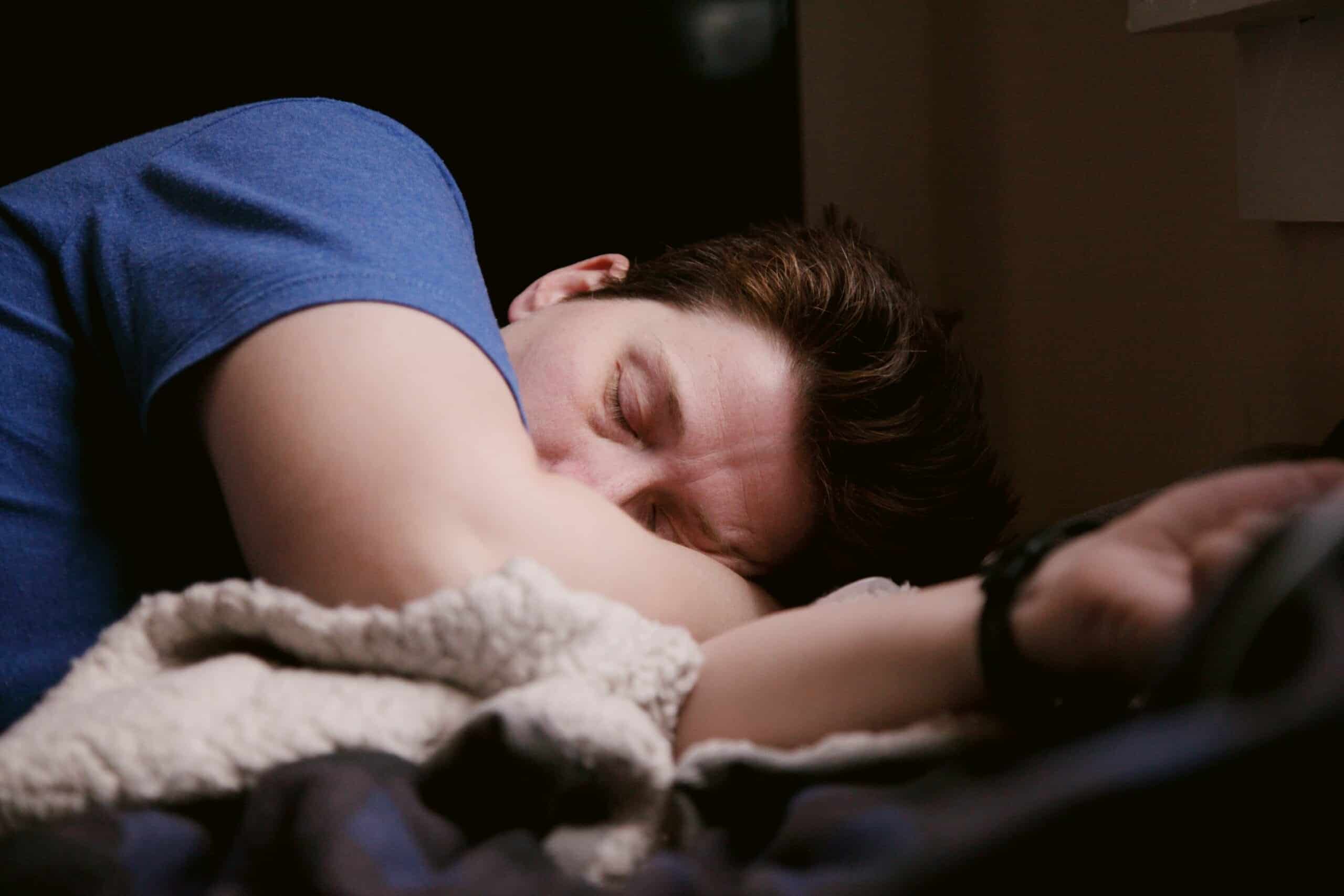
How to fall back asleep after waking up at 2 a.m. comes down to one principle: stop trying so hard. The harder you push for sleep, the more your nervous system reads the bed as a place of struggle. Most middle-of-the-night wakings end on their own when you stop fueling them with frustration, clock-checking, and rumination about tomorrow. Comparing options? See our best sleep positions for back pain roundup.
Brief night wakings happen to most people. What turns a normal awakening into an hour of staring at the ceiling is usually behavioral, not medical. Knowing which techniques calm your nervous system makes the difference between a 15-minute reset and a wrecked morning.
This guide covers seven evidence-based methods I have used through 20+ years of chronic insomnia, including cognitive shuffling, paradoxical intention, the 15-minute rule, and progressive muscle relaxation. None requires equipment. Most work within 20 minutes. Several lean on principles from cognitive behavioral therapy for insomnia (CBT-I), the first-line treatment recommended by the American Academy of Sleep Medicine.
Last updated: May 30 2026 | By Austin Murphy
This article is for informational purposes and is not medical advice. Persistent insomnia, especially with daytime impairment, warrants evaluation by a healthcare provider.
Key Takeaways
- Stop watching the clock. Turn devices away and avoid checking the time during a night waking.
- Get out of bed after 15 to 20 minutes of wakefulness; the bed should equal sleep, not frustration.
- Cognitive shuffling and paradoxical intention work by reducing pressure to sleep, not by forcing it.
- Chronic mid-night waking (three or more nights weekly for three months) alongside snoring, gasping, or daytime exhaustion warrants medical evaluation for sleep apnea, depression, or other underlying conditions.
Why You Wake Up in the Middle of the Night
Brief awakenings are normal. Sleep cycles run roughly 90 minutes, and the transitions between cycles are natural waking points. Most people return to sleep within seconds and never remember it. A waking only becomes a problem when something keeps you alert past the transition: a full bladder, a noise, a temperature shift, a vivid dream, or a stressed mind.
Common drivers of sustained mid-night wakings include caffeine that stays active for 5 to 6 hours (a 3 p.m. coffee is still working at 9 p.m.), late alcohol (sedates initially but fragments sleep in the second half of the night), bedroom temperature drift (an overheated room wakes you when core temperature should be at its lowest), and untreated stress carried into the bedroom.
Once you are awake and frustrated, a feedback loop kicks in. Your sympathetic nervous system reads frustration as a threat signal and ramps up cortisol. Cortisol is the wake-up hormone. Trying harder to sleep makes it worse. The techniques below interrupt that loop.
This guide addresses acute mid-night waking management. It does not treat chronic insomnia disorder. Persistent wakings that meet diagnostic criteria for chronic insomnia (waking three or more nights per week for three or more months with daytime impairment) warrant a referral to a sleep medicine provider for CBT-I, which has stronger long-term outcomes than any single technique below.
The 15-Minute Rule: When to Get Out of Bed
If you are not asleep within roughly 15 to 20 minutes, get out of bed. This rule comes from stimulus control therapy, a core component of CBT-I, and exists to prevent your brain from learning to associate the bed with wakefulness, anxiety, and frustration.
The mechanism: your bed is a conditioned cue. If you spend night after night lying awake in it, the bed itself becomes a trigger for alertness. Reversing that requires leaving the bed when sleep is not happening, doing something quiet and boring elsewhere, and only returning when sleepy.
How to apply the rule without a clock
Do not check the time. The rule is not about literal minutes; it is about the felt sense of being awake and frustrated. If you have been lying there long enough to feel restless, get up. The clock check itself is a sleep saboteur. Knowing it is 3:47 a.m. with work at 7 a.m. is guaranteed to spike alertness.
Where to go and what to do
Move to another room if possible. Keep lights dim (warm tones, low brightness). Read a paper book, fold laundry, do a crossword. Avoid: phones, screens, work, anything stimulating, anything that requires a decision. Return to bed only when you feel sleepy, not just bored.
Cognitive Shuffling: Bore Your Brain Back to Sleep
Cognitive shuffling is a technique developed by cognitive scientist Luc Beaudoin. It works by giving your mind a task that mimics the cognitive randomness of sleep onset, which short-circuits the rumination loop that keeps you awake.
The method: pick a neutral word, like “table.” Spell it out: T, A, B, L, E. For each letter, generate as many unrelated images or words as you can, starting with that letter. T: tiger, taxi, telescope, towel, tortilla. Then move to A: apple, attic, arrow, anchor, ash. Keep the images visual and concrete. Do not let them connect into a narrative; that is the point. The randomness signals to your brain that you are drifting, and your brain follows.
Most people fall asleep within 5 to 15 minutes once they get the hang of it. The first few tries can feel awkward. Stick with it for three or four nights before deciding whether it works for you.
Paradoxical Intention: Stop Trying to Sleep
Paradoxical intention is the cleanest demonstration that effort kills sleep. Instead of trying to fall asleep, you deliberately try to stay awake. You lie in bed, eyes open, and tell yourself you will stay awake. Within 10 to 20 minutes, most people are asleep.
The mechanism: the pressure to sleep is what keeps you awake. Removing the pressure removes the obstacle. This technique is supported by clinical evidence as part of CBT-I and works particularly well for people who lie awake, catastrophizing about how tired they will be tomorrow.
One caveat: do not turn on lights, do not pick up your phone, do not get out of bed. The instruction is only to stay mentally awake while staying physically still in the dark. Your brain, freed from the demand to perform sleep, usually performs it anyway.
Progressive Muscle Relaxation
Progressive muscle relaxation (PMR) tackles the body side of the wakefulness loop. Anxiety holds tension in muscles you are not aware of: jaw, shoulders, hands, and lower back. Releasing that tension downregulates your sympathetic nervous system.
The protocol: starting at your feet, tense one muscle group for 5 seconds, then release for 10 seconds. Move up: calves, thighs, glutes, abdomen, hands, arms, shoulders, neck, face. One full pass takes about 10 minutes. Notice the contrast between tense and relaxed. By the time you reach your face, you will likely be on the edge of sleep.
A short version for repeat wakings
If you have done full-body PMR earlier and woken again, run a shorter version: hands and arms, shoulders, jaw, eyes. Many night wakings hold tension in those four areas, especially in side sleepers and people with bruxism.
Box Breathing and 4-7-8 Breathing
Slow nasal breathing increases parasympathetic tone and lowers heart rate. Two structured patterns work well: box breathing and 4-7-8 breathing.
For box breathing, inhale for 4 seconds, hold for 4, exhale for 4, hold for 4. Repeat for 5 to 10 cycles.
The 4-7-8 method: inhale through your nose for 4 seconds, hold for 7, exhale through your mouth for 8 seconds. Repeat 4 times. The long exhale is the active ingredient; it triggers a calming response that slows the heart.
Neither breathing pattern is a sleep drug. They are tools to interrupt sympathetic activation. Pair with any of the cognitive techniques above for compounding effects.
The “Get Up” Toolkit for Bad Nights
Some nights, nothing works in bed. Plan for those. Keep a small toolkit ready before you sleep:
- A boring paper book on the nightstand or in the next room (not a thriller, not work-related; something dense like a history book or an old textbook)
- A dim, warm-light lamp, not the overhead light
- A blanket for the couch so you do not get cold
- Optional: a notepad for parking ideas that wake you up. Writing down “call dentist Monday” gets it out of your head.
Stay out of bed for 20 to 30 minutes. Return when your eyes feel heavy, not when you decide it is time. If you are still awake an hour later, repeat the cycle. This is not failure; this is how stimulus control works over weeks of practice.
What Not to Do (Common Mistakes)
The mistakes are usually more impactful than the techniques. Avoiding the bad behavior is half the work.
Checking the time
Watching the clock creates math: “Only 3 hours of sleep left.” Math wakes up the analytical part of your brain. That kind of thinking is incompatible with sleep onset. Turn your clock face away. Put your phone across the room or in another room entirely.
Picking up your phone
Blue light is real, but the bigger issue is content. Email, news, social media, work messages: any of these will spike alertness within seconds. Even neutral content (Wikipedia, recipes) engages your brain past the point of returning to sleep easily.
Reaching for melatonin at 3 a.m.
Melatonin has a 30 to 60 minute onset. By the time it works, you would have fallen asleep anyway. Worse, taking it in the second half of the night can shift your circadian rhythm and create a worse waking the next night. Save melatonin for sleep-onset insomnia at the start of the night, not for middle-of-night wakings.
Eating or drinking anything caloric
Food triggers digestion, which raises core temperature, which suppresses sleep. Stick to water if you are genuinely thirsty.
Doing chores or work
Yes, you have things to do. No, 3 a.m. is not when to do them. Choosing productive tasks reinforces to your brain that wakefulness is rewarded, which makes future wakings stickier.
Sleep Hygiene Foundations That Make This Easier
The techniques above work better against a backdrop of decent sleep hygiene. None of these eliminate mid-night wakings on their own, but they cut the frequency over weeks.
Keep your bedroom cool (65 to 68 degrees Fahrenheit is the Sleep Foundation range for most adults). I sleep with a cooling mattress topper because I run warm, and the temperature stability through the night has cut the number of times I wake up overheated by more than half.
Limit alcohol within 3 hours of bed. Alcohol is a sleep wrecker disguised as a sleep aid; it sedates you for the first half of the night and fragments the second half.
Cap caffeine at noon if you wake mid-night. Caffeine stays active in your system for 5 to 6 hours, meaning a 3 p.m. coffee still has substantial active caffeine at 11 p.m. Even people who fall asleep fine on late caffeine often wake at 2 a.m. because of it.
Use blackout for light. I run blackout curtains plus a sleep mask, and the redundancy matters because streetlights, neighbor porch lights, and early summer dawn light all sabotage sleep continuity. See the best blackout curtains for sleep roundup if you have not solved this yet.
Active Help vs Long-Term Solutions
The seven techniques above are acute tools: they help you fall back asleep when you have already woken up. They are not a treatment for chronic insomnia. If you are using them four or five nights a week for months, the right next step is CBT-I with a sleep medicine provider, not more techniques.
CBT-I combines stimulus control (the 15-minute rule), sleep restriction (shortening time in bed temporarily to consolidate sleep), cognitive restructuring (addressing the catastrophic thinking that fuels insomnia), and sleep hygiene into a 6 to 8 week protocol. Outcomes match or beat sleep medication and last longer. The American Academy of Sleep Medicine recommends CBT-I as first-line treatment for chronic insomnia in adults.
Supplements like magnesium glycinate and over-the-counter sleep aids can help on occasional rough nights, but do not address the behavioral conditioning that drives chronic insomnia. See the best sleep aids for adults roundup for evidence on what does and does not work over the counter, and the best sleep supplements for deep sleep roundup for supplement options.
When to See a Doctor
Mid-night wakings on their own are usually behavioral and respond to the techniques above. Some patterns warrant medical evaluation rather than another self-help attempt:
- Waking three or more nights per week for three or more months, with daytime impairment (chronic insomnia disorder)
- Snoring, gasping, or witnessed apneas during sleep (obstructive sleep apnea)
- Severe daytime sleepiness despite adequate sleep opportunity (excessive daytime sleepiness, narcolepsy)
- Acting out dreams, kicking, punching, or vocalizing during sleep (REM sleep behavior disorder)
- Heart palpitations, chest discomfort, or new shortness of breath waking you up (cardiac causes)
- Night sweats not explained by room temperature or perimenopause, especially with weight loss or fever (rule out infection, lymphoma, hyperthyroidism)
- New depressive symptoms, hopelessness, loss of interest, or suicidal thoughts
- Restless, uncomfortable, or crawling sensations in legs that improve with movement (restless legs syndrome)
- Frequent urination is the main waking trigger, more than twice per night (nocturia; evaluate for diabetes, prostate, sleep apnea)
- Waking combined with morning headaches, dry mouth, or unrefreshing sleep (often sleep-disordered breathing)
- Insomnia starting after a specific medication change, life event, or trauma
- Pregnancy with persistent sleep disruption affecting daily function
A primary care provider can rule out medical causes and refer to sleep medicine or behavioral sleep medicine if appropriate. Many insurance plans now cover CBT-I, including digital programs.
Frequently Asked Questions
Is it normal to wake up at 3 a.m. every night?
Brief awakenings between sleep cycles are normal. Waking at the same time nightly and staying awake usually means conditioned arousal (the bed has become associated with wakefulness), an environmental trigger, or a medical issue like sleep apnea. The 15-minute rule and stimulus control are first steps; if the pattern persists for three months, see a doctor.
Should I get up if I cannot fall back asleep?
Yes, after roughly 15 to 20 minutes of feeling alert and frustrated. Lying in bed awake reinforces the bed-equals-wakefulness association. Go to a dim room, do something boring, and return when sleepy.
Does melatonin help with middle-of-night wakings?
Not usually. Melatonin has a 30 to 60 minute onset and is best for sleep-onset insomnia, not maintenance. Taking it at 3 a.m. can shift your circadian rhythm and create worse wakings the next night.
What is cognitive shuffling, and does it actually work?
Cognitive shuffling is generating random, unrelated images for each letter of a neutral word. Many people fall asleep within 5 to 15 minutes. The method mimics the cognitive randomness of sleep onset, which short-circuits rumination. Stick with it three or four nights before deciding.
Why do I wake up at the same time every night?
Common causes: blood sugar dips (3 a.m. is when cortisol naturally rises), conditioned arousal, sleep apnea events clustered in REM-heavy second-half sleep, or perimenopausal hormonal shifts. If the timing is consistent, track other symptoms and discuss with a doctor.
Is it bad to use my phone if I cannot sleep?
Yes. Content matters more than blue light; email, news, or social media will spike alertness within seconds. Even neutral browsing engages your brain past the point of easy return to sleep. Read a paper book if you must do something.
How long does it take for these techniques to work?
Acute techniques (breathing, cognitive shuffling, PMR) often work within 10 to 20 minutes on a given night. Behavioral changes like stimulus control take 2 to 4 weeks of consistent application to retrain the bed-sleep association. CBT-I, as a full program, runs 6 to 8 weeks.
Should I take a sleeping pill if I wake up at 3 a.m.?
No. Most prescription sleep medications have long enough half-lives to leave you groggy the next day if taken in the second half of the night. Over-the-counter options like diphenhydramine are even longer-acting and impair next-day cognition. Save medication decisions for a discussion with your doctor.
Related Reading
Explore more: falling asleep on couch not bed, waking up to pee reasons, how to sleep after knee replacement surgery, how to stop waking up at 3am, why we twitch when falling asleep, and tired after coffee reasons.
Recommended Reading
See also our guides to falling asleep on couch not bed, and why arms go numb sleeping.
