
These terms get used loosely enough that shopping is confusing. Both are things you put a mattress on, and the meaningful distinction is what the mattress rests on and whether you need anything underneath it.
A platform bed supports the mattress directly, across slats or a solid surface, and needs no box spring. A traditional bed frame is a perimeter structure designed to hold a box spring, which in turn holds the mattress. That difference decides the height, the cost, and whether a foam mattress will work on it. Our roundup of bed frames covers the options. Frame style changes the footprint considerably, and our note on what size mattress fits your room covers clearance around it.
Quick Verdict
Platform beds suit foam and hybrid mattresses and need nothing underneath. Traditional frames suit innerspring mattresses with a box spring and sit higher. Most people buying today are better served by a platform.
What Each One Is
Platform bed
Supports the mattress directly on closely spaced slats or a solid deck. No box spring required, and adding one usually makes the bed impractically tall.
Traditional bed frame
A perimeter with rails and legs, designed to carry a box spring. Without one, most mattresses have nothing continuous to rest on.
The overlap
Many modern frames are platforms in everything but name, with slats included and no box spring required. The word on the box is considerably less reliable than the slat spacing, which is the specification worth checking.
What actually matters
Slat spacing, support underneath, and total height. Those three decide whether a given mattress works and whether you like the result.
Slat Spacing Is the Real Specification
Foam and hybrid mattresses need closely spaced support, commonly cited as around three inches or less between slats. Wider gaps let foam sag into them over time, which produces uneven wear and can void a warranty.
Innerspring mattresses tolerate wider spacing because the coil unit distributes load across the whole surface rather than relying on what is directly underneath.
This is why a foam mattress on an old slatted frame can develop dips that look like mattress failure and are actually a support problem. Our roundup of slat supports and replacement slats covers fixing it.
Height and Practicality
Platform beds sit lower, typically putting the mattress surface somewhere around knee height. That suits most people, looks contemporary, and makes getting up harder for anyone with mobility or joint issues.
Traditional frames with a box spring sit considerably higher, which many older adults prefer and which also creates usable storage space underneath.
Neither is better in general. Anyone with hip, knee, or back problems should think about the height they actually want to rise from before choosing. Our roundup of bed risers covers adjusting it afterward.
At a Glance
| Platform bed | Traditional frame | |
|---|---|---|
| Box spring needed | No | Usually yes |
| Suits foam mattresses | Yes | Only with a base |
| Height | Lower | Higher |
| Total cost | One purchase | Frame plus box spring |
| Under-bed storage | Varies, often limited | Usually good |
| Best for | Foam and hybrid | Innerspring, higher beds |
What Mine Is
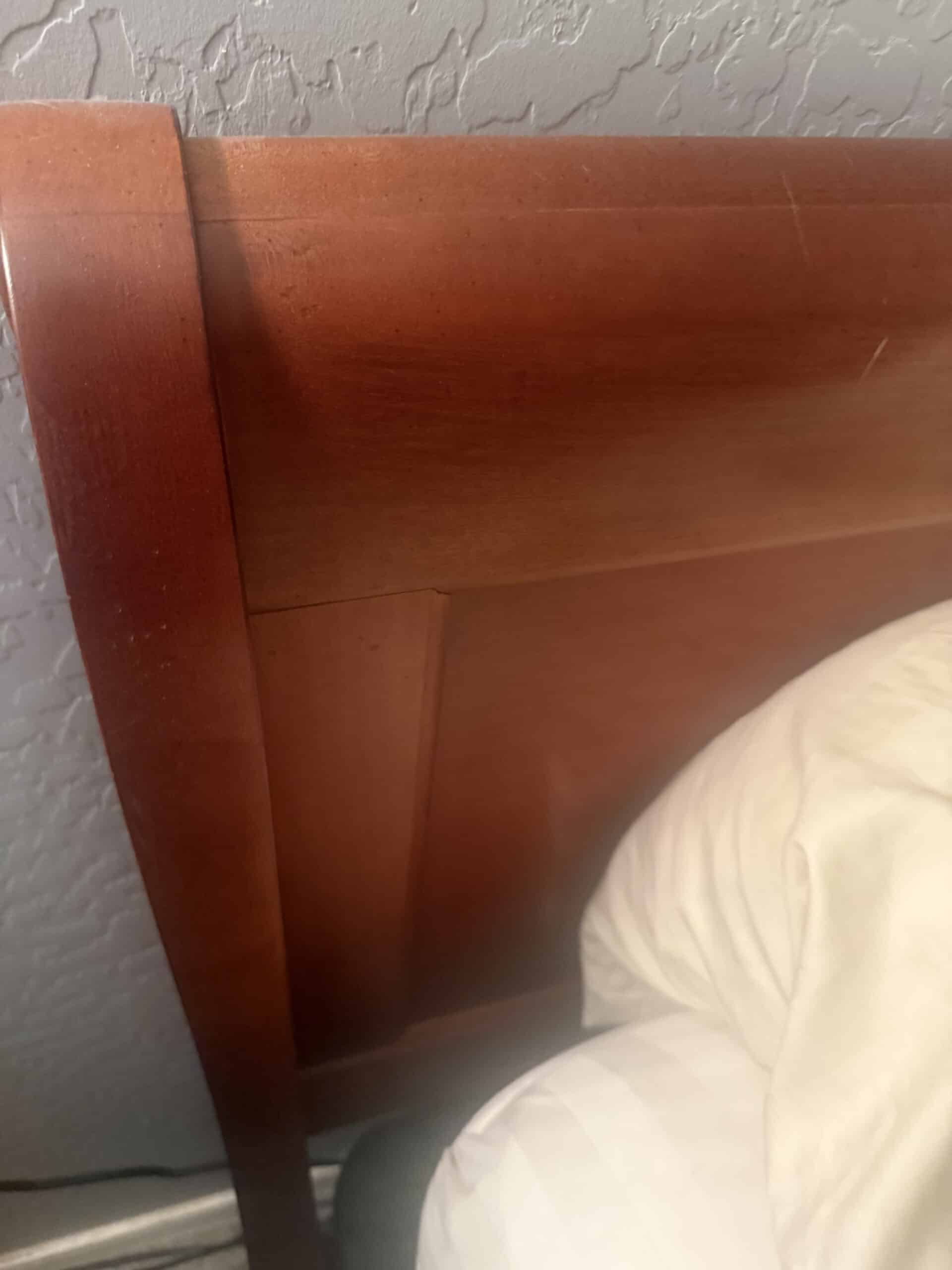
Mine is a large wooden frame with a memory foam mattress on it, and the combination has worked without complaint.
The thing I would point at is that it is solid. It does not shift across the floor, it does not creak, and it has never needed anything doing to it. A heavy wooden frame is not exciting and it does remove a whole category of problem that lighter frames create.
Memory foam is the part where support matters most, since foam sags into anything it is not evenly supported by. Mine has not developed dips, which suggests the support underneath is doing its job, though I have never lifted the mattress to inspect the spacing.
What I would say to anyone choosing is that the frame gets very little attention compared with the mattress, and it is the thing the mattress depends on. Mine has been the least interesting part of the bed and that is exactly what you want from it.
What I cannot compare is metal frames, adjustable bases, or platform beds specifically, since I have only had this one.
Noise and Stability
Frames develop squeaks at the joints where wood or metal moves against itself, and the cause is almost always fasteners loosening over time rather than a fault in the design.
Heavier frames tend to stay quieter and stay put, since mass resists the small movements that produce noise and gradually walk a light frame across a floor. That is one of the few advantages that scales directly with weight.
Metal frames are more prone to noise than solid wood, particularly at the bolted corners, and they are also lighter and easier to move. Neither is a fault so much as a trade. Our roundup of frames that do not squeak covers what to look for.
Which Should You Buy?
Choose a platform if
You have or are buying a foam or hybrid mattress, you want one purchase rather than two, and a lower bed suits you. This covers most people buying today.
Choose a traditional frame if
You have an innerspring mattress and a box spring already, you want a higher bed, or under-bed storage matters. Height is a genuine accessibility consideration.
Either works if
Your mattress is a hybrid and the slat spacing is close enough, in which case the decision comes down to height and appearance.
Check before assuming
Many mattress warranties specify support requirements, and using the wrong base can affect a claim. Our note on whether you need a box spring covers that.
Common Mistakes to Avoid
Putting foam on wide slats
Gaps beyond roughly three inches let foam sag through, producing dips that look like a failing mattress and are a support problem.
Adding a box spring to a platform
The bed becomes uncomfortably tall and the extra layer adds nothing, since the platform already provides the support.
Buying on appearance alone
Slat spacing and center support are what determine whether the mattress lasts. Neither is visible in a product photo.
Skipping the center support leg
Queen and larger frames generally need one, and leaving it out is a common cause of sagging in the middle. Our roundup of mattresses for back pain covers build quality.
Recommended Reading
See our roundup of metal bed frames, our guide to upholstered frames, our note on headboards, and a roundup of wall protectors, and stopping a bed frame shifting.
Bed Frame vs Platform FAQ
What is the difference between a bed frame and a platform bed?
A platform bed supports the mattress directly on closely spaced slats or a solid deck and needs no box spring. A traditional frame is a perimeter structure designed to hold a box spring, which then holds the mattress.
Do I need a box spring with a platform bed?
No, and adding one usually makes the bed uncomfortably tall while contributing nothing, since the platform already provides continuous support. Check your mattress warranty, which often specifies what base is acceptable.
Can I put a memory foam mattress on any frame?
Only one that supports it closely enough. Foam needs slat spacing commonly cited at around three inches or less, since wider gaps let it sag through and create dips that resemble mattress failure.
Which is better for back pain?
Neither directly, since the mattress does that work. What matters is that the base supports the mattress evenly, because a sagging base undermines any mattress. Height also affects how easily you get in and out, which matters with back pain.
Are platform beds lower?
Generally yes, often putting the mattress surface around knee height. That suits most people and can be harder for anyone with mobility issues, where a higher traditional frame with a box spring is often preferred.
Is a platform bed cheaper?
Usually overall, since it is one purchase rather than a frame plus a box spring. Individual platform beds are not necessarily cheaper than individual frames, and the total cost typically is.
Can I convert a frame to a platform?
Often, by adding closely spaced slats or a bunkie board on top of the existing rails. That gives foam the continuous support it needs without buying a new frame.
Do platform beds have storage underneath?
It varies considerably. Some are built with drawers, and many sit low enough that there is little usable clearance. Traditional frames with a box spring generally leave more space.best-mattresses-for-back-pain/”>mattresses for back paine Is What Holds the Mattress
These terms get used loosely enough that shopping is confusing. Both are things you put a mattress on, and the meaningful distinction is what the mattress rests on and whether you need anything underneath it.
A platform bed supports the mattress directly, across slats or a solid surface, and needs no box spring. A traditional bed frame is a perimeter structure designed to hold a box spring, which in turn holds the mattress. That difference decides the height, the cost, and whether a foam mattress will work on it. Our roundup of when to replace a mattress covers the options.
Quick Verdict
Platform beds suit foam and hybrid mattresses and need nothing underneath. Traditional frames suit innerspring mattresses with a box spring and sit higher. Most people buying today are better served by a platform.
