
They work, and they work less well as humidity climbs, because the exhaust air can only carry away so much moisture before the unit has to store the rest. Self-evaporating portable ACs in humid weather shift from handling all the condensate to handling most of it, which shows up as a fuller reservoir or a drain you suddenly need rather than a unit that stops cooling. The cooling itself usually holds up; the moisture handling is what gives.
That distinction matters because people expect the failure to look like weak airflow. It looks like water instead, and our guide to how often you have to empty a portable AC covers the manual end of the same problem.
Quick Answer
Self-evaporating units send most condensate out through the exhaust hose as vapor, so they need no draining in average conditions. In sustained high humidity the exhaust saturates and the surplus collects in the internal reservoir, which then needs emptying or a continuous drain. Cooling performance drops less than moisture handling does.
Key Takeaways
- Self-evaporating is a moisture-handling feature, not a cooling feature.
- The exhaust air carries condensate away as vapor until it cannot hold more.
- High humidity means more condensate produced and less capacity to expel it.
- A full reservoir triggers a shutdown on most units rather than an overflow.
- A continuous drain hose removes the ceiling on humid-day operation.
- Filter condition affects moisture handling as much as it affects airflow.
What Changes as Humidity Rises
| Conditions | Condensate Produced | Exhaust Can Carry | What You See |
|---|---|---|---|
| Dry heat | Low | All of it | Nothing, no draining ever |
| Moderate humidity | Moderate | Most of it | Occasional reservoir level |
| High humidity | High | Some of it | Reservoir fills, unit may pause |
| High humidity plus heat | Highest | Least share | Frequent full-tank shutoffs |
| Continuous drain fitted | Any | Irrelevant | Runs without interruption |
Why the Exhaust Is the Bottleneck
A portable AC pulls heat out of room air, and pulling heat out of air condenses the moisture in it. That water has to go somewhere, and a self-evaporating design routes it onto the hot condenser coil where the exhaust airflow picks it up as vapor and blows it outside.
The exhaust air has a limit. Air can only hold so much water at a given temperature, and if it arrives at the coil already carrying moisture from a humid room, it has less room left for the condensate you are trying to get rid of.
So humidity squeezes the system from both ends. More water gets pulled out of the room air, and the air doing the removal has less spare capacity. The surplus goes to the internal reservoir, and once that fills most units pause and show a full-tank indicator.
Five Summers With One Unit
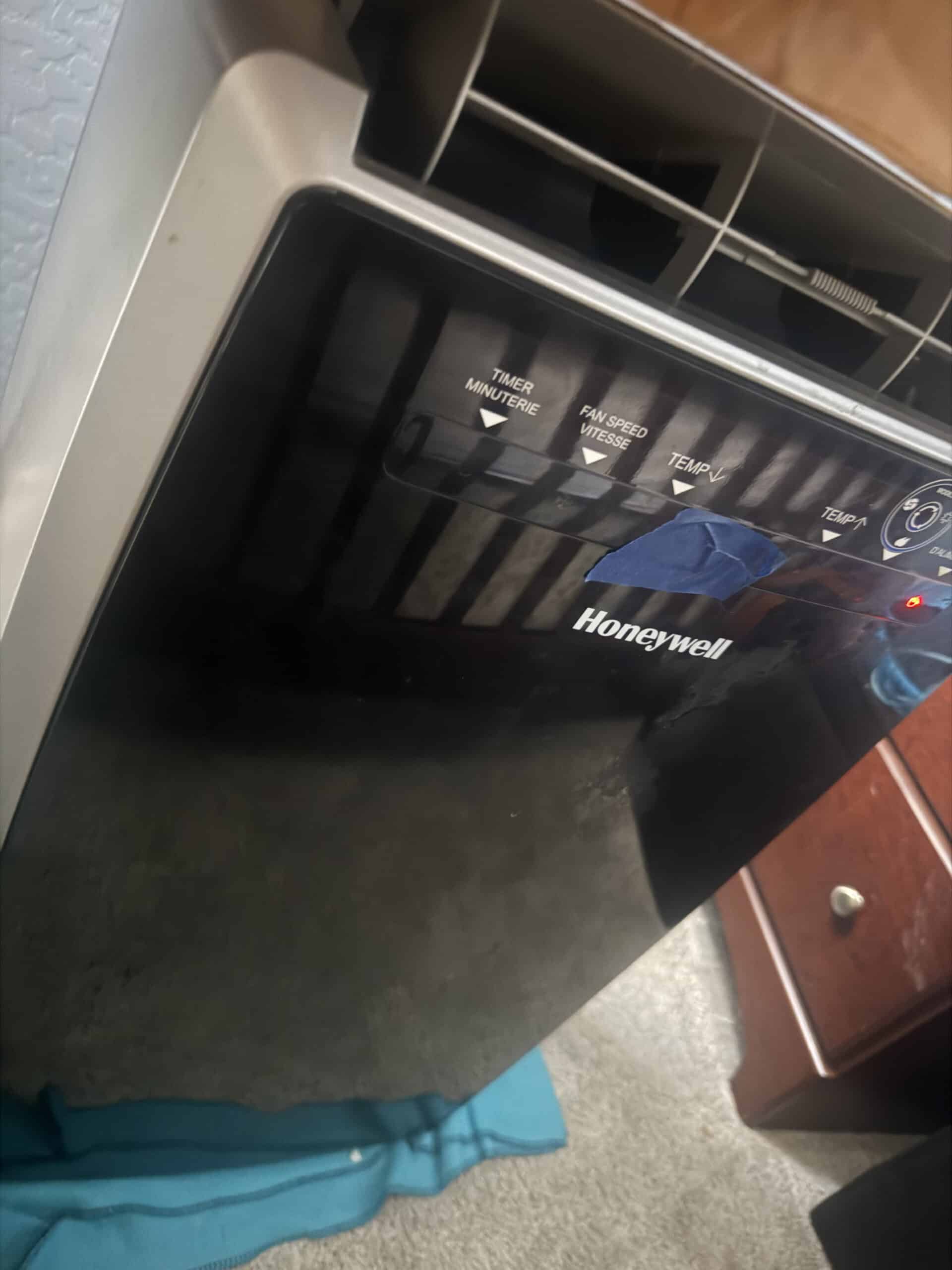
My own portable AC is a single-hose self-evaporating unit and I have run it for five or more summers. It sits between the window and the bed, and I have never emptied a tank on it.
The only maintenance it gets is a filter check roughly every couple of months during the season. That is it.
Here is the honest part about humid weather. When humidity comes up during monsoon the self-evaporating side gets a little worse, and you can tell. It still keeps up. Not a failure, not invisible either, and that is the realistic version of what this feature does when conditions push on it.
What I cannot tell you is how that compares to a dual-hose unit, a window unit, or a circulator, because I have not run any of those. The comparison sections below are research rather than experience, and our guide to single-hose versus dual-hose designs covers that ground properly.
What to Do When It Starts Falling Behind
Fit a continuous drain
Most self-evaporating units have a drain port specifically for this. Run a hose to a floor drain or a low bucket and the reservoir never fills, which removes the humid-day ceiling entirely. Our guide to draining a portable AC continuously covers the setup.
Check the filter first
A loaded filter reduces airflow across the coil, which reduces both cooling and the exhaust volume available to carry moisture. It is the cheapest thing to rule out and the most commonly neglected.
Seal the window kit properly
A leaking window seal lets humid outside air straight back in, so the unit reprocesses the same moisture indefinitely. Foam and tape around the panel is a small job with a disproportionate effect.
Add a dehumidifier rather than a bigger AC
If the room feels clammy at a temperature that should be comfortable, the problem is moisture rather than heat. A separate dehumidifier attacks that directly, and our guide to bedroom humidity control covers the options.
Why the Rating on the Box Does Not Tell You This
Cooling capacity is published and moisture-handling capacity is not. A unit lists a BTU figure and a coverage area, and nothing on the box describes how much condensate the exhaust can carry away at a given humidity.
That is why two units with the same rating behave differently in a damp week. The gap shows up in the reservoir rather than in the temperature, so a spec sheet comparison will never surface it.
The practical consequence is that humid-climate buyers should treat a drain port as a required feature rather than a nice extra, whatever the unit claims about self-evaporation.
What Self-Evaporating Does Not Mean
It does not mean the unit produces no condensate. Every air conditioner that cools also dehumidifies, so water is always being made. Self-evaporating only describes where that water goes.
It also does not mean the reservoir is decorative. The tank exists because the designers expected conditions where the exhaust cannot keep up, and a unit sold as fully self-evaporating will still have one.
Finally it does not mean better cooling. Two units with identical cooling capacity can differ only in moisture handling, and in dry heat that difference never surfaces at all. Placement affects the result more than the feature does, which our guide to where to put a portable AC covers.
Signs It Is Humidity and Not a Fault
A full reservoir on a humid day is the system working as designed rather than breaking. So is a unit that pauses, shows a tank indicator, and resumes after you empty it.
What is not normal is warm air from the vents, which points at something else entirely. Our guide to why a portable AC blows warm air walks through that list.
Related Reading
Frequently Asked Questions
Do self-evaporating portable ACs work in humid weather?
Yes, with reduced moisture handling. The exhaust air carries condensate out as vapor until it saturates, and in sustained humidity the surplus collects in the internal reservoir instead. Cooling generally holds up better than the self-evaporating function does.
Will you still have to empty the tank?
Possibly, on humid days. In dry conditions many owners never empty one at all, and in sustained high humidity the reservoir can fill and pause the unit. Fitting a continuous drain hose removes the issue permanently.
Does high humidity stop a portable AC from cooling?
Not directly. The unit keeps removing heat, and what degrades is its ability to expel the water it condenses. A room can feel clammy at a correct temperature, which is a moisture problem rather than a cooling one.
What is the difference between self-evaporating and a drain hose?
Self-evaporating sends condensate out through the exhaust as vapor with no plumbing. A drain hose routes liquid water out by gravity and works regardless of humidity. Most self-evaporating units support both.
Does a dirty filter affect moisture handling?
Yes. A loaded filter cuts airflow across the coil, which reduces the exhaust volume available to carry vapor away. Check it before assuming humidity is the whole story.
Should you run a dehumidifier alongside a portable AC?
It helps when the room feels damp at a comfortable temperature, since that is moisture rather than heat. The two units address different halves of the problem. Running both does raise total power draw.
Is a full tank a sign of a fault?
Usually not. A reservoir filling on a humid day is the design working as intended, and most units pause rather than overflow. Warm air from the vents is the symptom that points at an actual fault.
Do dual-hose units handle humidity better?
They are generally described as more efficient because they draw condenser air from outside rather than from the room, which changes the moisture balance. Comparing the two in practice requires running both. The single-hose and dual-hose comparison guide covers the stated differences.
