
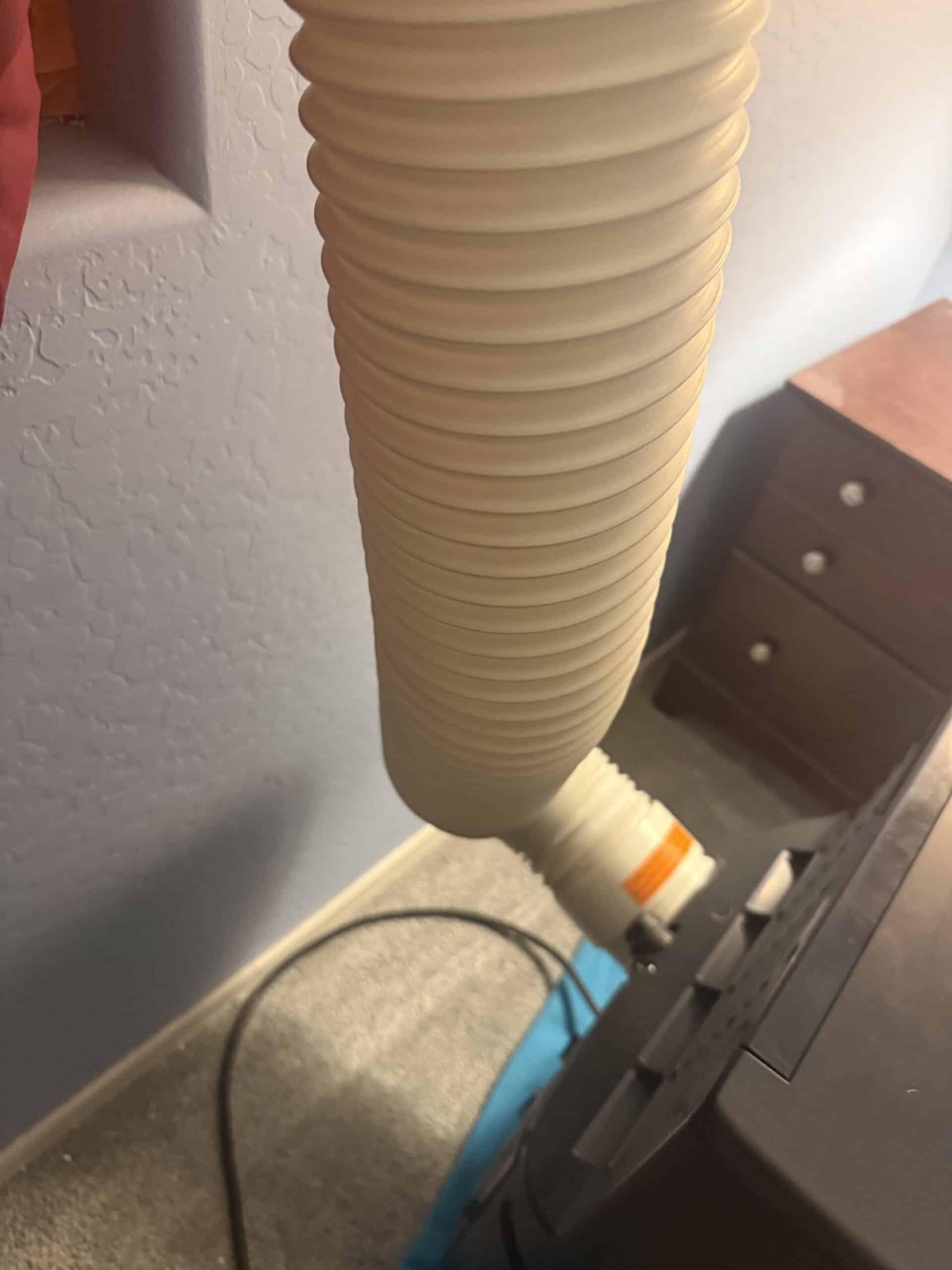
Dual-hose units are more efficient and single-hose units are the ones almost everyone buys. That gap is not a mistake by consumers so much as a reasonable trade, because the efficiency advantage comes with more window hardware, more bulk, and a narrower set of models to choose from. Knowing which side of that trade you are on is the whole decision. Our roundup of bedroom air conditioners covers the units themselves.
Quick Verdict
Dual-hose wins on cooling efficiency and suits large or hot rooms where the unit runs constantly. Single-hose is simpler, cheaper, more widely available, and adequate for a bedroom, provided the window is sealed properly.
Key Takeaways
- Single-hose units pull room air and exhaust it, creating negative pressure.
- That pressure drags warm outside air in through every gap.
- Dual-hose units draw outside air for the condenser instead.
- Window sealing matters far more on a single-hose unit.
- Model choice is much wider in single-hose.
How We Compared Them
These are compared on the things that decide a purchase: how well they cool, how much window hardware they need, how they behave in a bedroom overnight, and what is actually available to buy. Where the comparison draws on ownership, that is stated plainly rather than implied.
Single-Hose vs Dual-Hose at a Glance
| Criterion | Single-hose | Dual-hose |
|---|---|---|
| Cooling efficiency | Lower | Higher |
| Room pressure | Negative | Close to neutral |
| Window hardware | One opening | Two openings |
| Sensitivity to gaps | High | Lower |
| Model availability | Wide | Limited |
| Typical price | Lower | Higher |
Single-Hose, Pros and Cons
- Cheaper to buy and far more models to choose from.
- One window opening, so less kit and a simpler install.
- Lighter and generally smaller for the same rated capacity.
- Creates negative pressure that pulls warm air in through gaps.
- Cooling suffers noticeably if the window seal is poor.
- Works harder for the same result in a large room.
Single-hose suits bedrooms, apartments, and anyone prioritizing simplicity and price. Skip it if you are cooling a large or badly sealed space.
Dual-Hose, Pros and Cons
- Draws outside air for the condenser rather than room air.
- Keeps room pressure close to neutral, so less infiltration.
- Cools a given space faster and with less runtime.
- Needs a larger window kit with two openings.
- Bulkier and heavier for the same capacity.
- Considerably fewer models on the market.
Dual-hose suits large rooms, hot climates, and situations where running cost matters over a long season. Skip it if window space is tight or you want choice.
Which Cools Better?
Dual-hose, and the mechanism is worth understanding rather than taking on faith. A single-hose unit pulls air from the room, runs it over the condenser, and pushes it outside. That air has to be replaced, and it gets replaced by outside air drawn in through gaps around windows, doors, and the window kit itself.
So a single-hose unit is partly fighting warm air it created demand for. A dual-hose unit takes its condenser air from outside through the second hose, exhausts it back out, and leaves room pressure roughly where it found it.
In a small well-sealed bedroom the difference is modest. In a large or leaky room it compounds, because more air moves and more of it is warm.
Winner: dual-hose, by a margin that grows with room size.
Which Is Easier to Install?
Single-hose, clearly. One hose means one opening in the window panel, less hardware, and a lighter unit to position. Dual-hose kits need a wider panel with two ports and more careful sealing around both.
The practical constraint is window width. Some windows will not accommodate a dual-hose panel at all, which decides the question before efficiency enters into it. Our roundup of portable AC window kits covers sealing either type.
Winner: single-hose.
Which Suits a Bedroom?
Single-hose, for most people. Bedrooms are small, usually reasonably sealed, and the efficiency gap matters least at that size. The unit is also smaller, which counts in a room where it has to sit somewhere without blocking the path to the bed.
Noise is roughly comparable between the two types and depends more on the model than the hose count. Our note on whether portable ACs disturb sleep covers that.
Winner: single-hose, on size and availability rather than performance.
Which Costs Less to Run?
Dual-hose, over a long season. Higher efficiency means less runtime for the same result, and in a hot climate where the unit runs most of the day that compounds into a real difference on a bill.
Over a short summer with intermittent use, the purchase price gap can outweigh the running cost gap entirely. The calculation depends on how many hours the thing actually runs. Our note on what a portable AC costs to run overnight covers the arithmetic.
Winner: dual-hose, if it runs enough hours to pay back the difference.
Which Fits Your Situation
| If this is you | Better choice |
|---|---|
| Cooling one bedroom | Single-hose |
| Cooling a large or open room | Dual-hose |
| Narrow window opening | Single-hose |
| Running it most of the day all summer | Dual-hose |
| Occasional use on hot nights | Single-hose |
| Room seals poorly | Dual-hose, or fix the seal |
My Experience With Single-Hose
I have run a single-hose portable air conditioner overnight through five Arizona summers, and it still cools as well as it did when I got it. That is the practical answer to whether single-hose is good enough for a bedroom, at least in one bedroom over five years.
What I would emphasize from that time is the window seal. The kit that came with the unit does the main job and it is not a perfect fit, and air leaks in sometimes. On a single-hose unit that matters more than it would on a dual-hose one, because the negative pressure is actively pulling outside air through whatever gap exists.
So the efficiency criticism of single-hose is real, and it is also partly addressable. Sealing the window properly closes some of the gap between the two designs without buying a different machine.
I have not owned a dual-hose unit, so everything above about how they perform comes from how the two designs work rather than from running one. What I can tell you is that the cheaper, simpler option has been adequate in a bedroom for five summers in a genuinely hot climate.
The Verdict
Dual-hose is the better engineering and single-hose is the better fit for most bedrooms, which is an unsatisfying answer that happens to be true. The efficiency advantage is real and it matters most where the room is large, the season is long, and the unit runs constantly.
For a bedroom, buy single-hose and spend the difference on sealing the window properly. That closes part of the gap the design creates and it costs a fraction of what the upgrade would. Our roundup of portable AC hoses and insulation covers the other half of the setup.
Recommended Reading
See our note on whether a portable AC is worth it for one room, our guide to where to put a portable AC, our note on how often you empty one, and a guide to running a fan and AC together.
Single-Hose vs Dual-Hose FAQ
Is a dual-hose portable AC really more efficient?
Yes, and the reason is structural rather than marketing. A single-hose unit exhausts room air, which gets replaced by warm outside air drawn in through gaps. A dual-hose unit takes condenser air from outside instead, so room pressure stays close to neutral and less warm air infiltrates.
Is single-hose good enough for a bedroom?
For most bedrooms, yes. The efficiency gap matters least in a small, reasonably sealed room, and single-hose units are smaller, cheaper, and available in far more models. Sealing the window well closes part of the difference.
Why are most portable ACs single-hose?
They are cheaper to make, simpler to install, and lighter, which suits the majority of buyers cooling one room. Dual-hose designs need a wider window panel and more hardware, so manufacturers make far fewer of them.
Does the window seal matter more with single-hose?
Considerably. The negative pressure a single-hose unit creates actively draws outside air through any gap, so a poor seal costs more cooling than it would on a dual-hose unit. It is the cheapest improvement available on a single-hose setup.
Can I convert a single-hose unit to dual-hose?
Not properly. The intake path and internal ducting are designed around one configuration, and aftermarket conversions generally do not deliver the efficiency of a purpose-built dual-hose unit. Sealing the window better is the practical improvement.
Will a dual-hose unit fit my window?
Check the panel width before anything else. Dual-hose kits need room for two ports and are wider than single-hose panels, and some windows will not take one. That constraint decides the question before efficiency does.
Which is quieter?
Roughly comparable, and it depends far more on the specific model than on hose count. Compressor design and fan speed drive noise, so compare stated decibel figures between models rather than assuming one type is quieter.
Is the price difference worth it?
It depends on runtime. In a hot climate with the unit running most of the day for months, better efficiency pays back over a season. For occasional use on hot nights, the higher purchase price rarely recovers.
