
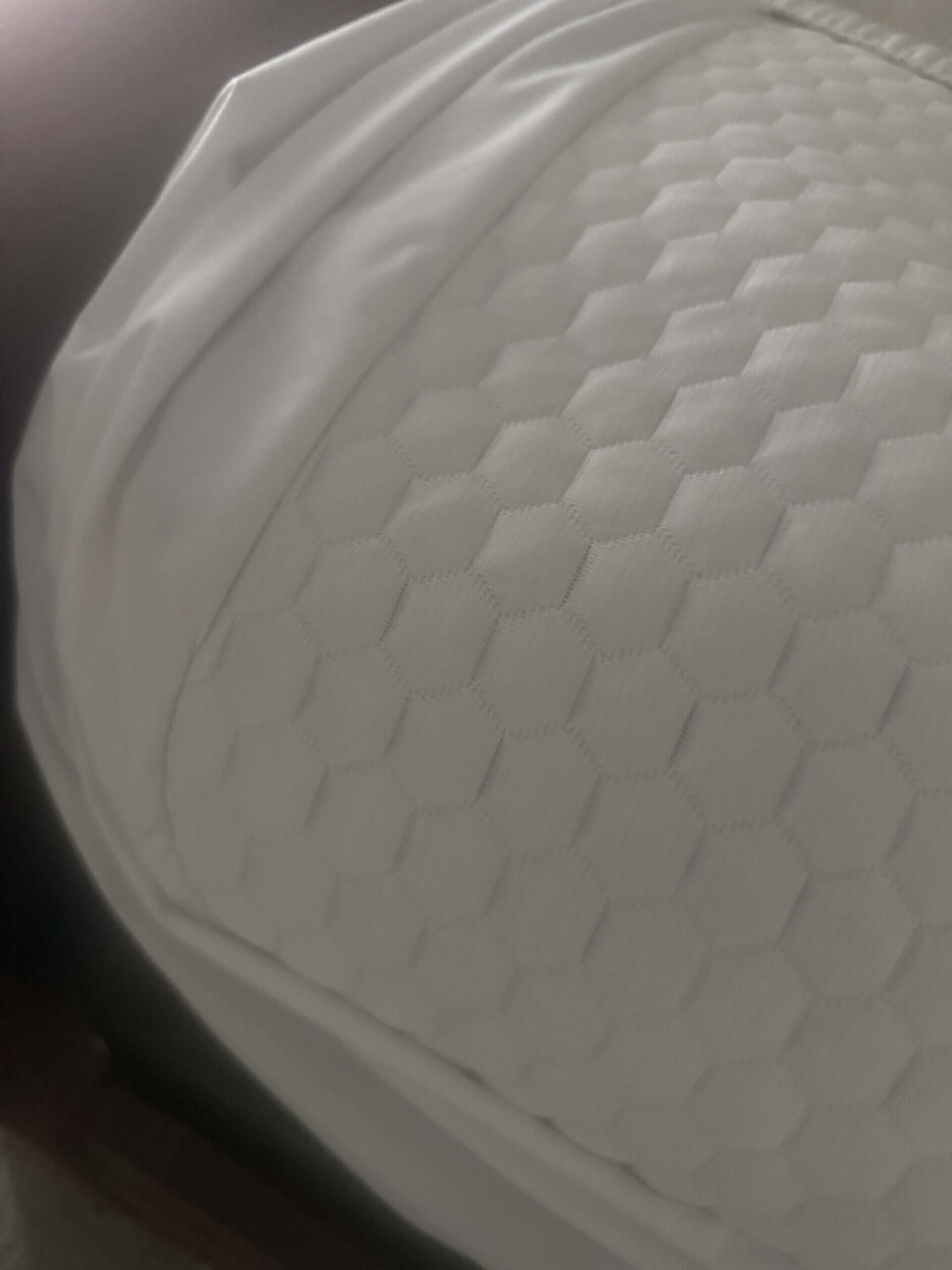
Not for comfort, if the mattress is right for you. A topper on a new bed usually means either the firmness was wrong or you want something the mattress does not do, and cooling is the most common version of the second.
I put a topper on my current mattress from the start. It is a memory foam bed about a year old, and the cooling topper is three or four years old, so it moved across from the mattress before it.
A Quick Note
This covers comfort rather than medical advice. Back or joint pain that persists or worsens on a new mattress is worth discussing with a doctor rather than layering products.
Quick Answer
Skip it if the mattress feels right. Add one if you need cooling the mattress does not provide, if the firmness is close but not quite there, or if you want to protect the surface. Adding a topper immediately can also mask a mattress that is genuinely wrong for you.
Reasons People Add One Anyway
| Reason | Worth doing |
|---|---|
| Mattress sleeps hot | Yes, cooling toppers address it directly |
| Slightly too firm | Yes, cheaper than exchanging |
| Slightly too soft | Rarely, toppers add softness not support |
| Protecting the surface | A protector does this better |
| Habit from the old bed | Worth trying without first |
| Mattress feels wrong overall | No, return it instead |
The distinction that actually matters is whether you are correcting a small gap or papering over a large one.
The Case Against
A new mattress needs a break-in period, commonly a few weeks, during which it softens noticeably from the state it shipped in. Adding a topper immediately means you are judging the mattress through something else entirely.
Trial periods are the bigger issue. Most mattresses come with a sleep trial, and adding a topper during it means you never learn whether the mattress alone suited you.
Some manufacturers also note that toppers can affect warranty assessments, since a topper changes how the surface wears and how body impressions form.
And a topper adds heat on a memory foam bed unless it is specifically a cooling one, which compounds the most common complaint about foam, covered in whether mattress toppers are worth it. A new mattress needs to expand first, and time in the box covers how long it can sit rolled before that becomes a problem.
Why Mine Went On Straight Away
The topper predates the mattress by a couple of years, so I was not deciding whether to buy one. I already had it and it went onto the new bed.
That is a different decision from buying a topper for a new mattress, and it is probably the more common situation than the articles about this suggest.
It does make the mattress feel softer, which is a real change rather than a subtle one. I have never slept on the mattress without it to compare.
That is the honest limitation of my experience here. I cannot tell you whether the mattress needed the topper, because I never gave it the chance to answer, covered in whether a cooling topper changes how firm a mattress feels.
If I were doing it deliberately I would sleep on the mattress alone for a few weeks first, then decide.
When a Topper on a New Mattress Makes Sense
Cooling on a foam bed
Memory foam retains heat by design, and a cooling topper is the cheapest fix short of replacing the mattress. This is the strongest case.
Firmness slightly off
A bed that is close but a little firm is a good candidate, since a topper costs a fraction of an exchange and arrives faster.
Different needs in a couple
A topper on one side lets two people share a mattress with different firmness preferences, covered in mattress toppers for couples.
Extending a compromise
Where the mattress was chosen for reasons other than comfort, such as budget or a guest room, a topper closes the gap.
A firm mattress bought deliberately
Some people choose firm support on purpose and want a softer surface on top of it, which is a legitimate combination rather than a correction.
Moving an Existing Topper Onto a New Bed
This is a different question from buying one, and it is the situation a lot of people are actually in when they replace a mattress.
Age is the first thing to check. A topper that has been in use for several years has compressed, and putting worn foam on a new mattress undermines what you just paid for.
The press test tells you quickly. Push down hard with your palm and see whether it springs back. Foam that stays compressed has stopped doing its job regardless of how it looks.
Fit matters too, since a topper sized for a previous mattress may not match the depth or dimensions of the new one, and a topper that shifts is worse than none.
Hygiene is worth considering. Years of absorbed moisture and skin oils sit in old foam, and putting that on a new mattress transfers what you were escaping.
Where the topper is still in good condition, moving it across is sensible and saves money. The mistake is doing it automatically rather than checking first, which is easy when a new mattress arrives and the old topper is simply there.
When It Is Solving the Wrong Problem
A mattress that is too soft cannot be firmed with a topper. Toppers add a softer layer on top, and firmness comes from the support beneath.
Sagging is a support failure and a topper sits on top of the dip rather than filling it. That is a replacement rather than an addition.
Persistent back pain on a new mattress is worth investigating rather than layering over, since the mattress may be genuinely wrong for you.
And a mattress that feels wrong in a way you cannot name is usually one to return during the trial, covered in mattress topper against a new mattress.
What to Do Instead First
Sleep on it alone for at least two to four weeks first. Bodies adjust to an unfamiliar surface, and initial discomfort frequently resolves on its own within that window.
Check the foundation underneath it. A new mattress sitting on an old or unsuitable base performs badly, and that is very easy to mistake for the mattress itself being wrong.
Use a mattress protector rather than a topper if surface protection is what you are actually after, since a protector adds nothing to the feel or the heat retention.
And if cooling is the real issue, address the bedding and the room temperature first, since both are cheaper to change and frequently sufficient on their own, covered in cooling bedding layers.
Related Reading
- are toppers worth it
- topper against new mattress
- choosing a topper
- topper against pad
- do cooling toppers work
- topper thickness
Frequently Asked Questions
Do you need a mattress topper on a new mattress?
Not if the mattress is right for you. Adding one makes sense for cooling, for firmness that is slightly off, or where the mattress was a compromise.
Will a topper void my warranty?
Not usually, and some manufacturers note it can affect assessment, since a topper changes how the surface wears and how body impressions form.
Should I use one during the sleep trial?
Better not to. A topper means you never learn whether the mattress alone suited you, which is the whole purpose of the trial.
Can a topper make a soft mattress firmer?
Rarely. Toppers add a softer layer on top, and firmness comes from the support beneath, so this is the wrong tool for that problem.
How long should I wait before deciding?
Two to four weeks. Bodies adjust to a new surface, and a new mattress also softens from its shipped state during that period.
What if my new mattress sleeps hot?
A cooling topper is the strongest case for adding one, particularly on memory foam, which retains heat by design rather than as a defect.
Can I move my old topper onto a new mattress?
If it still springs back when pressed hard, yes. Compressed foam undermines a new mattress, and years of absorbed moisture and oils transfer across with it.
Is a protector a better option?
If surface protection is the goal, yes. A protector adds nothing to feel or heat, where a topper changes both.
Sources
American Academy of Sleep Medicine. Healthy Sleep Habits. https://sleepeducation.org/healthy-sleep/healthy-sleep-habits/
Sleep Foundation. Mattress Toppers. https://www.sleepfoundation.org/mattress-topper
Recommended Reading
See our note on choosing a mattress.
