
Size a cooling blanket by the sleeper rather than the mattress. The measurement that matters is whether it covers your shoulders and reaches past your feet at the same time, and that depends on your height more than on whether the bed is a queen or a king.
Quick Answer
For one person, a blanket matching your mattress size works. For two, size up so nobody gets pulled off. Tall sleepers should check the length rather than trusting the size label, since a standard blanket leaves feet exposed for anyone over about six feet.
Key Points
- Length matters more than the size name
- Tall sleepers need to check dimensions directly
- Two people usually need to size up
- Weighted versions are sized differently again
- Too large means it drags on the floor
- Single-sided blankets should not be flipped for length
Typical Dimensions by Size
| Size | Common dimensions | Suits |
|---|---|---|
| Throw | 50 x 60 in | Sofa, one person seated |
| Twin | 60 x 80 in | One sleeper, single bed |
| Full or queen | 80 x 90 in | One sleeper spreading out, or two close |
| King | 90 x 108 in | Two sleepers with room |
| Oversized king | 108 x 108 in | Two plus overhang, tall sleepers |
These vary considerably by manufacturer, which is why the size name alone is not enough. Two queen blankets from different brands can differ by several inches in length, and that difference is exactly where the sizing problems come from.
Why Length Is the Number to Check
Most blankets are sized for width first, since that is what a bed measurement suggests. Length is where people actually run into problems.
A blanket that covers your shoulders should still reach past your feet. If it does not, you spend the night choosing between cold shoulders and cold feet, and that is a nightly annoyance rather than an occasional one.
Anyone over about six feet needs to look at the stated length rather than trusting the size. An eighty-inch blanket on a six-foot-two sleeper leaves very little margin once it is tucked or bunched.
Feet are also the part most likely to notice, since they lose heat readily and there is nothing between them and the air, covered in why cold feet make it hard to sleep.
What Works for Me
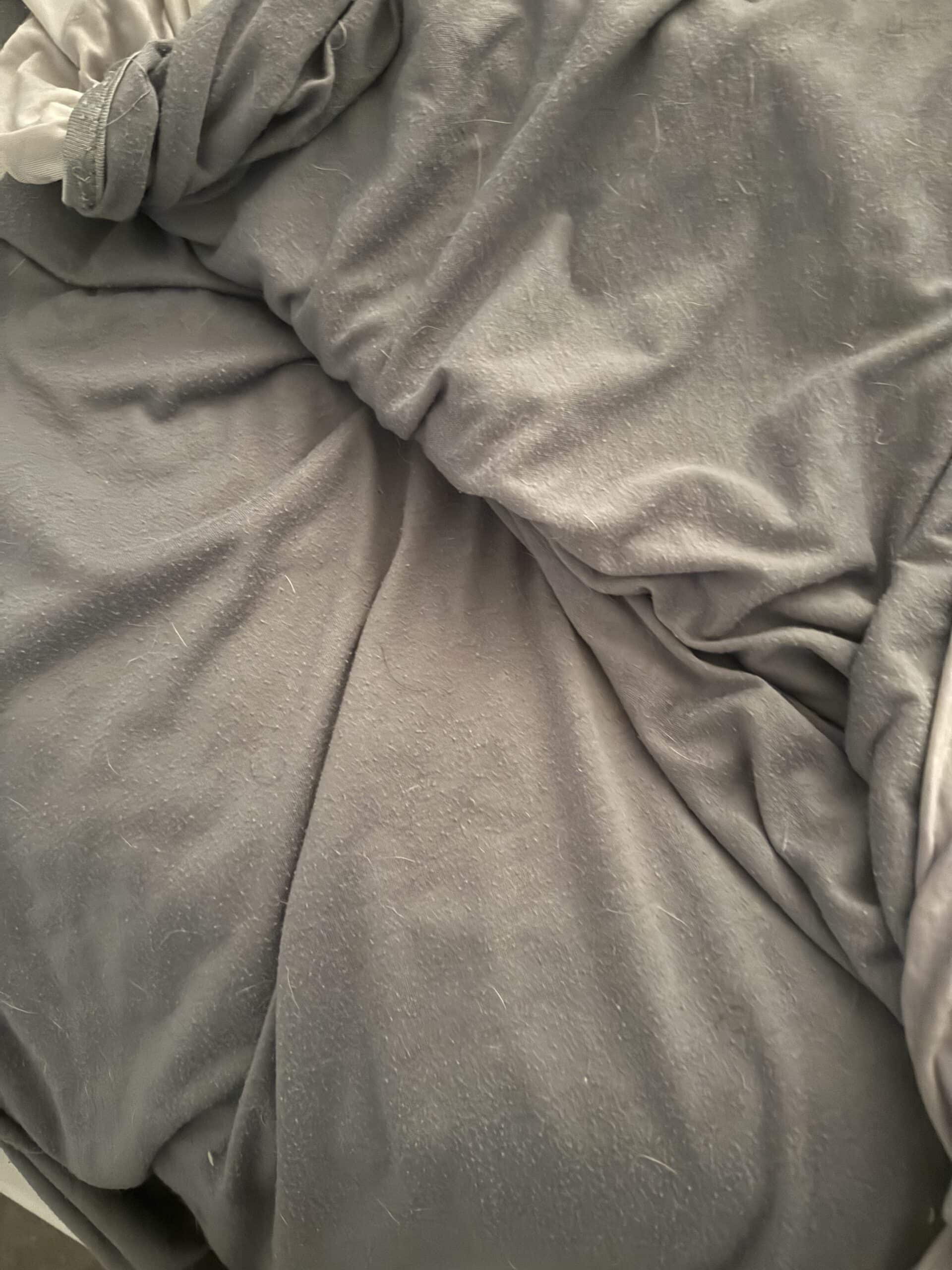
I am six foot two and mine is on the large side. It reaches my feet comfortably with the top still where I want it, which is the thing I would check first if I were buying again.
The other thing worth knowing about mine is that it only cools on one side. That changes how you use it, since there is no flipping it end to end or over to get a fresh cool surface.
People do that instinctively with pillows, and with a single-sided blanket you just end up on the ordinary face. Worth knowing before you buy if that is a habit of yours.
Going large has been the right call for me. The only cost is that more of it hangs over the sides, which has never bothered me, though it would on a lower bed where it reached the floor.
Sizing for Two People
Size up from your mattress rather than matching it. A queen blanket on a queen bed leaves almost no overhang, and two people pulling in opposite directions means someone ends up uncovered.
King or oversized king on a queen bed is a common solution, and it costs a good deal less than the arguments it prevents over a year.
The other approach is two separate blankets, which suits couples with different temperature preferences and lets one person have cooling while the other does not, covered in cooling blankets for couples.
Separate blankets also solve the tug of war entirely, which is why the practice is common in parts of Europe and increasingly elsewhere. It looks unusual on a made bed and nobody notices once the lights are off.
Weighted Cooling Blankets Are Sized Differently
Weight rather than dimensions is the primary decision here, and the common guidance is roughly ten percent of body weight.
That makes sharing awkward. A blanket weighted for one person is wrong for the other, and a single heavy blanket across two people distributes unevenly as either moves.
Most guidance suggests individual weighted blankets rather than one shared between two people, which also means sizing each one to the person rather than to the bed.
Dimensions should match the sleeper closely, since a weighted blanket hanging over the sides slides off under its own weight, covered in the weighted blanket weight guide.
Measuring Before You Buy
Two minutes with a tape measure prevents the most common sizing regret, and neither number is the one on the product page.
Start with your own height plus about a foot. That is the minimum length that lets the blanket cover your shoulders and still clear your feet once it settles and bunches slightly.
Then measure your mattress width and add the drop you want on each side. Twelve inches per side is enough to stop it sliding off for one person, and closer to eighteen works better for two.
Check those against the stated dimensions rather than the size name, since manufacturers vary by several inches within the same label.
If you already own a blanket you like the size of, measure that instead. It is faster and more reliable than working from the bed, and it accounts for how you actually sleep.
One caveat on listed dimensions: some manufacturers measure before finishing, so the delivered blanket can be slightly smaller than advertised. Buying with a little margin absorbs that.
When Bigger Is Worse
It drags on the floor
An oversized blanket on a low bed collects dust and pet hair, which means washing it more often than you would like.
It will not fit your machine
Oversized king blankets often exceed home washer capacity, which turns every wash into a trip to a laundromat and shortens how often you do it.
Extra weight in a weighted version
Larger dimensions in a weighted blanket usually mean more total weight, which may put you above the range that suits you.
Harder to store between seasons
An oversized blanket takes real cupboard space folded, which matters if you swap it out for the winter rather than using it year-round.
Cost without benefit
For a single sleeper, going two sizes up mostly adds fabric that hangs over the edge, and the money is better spent on the material quality.
Related Reading
- cooling blankets compared
- blankets for couples
- cooling weighted blankets
- weighted blanket sizing
- do cooling blankets work
- cooling bedding layers
- king against California king
Part of our guide to cooling a bedroom for better sleep.
Frequently Asked Questions
What size cooling blanket should I get?
Match your mattress for one sleeper and size up for two. Check the stated length rather than the size name, particularly if you are over about six feet.
Should a cooling blanket be bigger than the bed?
For two people, yes. Overhang is what stops one person pulling it off the other. For a single sleeper, matching the mattress is usually enough.
What size do I need if I am tall?
Look at the length in inches rather than the size label. Anyone over six feet should want at least ninety inches so shoulders and feet are covered at once.
Are two blankets better than one for couples?
Often. It removes the tug of war entirely and lets each person choose their own temperature, which is the more common source of disagreement.
How do I size a weighted cooling blanket?
By weight first, commonly around ten percent of body weight, and by dimensions matched to the sleeper rather than the bed so it does not slide off.
Can I use a throw size on a bed?
Only for one person who does not move much. Throws are sized for a sofa and will not cover shoulders and feet at the same time on most adults.
What if my blanket only cools on one side?
Then flipping it does nothing for you. Many are built this way, and it is worth checking before buying if you tend to turn bedding looking for a fresh cool surface.
Does a bigger blanket cool better?
No. Cooling depends on the fabric and the room rather than the surface area, and extra size only adds fabric hanging over the edge.
Recommended Reading
See our note on what size sheet you need.
