
Apartment sleep problems are not the same as bedroom sleep problems. You have a wall you share with someone whose schedule is not yours, a lease that says nothing permanent, and an HVAC system you do not control. Most sleep advice assumes a house and quietly falls apart in a building. This is the version that accounts for the constraints.
Quick Verdict
Blackout curtains and a sound machine solve most of it. A dehumidifier fixes a problem you may not know you have. Everything here is renter-safe, comes with you when the lease ends, and works without permission from anybody.
Key Takeaways
- Noise and light are the two apartment problems. Attack both.
- Masking noise beats blocking it. You cannot soundproof a rented wall.
- Blackout curtains do double duty in a hot climate. Light and heat.
- Humidity is the invisible one, especially in an older building.
- Nothing here needs drilling, and all of it moves with you.
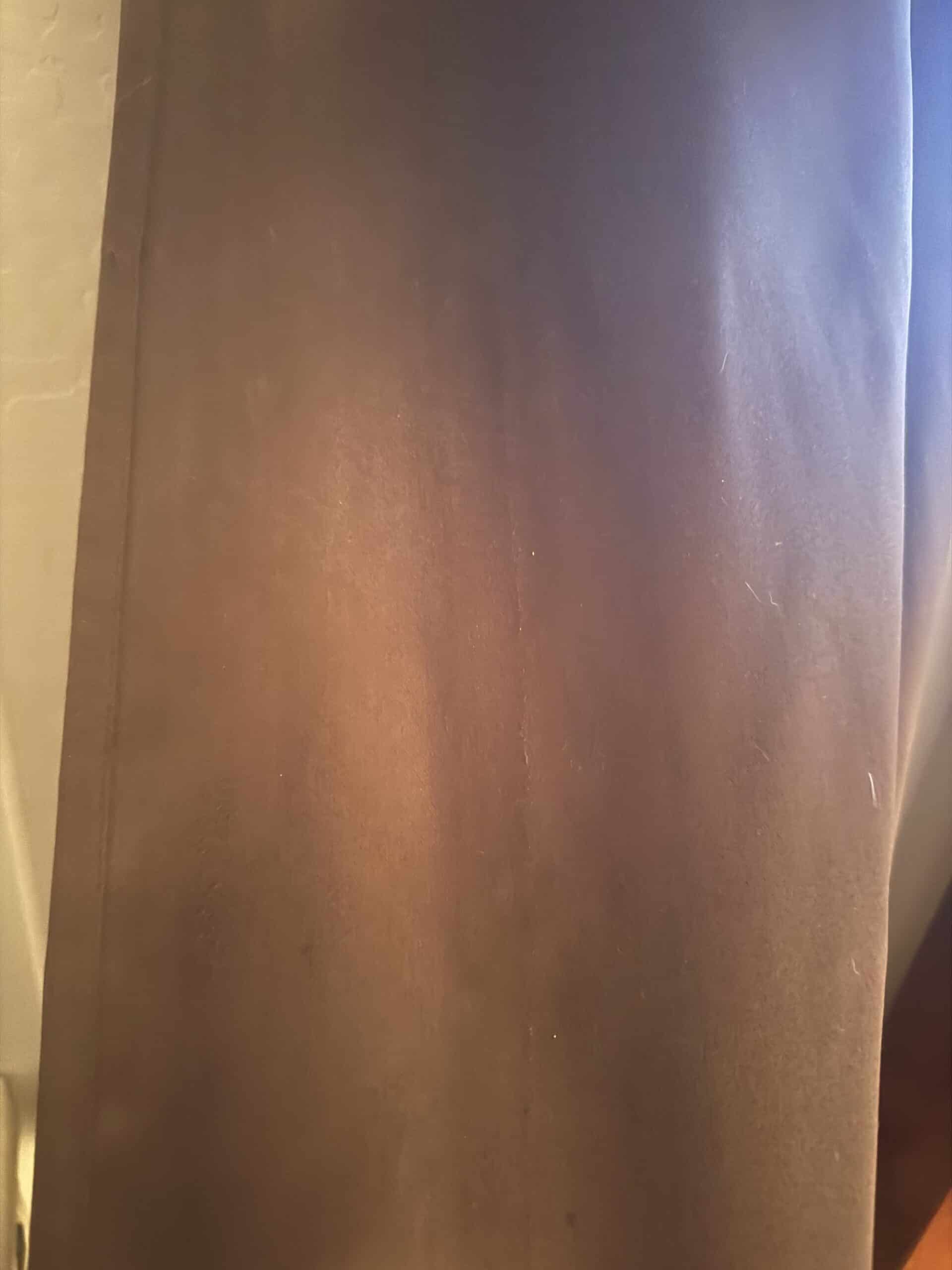
1. Blackout Curtains, Best Overall
The single highest-value purchase in an apartment bedroom, and the one I would not sleep without.
I use thick blackout curtains year-round in Arizona, and they earn their keep twice. They block the light, which is the obvious job, and they keep the bedroom cooler in summer, which is the one nobody mentions. Sun coming through glass is heat, and heat is why you wake up at four.
After real use I have had no issues with mine at all, which is why I rate genuine thickness and a real blackout liner rather than the thin panels sold under the same name. The difference between “blackout” as marketing and blackout as a fact is the liner.
The apartment angle: they hang on a rod, they come down when you move, and no landlord has an opinion. Blackout curtains covers the range including the ones I use, and curtains vs blinds if you are weighing the two.
Best for: street lights, early sun, hot climates, everybody.
Skip if: your room is already dark, which almost no apartment is.
Check Price on Amazon2. A Sound Machine, Best for Shared Walls
You cannot soundproof an apartment. You can make the noise matter less, and that is a different and achievable goal.
The mechanism is masking rather than blocking. A steady sound raises the floor so that the footstep upstairs, the door in the hallway, and the neighbor’s television stop being distinct events your brain has to process. The noise is still there. It stops arriving as information.
That is exactly right for a building, because the problem is not volume, it is unpredictability. A constant hum is easy to sleep through. A sudden bang is not, and masking turns the second into something closer to the first.
Sound machines covers the field, white noise machines the narrower category, and a machine vs a fan since a fan does this for free if you already own one.
Best for: shared walls, hallways, neighbors on a different schedule.
Skip if: a fan already does it, in which case you are done.
Check Price on Amazon3. A Dehumidifier, Best Invisible Fix
The one I would not have predicted, and it earned its place.
I have a dehumidifier and it was genuinely helpful in my old apartment when it got humid. That is a specific and limited claim and it is the honest one. Older buildings hold moisture, ventilation is often whatever the builder decided in 1974, and you cannot open up a wall to find out why.
What humidity does to sleep is make a room feel warmer than it is and make bedding feel heavy. You end up fighting the temperature all night and blaming the mattress. A dehumidifier removes a variable you did not know was a variable.
The apartment part: you are not going to fix ventilation in a unit you rent. This works around the building instead of arguing with it. Bedroom dehumidifiers covers sizing, and humidifiers for the opposite problem, which is the desert default.
Best for: older buildings, ground floors, anywhere that feels heavy.
Skip if: you live somewhere dry, where you want the opposite machine.
Check Price on Amazon4. Earplugs, Best Backup
For the nights masking is not enough, which in a building is some of them.
A sound machine handles the ambient layer. It does not handle a party two doors down or a genuinely thin wall on a Saturday. Earplugs are the fallback, and they are cheap enough to keep a box of.
The fit is the whole thing. Foam plugs that are not seated properly do very little, and most people never learn to roll and insert them correctly, then conclude earplugs do not work. They work. The technique is thirty seconds to learn.
Comfort matters more than rating for sleep, because a plug that hurts on your side is a plug you remove at two in the morning. Earplugs for sleeping covers types and fit.
Best for: bad nights, thin walls, side sleepers who need soft ones.
Skip if: you need to hear an alarm or a child, which is a real disqualifier.
Check Price on Amazon5. A Bedside Fan, Best Multi-Tasker
Air movement plus noise masking in one object, which is good value in a room where objects have to earn space.
Apartment HVAC is frequently a single thermostat serving rooms with completely different sun exposure, and the bedroom is often the loser. A fan gives you local control over a system you do not control.
It also produces the steady sound that a sound machine produces, which means for a lot of people it is both purchases at once. If you already sleep with a fan, you may not need the machine at all.
Bedside fans covers the options, bedside vs tower for placement, and why fans help sleep for the mechanism.
Best for: bad HVAC, small rooms, anyone who wants one object doing two jobs.
Skip if: moving air bothers you, which it does bother some people.
Check Price on Amazon6. A Sleep Mask, Best Cheap Insurance
The backup for the light problem, and the one that travels.
Curtains handle the window. They do not handle the hallway light under the door, the smoke detector LED, the charger glow, or a partner who reads. An apartment has more small light sources than a house does, because everything is closer together.
A mask handles all of it for a few dollars and takes no space, which is why it stays in rotation even once the curtains are up. The fit question is nose gap: a mask that lets light in at the bottom is doing half a job.
Sleep masks covers shapes, and mask vs curtains makes the case that you probably want both rather than either.
Best for: gap light, partners, travel, anyone renting furnished.
Skip if: you find things on your face intolerable. Plenty do.
Check Price on AmazonApartment Sleep Gear at a Glance
| Item | The apartment problem it solves | Renter safe? |
|---|---|---|
| Blackout curtains | Street light, sun, heat | Yes, rod only |
| Sound machine | Neighbors, hallway, shared walls | Yes |
| Dehumidifier | Old building, bad ventilation | Yes |
| Earplugs | The bad nights | Yes |
| Bedside fan | HVAC you do not control | Yes |
| Sleep mask | Gap light, LEDs | Yes |
| Soundproofing foam | Nothing. It does not work. | Pointless |
Mask Noise, Do Not Try to Block It
This is the mistake that costs people money, so it is worth being blunt.
You cannot soundproof an apartment. The foam panels sold for it treat echo inside a room, not sound coming through a wall, and they will do nothing for your neighbor’s television. Real soundproofing means mass and decoupling, which means construction, which means a building you own.
What works is masking. Raise the noise floor with something steady and the sudden sounds stop standing out against silence. That is a fan or a sound machine, it costs very little, and it is the entire realistic strategy for a rented wall.
The reason this works is that your brain reacts to change rather than volume. A constant hum at the same level as a footstep is easy to sleep through. Silence punctuated by that footstep is not.
Everything Here Comes With You
Worth stating as a principle rather than a feature list.
Nothing on this page needs a drill, a landlord conversation, or a deposit. Curtains hang on a rod. Everything else plugs in or sits on a table. When the lease ends, it goes in a box and works identically in the next place.
That is not a small thing when you are renting, because the temptation is to either do nothing and suffer, or do something permanent and lose the deposit. The realistic middle is a stack of portable objects that each solve one variable, and it works better than it sounds.
If your problem is what you are sleeping on rather than the room around it, a topper is the renter answer there too. It transforms a mattress you did not choose and it comes with you. Choosing a topper covers the decision.
What You Cannot Buy
The neighbor’s schedule, and it is worth naming because gear pages pretend otherwise.
Someone who comes home at two is going to come home at two. Masking makes it survivable, not silent. If the problem is genuinely a person rather than a building, the answer is a conversation or a different unit, and no purchase substitutes for either.
The other thing you cannot buy is a sleep schedule. If you are lying awake at midnight, the room is probably not the reason. Winding down does more for that than any object here, and it is free.
Recommended Reading
See blackout curtains, sound machines, and bedroom essentials.
Apartment Sleep Gear FAQ
What is the best sleep purchase for an apartment?
Blackout curtains, then a sound machine. Light and noise are the two apartment problems and those two cover most of both. I use thick blackout curtains year-round in Arizona and they block the sun and keep the room cooler, which is two jobs from one purchase.
Can I soundproof my apartment bedroom?
No, and the foam panels sold for it will not help. They treat echo inside a room, not sound through a wall. Real soundproofing needs mass and decoupling, which means construction. Masking with a steady sound is the realistic strategy and it works better than you would expect.
Why does masking noise work better than blocking it?
Because your brain reacts to change, not volume. A constant hum at the same level as a footstep is easy to sleep through, while silence punctuated by that footstep is not. Raising the noise floor turns sudden events into part of the background.
Do I need a dehumidifier in a bedroom?
If the room feels heavy, possibly. Mine was genuinely helpful in an old apartment when it got humid. Older buildings hold moisture and you cannot fix the ventilation in a unit you rent. Humidity makes a room feel warmer than it is, and people usually blame the mattress.
Is a fan or a sound machine better?
A fan does both jobs if you already own one, since it produces the same steady masking sound and moves air. A machine gives you more control over the sound itself and does not make the room cold. If you already sleep with a fan you may not need the machine at all.
What can I use if I cannot drill anything?
Everything on this page. Curtains hang on a rod, and the rest plugs in or sits on a table. Nothing needs a drill, a landlord conversation, or your deposit, and all of it moves to the next place in a box.
Do earplugs actually work?
Yes, when they are seated properly, which most people never learn to do. Foam plugs need rolling and inserting correctly, and a plug that is loose does very little. Comfort matters more than the rating for sleep, since one that hurts on your side gets removed at two in the morning.
What if the problem is my neighbor’s schedule?
Then gear makes it survivable rather than solved. Someone coming home at two is going to come home at two. Masking helps, earplugs help on the worst nights, and beyond that it is a conversation or a different unit. No purchase fixes a person.
Keep reading: how to improve sleep quality naturally, our picks for sleep gear for light sleepers, the best night sweats solutions for better sleep, the best essential oils for sleep.
