
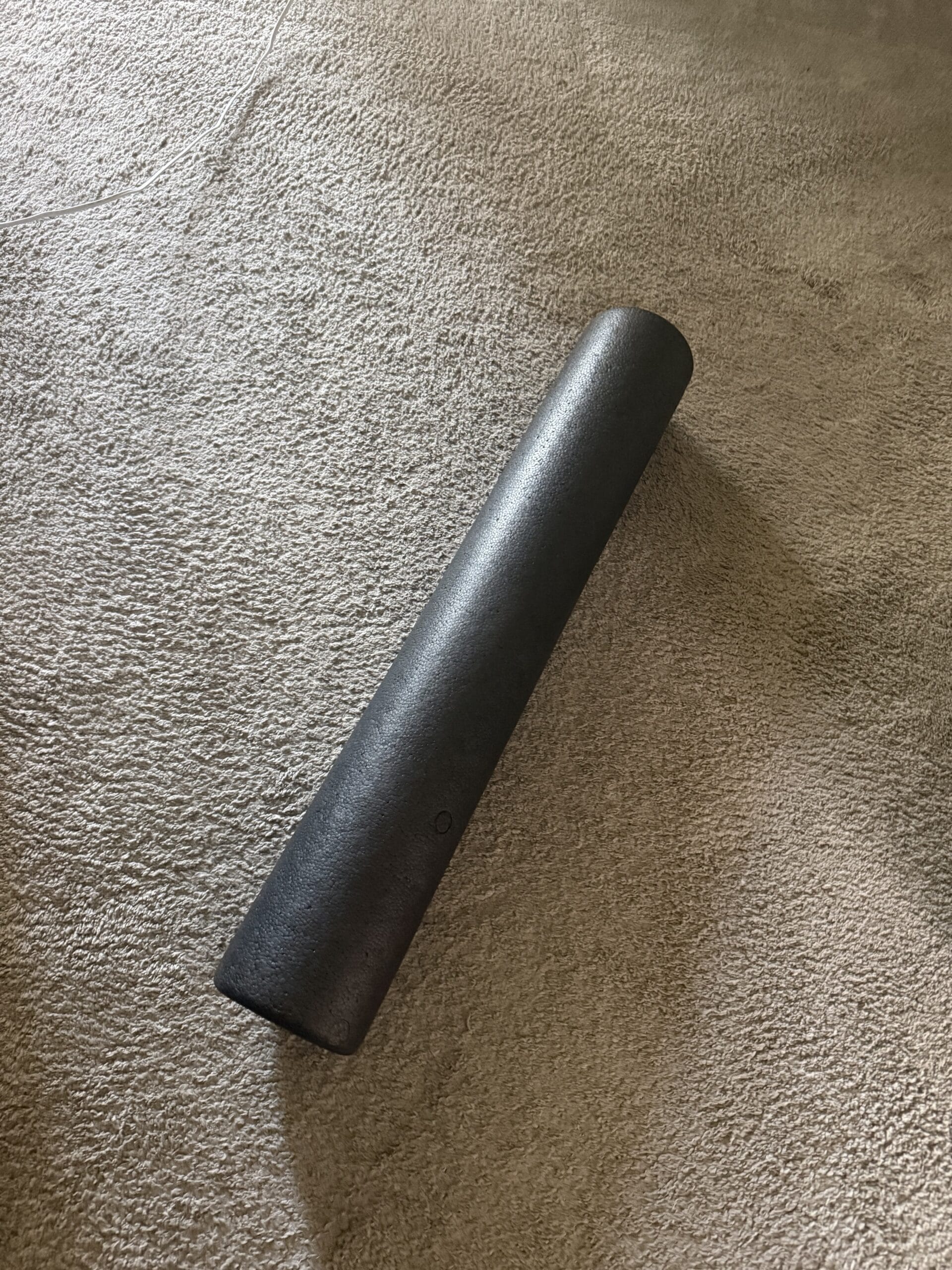
Every article on this says daily. I have owned a foam roller for at least three years and I have never rolled daily for any sustained stretch. I go in phases: often for a while, then not at all for a while. That is not the answer you are supposed to give, and it is the one that turns out to matter, because the useful question is not how often is optimal but how often is sustainable.
Important
This is general information and my own experience, not medical advice. Rolling is not a treatment for injury or persistent pain. Sharp pain, radiating pain, numbness, or anything lasting weeks needs a doctor or physical therapist.
Quick Verdict
Daily is fine and unnecessary. A few times a week does nearly all of the available good. Rolling when you are actually sore or tight beats any schedule, because the schedule is the thing people abandon.
Key Takeaways
- There is no minimum effective frequency. Rolling is not cumulative like training.
- Daily is safe. It is just not necessary, and it is what people quit.
- Responsive beats scheduled: roll when something is tight.
- The effects are short-lived, which cuts both ways.
- Phases are normal. Nothing is lost when you stop.
What Frequency Actually Buys You
| Pattern | Realistic outcome |
|---|---|
| Daily | Fine. No harm. Not more benefit than a few times a week. |
| A few times a week | Nearly all of the available benefit |
| When sore or tight | What most people actually do, and it works |
| Phases, then nothing | What I do. Nothing is permanently lost. |
| Twice, then never | The roller was too firm. That is the real cause. |
Rolling Is Not Cumulative
This is the thing that reframes the question, and it is why the daily advice is misleading rather than wrong.
Training is cumulative. You get stronger because sessions stack on each other, so consistency is the whole game and a missed week costs you. Foam rolling does not work that way. The benefits, mainly short-term flexibility and reduced soreness, arrive quickly and fade fairly quickly.
The upside: skipping three weeks does not undo anything, because there was no accumulated position to lose. You are not behind. You pick it up and it works exactly as well as it did.
The downside: rolling on Monday does very little for you on Thursday. Which is precisely why responsive use makes more sense than a schedule. Roll when there is something to address.
My Actual Pattern, Since It Is Relevant
I use the roller often for a stretch, then not at all for a stretch. That has been true for three years.
I am not defending it as optimal. It is just what happens, and I suspect it is what happens to most people who own one, whatever they say. The phases where I use it tend to line up with when I am sore or when there is mild pain to deal with. The phases where I do not are the phases where nothing hurts.
Which, once you know rolling is not cumulative, is not actually irrational. I am using it as a response to a problem rather than as a daily habit maintaining something. The roller sits there costing nothing until there is a reason.
The reason this is worth admitting is that “roll daily” advice sets you up to fail and then feel bad about it. Nobody rolls daily for three years. Building your expectations around a thing you will not do is how the roller ends up in a closet.
The Real Reason People Quit
It is almost never the schedule. It is the roller.
Firm rollers are unpleasant, and unpleasant things do not survive contact with a normal week. If rolling is something you brace for, you will find reasons not to. That is not a discipline failure, it is a predictable response to buying a tool that punishes you.
This is why density matters more than any other spec. A medium roller you use twice a week is worth more than a firm one you own and avoid. The frequency question and the density question are the same question wearing different clothes.
Technique matters here too. If you are rolling too hard or too fast, you have made it into an ordeal, and ordeals get skipped.
Can You Roll Too Much
Practically, no, within reason.
Daily rolling is not going to hurt you. There is no meaningful overuse risk from lying on foam and moving slowly, provided you are avoiding your lower back, joints, and anything injured. If daily suits you, do it.
The caveats are the obvious ones. Do not roll something that is actually injured. Do not grind on one spot for ten minutes because it hurts and you have decided that means it needs it. And if something hurts enough that you are rolling it every day hoping it improves, that is a signal to see someone rather than to increase the dose.
When to Roll, If You Want a Rule
Roll when there is something to roll.
Sore after training: roll in the following days, that is the best-supported use. Tight from sitting all day: roll the quads and hips. Legs feel tense at bedtime: roll them, which is my most common use and the one that reliably helps.
Not sore and not tight: skip it. You are not maintaining anything and there is nothing to protect. That is genuinely fine, and it is the part the daily advice cannot bring itself to say.
For the sleep case specifically, rolling before bed is worth it only when tension is the actual obstacle. And if you are considering the gun instead, frequency is the same story there.
When Frequency Is the Wrong Question
If you are asking how often to roll because something hurts and you want it to stop, the frequency is not your problem.
Ordinary tightness and post-exercise soreness respond to rolling. Real pain does not, and rolling it more often is not a plan. Sharp pain, pain shooting down a limb, numbness, or anything running for weeks is a doctor or physical therapist conversation.
And if the pain shows up in the morning, look at your bed before your muscles. Waking up in pain is usually about what you sleep on, and no amount of rolling fixes a mattress.
Recommended Reading
See choosing a roller and using one properly. For picks, see foam rollers.
Foam Rolling Frequency FAQ
How often should you foam roll?
A few times a week gets you nearly everything available. Daily is fine and adds little. The most useful pattern is responsive: roll when you are actually sore or tight, and skip it when you are not. Rolling is not cumulative, so there is no schedule to fall behind on.
Is it bad to foam roll every day?
No. There is no real overuse risk from lying on foam and moving slowly, as long as you avoid your lower back, joints, and anything injured. Daily just is not necessary, and it is the expectation people quit against.
Do I lose progress if I stop?
No, and this is the useful part. Rolling is not like training, where sessions stack and a missed week costs you. The benefits are short-term and fade, which means there is no accumulated position to lose. I go months in phases of not using mine and it works exactly as well when I pick it up again.
How long until foam rolling works?
Immediately, and that is the whole scope. Flexibility gains and tension relief show up within the session. What does not happen is a slow structural change over months, whatever the marketing implies. Rolling on Monday does very little for you by Thursday.
Why do I keep quitting?
Probably your roller is too firm. Unpleasant tools do not survive a normal week, and that is not a discipline problem, it is a predictable response to buying something that punishes you. A medium roller you actually use beats a firm one you avoid.
Should I roll before bed every night?
Only when leg tension is what is keeping you up. That is a situational use, not a nightly habit. I do it sometimes, when there is tension to relieve, and it helps with that. On nights when nothing is tight there is nothing for it to do.
How long should each session be?
A few minutes per muscle. There is no benefit to grinding away for twenty, and going longer is a common way of turning a small useful thing into a chore you eventually stop doing.
I roll every day and it still hurts. What now?
Stop increasing the dose and go see someone. Rolling addresses ordinary tightness and post-exercise soreness in healthy muscle. If something hurts enough that you are treating it daily and hoping, that is a signal rather than a frequency problem, and a physical therapist will get you further than another week of rolling.
Part of our full guide: the complete guide to easing pain for better sleep.
