
Most mattress toppers last three to five years, with cheap foam failing sooner and latex lasting longer. That range is wide because a topper’s life depends far more on how it is treated than on what it cost. Density, washing, and what sits underneath it all move the number, and the topper usually tells you it is finished long before it falls apart.
Quick Verdict. It also helps to think about how thick a topper should be.
Budget on three to five years. Latex and high-density foam sit at the top of that range, thin low-density foam at the bottom. Replace when it stops springing back, not on a schedule. A topper that has flattened is doing nothing except taking up space.
Key Takeaways
- Three to five years is the realistic range for most toppers.
- Density predicts life better than price does.
- Permanent body impressions are the retirement signal.
- A sagging mattress underneath destroys a topper early.
- Washable toppers can survive frequent laundering without drama.
What the Range Actually Depends On
| Type | Typical life | Fails by |
|---|---|---|
| Low-density memory foam | 2 to 3 years | Flattening, permanent dents |
| High-density memory foam | 3 to 5 years | Slow loss of rebound |
| Latex | 5 or more years | Surface crumbling, eventually |
| Feather or down | 2 to 3 years | Clumping, flat spots |
| Quilted or fiberfill | 2 to 4 years | Fill migration, thinning |
Density is the honest predictor. A dense foam has more material to lose before it stops doing its job, which is why two toppers at the same price can differ by years. Thin, cheap foam compresses permanently, and once it has, nothing brings it back.
Mine Is Two to Three Years Old and Still Fine
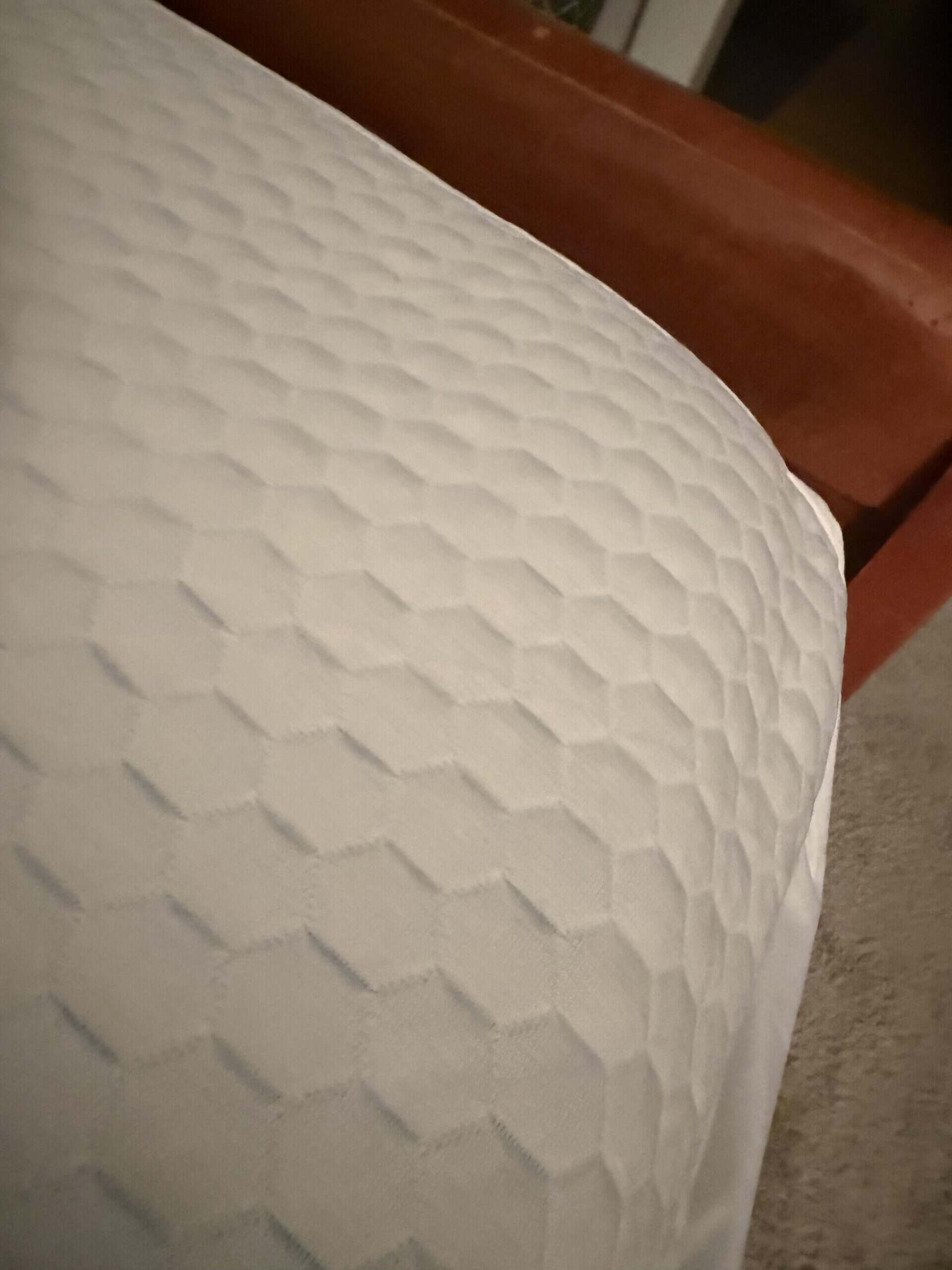
I have had my cooling topper for two to three years, and I use it every single night. It is white, honeycomb-quilted, and I could not find a brand tag on it, so I will not guess who made it. In that time I have never had an issue with it.
It still makes the bed feel softer, which is the thing I liked about it from the start and the thing I would notice losing. It also still takes the edge off a hot bed through Arizona summers, which is a fair endurance test for a cooling layer.
The other half of that is washing. Mine is washable and it goes through the wash regularly, then straight back on the bed. Frequent laundering has not degraded it, which surprised me more than it should have, since washing is often where toppers quietly die.
What this does not tell you is which brand lasts. It is one unbranded unit, on one memory foam bed, in one dry climate. It is a single data point that says a quilted topper can take a couple of years of nightly use and regular washing without complaint, and no more than that.
Why the Advertised Number Is Not Your Number
Manufacturers quote a lifespan based on average use, and almost nobody is average. The same topper can last two years or six depending on the weight on it, the hours it carries that weight, and whether it ever gets a chance to recover between nights.
A guest room topper used a dozen nights a year will outlive its stated life comfortably. A topper carrying two adults nightly will not reach it. Treat the number on the box as a ceiling under favorable conditions rather than a promise, and judge yours by how it behaves instead.
How to Tell It Is Done
The test is rebound. Press your hand into it and lift. If the impression stays, the material has taken a permanent set, and it will not recover no matter how long you leave it alone.
Body-shaped dips that are still there in the morning mean the same thing. So does waking up with aches that were not there before, since a collapsed topper has stopped distributing weight and is now just a layer of nothing between you and the mattress. If you bought it to help with back pain, that reversal is the clearest signal there is.
A cooling topper has one extra failure mode: it stops taking the edge off. Compressed foam breathes worse than lofted foam, so a flattened cooling layer traps heat instead of releasing it. If your bed has crept back to feeling hot, the layer may simply be finished.
What Extends It
Rotating the topper is the cheapest thing that works. Turning it end to end every few months moves your body’s pressure to a fresh area and spreads the compression, which is the same logic as rotating a mattress and it costs nothing.
Letting it breathe matters more than people expect. Foam that stays damp breaks down faster, so a topper that gets stripped and aired when you change the sheets lasts longer than one sealed under bedding permanently. If yours is washable, drying it fully and on low heat is the single biggest thing you control.
Using a protector under the topper rather than over it keeps sweat and spills out of the foam without wrapping the sleeping surface in something airless. That order also stops the topper sliding, which is a useful side effect of doing it correctly.
What Shortens Its Life
A worn mattress underneath is the big one. A topper cannot bridge a dip, so it deforms into the sag and takes a permanent set in weeks rather than years. Buying a topper to paper over a sagging mattress is a reliable way to destroy the topper and still have the sag.
Heat and moisture matter too. A topper that never dries fully, or one dried on high heat, breaks down faster. So does leaving it compressed for long periods, which is why storage advice is worth reading if a bed is going into a closet.
Weight is the fair one nobody likes. Heavier sleepers compress foam harder and reach the end of its life sooner, which is not a defect, it is physics. Higher density is the answer rather than a different brand.
Recommended Reading
To replace one well, start with the selection framework, or go straight to hot-sleeper picks and budget options. If the mattress underneath is the real issue, see why beds sag and how to choose a replacement.
Mattress Topper Lifespan FAQ
How often should you replace a mattress topper?
Every three to five years for most types, but replace on condition rather than on the calendar. The real test is rebound: press in, lift off, and see whether the impression stays. A topper that holds a dent has taken a permanent set and is finished, whether that happened at two years or six.
How long do memory foam toppers last?
Two to five years, and density decides where in that range you land. Low-density foam flattens quickly, often within two or three years of nightly use. High-density foam holds its structure considerably longer. Density is listed in pounds per cubic foot and predicts lifespan better than price does.
Do cooling toppers wear out faster?
Not inherently, though they have an extra way to fail. As foam compresses it breathes worse, so a cooling topper can lose its temperature benefit before it feels obviously flat. Mine has held up through two to three years of nightly use and regular washing in Arizona heat without that happening.
Can washing a mattress topper ruin it?
It can, if the topper was not built for it or if it is dried on high heat. Plenty are washable, and mine goes through the wash regularly with no ill effects over two to three years. Check the care label, because construction varies far more than the marketing suggests.
Why did my mattress topper flatten so quickly?
Usually low density, or a worn mattress underneath. Cheap foam compresses permanently under nightly use. A sagging bed is worse: the topper deforms into the dip and sets that way within weeks. If a topper failed unusually fast, look at what it was sitting on before blaming the topper.
Does a mattress topper extend the life of a mattress?
It protects the surface and can delay the day you replace the bed, but it does not fix structural problems. A topper adds comfort on top of a sound mattress. On a sagging one, it hides the symptom briefly while the sag keeps getting worse underneath it.
Is it worth buying an expensive mattress topper?
Sometimes, but pay for density and materials rather than for the name. Latex costs more and lasts longest. A dense foam topper at a moderate price will usually outlive an expensive thin one. The material spec tells you more about how long it will last than the price tag does.
