
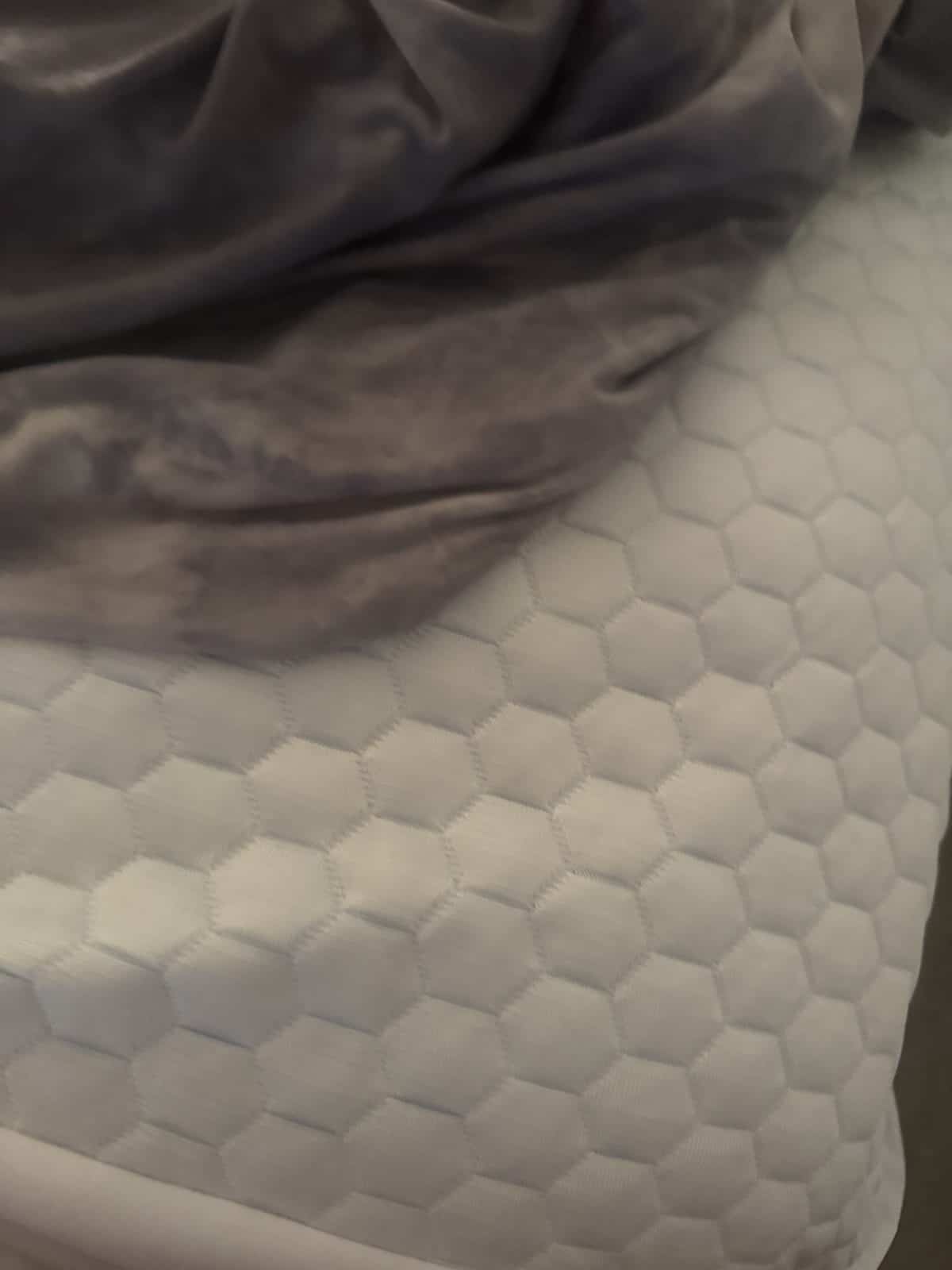
For most hot sleepers a cooling topper does more of the heavy lifting than a cooling blanket, because it cools the surface you lie on where body heat actually pools, while a cooling blanket cools what sits over you. In the cooling blanket vs cooling topper decision, the honest answer is that they solve different halves of the problem, and used together they beat either one alone. If you sleep hot on memory foam like I do, start with our picks for hot-sleeper toppers and read on for how each layer earns its place.
Quick Verdict
Pick a cooling topper if you sleep hot from below, own a heat-trapping memory foam mattress, and want passive cooling all night with no effort. Pick a cooling blanket if you want adjustable, flip-to-cool-side control over what covers you, at a lower price. Hot sleepers get the best result using both.
Why Trust This Guide
I own and use both. I sleep on a memory foam mattress in Arizona, which runs hot, so I added a cooling topper to the bed and I reach for my gray dual-sided cooling blanket every single night. Sleeping with both, night after night, is what shaped the comparison below.
Key Takeaways
- A topper cools from below, where body heat collects against the mattress.
- A cooling blanket cools from above and is easy to adjust or flip.
- Memory foam traps heat, which makes a topper especially worthwhile.
- A blanket costs less and moves between beds; a topper is a fixed upgrade.
- For serious hot sleepers, the two together work better than either alone.
How We Compared
We judged these two on the factors that decide real hot-sleeper comfort: where each one removes heat, whether it cools all night or on demand, the effort involved, the price, and upkeep. The framing rests on how the body cools for sleep. The Sleep Foundation explains that core temperature naturally drops about one to two degrees to trigger and sustain sleep, and the body sheds that heat outward toward the surface and the extremities. Anything that helps that heat escape, rather than trapping it, supports better sleep, which is the lens used throughout.
Cooling Blanket vs Cooling Topper at a Glance
| Factor | Cooling blanket | Cooling topper |
|---|---|---|
| Where it cools | Over you | Under you |
| Cooling duration | On demand, can be re-flipped | Passive, all night |
| Adjustability | High (flip, add, remove) | Low (fixed on the bed) |
| Effort | None to set up | One-time install |
| Typical cost | Lower | Higher |
| Best for | Adjustable over-body cooling | Heat trapped by the mattress |
Cooling Blanket, Pros and Cons
- Pros: low cost, moves between beds and rooms, adjustable on the fly, a dual-sided model lets you flip to a fresh cool side or a warmer side as the night changes.
- Cons: only cools what it covers, warms up as it absorbs body heat, does nothing about a mattress that traps heat underneath you.
A cooling blanket is for the sleeper who wants control and flexibility over the top layer without committing to a bed upgrade. It is less suited to someone whose main problem is heat building up in the mattress itself.
Cooling Topper, Pros and Cons
- Pros: cools the exact spot where body heat pools against the mattress, works passively all night, tames a hot-running memory foam bed, no nightly effort.
- Cons: higher price, semi-permanent once fitted, cools only the sleeping surface and not what covers you, harder to move around.
A cooling topper is for the sleeper whose bed itself runs hot, especially on memory foam. It is overkill for someone who sleeps on an already-breathable mattress and only wants lighter covers.
Which Cools You More Effectively?
The cooling topper wins on raw cooling for most hot sleepers. Heat builds up fastest where your body presses into the mattress, because that contact traps it with nowhere to go. The Sleep Foundation notes that memory foam in particular tends to hold heat, which is exactly why sleepers on those beds feel warm from underneath. A topper attacks that trapped heat at the source. A cooling blanket helps the air layer above you, which matters, but it cannot fix a mattress that is radiating warmth back into your body all night. For the underlying heat problem, the surface you lie on is where cooling counts most.
Which Is Easier to Adjust Night to Night?
The cooling blanket wins on flexibility by a wide margin. Cooling needs change with the season, the room, and how hot you run on a given night, and a blanket lets you respond instantly. You can pull it up or push it off, and a dual-sided blanket like mine lets you flip from the cool side to the regular side when you cool down before morning. A topper offers none of that once it is fitted to the bed. It does one job, continuously, with no dial to turn. If you value control from night to night, the blanket is the obvious pick.
Which Costs More and Lasts?
The cooling blanket wins on value and versatility, while the topper wins on staying power. A cooling blanket costs less up front and can travel to a guest room, a couch, or a new bed, so its usefulness is not tied to one mattress. A cooling topper costs more and becomes part of that specific bed, but a quality one earns its price by working every night for years without any input. Neither is wasted money for a hot sleeper; the blanket is the lower-commitment start, and the topper is the deeper fix.
Which Fits Your Situation
| If this is you | Better choice |
|---|---|
| Sleep hot on a memory foam mattress | Cooling topper |
| Want adjustable, flip-to-cool control | Cooling blanket |
| On a tight budget or need it portable | Cooling blanket |
| Bed itself radiates heat all night | Cooling topper |
| Serious hot sleeper who wants the best result | Both together |
How to Choose Between Them
Start by locating your heat. If you wake up feeling like the mattress is baking you from below, the topper is the higher-impact buy, and a hot-running memory foam bed is the clearest case for it. If your bed is already reasonably breathable and you mostly want lighter, cooler covers you can adjust, the blanket does the job for less. Budget and portability tip things toward the blanket, while a fixed, all-night fix tips toward the topper. My own answer was not either-or: the topper handles the heat under me and the cooling blanket handles the heat over me.
The Verdict
The cooling topper is the stronger single choice for most hot sleepers, because it cools where body heat actually collects and does it passively all night, which matters most on heat-trapping memory foam. The cooling blanket wins for adjustability, portability, and price, and it is the smarter first step for a smaller budget. Pick the topper if the bed itself runs hot, pick the blanket if you want flexible over-body cooling, and use both if you sleep as hot as I do in a warm climate. Explore your options in our roundups below.
Recommended Reading
- cooling pillows for hot sleepers, to cool your head too.
- do cooling blankets actually work, the honest efficacy verdict.
- the best cooling blankets, our full picks for over-body cooling.
- cooling toppers for hot sleepers, to tackle heat from below.
- cooling blanket vs lightweight blanket, if you are weighing the covers themselves.
- cooling mattress pads, a lighter alternative to a full topper.
- choosing a mattress
- sharing a cooling blanket
Common Misconceptions
A cooling blanket alone will fix a hot bed
It will not. A blanket cools the layer above you and cannot stop a mattress from trapping heat underneath. That is the topper’s job.
A topper makes the blanket pointless
No. They cool different sides of you. Even with a great topper, an adjustable cooling blanket still controls the covers as the night changes.
Cooling means cold
Neither product refrigerates you. They move heat away so your body can cool naturally, which feels cool to the touch rather than genuinely cold.
More expensive always cools better
Not necessarily. Fit to your problem matters more than price. A well-matched blanket can beat an ill-suited topper for your specific situation.
Cooling Blanket vs Cooling Topper FAQ
Is a cooling blanket or cooling topper better for memory foam?
A cooling topper is usually better for memory foam, because that material traps heat against your body from below. The topper sits between you and the foam to intercept that heat, which a blanket over you cannot do.
Can I use a cooling blanket and cooling topper together?
Yes, and for serious hot sleepers that combination works best. The topper cools the surface under you while the blanket cools what covers you, so the two address heat from both directions at once.
Which is cheaper, a cooling blanket or a cooling topper?
A cooling blanket is almost always cheaper and more portable. A cooling topper costs more because it is a larger, bed-fitted upgrade, though it works passively every night in return.
Do cooling toppers work all night?
A cooling topper works passively as long as you lie on it, though its cool-to-touch feel fades as it warms to your body. It keeps helping air and heat move better than bare memory foam throughout the night.
Will a cooling topper make my mattress feel different?
Slightly. A topper adds a thin layer that can subtly change firmness and feel. Most are designed to preserve the mattress feel while adding cooling, but it is worth checking the thickness before buying.
Do I need both if my bedroom is already cool?
Not necessarily. A cool room does a lot of the work. If your bed still traps heat, a topper helps; if you only want lighter covers, a cooling blanket alone may be enough.
Rather than choosing, see why you probably want both, in order.
Layering more than one is a separate question. Combining cooling layers covers whether the effects add.
