
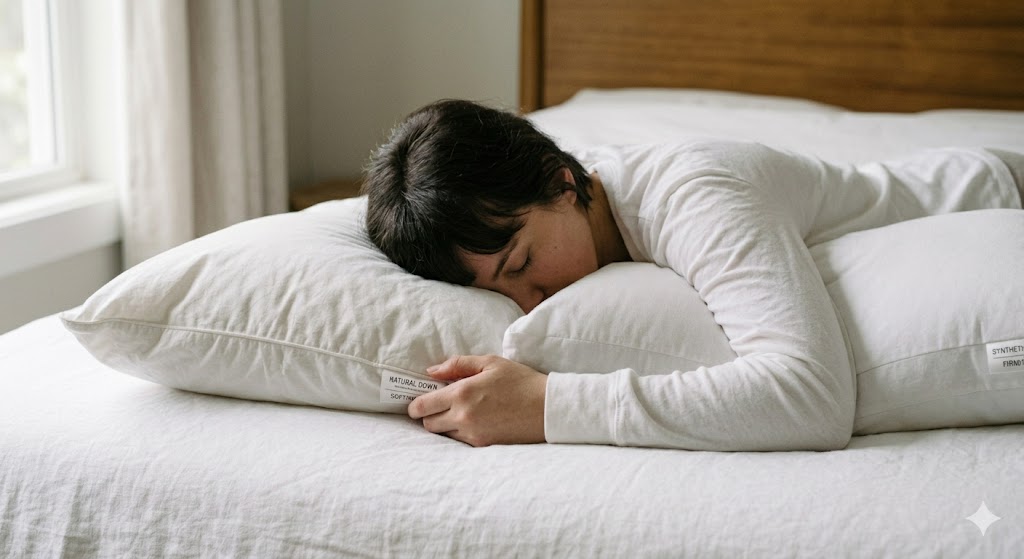
Does your neck hurt when you sleep on your stomach? Stomach sleeping places the cervical spine in two simultaneous positions; it was never designed to sustain for seven or eight hours at a time. The first is rotation, your head turned fully to one side because you cannot breathe face-down into a mattress. The second is extension, your head tilted slightly backward by any pillow thickness that elevates it above the mattress surface. Rotation plus extension held for a full night of sleep creates sustained mechanical stress on the facet joints, intervertebral discs, and paraspinal muscles of the cervical spine that accumulates into the stiffness, pain, and headaches that stomach sleepers recognize as their morning routine. Comparing options? See our best travel pillows for neck pain roundup.
This is not a mystery. It is physics applied to anatomy. The muscles and joints of the cervical spine are designed for intermittent movement across a full range of motion, not for sustained static positions at the limits of their range. Seven hours of held rotation and extension produces the same result that holding any joint at its range limit for seven hours would produce, tissue stress, inflammation, and pain that does not resolve until the joint returns to neutral and the inflammatory response subsides. For most stomach sleepers this takes an hour or two after waking. For chronic stomach sleepers whose cervical tissues have accumulated strain over months and years, it can become a persistent background pain that never fully resolves between sleep cycles.
Our guide to why does my neck hurt in the morning covers the full range of morning neck pain causes beyond stomach sleeping specifically. If your neck pain includes shoulder involvement, our guide to the best pillows for shoulder pain covers the pillow options that address the shoulder component of stomach and side sleeping pain simultaneously.
The Anatomy Behind Stomach Sleeper Neck Pain
Cervical Rotation, Why Turning Your Head All Night Hurts
The cervical spine accommodates approximately 70 to 90 degrees of rotation to each side, enough to look over your shoulder comfortably in a waking, moving context. Stomach sleeping requires sustained rotation at or near this maximum, turning the head fully to one side and holding that position for the entire sleep period. The facet joints at each cervical level bear compressive load in sustained rotation that they do not bear in neutral position. The paraspinal muscles on the rotated side shorten under sustained contraction, while the opposite side muscles lengthen under sustained stretch. Both sides accumulate fatigue and microstress across the sleep period that manifests as the morning stiffness and pain that stomach sleepers experience.
Why the Same Side Every Night Makes It Worse
Most stomach sleepers rotate consistently to the same preferred side, creating asymmetric cervical strain that accumulates differently on each side over weeks and months. The consistently rotated side develops shortened, tight paraspinal muscles. The consistently stretched side develops elongated, weakened muscles with reduced ability to support the cervical spine in neutral during waking hours. This asymmetry produces cervical muscle imbalance that compounds the nightly strain rather than resolving between sleep sessions.
Cervical Extension, Why Any Pillow Makes It Worse
Any pillow thickness that elevates the head above the mattress surface in a prone position creates cervical extension, the backward tilt of the head that compresses the posterior cervical structures. Thick pillows create significant extension. Even standard-loft pillows create meaningful extension in stomach sleeping that does not occur in back or side sleeping. The only pillow that does not create extension in the prone position allows the head to rest at or near mattress level, which is why stomach sleepers who sleep without any pillow often report less neck pain than those who use a standard pillow.
The Lumbar Extension Problem That Compounds Cervical Pain
Stomach sleeping also places the lumbar spine in sustained extension, the lower back arches forward when the weight of the torso presses down onto the mattress without the neutral pelvic position that back sleeping maintains. This lumbar extension creates a secondary pain source that many stomach sleepers attribute to mattress firmness rather than position. Placing a thin pillow under the pelvis, not under the head, reduces the lumbar extension that compounds the overall morning pain pattern for stomach sleepers.
How to Fix Stomach Sleeper Neck Pain Without Changing Position
Fix 1: Switch to the Thinnest Possible Pillow, or No Pillow
The single most effective intervention for stomach-sleeper neck pain is pillow reduction. Moving from a standard loft pillow to the thinnest possible pillow, or to no pillow at all, reduces the cervical extension that compounds the rotational stress of prone sleeping. The goal is to keep the head as close to mattress level as possible while prone, minimizing the extension angle rather than eliminating it entirely, which requires sleeping face-down without breath access.
Our guide to the pillows that keep the neck flatter covers the specific ultra-thin and compressible options that minimize cervical extension for prone sleeping. The difference between a three-inch loft pillow and a one-inch loft pillow for a stomach sleeper is the difference between significant nightly extension and minimal extension, a change that produces noticeable morning pain reduction within the first week of use.
Fix 2: Place a Thin Pillow Under Your Pelvis
A thin pillow positioned under the pelvis, not under the abdomen, not under the head, reduces the lumbar extension that stomach sleeping creates by tilting the pelvis slightly forward and reducing the lower back arch. This pelvic pillow intervention addresses the secondary pain source that stomach sleepers often overlook because their primary attention goes to the cervical pain that wakes them. Reducing lumbar extension also reduces the overall muscular tension across the posterior chain that contributes to morning stiffness beyond the cervical region specifically.
Fix 3: Alternate Head Rotation Direction
If you consistently rotate to the same preferred side every night, deliberately alternating rotation direction across nights, or within a single night when you wake and reposition, reduces the asymmetric cervical strain accumulation that same-side rotation produces over weeks and months. The cervical muscles on both sides experience equal loading across the rotation cycle rather than building an imbalance that worsens over time. This is a behavioral intervention that requires awareness and consistency but produces cumulative benefit over weeks that structural interventions alone cannot fully provide.
Fix 4: Address Morning Stiffness With Heat Before Moving
Before getting up and moving normally after a night of stomach sleeping, apply gentle heat to the cervical region, a heating pad on low for five to ten minutes, to increase blood flow to the strained paraspinal muscles before they are loaded with the full demands of upright posture and head weight. Moving directly from sustained cervical rotation into full upright posture without allowing the musculature to warm and recover first increases the likelihood of sharp pain on initial movement and prolongs the morning resolution time. Our guide to the best TENS units for pain relief covers the electrical stimulation tools that address chronic cervical muscle tension from accumulated stomach sleeping strain.
Fix 5: Consider Transitioning to Side Sleeping
For stomach sleepers whose cervical pain is severe or chronic, pain that persists through the day or that has accumulated over months into persistent neck dysfunction, transitioning away from stomach sleeping is the only intervention that addresses the root cause rather than managing its consequences. Side sleeping with a correctly lofted pillow maintains cervical neutral throughout the night, eliminating both the rotation and extension that stomach sleeping produces. The transition is difficult because sleep position is deeply habitual, but achievable with consistent effort, placing a body pillow alongside the body prevents rolling to the prone position during sleep, and most stomach sleepers complete the transition within two to four weeks of consistent effort. Our guide to the best body pillows covers the options that make the stomach-to-side transition most comfortable.
Frequently Asked Questions: Why Does My Neck Hurt When I Sleep on My Stomach
Why does my neck hurt specifically after stomach sleeping?
Stomach sleeping requires the head to rotate fully to one side, sustained at the rotation limit of the cervical spine for the entire sleep period. Combined with the cervical extension that any pillow thickness creates in the prone position, stomach sleeping applies mechanical stress to the facet joints, intervertebral discs, and paraspinal muscles of the neck for seven or eight hours simultaneously. The pain is the direct result of sustained mechanical stress on tissues designed for intermittent movement, not a sign of underlying pathology in most cases.
Is sleeping on your stomach bad for your neck long-term?
Yes, chronic stomach sleeping produces cumulative cervical strain that compounds over months and years into persistent muscle imbalance, reduced range of motion, and ongoing pain that increasingly fails to resolve between sleep sessions. Most cervical spine specialists recommend against stomach sleeping for anyone experiencing neck pain and consider it the most mechanically problematic sleep position for cervical health. Transitioning to side or back sleeping addresses the root cause before cumulative damage becomes permanent.
What pillow should a stomach sleeper use to prevent neck pain?
The thinnest possible pillow, ideally one inch of loft or less, or no pillow at all. Any pillow thickness that elevates the head above mattress level creates cervical extension in the prone position. The goal is to minimize extension by keeping the head as close to the mattress surface as possible. Our guide to the best thin pillows for stomach sleepers covers the specific ultra-thin and compressible options designed for prone sleeping.
Why does my neck hurt more on one side after stomach sleeping?
Most stomach sleepers consistently rotate their head to the same preferred side every night, creating asymmetric cervical loading that affects one side differently from the other. The consistently rotated side develops tight, shortened paraspinal muscles. The opposite side develops lengthened, weakened muscles. This asymmetry produces one-sided pain that reflects the direction of consistent rotation, a pattern that alternating head direction and corrective stretching addresses over weeks of consistent effort.
Can I fix stomach sleeping neck pain without changing sleep position?
Partially, using the thinnest possible pillow reduces cervical extension significantly, placing a pelvic pillow reduces lumbar extension that compounds pain, and alternating rotation direction reduces asymmetric muscle imbalance. These interventions reduce the severity and frequency of stomach sleeping neck pain meaningfully. They do not eliminate it because the cervical rotation that prone sleeping requires cannot be avoided without changing position, making position change the only complete solution for severe or chronic stomach sleeper neck pain.
Recommended Reading
See also our guides to what does thread count mean, and why do cold feet make it hard to sleep.
Related Reading
Explore more: why do i drool in my sleep, Do Essential Oils Help You Sleep? What Helps Your Sleep, Which Essential Oils Actually Help You Wind Down for Sleep i, Is Sleeping on Your Stomach Bad? What You Should Know, how to help seniors sleep better, sleep mask vs blackout curtains, what time should you go sleep, and how sleep stuffy nose congested.
