
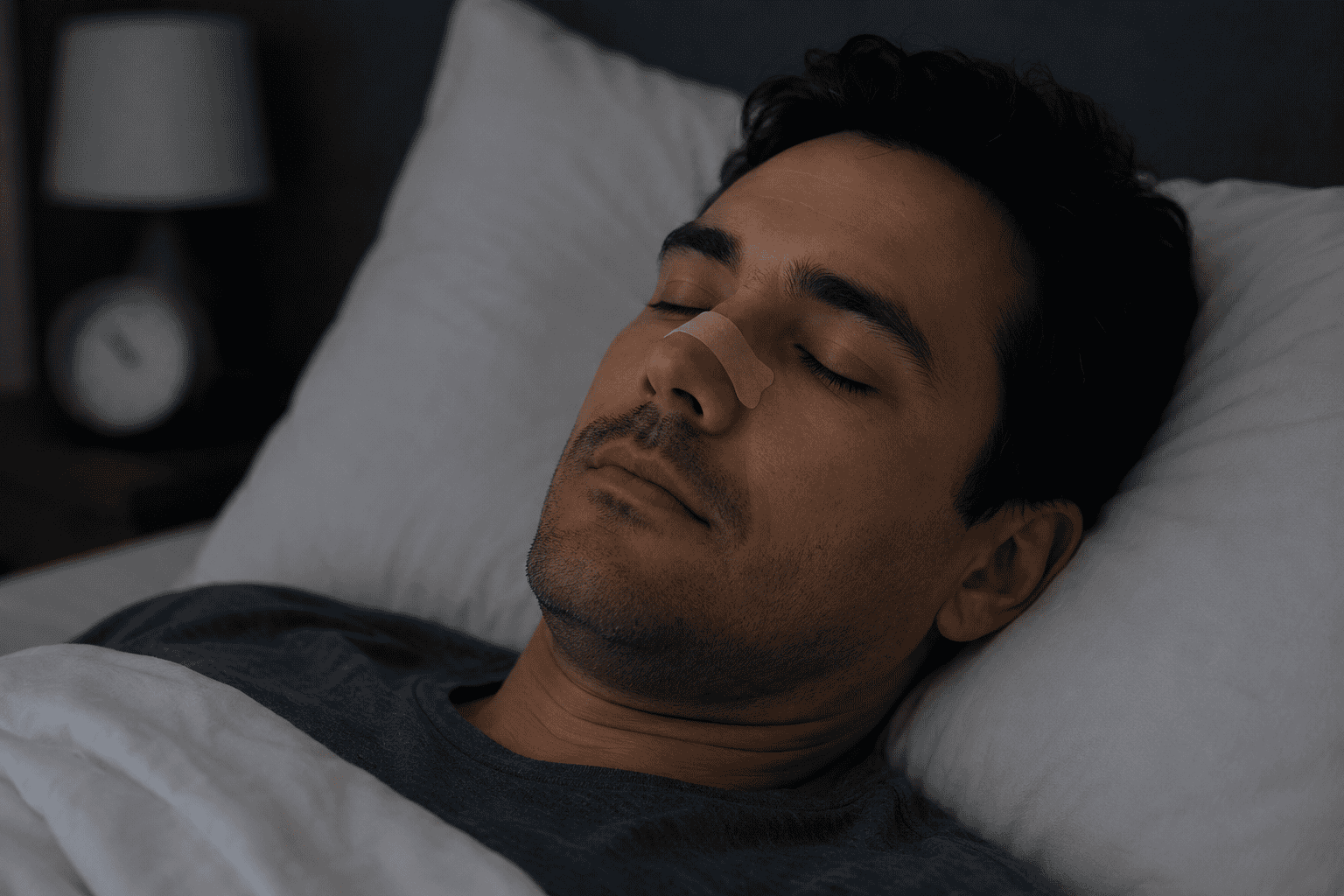
You stick a strip across your nose, switch off the light, and hope for a quieter night. Whether nasal strips work for snoring depends on where your snoring starts: they open the nostrils, so they help most when a blocked nose is the cause. For snoring that comes from the throat or soft palate, or from sleep apnea, they do little, which is why results vary so widely. For recommendations, see our best nasal strips snoring guide.
Key takeaways:
- Nasal strips open the nostrils, so they help most with snoring caused by nasal congestion.
- They do little for snoring that starts in the throat, soft palate, or tongue.
- Nasal strips do not treat sleep apnea and are not a substitute for medical care.
- They are low-risk, drug-free, and worth trying if a stuffy nose is your main issue.
- Loud snoring with gasping or breathing pauses warrants a doctor’s evaluation.
- Combining a strip with side sleeping and good nasal hygiene often works better than the strip alone.
Do Nasal Strips Work for Snoring?
The honest answer is that nasal strips work for some snorers and not for others. They make a real difference when the snoring traces back to a blocked or narrow nose. They fall flat when the noise comes from tissue vibrating deeper in the throat.
This is why one person swears by them while another sees no change at all. The strip only addresses one possible cause of snoring among several. Matching the tool to your specific cause is the whole game.
If a stuffy nose tends to make your snoring worse, a strip is a cheap, low-risk thing to try. If you snore just as loudly with a clear nose, the cause is probably elsewhere. Knowing which camp you fall into saves money and frustration.
How Nasal Strips Work
A nasal strip is a flexible band with a built-in spring tension. When you stick it across the bridge of your nose, it gently pulls the sides of your nostrils outward. That lift widens the nasal passages and can make breathing through your nose easier. A blocked nose rules out taping entirely, as our guide explains.
The mechanism is purely mechanical, with no medication involved. By opening the nostrils, the strip lowers airflow resistance at the entrance to your nose. For people whose snoring comes from that narrow point, the extra airflow can quiet things down.
The effect ends at the nostrils, though, which is the key limitation. A strip cannot reach the throat, the soft palate, or the base of the tongue. Whatever happens deeper in the airway is beyond what the strip can change.
What Causes Snoring in the First Place
Snoring is the sound of tissue vibrating as air squeezes through a narrowed airway. The narrowing can happen at several points, and the location determines what will help. Understanding the source is the first real step toward quieter sleep.1
Nasal Causes
Congestion, allergies, a cold, or a deviated septum can restrict airflow through the nose. When the nose is the bottleneck, you breathe harder and snoring often follows. This is the one category where nasal strips can genuinely help.
Throat and Palate Causes
Relaxed tissue in the soft palate and throat is the most common source of loud snoring. As these tissues loosen during sleep, they vibrate with each breath. Nasal strips do nothing for this type because they never reach the area.
Tongue and Position Causes
Sleeping on your back lets the tongue fall back and crowd the airway. Body weight and alcohol can make this worse. Positional changes and other devices address this far better than a nasal strip.
When Nasal Strips Help
Nasal strips shine in a fairly specific set of situations. If any of these describe you, a strip is well worth a try. The common thread is that the nose is the problem.
People who snore mainly when congested often respond well, since the strip counters the blockage. Seasonal allergy sufferers and anyone fighting a head cold fall into this group. The strip opens the airway just where the congestion narrows it.
Mild structural narrowing can also improve with a strip. Someone with slightly narrow nostrils may breathe more freely with the extra lift. The benefit is modest but real when the nose is the limiting factor.
Mouth breathers sometimes find that easier nasal breathing helps them keep the mouth closed. That shift alone can reduce some snoring. Pairing a strip with side sleeping tends to stack the gains.
When Nasal Strips Will Not Help
It is just as important to know the limits. Spending money on strips for the wrong cause leads to disappointment. These are the cases where you should look elsewhere.
Throat-based snoring, the most common kind, sits beyond the strip’s reach entirely. If your nose is clear and you still snore loudly, the cause is likely deeper. A strip will not quiet vibration in the soft palate.
Tongue and position-driven snoring also needs a different fix. A positional pillow or a mandibular device targets these causes more directly. The strip leaves the underlying mechanism untouched.
Sleep apnea is the most important exception of all. Snoring linked to apnea involves repeated pauses in breathing and needs medical treatment. No over-the-counter strip can address that, which the next section covers in detail.
Disposable, Reusable, and Sensitive-Skin Versions
Nasal strips come in a few variations worth knowing before you buy. The standard versions are single-use and disposable, which keeps them simple and hygienic. Stronger tension models exist for people who want a firmer lift.
Sensitive-skin versions use a gentler adhesive that is kinder to delicate skin. If standard strips leave your skin red or sore, these are the ones to try. They trade a little staying power for comfort.
There are also internal nasal dilators that sit just inside the nostrils instead of on the skin. They work on the same principle of widening the nasal opening. Some people prefer them because nothing shows on the face.
Recommended read: Comparing your options? See our guides to the best nasal strips for snoring, the best mouth tape, and how to stop snoring naturally.
Nasal Strips vs Other Anti-Snore Options
Nasal strips are one entry in a crowded field of anti-snore tools. Each targets a different cause, so the best pick follows from your diagnosis. Layering two approaches is common when one is not enough.
Mouth tape aims to keep the mouth closed and encourage nasal breathing, a different goal than the strip. Mandibular mouthguards hold the lower jaw forward to open the throat airway. Our roundups of anti-snore devices and pillows for snoring compare these in depth.
Positional aids tackle back-sleeping, which worsens many cases. Simply training yourself to sleep on your side helps a surprising number of snorers. A strip pairs well with any of these, since it addresses only the nasal piece.
How to Use Nasal Strips Correctly
A strip that is applied poorly will underperform even when the cause is right. A few simple habits get the most from each one. The routine takes only a moment.
Clean and Dry First
Wash and dry the bridge of your nose before applying a strip. Oils and lotion keep the adhesive from gripping. A clean surface helps the strip stay put all night.
Placement Matters
Center the strip just above the flare of your nostrils, not too high on the bony bridge. Placed correctly, you should feel a slight outward pull. Too high and the spring tension cannot open the nostrils.
Remove Gently
Take the strip off slowly in the morning, ideally after loosening it with warm water. Pulling fast can irritate the skin over time. People with sensitive skin can use a gentler adhesive version.
Nasal Strips and Sleep Apnea
This distinction deserves its own section because it matters most for your health. Obstructive sleep apnea causes the airway to collapse repeatedly during sleep, briefly stopping breathing. It is a medical condition, not just a noise problem.2
Nasal strips cannot treat apnea, and relying on one can delay proper care. The strip opens the nostrils but does nothing for the airway collapse that defines apnea. Treating apnea like ordinary snoring is the risk to avoid.
The reason this matters is that untreated apnea affects daytime alertness and long-term health. Effective treatment exists once a diagnosis is in place. The right move is a proper evaluation, which the safety note just below explains in plain terms.
When to see a doctor: Nasal strips address snoring from nasal congestion only. If you snore loudly and also gasp, choke, or stop breathing during sleep, or you feel very sleepy during the day, talk with a doctor. These can be signs of obstructive sleep apnea, which needs medical evaluation and treatment rather than an over-the-counter strip.
Simple Nasal Hygiene That Helps Strips Work
A strip works better when your nose is in good shape to begin with. Clearing congestion before bed gives the strip less to fight against. A few low-cost habits make a noticeable difference.
Saline Rinse or Spray
A saline rinse or spray flushes out irritants and thins mucus before sleep. It is drug-free and gentle enough for nightly use. Clearing the passages first lets the strip do its job more easily.
Humidify Dry Air
Dry bedroom air can swell nasal tissue and worsen congestion overnight. A humidifier keeps the air comfortable and your passages clearer. This helps most in winter or in dry climates.
Manage Allergies
If allergies drive your congestion, controlling them attacks the root cause. Washing bedding often and reducing dust and dander in the bedroom both help. A clearer nose makes the strip far more effective.
Setting Realistic Expectations
A nasal strip is a small tool with a narrow job, and that is fine. For the right person, it can take the edge off a stuffy-nose night. For the wrong cause, it will feel like a waste.
The best results usually come from combining approaches rather than counting on one. A strip plus side sleeping plus a clear nasal routine often beats any single step. Think of the strip as one layer, not the whole solution.
Give it a few nights of consistent use before deciding. If a clear nose makes no difference to your snoring, move on to tools that target the throat or position. Matching the fix to the cause is what finally quiets the room, and our guide for partners of snorers can help in the meantime.
Are Nasal Strips Worth Trying?
For most people, a box of strips is cheap enough to test without much risk. They are drug-free, external, and easy to stop using if they do nothing. That low barrier makes them a reasonable first experiment for mild snoring.
There is a quick way to gauge whether your nose is the cause. Press the sides of your nostrils outward gently with two fingers and breathe in. If that makes breathing noticeably easier, a strip is more likely to help you.
If the test changes nothing, your snoring probably starts elsewhere. In that case, save the money and look at throat or position-focused tools instead. Matching the cause to the fix beats trial and error every time.
When you do try a strip, give it a few consecutive nights rather than judging on one. A single restless night can have many causes unrelated to the strip. A short, consistent trial gives you a clearer read.
Common Nasal Strip Mistakes
A handful of missteps explain most of the disappointment people report. Each is easy to correct once you know what to watch for. Fixing them costs nothing and often changes the result.
Using a strip for throat-based snoring is the most common mismatch, since the strip never reaches the source. If your nose is clear and you still snore, the cause is deeper. Switch to a tool aimed at the throat or your sleep position.
Applying the strip too high on the nose is a frequent placement error. The spring tension only opens the nostrils when the strip sits over the flexible lower part. A small adjustment often turns a useless strip into a helpful one.
Skipping skin prep undermines the adhesive, letting the strip peel off mid-sleep. Wash and dry the area first so it holds through the night. Clean skin is the simplest fix of all.
Expecting a strip to solve loud, severe snoring leads to frustration. These tools handle mild, nasal-origin snoring, not every case. Setting that expectation up front prevents wasted money.
Ignoring signs of sleep apnea is the most serious mistake. Loud snoring with gasping or breathing pauses is a reason to see a doctor, not to buy more strips. Professional evaluation comes first when those signs appear.
Frequently Asked Questions
Do nasal strips really work for snoring?
They work for snoring caused by nasal congestion or a blocked nose, since they open the nostrils to improve airflow. They do little for snoring that starts in the throat or soft palate. Results depend entirely on the cause of your snoring.
How do nasal strips reduce snoring?
A nasal strip has a built-in spring tension that lifts the sides of your nostrils outward. That widens the nasal passages and lowers airflow resistance at the nose. When congestion is the cause of snoring, the easier breathing can quiet it.
Why don’t nasal strips work for everyone?
Snoring has several possible sources, and strips only address the nose. If your snoring comes from the throat, tongue, or sleep position, a strip leaves the cause untouched. That mismatch is why some people see no change.
Are nasal strips or mouth tape better for snoring?
It depends on the cause, since they do different jobs. Nasal strips open the nostrils for congestion-related snoring, while mouth tape encourages nasal breathing by keeping the mouth closed. Some people use both, but neither treats sleep apnea.
Can nasal strips treat sleep apnea?
No, nasal strips cannot treat sleep apnea. Apnea involves the airway collapsing and breathing pausing during sleep, which a strip does not address. Sleep apnea needs medical diagnosis and treatment.
Are nasal strips safe to use every night?
For most people, nightly use is low risk since strips are drug-free and external. Some users notice skin irritation from the adhesive over time. Gentle removal and sensitive-skin versions help if that happens.
When should I see a doctor about snoring?
See a doctor if you snore loudly and also gasp, choke, or stop breathing during sleep, or feel very sleepy during the day. These can signal obstructive sleep apnea. A professional can evaluate the cause and recommend treatment.
Where can I learn more about snoring and sleep?
The National Sleep Foundation and Mayo Clinic publish guidance on snoring, sleep apnea, and healthy sleep.12
This article is for general information and is not medical advice. Snoring varies by individual and may require evaluation by a qualified healthcare provider for diagnosis and treatment.
Related Reading
Explore more: chin straps snoring, Do Chin Straps Work for Snoring? What Actually Helps, why counting sheep doesnt work, and snoring only on back reasons. Also explore: chin strap vs mouthpiece.
Recommended Reading
See also our guides to chin straps snoring, do chin straps work snoring, and why counting sheep doesnt work.
Sources
- National Sleep Foundation, snoring causes and remedies. thensf.org
- Mayo Clinic, snoring and obstructive sleep apnea. mayoclinic.org
