
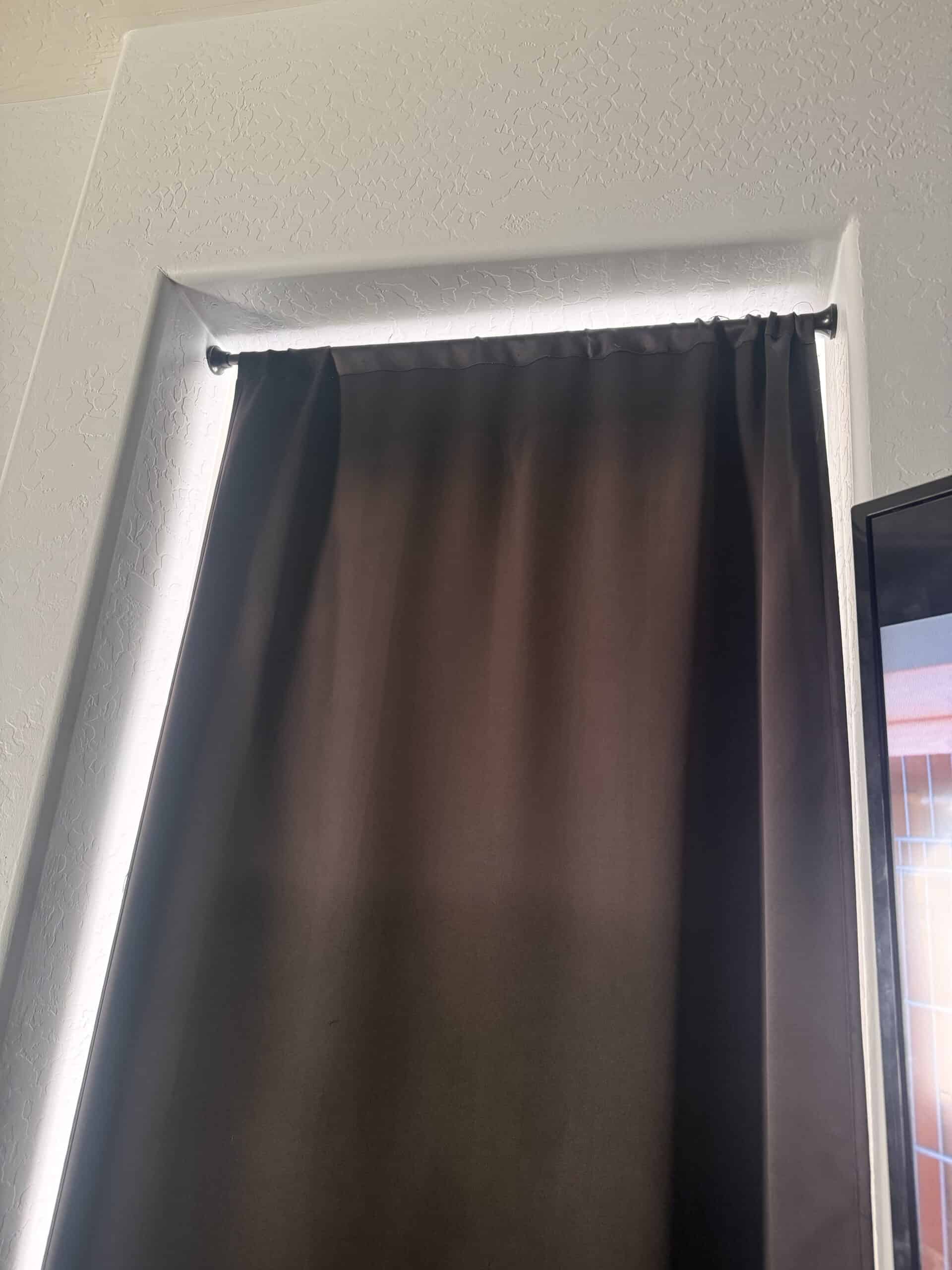
Add mass at the hem, because a panel swings back at you for the same reason a light door does not stay put, which is that there is nothing at the bottom to settle it. Stopping a doorway curtain from swinging is almost always a weight problem rather than a rod problem, and the fixes run from free to a few dollars.
People reach for a heavier rod first and it changes nothing. Our roundup of doorway curtains covers panels that hang better out of the box.
Quick Answer
Weight the hem with sewn-in drapery weights, a hem rod, or a length of chain. A magnetic closure at the bottom edge holds it against the frame. Heavier fabric and a deeper hem both help. Raising the hem off the floor stops the related problem of the panel catching as it moves.
Key Takeaways
- Swing-back is a mass problem, not a hardware problem.
- Drapery weights in the hem are the standard fix.
- A hem rod adds weight evenly across the whole width.
- Magnets hold the panel to the frame rather than just damping it.
- Heavier fabric settles faster than light fabric ever will.
- A floor-clearing hem moves more predictably than a dragging one.
| Fix | Effort | How Well It Works |
|---|---|---|
| Sewn-in drapery weights | Low, some sewing | Very effective |
| Hem rod through the bottom | Low | Very effective, even |
| Chain in the hem | Low | Effective, flexible |
| Magnets at the bottom edge | Moderate | Holds rather than damps |
| Heavier panel | Buy new | Effective, costs more |
| Tieback | None | Sidesteps it entirely |
| Heavier rod | Buy new | Does nothing for swing |
Why a Light Panel Rebounds
When you push a curtain aside you give it energy. A light panel has very little mass to absorb that energy, so it travels past vertical and comes back.
The bottom edge is where this shows most, because it is furthest from the rod and moves through the largest arc. That is also why weight added there does the most good.
A heavy panel does the same thing with far less amplitude. It absorbs the push, moves aside, and settles in a fraction of the time, which is why fabric weight matters more than any other single factor.
The Fixes, Cheapest First
- Tuck the hem behind something. Free, and it works for a panel next to a piece of furniture.
- Add a tieback on one side. Free to cheap, and it removes the issue for trips with your hands full.
- Thread a chain through the hem. A length of chain from a hardware store, fed through the existing hem channel.
- Sew in drapery weights. Small lead or steel weights, placed at the corners and at each seam.
- Fit a hem rod. A thin rod or dowel through the bottom hem gives even weight across the full width.
- Add magnets. Sew-in magnets at the bottom edge with a matching plate on the frame, which holds rather than only damps.
- Replace with a heavier panel. The most effective and the most expensive.
Our guide to washing blackout curtains is worth reading before you sew anything in, since weights and rods change how the panel can be cleaned.
Several Passes a Day on One Doorway Panel
The doorway curtain I use hangs in a doorway leading to a bathroom and a closet. It goes through several passes a day and has for three to four years.
It is a standard blackout panel rather than a thermal one, and it stops a foot or two above the floor.
The two things that describe that setup are the hem height and the route. A panel that clears the floor has nothing to catch on as it moves, and the doorway leads to a bathroom and a closet rather than between two rooms anyone sits in.
The rod is a tension rod and it has never come down, which is worth saying because people expect a panel getting pushed twice an hour to work a rod loose. It has not.
Everything above about weights, hem rods, and magnets is how those fixes work rather than a comparison I have run. Treat that section as research rather than as a verdict from this doorway.
What Does Not Help
A heavier or thicker rod
The rod is not what swings. Upgrading it addresses a failure mode you may not have and leaves the panel behaving exactly as before.
More rings or a different glide
Smoother travel makes the panel swing more freely rather than less. This is the opposite of the fix.
Tightening the tension rod harder
It changes nothing about the fabric and it adds pressure where the rod meets the frame. Our guide to whether tension rods fall down with blackout curtains covers what tension is actually for.
Pulling the panel wider than the opening
Extra width is useful for blocking light and neutral for swing. Our guide to stopping light leaking around blackout curtains covers the reason to do it anyway.
Getting the Hem Height Right
A panel that drags on the floor catches as it swings, which turns a mild annoyance into a real one. It also collects whatever is on the floor near the doorway.
Clearing the floor by an inch or two is the practical setting for a doorway. You lose the look of a full-length drape and you gain a panel that moves cleanly every time.
Our roundup of blackout curtains that do not reach the floor covers panels made in that length, which saves hemming a longer one.
If You Want It to Stay Open Instead
Sometimes the answer is not to damp the swing but to remove it from the equation. A tieback or a hook on one side of the frame parks the panel out of the way.
That suits doorways with a predictable pattern, like a route you use constantly during the day and cover at night. It also helps on laundry day and any other trip with both hands full.
For a setup you want closed most of the time with easy passage, a track with a proper glide and a weighted hem gets closest. Our roundup of blackout curtain tracks and wrap-around rods covers that hardware, and our roundup of curtain rods for doorways covers the simpler route.
Frequently Asked Questions
How do you stop a doorway curtain from swinging?
Add weight at the hem. Sewn-in drapery weights, a thin rod through the bottom hem, or a length of chain all give the panel enough mass to settle instead of rebounding. Magnets at the bottom edge hold it against the frame outright.
Do curtain weights actually work?
Yes, and they are the standard solution in drapery for exactly this. Place them at the corners and at each vertical seam so the weight is distributed rather than concentrated in the middle.
What can you use instead of drapery weights?
A length of chain threaded through the hem, a thin dowel or rod, large washers sewn into the corners, or coins in a small fabric pocket. Anything that adds mass low and evenly will help.
Will a heavier rod stop the swinging?
No. The rod is not the part that moves, so upgrading it changes nothing about how the panel behaves. Spend the money on hem weight or a heavier panel instead.
Should the curtain touch the floor to stop it moving?
A dragging hem catches rather than settles, and it collects dirt. Clearing the floor by an inch or two with weight in the hem is better on both counts. Length is not a substitute for mass.
Do magnetic closures work on a doorway curtain?
They hold the panel to the frame rather than just slowing it, which is the strongest version of this fix. You need a magnet in the hem and a matching plate or magnet on the frame, so it takes more setup than weights.
Does washing the curtain change how it hangs?
It can, since some blackout coatings stiffen or soften with washing and creases from folding take time to drop out. Hanging a panel damp lets gravity pull the creases out, which improves how it settles.
Is swinging worse with blackout fabric?
Usually the opposite. Blackout panels are denser than sheers or light cottons, so they carry more mass and settle faster. The worst swinging comes from light, thin panels on a smooth rod.
