
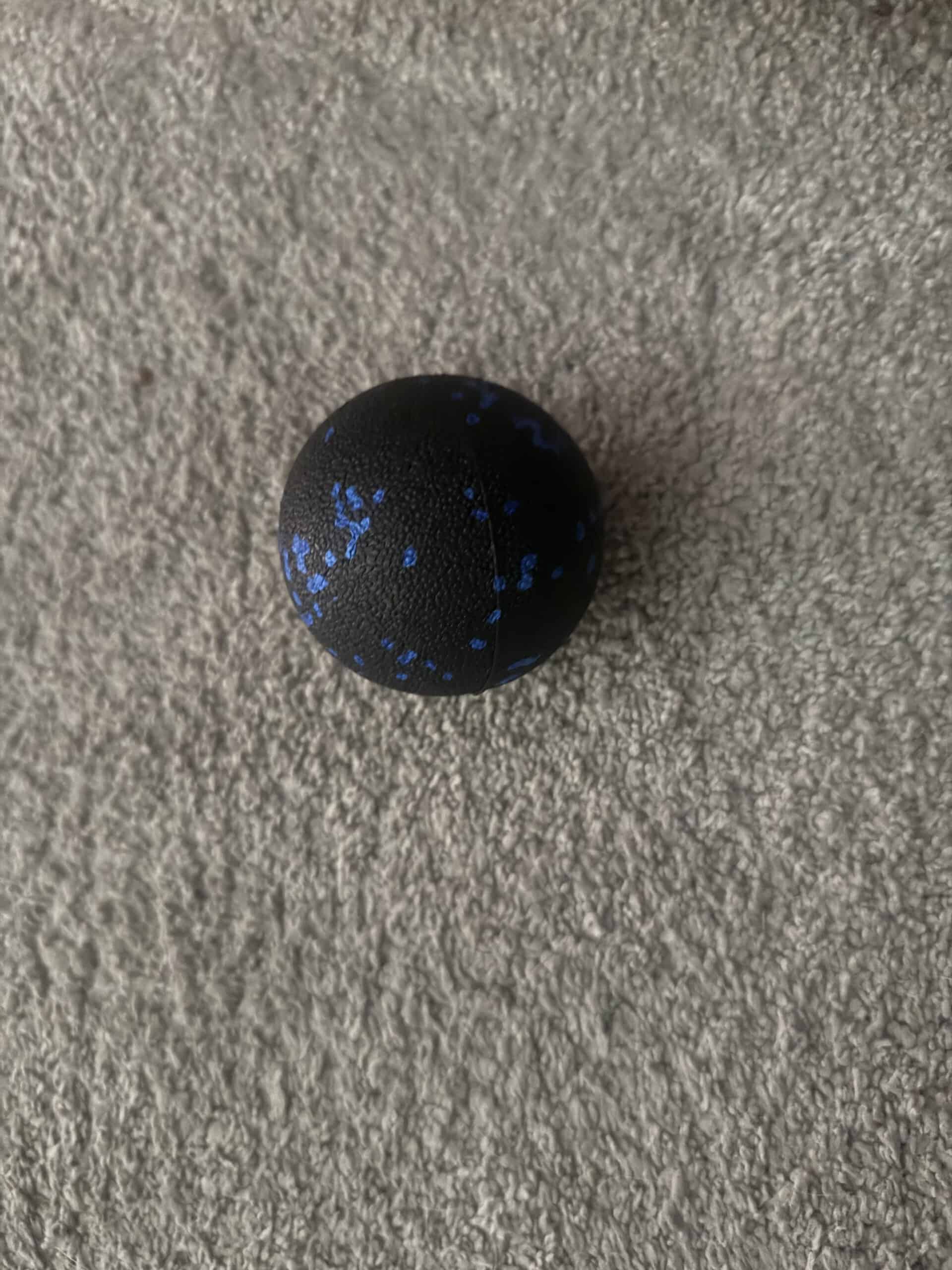
Stand on the ball, put as much weight through it as you can tolerate, and move slowly, because standing is what lets your bodyweight do the work instead of your hands. Using a massage ball on your feet while standing gives you far more pressure than any seated version, which is the entire reason to do it that way. The tradeoff is control, so you need something to hold on to.
Pressure is the variable that matters most here, and our guide to how hard to press a massage ball covers where the useful range sits.
Quick Answer
Hold a wall or a door frame, place the ball under the arch of one foot, and shift weight onto it until the pressure is firm but not sharp. Roll slowly from heel to the base of the toes, pausing where it feels tight. Work one foot at a time, a minute or two each, and keep the other foot on the floor so you can unload instantly.
Key Takeaways
- Standing supplies pressure your hands cannot match.
- Always have something to hold, since balance is the limiting factor.
- Slow movement beats fast rolling for the same amount of time.
- A firm ball that stays planted works better than one that squirts away.
- Keep the other foot down so you can take weight off at any moment.
- Sharp or radiating pain means stop, not push harder.
The Standing Sequence
- Get a handhold first. A wall, a counter, or a door frame. Do this before the ball goes on the floor.
- Place the ball under the arch. Mid-foot, not under the heel bone and not under the toes.
- Load gradually. Shift weight onto that foot until the pressure reads firm and workable rather than sharp.
- Roll heel to forefoot slowly. Take several seconds in each direction rather than scrubbing back and forth.
- Pause on the tight spots. Hold steady pressure for twenty or thirty seconds where it feels like something is there.
- Work the inside and outside edges. Tilt the foot slightly to bring the ball under the medial and lateral arch.
- Swap feet. A minute or two per side is plenty, and both feet usually feel different.
Standing Versus Sitting
| Standing | Sitting | |
|---|---|---|
| Pressure available | Full bodyweight | Leg weight only |
| Control | Lower, needs a handhold | High |
| Balance demand | Real | None |
| Best for | Deep arch pressure | Learning the spots, sensitive feet |
| Ball that suits it | Firm, stays planted | Any firmness |
Start seated if your feet are new to this or particularly sensitive, then move to standing once you know where the tight spots are. Seated work is also the version that suits a wind-down routine, which our guide to foot massagers for bedtime covers from the powered side.
How I Actually Use Mine
My massage ball is a firm single ball made of dense foam rather than a rubber lacrosse ball, and I have used it for years. Standing underfoot pressure is the main use it gets.
The thing I would point at is that it stays planted. A ball that rolls out from under you the moment you load it is unusable standing up, and the dense foam construction is why this one holds position instead of squirting away.
It also overlaps with my massage gun more than with my foam roller. The roller gets used on my legs and the ball gets used underfoot, so in practice they cover different ground.
The ball has no visible branding on it, so there is nothing for me to name even if that would be useful. Our guides to massage balls for trigger point work and foam rollers cover the market versions of both.
Picking a Ball That Works Standing Up
Firm, and dense rather than hollow
Standing loads a ball with your whole bodyweight, and a soft or hollow ball simply flattens and delivers nothing. Dense foam and solid rubber both hold up. You want the ball to push back.
It has to stay put
The practical difference between balls is whether they shoot out from under your foot. Smooth hard balls skid on hard floors, and a slightly grippy surface or a textured floor solves it. Trying this on a tile floor with a hard ball is how people give up on the technique.
Size to your arch
Something around the size of a tennis ball to a baseball suits most feet. Smaller balls dig into one point, which is useful once you know the spot and uncomfortable as a starting position. Larger balls spread the pressure and reach less deeply.
Smooth before spiky
Textured and spiky balls change the sensation more than the depth, and they can be genuinely unpleasant underfoot at full bodyweight. Smooth is the safer default for standing work.
What Trips People Up
No handhold
Balancing on one foot on a rolling object is how this goes wrong. Set up next to something solid before the ball touches the floor, every time.
Rolling fast
Quick scrubbing feels like more work and delivers less. Slow passes with pauses on the tight spots use the same two minutes far better.
Going straight to maximum pressure
Full weight on the first pass on a foot that has never done this is how you end up sore rather than loose. Load gradually within each session and across the first few sessions.
Pushing through sharp pain
Firm pressure that you can breathe through is the target. Sharp, burning, or radiating pain is a stop signal. Persistent heel or arch pain, numbness, or anything that worsens is worth taking to a clinician rather than working harder at, and our guide to night splints covers one of the overnight approaches people are often pointed toward.
Where It Fits Alongside Other Tools
The ball reaches the feet and small areas that larger tools cannot. A foam roller handles calves and thighs, and a percussive tool covers broad areas fast, which our guide to massage guns covers.
Most people end up with the tools dividing the work by the size of the area rather than by any plan. Feet and shoulder blades go to the ball, legs go to the roller, and the back goes to whichever is reachable.
Related Reading
Frequently Asked Questions
How do you use a massage ball on your feet while standing?
Hold a wall or counter, put the ball under the arch, and shift weight onto it until the pressure is firm but tolerable. Roll slowly from heel to forefoot and pause on tight spots. Keep the other foot on the floor so you can unload instantly.
Is standing better than sitting?
For pressure, yes, because standing brings your full bodyweight instead of just the weight of your leg. Sitting gives more control and suits sensitive feet or a first attempt. Many people start seated and move to standing.
How long should you spend per foot?
A minute or two per side covers it for most people. Slow passes with brief pauses beat longer sessions of fast rolling. Both feet usually feel different, so do not assume symmetry.
What kind of ball works best underfoot?
A firm ball around tennis ball size that stays planted rather than skidding. Dense construction matters because a soft ball flattens under bodyweight and delivers nothing. Smooth is a better default than spiky for standing work.
Why does the ball keep shooting out from under my foot?
Usually a hard smooth ball on a hard smooth floor. Move to a rug or a mat, or use a ball with a slightly grippier surface. Loading more gradually also helps.
Should it hurt?
Firm pressure you can breathe through is the target. Sharp, burning, or radiating sensations mean back off rather than push harder. Soreness the next day means you used too much pressure too soon.
Can you do this every day?
Many people do, at short durations. Start with a few sessions a week and see how your feet respond before making it daily. Reduce it if you are sore rather than looser.
When should you see someone about foot pain?
If pain is persistent, worsening, sharply localized at the heel, or comes with numbness or tingling, that warrants a clinician rather than more pressure. A massage ball is a comfort and mobility tool. It is not a diagnosis or a treatment.
