
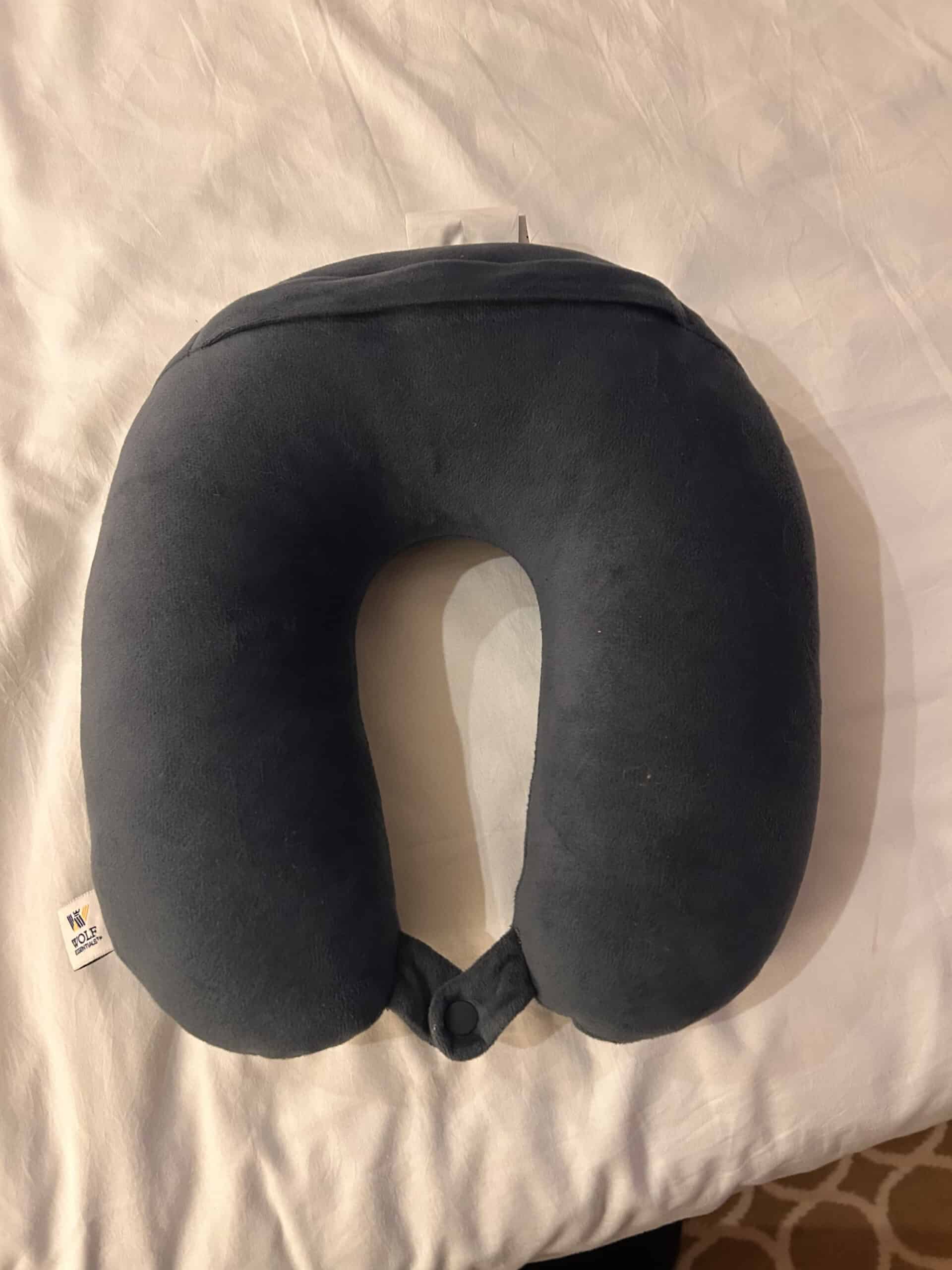
A U-shaped pillow fills the gap between your shoulder and your jaw, which stops the head dropping a long way but does not lock it in place, so it still tips sideways once your neck muscles let go. Your head falls sideways in a travel pillow because the U-shape supports downward load and resists almost nothing lateral, and that is a geometry limit rather than a sign the pillow has worn out. More firmness does not fix it.
The pillows built to address it change shape rather than density, which our guide to U-shaped travel pillows touches on and the alternatives below cover.
Quick Answer
A U-shape props the head from below and leaves the sides open, so sideways tipping continues once you fall asleep. Fixes come from shape rather than support: a taller side wall, a chin-supporting front, a wraparound that braces against the seat, or simply turning the pillow so the thick part sits under your chin. A firmer pillow of the same shape changes nothing.
Key Takeaways
- U-shapes resist downward drop and barely resist lateral lean.
- Sideways tipping is normal behavior, not pillow failure.
- Wearing the pillow backward puts the bulk under the chin instead of behind the neck.
- Seat headrest wings do more for lateral support than most pillows do.
- Extra firmness raises the head without holding it upright.
- Foam that still holds its shape after years is doing its actual job.
What Each Design Actually Restrains
| Design | Stops Head Dropping Forward | Stops Sideways Lean | Bulk |
|---|---|---|---|
| Standard U-shape | Partly | Barely | High |
| U-shape worn backward | Yes | Partly | High |
| Tall-sided U-shape | Partly | Better | Highest |
| Chin-supporting front | Yes | Partly | High |
| Wraparound or scarf style | Yes | Yes, braced | Moderate |
| Inflatable wedge | Varies | Varies | Lowest packed |
The Geometry Problem
Sit upright and your head balances on top of your spine. Fall asleep and the muscles holding it there stop working, so the head goes wherever gravity takes it, which is forward or to one side.
A U-shaped pillow sits behind and beside the neck. It raises the floor under your head, so instead of dropping to your chest the head drops a shorter distance and stops. That is a real benefit and it is the only one the shape provides.
Lateral lean is different. To stop your head tipping sideways something has to push back against the side of your head at or above ear height, and a standard U-shape ends well below that. The head rotates over the top of the pillow rather than being caught by it.
This is why firmness is the wrong lever. A denser pillow of the same profile raises the stopping point slightly and still gives the head nothing to lean against.
Height is the other thing people reach for and it has the same problem. Building the collar taller under the jaw addresses forward drop, which is the direction the pillow was already handling. Sideways lean needs the material on the sides, not underneath.
Five Years With the Same One
My travel pillow is a U-shaped memory foam one and I have had it more than five years. The foam still supports rather than flattening after that time, which is the part that has held up best.
My head still drops sideways a bit when I doze off. Five years in, with foam that has not gone soft, that has not changed.
It is also bulky, and it gets hot, which is what memory foam does wrapped around a neck. None of that is a defect list so much as a description of the category.
One pillow of one type is the boundary of what I can speak to. Wraparound designs, inflatable versions, and chin-supporting fronts are research here rather than experience, so treat the comparisons above as what those shapes are built to do rather than as a verdict I have earned. The heat side is covered separately in why travel pillows get hot.
Fixes Worth Trying in Order
Wear it backward
Rotate the pillow so the opening sits at the back of your neck and the thick section rests under your chin. This costs nothing, takes two seconds, and addresses forward drop better than the intended orientation does. Plenty of people find this is the whole answer.
Use the seat, not just the pillow
Window seats give you a wall, and headrests with fold-in wings give you two vertical surfaces at the right height. The pillow raises the floor and the seat provides the sides, and together they do what neither does alone.
Move up to a shape with side walls
Tall-sided and chin-supporting designs add material at ear height, which is where lateral restraint has to come from. The trade is more bulk to carry, which our guide to packing a travel pillow addresses.
Try a wraparound style
Wraparound and scarf-style pillows brace against the seat itself rather than only your shoulders, which is the design most directly aimed at sideways lean. They also pack smaller than a rigid U-shape.
What Not to Chase
Do not buy firmer expecting it to hold your head upright. Firmness changes how far the head drops and not which directions it can drop in.
Do not size up on the assumption that bigger means more support. An oversized pillow can push your head forward off the headrest entirely, which makes the lean worse, and our guide to travel pillow sizing covers getting that right.
Do not treat a pillow that still holds its shape as worn out. Foam that supports after years of use is performing. The sideways tipping was there on day one.
Cars Are a Different Problem
In a car the seat geometry and the vibration both work against you, and headrests are often positioned differently from aircraft seats. A pillow that behaves well on a plane can fail in a passenger seat.
Our guide to travel pillows for road trips covers that case, and how to sleep on a plane covers seat selection and position, which matter more than the pillow for most people. If the underlying issue is neck pain rather than sleep position, travel pillows for neck pain is the better starting point.
Frequently Asked Questions
Why does my head still fall sideways in a travel pillow?
Because a U-shape supports the head from below and leaves the sides open, so once your neck muscles relax the head tips over the top of the pillow. Lateral restraint requires material at or above ear height. It is a shape limit rather than a worn-out pillow.
Does a firmer travel pillow stop the sideways lean?
No. Firmness raises the point where the head stops dropping and adds nothing on the sides. Changing shape is the only thing that changes lateral behavior.
Should you wear a travel pillow backward?
It is worth trying, and many people prefer it. Rotating the opening to the back of the neck puts the bulk under your chin, which resists forward drop directly. It costs nothing to test.
Are wraparound travel pillows better for this?
They are the shape built for it, because they brace against the seat rather than only against your shoulders. They also pack smaller than rigid U-shapes. Whether the fit suits you depends on your neck and shoulder proportions.
Does the seat matter more than the pillow?
Often, yes. A window seat gives you a wall and a winged headrest gives you two vertical surfaces at the right height, and both do more for lateral support than a standard U-shape. The pillow and the seat solve different halves.
How long should a memory foam travel pillow last?
Foam that still holds its shape after several years of use is doing its job. Replace it when it compresses and stays compressed, not because your head still leans. The lean was a property of the shape from the start.
Is a bigger travel pillow more supportive?
Not necessarily, and oversizing backfires. Too much bulk behind the neck pushes your head forward off the headrest, which removes the surface you were leaning on. Match the size to your neck rather than buying up.
Do inflatable travel pillows help with sideways lean?
It depends entirely on the shape they inflate into, since some are wedges and others are U-shapes. They pack far smaller than foam, which is their main advantage. Judge them on profile rather than on the fact that they inflate.
