
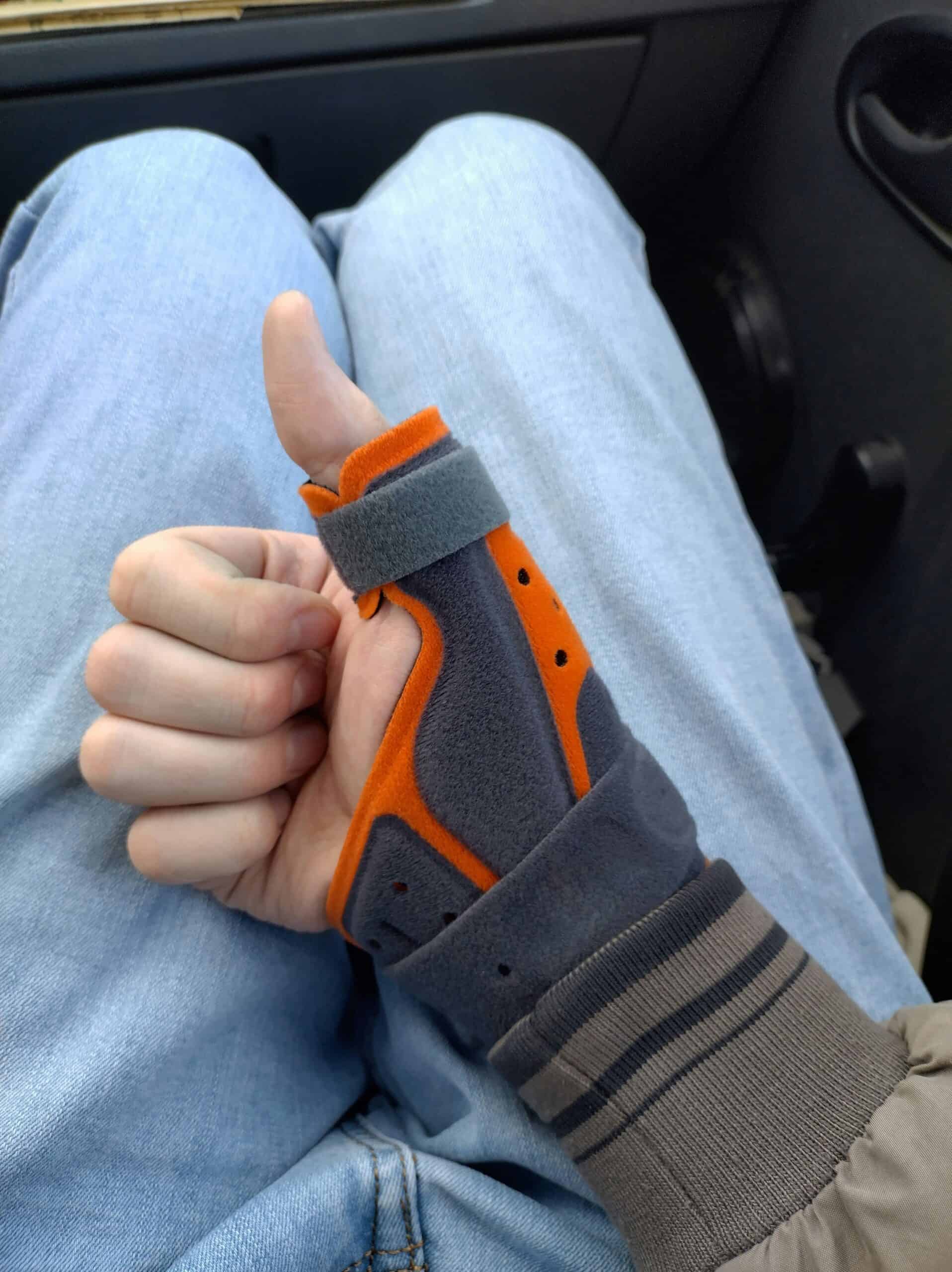
A night brace works by holding the wrist straight, because a bent wrist raises pressure inside the carpal tunnel and most people bend theirs in their sleep without knowing. That single mechanism explains what separates the best wrist braces for carpal tunnel at night from daytime supports: the splint must hold neutral, not just feel snug. Everything else is fit, bulk, and whether you can tolerate wearing it for eight hours.
The National Institute of Neurological Disorders and Stroke lists wrist splinting, often worn at night, among the conservative measures used for carpal tunnel syndrome. It also notes that symptoms frequently appear at night and can wake people.
Anyone waking with numb or tingling hands should read our guide to why hands and arms go numb overnight first, since not every case traces to the wrist.
The Short Version
Choose a brace with a removable metal stay that holds the wrist near zero degrees, not one with a pre-curved spoon that pushes the wrist back. Soft wrap styles suit people who cannot sleep in something rigid, and they trade some positioning control for comfort. Get the sizing right first, because a brace that slides is a brace that does nothing.
Medical Disclaimer
This article is general information about brace categories and is not medical advice, and nothing here diagnoses or treats carpal tunnel syndrome. Persistent numbness, weakness, muscle wasting at the base of the thumb, or symptoms that worsen despite splinting all need medical evaluation, because untreated nerve compression can cause lasting damage. Talk to a doctor or a hand specialist before relying on a brace, especially if you have diabetes, thyroid disease, or a recent injury.
Key Takeaways
- Neutral wrist position is the whole point, so a flat or near-flat stay beats a curved one.
- Removable stays let you adjust rigidity as symptoms change.
- Sizing comes from wrist circumference, not glove or shirt size.
- Straps that cross the palm restrict finger movement and often get removed at 2 a.m.
- Breathable fabric matters more at night than during the day.
- Braces manage symptoms, and they do not address the underlying compression.
How We Picked These Wrist Braces
We organized this guide around wrist position first. Any brace that holds the joint in extension defeats the purpose, since extension raises carpal tunnel pressure much like flexion does. So designs with flat or slightly adjustable stays ranked above pre-curved ones.
Tolerability came second. A brace nobody can sleep in provides zero benefit, and comfort complaints are the most common reason people abandon night splinting. Bulk, strap placement, and fabric breathability all fed into this.
We also looked at construction quality where it counts. Stitching at the strap anchors takes repeated load, and cheap hook-and-loop closures lose grip within weeks. Braces with wide, replaceable straps held adjustment far longer.
Finally, we considered what happens alongside the brace. Nighttime symptoms rarely exist in isolation, and many people arrive here already reading about sleeping better with chronic pain. A brace is one piece of that picture.
1. Rigid Neutral-Position Night Splints
Why It Stands Out
These use a firm aluminum or plastic stay along the palm side to lock the wrist near neutral. That rigidity is exactly what stops unconscious wrist flexion, which is the behavior night splinting targets. For symptom control overnight, this category does the most.
Many include a second dorsal stay for extra control. The result holds position even when someone sleeps on their hand.
Worth Knowing
Rigid splints feel intrusive for the first several nights. Most people adapt within a week, but some never do, and pushing through is not always the right call. Check whether the stay comes out, so you can soften the brace if needed.
Check the stay shape before the first use. Some ship pre-bent into extension, and bending one flat by hand is both easy and worth doing.
Best for: People whose main complaint is waking with numbness and tingling, and who can tolerate something firm. Skip it if you already know you cannot sleep wearing rigid gear, since an abandoned splint helps nobody.
Check Price on Amazon2. Soft Wrap Wrist Braces
Why It Stands Out
Soft wraps use neoprene or padded fabric with a light internal stay, giving gentle restriction rather than a lock. They feel far closer to normal sleeping, so adherence tends to be much better. For people who quit rigid splints, this is usually the next stop.
Adjustable compression is a real advantage. You can run them loose on good nights and tighter when symptoms flare.
Worth Knowing
Positioning control drops noticeably. A soft wrap reduces how far the wrist bends but does not prevent it, so symptom relief is often partial. Treat that as the tradeoff you are accepting.
Neoprene also traps heat. Anyone who already sleeps hot should look at fabric alternatives rather than fight it.
Best for: Light or intermittent symptoms, and anyone who abandoned a rigid splint over comfort. Skip it if your numbness is frequent or severe, since partial positioning gives partial results.
Check Price on Amazon3. Low-Profile Fabric Sleeves
Why It Stands Out
Compression sleeves with a thin flexible insert are the least intrusive option available. They slide on like a sock, add no straps, and feel almost like nothing after a few minutes. Side sleepers who tuck a hand under a pillow often get along with these when nothing else works.
The seamless construction also avoids pressure points. Nothing digs into the back of the hand or the forearm.
Worth Knowing
These provide the least positional support of anything here. Expect them to reduce mild symptoms and comfort the joint rather than hold neutral. For many people that is genuinely enough, and for others it does nothing.
Sizing is unforgiving, since there is no adjustment. Measure your wrist circumference and take the measurement seriously.
Best for: Mild symptoms, sensitive skin, and anyone who wakes up having torn off every strapped brace they own. Skip it if you need real positioning control overnight.
Check Price on Amazon4. Adjustable Dual-Strap Braces
Why It Stands Out
Dual-strap designs separate wrist tension from forearm tension, which lets you tighten the joint without choking circulation up the arm. That independent adjustment solves the most common complaint about single-strap braces. It also improves fit across unusual wrist-to-forearm proportions.
Most include a removable stay as well. You get rigid positioning when you want it and a soft wrap when you do not.
Worth Knowing
More straps mean more to fiddle with in the dark. Set the tension once and leave it, marking the strap position if the brace allows. Overtightening is the usual mistake and it causes new numbness.
These also run bulkier than sleeves. Bed partners notice, and so does anyone who sleeps with hands near their face.
Best for: People between standard sizes, or anyone who wants to tune rigidity from night to night. Skip it if you want the simplest possible setup with no adjustment decisions.
Check Price on Amazon5. Thumb-Spica Combination Braces
Why It Stands Out
These add a thumb channel to the wrist splint, immobilizing both joints together. That matters when thumb-side pain travels with the wrist symptoms, which happens often in people who grip or type all day. One brace covers both complaints.
The thumb post also stops the hand from curling. Some people find that curl is what triggers their overnight numbness.
Worth Knowing
Immobilizing the thumb is a bigger comfort ask than the wrist alone. Expect a longer adjustment period, and expect to need help with anything you do before sleep. Do not use one to self-treat thumb-base pain without a clinical opinion, since several distinct conditions produce it.
Fit gets specific. Thumb length and web space vary a lot, and a poorly fitted spica creates a new pressure point.
Best for: Overnight wrist symptoms that come with thumb-side pain, under guidance from a clinician. Skip it if your thumb is unaffected, because the added restriction buys nothing.
Check Price on Amazon6. Breathable Braces for Hot Sleepers
Why It Stands Out
Mesh-panel and moisture-wicking braces address the reason many people stop wearing one, which is heat and sweat under the strap. Ventilated construction keeps the palm and forearm far drier through the night. Adherence improves once the brace stops feeling clammy.
Skin health matters too. Trapped moisture causes irritation and itching, and both wake people up.
Worth Knowing
Ventilated designs sometimes use lighter stays to save bulk. Check that the positioning support is still there rather than assuming a breathable brace is equivalent. Two removable stays and mesh panels together is the combination to look for.
Washability matters more here. Look for a removable stay so the fabric shell goes in the wash, and pair it with the rest of your setup if you already manage heat, as covered in our bedtime tension recovery tools guide.
Best for: Hot sleepers, warm climates, and anyone whose brace ends up damp by morning. Skip it if you run cold, since mesh panels feel drafty on cool nights.
Check Price on AmazonWrist Braces for Carpal Tunnel at Night at a Glance
| Brace Type | Positioning Control | Sleep Comfort | Adjustable | Best For |
|---|---|---|---|---|
| Rigid night splint | Highest | Lowest | Removable stay | Frequent numbness |
| Soft wrap | Moderate | Good | Yes | Mild to moderate symptoms |
| Fabric sleeve | Lowest | Highest | No | Mild symptoms, strap intolerance |
| Dual-strap brace | High | Moderate | Independent straps | Odd sizing, variable nights |
| Thumb spica | High | Lowest | Limited | Wrist plus thumb pain |
| Breathable brace | Moderate to high | Good | Usually | Hot sleepers |
What to Look For in a Night Wrist Brace
Why does neutral position matter so much?
Pressure inside the carpal tunnel rises when the wrist bends in either direction. A splint that holds the joint near straight keeps that pressure lower through the night. Braces built with a pre-curved stay work against this, so flatten the stay or choose a different design.
How do you size a wrist brace?
Measure the circumference of your wrist at the crease, then match it to the maker’s chart. Glove size, shirt size, and hand length tell you nothing useful here. When you fall between sizes, a dual-strap design usually fits better than guessing.
Which hand should you brace?
Brace the hand with symptoms, and brace both if both wake you. Many people have symptoms on both sides with one clearly worse. Two single braces often cost less than one pair marketed as a set.
How tight should it be?
Snug enough that the brace does not rotate on your arm, and loose enough that your fingers stay warm and pink. New tingling after tightening means the strap is too tight. Adjust in small steps over several nights.
Rigid Splint vs Soft Wrap
When the rigid splint is the right call
Choose rigid when numbness wakes you regularly and you can tolerate the bulk. Positioning control is the mechanism, and rigid designs deliver the most of it. Removable stays give you a way to step down later.
When the soft wrap wins
Choose soft when comfort is the barrier to wearing anything at all. Partial positioning applied every night beats full positioning applied twice and abandoned. You can always reintroduce a stay as you adapt.
Common Mistakes to Avoid
Wearing a daytime support to bed
Daytime wrist supports often allow or even encourage extension, because they are built for grip and load rather than position. At night that works against you. Buy something described for night or sleep use and confirm the stay is flat.
Cranking the straps down
Tighter is not better, and overtightening produces exactly the numbness you are trying to stop. Aim for stable rather than compressive. Loosen immediately if fingers feel cold or tingly.
Treating a brace as the whole answer
Splinting manages overnight symptoms and does not resolve the compression causing them. Daytime workstation setup, activity modification, and clinical evaluation all still matter, which is part of why our work-from-home pain relief guide and office chair guide exist. Use the brace as one layer.
Ignoring progressive weakness
Numbness that becomes constant, grip that weakens, or visible thinning at the base of the thumb are all reasons to stop self-managing. Those signs point to nerve changes rather than positional irritation. Get evaluated rather than buying a firmer brace.
Related Reading
- Night splints for plantar fasciitis
- TENS units and how they are used
- Massage balls for forearm tension
- Posture correctors and what they do
- Relieving pain for better sleep
- Pillows for shoulder pain
- Heating pads for back and neck
Frequently Asked Questions
Do wrist braces for carpal tunnel at night actually help?
Night splinting is one of the conservative measures described for carpal tunnel syndrome, and it works by keeping the wrist near neutral while you sleep. Many people report fewer overnight wake-ups from numbness. It manages symptoms rather than correcting the underlying compression.
How long should you wear a wrist brace at night?
Most people wear one for the full sleep period, since the goal is holding position for as many hours as possible. Give any new brace a week or two before judging comfort. Ask your clinician how long to continue, because that depends on your diagnosis.
Should the wrist brace be tight?
Snug but not compressive. It should not slide or rotate on your forearm, and your fingers should stay warm with normal color. New tingling or cold fingers after tightening means back the straps off.
Can you wear a wrist brace on both hands?
Yes, and plenty of people need to, since symptoms are often bilateral. Start with the worse hand if adapting to one brace is already hard. Add the second once you sleep comfortably in the first.
Why do carpal tunnel symptoms get worse at night?
Symptoms commonly appear or intensify at night and can wake people from sleep. Sleeping wrist position is a large part of it, since few people hold a neutral wrist unconsciously. Fluid shifts while lying down are also discussed as a contributor.
Is a rigid or soft brace better for sleeping?
Rigid braces control position better, and soft braces get worn more consistently. The right answer is whichever one you will actually keep on all night. Many people start rigid, then step down to a removable-stay soft wrap.
How do you clean a wrist brace?
Remove any metal stay, then hand wash the fabric shell in cool water with mild soap and air dry it fully. Skip the dryer, because heat degrades hook-and-loop closures and elastic. Wash weekly if you sleep warm.
When should you see a doctor about carpal tunnel symptoms?
See a doctor if numbness becomes constant, grip strength drops, the thumb base looks thinner, or splinting brings no change after a few weeks. Those findings suggest nerve involvement that a brace will not address. Earlier evaluation is better, since prolonged compression can cause lasting damage.
Sources
- National Institute of Neurological Disorders and Stroke. Carpal Tunnel Syndrome. National Institutes of Health. https://www.ninds.nih.gov/health-information/disorders/carpal-tunnel-syndrome
- National Institute of Arthritis and Musculoskeletal and Skin Diseases. National Institutes of Health. https://www.niams.nih.gov/
- MedlinePlus. Carpal Tunnel Syndrome. National Library of Medicine. https://medlineplus.gov/carpaltunnelsyndrome.html
- OrthoInfo. American Academy of Orthopaedic Surgeons. https://orthoinfo.aaos.org/
