
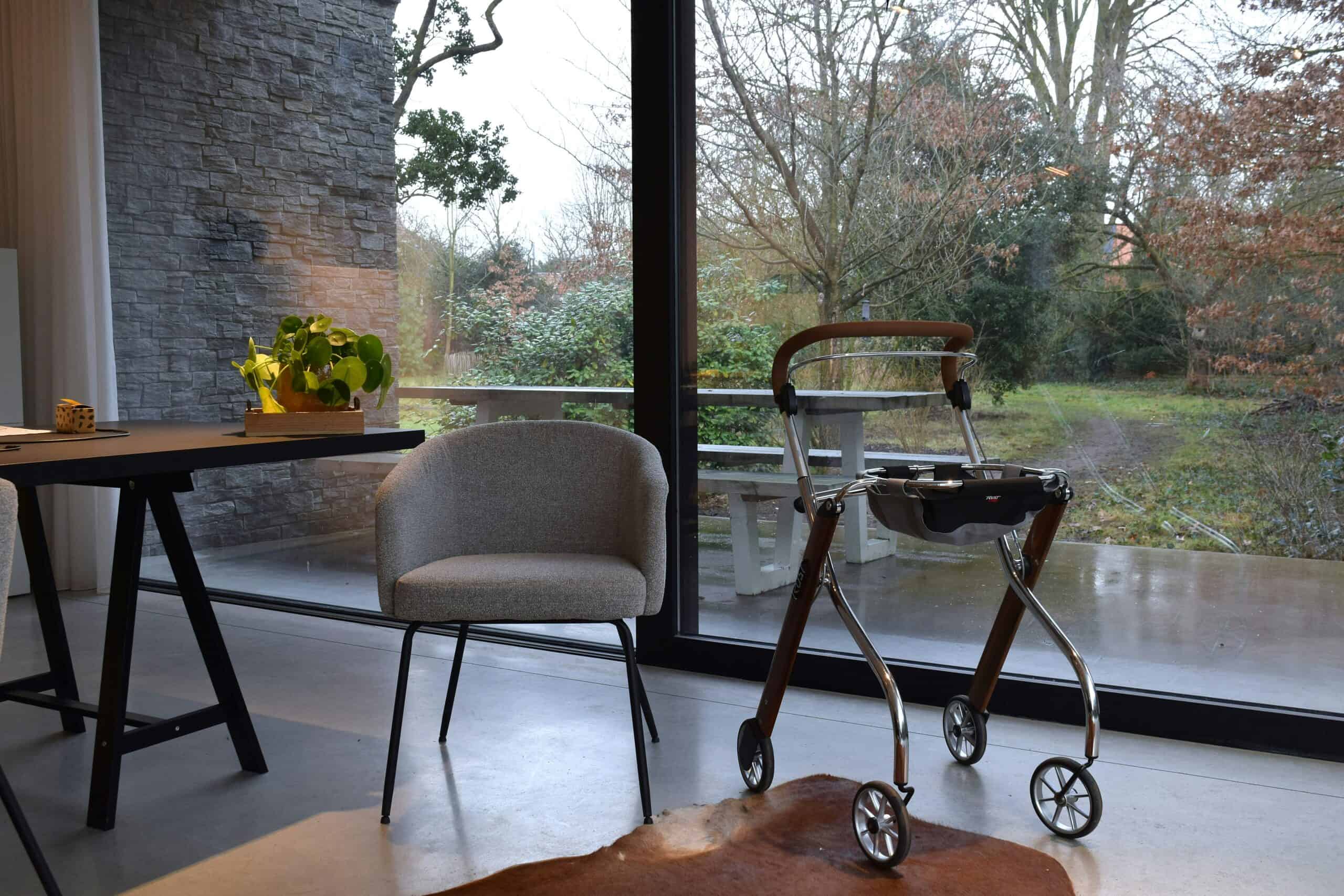
A walker gives you stability and a rollator gives you mobility, and confusing the two is how people end up with the wrong one. The best rollators and walkers for home use split into six types, and the deciding factor is whether you need to lean on something or roll alongside it. Standard walkers are the most stable and the slowest, while rollators move freely and need working brakes and enough strength to control them.
Fit is what makes either one safe, and the National Institute on Aging includes correctly fitted mobility aids among the measures that reduce falls at home1. A walker at the wrong height causes the problem it was bought to solve.
Indoors, doorway width decides more than features do. Our guide to grab bars and bathroom safety rails covers the places a walker cannot follow you.
Quick Verdict
A four-wheel rollator with a seat and hand brakes suits most people who can walk but tire or feel unsteady. A standard two-wheel walker is the more stable choice for anyone who needs to bear weight on it. Narrow rollators solve tight hallways, three-wheel models turn better, and upright rollators change posture entirely.
Key Takeaways
- Walkers support weight and rollators support balance, and they are not interchangeable.
- Handle height is the single most important fit dimension and should be set by a therapist.
- A rollator needs hand strength to brake, which rules it out for some people.
- Doorway and hallway width decide what actually works inside a house.
- Rollator seats are for resting when stopped, never for being pushed while seated.
- Loose rugs and thresholds are the two things that catch wheels indoors.
How We Picked
We compared walker types rather than individual models, because lineups turn over while the frames stay the same. Each section covers one type and who it suits.
We ranked types on four things: how much weight they support, how easily they turn in a house, whether braking requires hand strength, and how well they fold for storage and transport.
We excluded anything without a stated weight rating, and we have not published height ranges or capacities, since fit belongs to the person and the figures belong to the product.
1. Four-Wheel Rollators with Seat and Brakes
Why It Stands Out
Four wheels roll continuously, so walking stays smooth rather than becoming lift-and-place. The seat means you can stop and rest anywhere, which extends how far someone actually goes.
Hand brakes also let you park it, which makes sitting down on the seat far safer.
Worth Knowing
A rollator rolls away if you lean on it without braking, so it suits balance support rather than weight bearing. Hand strength to squeeze the brakes is a real requirement.
Width is the indoor issue, since many models struggle in older hallways. Our guide to bedroom rugs covers the floor hazards that catch wheels.
Best for: Anyone who can walk but tires or feels unsteady. Skip it if you need to put real weight through the frame.
Check Price on Amazon2. Standard Two-Wheel and No-Wheel Walkers
Why It Stands Out
A standard walker does not move unless you move it, which makes it the most stable option here. For anyone who needs to bear weight through their arms, that is the whole point.
Two front wheels are the common compromise, letting you push forward while the rear legs still grip.
Worth Knowing
Walking becomes a stop-start rhythm, which is slower and more tiring. There is no seat, so rest stops need a chair.
Rear glide tips wear and need replacing on schedule. Our guide to lift chairs covers where someone using one of these usually sits down.
Best for: Weight bearing, early rehabilitation, and maximum stability. Skip it for longer distances where fatigue is the limit.
Check Price on Amazon3. Narrow and Compact Indoor Rollators
Why It Stands Out
Narrow-frame rollators are built to pass through interior doorways and bathroom entries that stop a standard model. In an older house that is often the difference between usable and not.
They also turn in tighter spaces, which matters in a hallway with corners.
Worth Knowing
A narrower base is inherently less stable side to side, so it trades a little security for access. Seats are smaller too, and some models omit them.
Measure every doorway the person actually uses before ordering, including the bathroom.
Best for: Narrow hallways, older houses, and apartment bathrooms. Skip it if outdoor use is the main need.
Check Price on Amazon4. Three-Wheel Rollators
Why It Stands Out
A single front wheel turns tightly, so a three-wheel rollator handles corners and doorways better than a four-wheel frame. It is also lighter to lift into a car.
For someone whose problem is maneuvering rather than fatigue, that agility is worth a lot.
Worth Knowing
There is no seat, because the triangular frame has nowhere to put one. Stability is also lower over uneven ground.
That makes it an indoor and short-trip tool. Anyone who needs to sit down often should read our guide to recliners for where those rests happen.
Best for: Tight indoor spaces and people who do not need to rest mid-walk. Skip it if fatigue is the limiting factor.
Check Price on Amazon5. Upright and Posture Rollators
Why It Stands Out
An upright rollator puts the handles at forearm height, so the user stands taller rather than hunching over a low frame. Looking ahead rather than down changes what you can see coming.
Forearm supports also shift load off the wrists and hands.
Worth Knowing
These are heavier, bulkier, and considerably more expensive than a standard rollator. Fit is also more individual, which makes a therapist assessment more valuable rather than less.
Posture is a whole-day issue, and our guide to posture correctors covers the seated half of it.
Best for: Anyone who hunches over a standard rollator, and wrist or hand pain. Skip it if storage space or budget is tight.
Check Price on Amazon6. Bariatric and Heavy-Duty Frames
Why It Stands Out
Heavy-duty frames exist because standard weight ratings do not cover everyone, and a frame used beyond its rating is the failure nobody plans for. Wider seats and reinforced joints are the visible differences.
Handle height ranges are usually broader too, which helps taller users.
Worth Knowing
Extra width brings the doorway problem back, so measure before ordering. These frames are also heavier to fold and lift.
Always work from the manufacturer’s stated capacity rather than an estimate. Our guide to bed frames for heavy people covers the same rating question in the bedroom.
Best for: Anyone above a standard frame’s rating, and taller users. Skip it if standard ratings comfortably cover the need.
Check Price on AmazonRollators and Walkers at a Glance
| Type | Supports weight | Has a seat | Indoor maneuvering | Best situation |
|---|---|---|---|---|
| Four-wheel rollator | No | Yes | Moderate | Fatigue and balance |
| Standard walker | Yes | No | Good | Weight bearing, rehab |
| Narrow rollator | No | Sometimes | Best | Tight hallways |
| Three-wheel rollator | No | No | Best | Corners and doorways |
| Upright rollator | No | Usually | Moderate | Posture and wrist pain |
| Bariatric frame | Depends on type | Usually | Hardest | Above standard ratings |
What to Look For in a Walker
Do you lean on it or walk with it?
That distinction decides the category. Leaning weight through the arms needs a walker that stays put, and a rollator will roll out from under that load.
Anyone unsure which they need should be assessed rather than guess. Getting this wrong is a fall risk rather than an inconvenience.
How wide are the doorways?
Measure the narrowest doorway the person uses daily, including the bathroom. A rollator that does not fit that door gets abandoned in the hallway.
Turning radius matters as much as width in a house with corners. Walk the route before buying.
Can they operate the brakes?
Rollator brakes need grip strength and a reliable habit of using them. Loop brakes, push-down brakes, and reverse-lock systems all feel different.
Where hand strength is limited, a standard walker is often the safer answer. This is a good question for a therapist.
Is the handle height right?
Handles set too high push the shoulders up, and too low causes hunching, and both reduce control. Correct height is individual and should be set rather than assumed.
Check it again after new shoes or a change in posture. Our guide to helping seniors sleep better covers the night routine this equipment supports.
Where will it live?
A walker left in another room does not get used, and a folded one in a closet gets skipped on a quick trip. Plan a parking spot near where it is needed.
Many households end up with two, one upstairs and one down. That is usually cheaper than a fall.
How does it fold and lift?
Most rollators fold sideways or front to back, and the difference matters for getting one into a car boot. Weight matters more, since somebody has to lift it.
Lighter frames are easier to handle and less stable under load, which is the recurring trade in this category.
Test the fold with the person who will actually do it. A mechanism that needs two strong hands defeats the purpose.
What does it need to carry?
A bag or basket turns a rollator into the thing that moves a cup of tea from the kitchen, which is a real daily problem for anyone using both hands on a frame. That capability is often why a rollator beats a walker.
Load it low rather than high, because weight on the handles makes the frame want to tip. Most bags hang under the seat for exactly that reason.
Trays exist for the same job and get in the way when walking. Choose one or the other rather than both.
Rollator vs Standard Walker
Where a rollator wins
Distance and fatigue. Continuous rolling is far less tiring than lifting a frame with every step, and the seat lets someone rest and carry on.
It also carries things, which a standard walker mostly cannot.
Where a standard walker wins
Stability and weight bearing. It does not move unless moved, which is what someone recovering from surgery or with poor balance actually needs.
It is also cheaper and lighter. Our guide to hospital bed alternatives covers the recovery setup one of these usually belongs to.
Common Walker Mistakes to Avoid
Leaning on an unbraked rollator
Four wheels roll, and putting weight on them without the brakes locked is how people go down. Brake first, every time, before sitting or leaning.
Being pushed while sitting on the seat
Rollator seats are for resting when stopped, not for transport. A rollator is not a wheelchair and has no footrests or restraints.
Guessing the handle height
Wrong height reduces control and encourages hunching. Have it set properly, then check it periodically.
Leaving rugs and cords in the path
Wheels catch on rug edges and thresholds, and home hazard removal is part of every fall prevention program the Centers for Disease Control and Prevention describes2. Our guide to night lights covers seeing those hazards after dark.
Medical Disclaimer
This article is general information about products, not medical advice. Choosing between a walker and a rollator, and setting handle height, are clinical decisions best made with a physical or occupational therapist, who can assess strength, balance and the actual home. Weight capacity comes from the specific product’s rating. Anyone with a recent fall, new weakness, dizziness, or a change in walking should be evaluated by a clinician rather than buying equipment alone.
Related Reading
- Bed rails cover the transition from lying to standing.
- Bed exit alarms cover knowing when someone is up and moving.
- Wheelchair cushions cover the seating side when walking is no longer the whole answer.
Frequently Asked Questions
What are the best rollators and walkers for home use?
A four-wheel rollator with a seat and hand brakes suits most people whose problem is fatigue or unsteadiness rather than weakness. A standard two-wheel walker is the safer choice for anyone who needs to bear weight through their arms, and narrow models exist for houses with tight doorways.
What is the difference between a walker and a rollator?
A walker has legs or two wheels and stays put so you can lean on it, while a rollator has four wheels and rolls freely. The rollator supports balance and the walker supports weight, which is why they are not interchangeable.
Can you sit on a rollator and be pushed?
No. The seat is for resting while the rollator is stopped and braked, and it has no footrests or restraints. Being pushed while seated on one is unsafe and a wheelchair is the right equipment for that.
How do you set walker height?
Handle height should be set for the individual by a physical or occupational therapist, because too high and too low both reduce control. It is worth rechecking after a change in footwear or posture.
Will a rollator fit through my doorways?
Measure the narrowest doorway used daily, including the bathroom, before buying. Narrow-frame and three-wheel models exist specifically for older houses where standard rollators will not pass.
Are upright rollators worth the extra cost?
For someone who hunches over a standard frame or has wrist and hand pain, the forearm supports change posture and comfort noticeably. They are heavier and pricier, and fit matters more, so an assessment helps.
How often should walker tips and wheels be replaced?
Inspect them regularly rather than on a fixed schedule, since wear depends on use and flooring. Smooth rubber tips and worn wheels both reduce grip, which is the property the whole device depends on.
When should you see a professional about mobility?
A recent fall, new weakness, dizziness, or any change in how someone walks all warrant a clinical assessment. A therapist can also decide which device is appropriate, which matters more than which model you buy.
Sources
- National Institute on Aging, Falls and Fractures in Older Adults: Causes and Prevention. nia.nih.gov
- Centers for Disease Control and Prevention, Older Adult Fall Prevention. cdc.gov
