
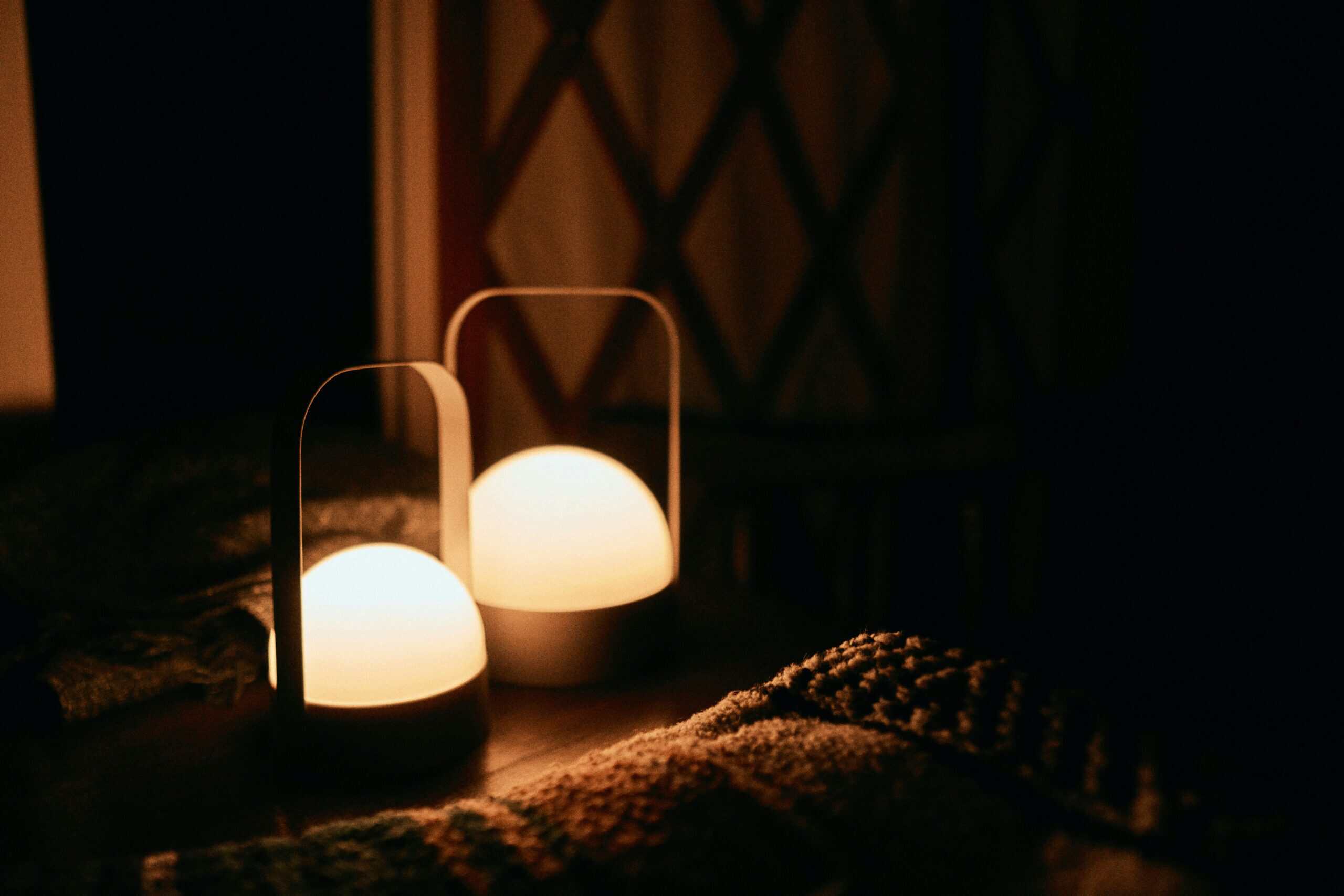
A morning light lamp works by delivering bright light to your eyes soon after you wake, when the circadian system responds most strongly. The best SAD lamps for winter mornings are simply the ones you will sit in front of daily, not the ones with the longest spec sheet. Winter creates the problem for an obvious reason. Sunrise now arrives after your alarm does, so the body takes its wake signal from a dim room. Many readers land here after trying a gradual sunrise alarm clock and wanting something brighter afterward.
This guide covers six categories of morning light device. It stays on bright morning light and circadian timing throughout.
Medical Disclaimer
This article is general information, not medical advice. It does not diagnose or treat anything. Seasonal affective disorder is a clinical diagnosis, and light therapy carries a real dose and schedule. Intensity, duration, distance, and time of day all change the effect. Poor timing can shift your sleep instead of helping it. Discuss suitability and scheduling with a clinician, particularly if you take regular medication or have an existing eye or mood condition.
Quick Verdict
A full-size bright light box is the strongest starting category. It reaches clinical-strength intensity at a distance you can sit at comfortably. Compact desk units suit small rooms and travel but need you closer. Wearables solve the sitting-still problem and give up dose precision in exchange.
Key Points
- Bright light therapy is usually described around a reference point of 10,000 lux at a stated viewing distance, so distance is part of the specification.
- Morning use is the standard framing for winter low mood, which is why this guide avoids evening lighting entirely.
- Blue-enriched devices are a separate approach from white light boxes, not a stronger version of them.
- Lamps sold for skin, plants, or ambience are different products.
- Eye conditions, photosensitizing medication, and bipolar disorder are the situations where supervision genuinely matters.
- Consistency through the dark months beats buying the largest available unit.
How We Picked
We built these recommendations from published clinical guidance and device documentation. We ran no hands-on trials, and nothing below is a specific model. These are category recommendations.
Verified illuminance at a usable viewing distance carried the most weight. A brand can quote a large lux figure measured almost against the panel. That number says nothing about the light reaching your eyes from twenty inches back. Any device worth considering states the distance alongside the figure.
We then weighted practical factors. Can the device sit at eye level? Is the light field wide enough to survive a turn of your head? Does the housing filter ultraviolet output? Units that force an awkward posture get abandoned by February.
1. Full-Size 10,000 Lux Light Boxes
Why It Stands Out
Clinical light therapy protocols were built around this format. A large diffusing panel spreads high illuminance across a wide field. You can reach the standard reference intensity while sitting an arm’s length back.
That distance is the whole point. It lets you read, eat, or answer email during a session. The wide field also forgives movement, so turning your head does not end your exposure.
Worth Knowing
These boxes are bulky, and that is the honest trade. They need a stable surface, a nearby outlet, and real table depth. Cramped desks rule them out.
They also do not travel. Mayo Clinic guidance stresses regular daily use through the low-light months, which makes portability a clinical consideration rather than a convenience feature.
Best for: Anyone with a fixed morning spot at a desk or table who wants the closest thing to a standard clinical setup. Skip it if counter space is short or you travel through most of the winter.
Check Price on Amazon2. Compact Desk Light Therapy Lamps
Why It Stands Out
Compact units solve the space problem that stops most people using a full-size box. A small lamp used daily outperforms a large one stored in a closet.
Better compact designs also handle angle well. A tilting head aims light down from slightly above, which is the orientation most guidance favors.
Worth Knowing
Small panels reach high illuminance only at close range. You may need to sit near enough that small posture shifts change your actual exposure.
So the stated distance matters more here than anywhere else. Some lamps quote intensity at a few inches, which nobody sustains for half an hour. Treat a missing distance as a missing specification.
Best for: Small desks, dorm rooms, and anyone needing the same routine at home and away. Skip it if you want distance flexibility or tend to fidget while working.
Check Price on Amazon3. Sunrise Wake-Up Lamps
Why It Stands Out
Sunrise lamps do something no light box does. They reach you while you are still asleep, ramping up gradually before the alarm. Waking feels less abrupt in a pitch-dark room.
They also pair naturally with a brighter device. Use the ramp to wake, then move to a therapy lamp for the session. The guide to waking up more easily in the morning covers the behavioral side of that handoff.
Worth Knowing
Here is the honest limitation. Most sunrise lamps sit far below bright light therapy intensity, because they are designed for a dark bedside table. Treating one as a substitute is the most common mistake in this whole category.
Some units produce a warm, dim glow that is pleasant but weak as a circadian signal. If a listing discusses ambience and never states lux at a distance, assume it is a comfort device.
Best for: People whose main winter complaint is a brutal, dark wake-up. Skip it if you want clinical-intensity light, since this category is not built for that.
Check Price on Amazon4. Adjustable-Arm and Wall-Mountable Light Panels
Why It Stands Out
An articulating arm solves a problem the other formats ignore. It raises the light above your sight line without stacking books underneath. An arm also makes that position repeatable every morning.
Mounting clears your work surface too. In a home office where the desk is already full, that can decide whether the routine survives.
Worth Knowing
The downside is commitment. A wall mount means drilling, and a clamp needs a desk edge of the right thickness. Neither suits strict rentals or thick, rounded edges.
Adjustability also introduces drift. Arms sag over months, and a panel a few inches off aim quietly cuts the light reaching your eyes. Check alignment occasionally.
Best for: Fixed home-office setups short on desk space where the morning station never moves. Skip it if you rent under tight rules or work from different rooms.
Check Price on Amazon5. Wearable Light Visors and Light Glasses
Why It Stands Out
Wearables remove the biggest barrier to daily use, which is sitting still. The source stays fixed relative to your eyes while you make breakfast. For mornings without a stationary half hour, that freedom decides it.
Emitters sitting inches from the eye also reach useful intensity on very little power. Most use blue-enriched light, a different approach from a white box rather than a concentrated version of one.
Worth Knowing
Precision is the real cost. Exposure depends on exactly how the frame sits, and a visor that rides up changes your dose silently. Comparing a wearable session to a light box session is not straightforward.
The blue-light approach also carries the most unsettled questions about long-term retinal exposure. The American Academy of Ophthalmology is the right authority here. Anyone with retinal disease or recent eye surgery should get clearance first.
Best for: Busy or mobile mornings where a seated session is unrealistic. Skip it if you have any diagnosed eye condition, take photosensitizing medication, or want a dose you can describe precisely.
Check Price on Amazon6. Floor-Standing Light Boxes With a Stand
Why It Stands Out
A floor stand puts a large panel at eye height using no table at all. That suits people without a fixed morning seat, since the assembly moves to wherever they land.
Height adjustment is the underrated benefit. You set the panel to your seated eye level rather than to whatever furniture you own. One device can then serve two people of different heights.
Worth Knowing
Floor units claim real floor area. A tall panel on a narrow base is also easy to knock over, so households with young children or large dogs should study base stability closely.
Stands add failure points too. Telescoping poles loosen, and a panel drifting below eye level changes your exposure angle with no obvious sign. Recheck the height setting from time to time.
Best for: Larger rooms needing one adjustable device across several seating positions. Skip it if floor space is tight, the unit would block a walkway, or a toddler shares the room.
Check Price on AmazonSAD Lamps at a Glance
| Type | How it is used | What to check |
|---|---|---|
| Full-size bright light box | Seated table session, light angled down from above | Illuminance paired with a stated distance, plus UV filtering |
| Compact desk lamp | Close-range session beside a laptop, or in a hotel | The distance behind the intensity claim, and head tilt |
| Sunrise wake-up lamp | Bedside ramp before the alarm, paired with a brighter device | Whether therapy-level output is claimed at all |
| Adjustable-arm or wall panel | Fixed workstation, panel mounted above the sight line | Mounting hardware, desk edge fit, and whether aim holds |
| Wearable visor or glasses | Hands-free use while moving through the first waking hour | Light spectrum, fit stability, and your eye health |
| Floor-standing box with stand | Seated session anywhere, height set to your eye level | Base footprint and how securely the height locks |
How to Choose a SAD Lamp
How Many Lux Do You Actually Need?
The common clinical reference point is 10,000 lux at a specified viewing distance. That distance is not a footnote, because illuminance drops sharply as you move back.
Lower intensities are sometimes paired with longer sessions instead. That trade between brightness and duration is worth settling with a clinician rather than guessing.
When Should You Use It in the Morning?
Standard practice places the session early, generally within the first hour after waking. The circadian system reads bright light then as a signal to advance your internal clock.
Use it too late and you can push sleep timing the wrong way. If your schedule is already scrambled, the guide to fixing a broken sleep schedule explains the mechanism.
How Far Away Should You Sit?
Sit at the distance the maker used for its intensity claim, and no further. Full-size boxes are usually specified around a comfortable arm’s length.
Position matters as much as distance. A panel slightly above eye level and angled down puts light into the lower visual field without making you stare at the source.
Does It Need to Filter UV?
Yes, and that point is not negotiable. Light therapy devices should filter ultraviolet output, and solid specifications say so plainly. Tanning equipment and grow lights are different products entirely.
A listing vague about UV is a reason to move on. The American Academy of Sleep Medicine treats controlled light exposure as a timed clinical tool, which assumes a device built for the job.
Bright White Light vs Blue-Enriched Light
Broad-Spectrum White Light Boxes
White boxes emit across the visible spectrum, and most clinical protocols were built around them. They feel like a very bright, slightly cool overcast sky.
Their quiet advantage is documentation. Because the format matches the standard reference intensity and distance, describing your setup to a clinician is simple.
Blue-Enriched and Blue-Only Devices
These concentrate output in the shorter wavelengths the circadian system answers most strongly. They reach a useful signal with far less total light, which is why wearables use them.
It is a different approach, not a shortcut to the same place. The narrower spectrum also raises the eye-safety questions most worth asking an ophthalmologist about.
Common Misconceptions
A Bright Room Light Does the Same Job
Ordinary indoor lighting sits far below therapy intensity, often by an order of magnitude. A ceiling fixture can make a room feel bright while delivering a fraction of that light to your eyes.
The difference is measured, not felt. Your eyes adapt to dim rooms fast, so a winter morning can seem lit and still fail as a circadian signal.
A Sunrise Alarm Replaces a Light Box
Sunrise lamps are built to be seen in a dark bedroom, so their output is modest by design. They ease a wake-up well and deliver a therapy dose poorly.
Using both in sequence is reasonable. Expecting one to do the other’s job is where people decide light does not work for them. If the wake-up itself fails, read why an alarm stops waking you.
More Light Is Always Better
Light therapy has a dose, and overshooting it has recognized downsides. Reported effects include headache, eye strain, agitation, and shifted sleep timing.
Supervision genuinely matters here. In bipolar disorder, bright light can trigger a shift toward mania, so clinical guidance treats it as a case for medical oversight.
Any Lamp Labeled Full Spectrum Will Work
Full spectrum is a marketing phrase, not a standard. It appears on grow lights, skin devices, and decorative bulbs with no therapy-relevant output.
Look for illuminance stated at a distance, plus explicit UV filtering. Without both, the label tells you nothing.
Related Reading
Before shifting your wake time, it helps to understand how sleep cycles are structured. Readers on rotating shifts should start with sleeping better on night shift, since the timing advice above assumes a daytime schedule. For the other end of the day, choosing a realistic bedtime pairs well with a fixed morning session.
Frequently Asked Questions
Do the best SAD lamps for winter mornings really help with low mood?
Bright light therapy is used clinically for seasonal depression and for shifting circadian timing. The National Institute of Mental Health describes it among standard treatment approaches. That is a statement about a clinical treatment, not a promise about any device. Outcomes depend on intensity, timing, duration, and the underlying diagnosis, so a clinician conversation belongs at the start.
How long should a morning session last?
Typical protocols pair higher intensity with shorter sittings, and lower intensity with longer ones. No single duration fits everyone. Session length is set alongside distance and brightness, so changing one changes the others. Ask a clinician to set the combination rather than copying a number off a listing.
What time in the morning works best?
Standard guidance places the session early, generally within roughly the first hour after waking. Bright light at that hour acts as a clock-advancing signal, which is the mechanism behind the winter recommendation. Later sessions can push sleep timing the wrong way. Letting the session drift into the afternoon usually works against the result you want.
Can you read or use a phone during a session?
Yes, and that is much of why distance matters. A full-size panel at its specified distance leaves room to read, eat, or type while light arrives from slightly above. Staring directly into the panel is not the goal. Glance toward it periodically instead, and keep your head in roughly the same position throughout.
When should a professional be involved before starting?
You should see a doctor before starting light therapy if you have any eye or retinal condition, take medication that raises light sensitivity, or carry a bipolar diagnosis. Those three situations are where light therapy can be inappropriate without supervision. Raise it too if low mood is severe or persistent, since that needs clinical care rather than a device.
Will a light box help with waking, or only with mood?
Those are two different jobs. A therapy box targets circadian timing and seasonal low mood. The sensation of waking more easily comes mostly from gradual light before the alarm. Many people combine a bedside ramp with a brighter session afterward. The page on programmable smart bulbs covers automating the earlier part.
Is daily use through the whole winter safe?
Daily use across the low-light months is the normal pattern in clinical light therapy, which is exactly why comfort and portability affect outcomes. Devices should filter ultraviolet output. Side effects such as eye strain, headache, or agitation are signals to adjust timing or intensity with your clinician. Anyone with an existing eye condition should get clearance first.
Do red or amber lamps work for winter mornings?
No. Warm red and amber lighting serves the opposite purpose, since it is chosen to avoid stimulating the circadian system at night. Morning light therapy needs the short-wavelength content those lamps deliberately remove. If evening lighting is the real goal, the page on red bulbs for evening wind-down is the better fit.
Sources
- National Institute of Mental Health, public information on seasonal affective disorder, its diagnosis, and treatment approaches including light therapy.
- Mayo Clinic, patient guidance on light therapy for seasonal affective disorder, covering typical use, timing, and reported side effects.
- American Academy of Sleep Medicine, clinical practice guidance on light exposure in the treatment of circadian rhythm sleep-wake disorders.
- American Academy of Ophthalmology, patient education on light exposure, blue light, and eye safety.
