
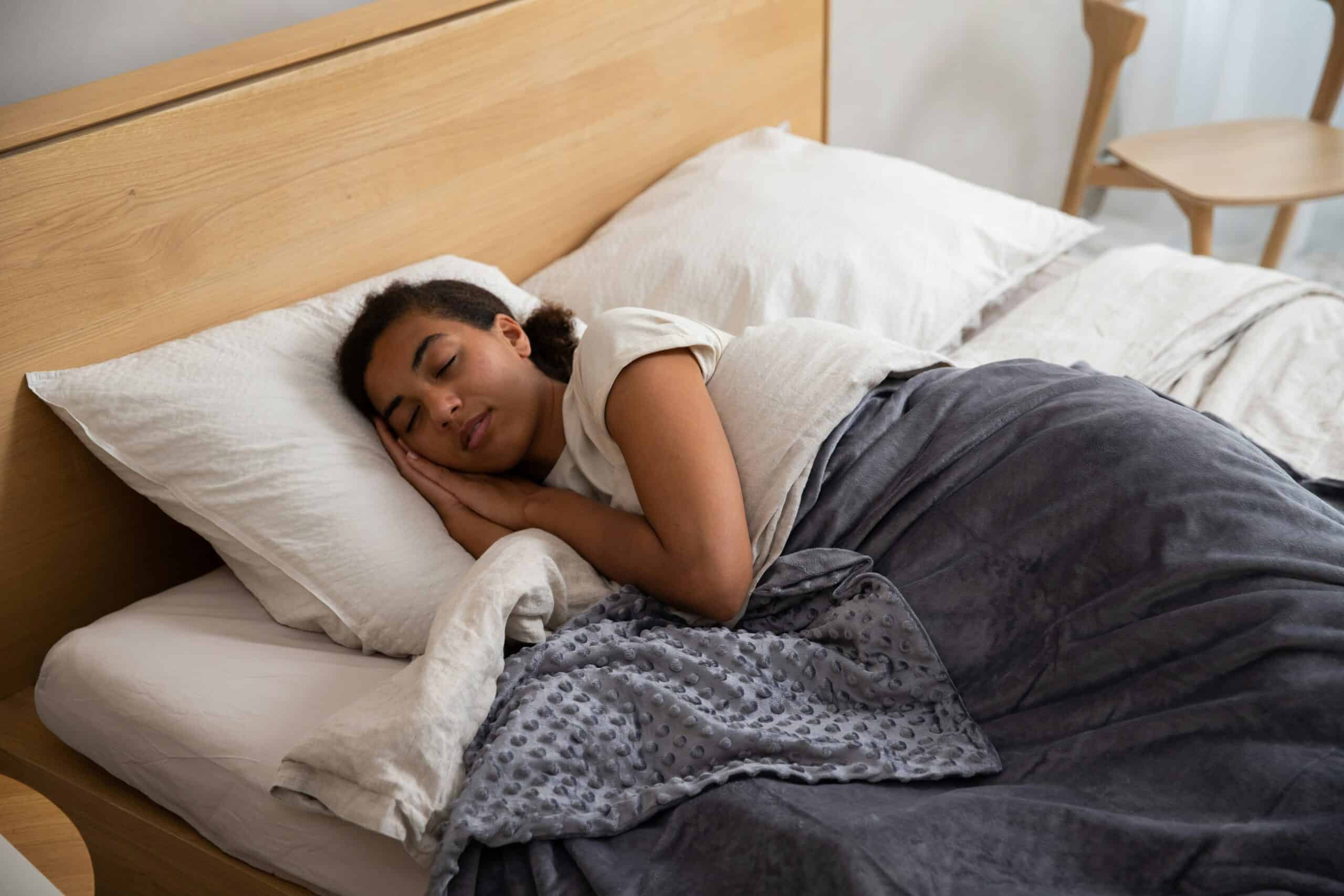
Teenagers generally need eight to ten hours of sleep a night, which is more than most of them get, and the gap comes mostly from a body clock that shifts later in adolescence combined with early school start times. Anyone asking how much sleep do teenagers need tends to hit that gap within a week of trying to close it. The number is settled; the schedule around it is not.
Two forces pull against each other here. Adolescent biology pushes sleep onset later, while the first bell stays where it is. That collision is why a plan to reset a drifting sleep schedule usually matters more than a stricter bedtime rule.
Medical Disclaimer
This guide offers general information about adolescent sleep and is not medical advice. A clinician should guide any diagnosis or treatment decision. Ongoing sleepiness, loud snoring, or marked mood changes deserve a professional evaluation.
Quick Answer
Teens aged thirteen to eighteen are advised to get eight to ten hours of sleep per night, according to guidance from the American Academy of Sleep Medicine. Younger school age children need more. Most teens fall short because their internal clock runs late while first period does not move.
Key Takeaways
- Thirteen to eighteen year olds are advised to sleep eight to ten hours a night.
- Adolescence shifts the body clock later, so a nine o’clock lights out can feel impossible.
- Early start times, not motivation, create most of the shortfall.
- Weekend catch up sleep helps a little, yet it also drags the clock later.
- Consistent wake times and morning light do more than a strict bedtime alone.
| Age | Recommended nightly sleep | What usually gets in the way |
|---|---|---|
| 6 to 9 years | 9 to 12 hours | Bedtime resistance and evening screen time. |
| 10 to 12 years | 9 to 12 hours | Homework volume rises and activities run later. |
| 13 to 14 years | 8 to 10 hours | The body clock starts drifting later. |
| 15 to 16 years | 8 to 10 hours | Early first bell, part time work, social evenings. |
| 17 to 18 years | 8 to 10 hours | Latest natural bedtimes plus exam and application pressure. |
| 19 to 20 years | 7 or more hours | Irregular class schedules and shared living spaces. |
| Teen on a sports schedule | 8 to 10 hours, often the upper end | Dawn practices and late away games. |
Ranges reflect published recommendations from the American Academy of Sleep Medicine rather than measurements of what teens actually sleep. They describe a target range, not a pass or fail line.
How much sleep do teenagers need each night?
Teenagers between thirteen and eighteen are advised to sleep eight to ten hours in each twenty four hour period. That range comes from consensus guidance published by the American Academy of Sleep Medicine and endorsed by the Sleep Research Society. It is a recommendation for healthy development, not a measurement of typical behavior.
Children from six to twelve sit higher, at nine to twelve hours. Once a young person passes eighteen, the adult figure of seven or more hours applies. The step down is gradual, so a seventeen year old and a nineteen year old are not far apart.
Why a teenager cannot fall asleep at a child’s bedtime
Puberty shifts the timing of the internal clock later, a pattern clinicians describe as a phase delay. Melatonin release commonly drifts back by an hour or two compared with childhood. So a teen lying in bed at nine may not be biologically ready for sleep yet.
Both Mayo Clinic and Cleveland Clinic describe this later timing as a normal feature of adolescent development. It eases for most people during their twenties.
The practical result is a narrower window. If sleep onset naturally lands near eleven, an eight hour night would end at seven. A six thirty alarm takes that difference out of the total.
Late nights are biology, not defiance
A teen who is wide awake at midnight is usually following a clock rather than breaking a rule. That distinction matters because it changes what happens next. Punishing the bedtime rarely moves sleep onset earlier.
A teen told they are lazy for sleeping until eleven on Saturday has little reason to cooperate on wake times. A teen told their clock simply runs late often will.
Bedtime rules are not pointless, yet the effective lever sits earlier in the day. Morning light and a fixed wake time shift the clock; pressure at eleven at night does not.
School start times and practice schedules squeeze both ends
Most high schools start earlier than adolescent biology would prefer, and that mismatch is the largest structural cause of teen sleep loss. The Centers for Disease Control and Prevention has described early start times as a barrier to adequate sleep for high school students. Districts that move the bell later report calmer mornings.
Activity schedules press from the other side. Dawn practice removes an hour from the front of the night. Away games and late rehearsals remove another from the back.
Athletes often need the upper end of the range, because heavy training raises the demand for recovery sleep. A packed season plus a fixed early bell leaves little room to find it.
Sleep debt: how much sleep do teenagers need to recover?
Short nights accumulate across a school week, and the shortfall does not simply vanish on Saturday. Losing an hour or two each weeknight leaves a real deficit by Friday. Recovery sleep helps, though it does not fully undo the week.
Weekend catch up carries a cost of its own. Sleeping until noon pushes the body clock later again, which makes Sunday night harder. Clinicians sometimes call that pattern social jetlag.
A gentler approach caps the weekend wake time at about an hour past the weekday one. Short naps can then fill part of the gap. It helps to understand how a daytime nap changes night sleep before making them routine.
Screens, evening light, and caffeine
Evening light delays the internal clock, and screens deliver that light at close range during the hours when the clock is most sensitive. Content matters as much as the light, since a group chat or a competitive match keeps the brain alert past the point of tiredness.
The relationship is an association with later sleep onset rather than a clean cause. Removing a phone guarantees nothing on its own. Still, dimmer rooms and earlier device cutoffs give the clock a clearer signal, as our overview of how evening screen use affects sleep explains.
Caffeine stacks a second delay on top of the first. It lingers for hours, so a late afternoon energy drink can still be working at bedtime. On an already delayed clock, that pushes sleep onset later again.
What actually helps teenagers sleep longer
Consistency does more work than any single rule. A fixed wake time, held within about an hour across all seven days, anchors the clock better than a strict bedtime does. Bright light soon after waking reinforces the same signal.
The wind down needs to begin before the target sleep time, not at it. Thirty to sixty minutes of dim, low stimulation time gives the body a runway. Building a predictable evening routine makes that runway automatic.
The sleep surface deserves a look too, especially for a teen who is still growing. A sagging or undersized bed makes a long night less restful. Our guide to mattresses suited to teenagers covers sizing and support without overspending.
Homework timing is the quiet variable, since work that ends at midnight sets the bedtime by default. Moving one assignment earlier often buys more sleep than any gadget.
What a recommended range cannot tell you
A recommended range describes a population rather than an individual, so some healthy teens sit outside it. One may function well on eight hours while another needs closer to ten. Treat the range as a planning tool, not a score.
Time in bed is also not the same as sleep. A teen can spend nine hours in bed and still wake unrefreshed. That pattern points toward sleep quality instead of quantity.
Persistent daytime sleepiness despite adequate time in bed deserves a clinician’s attention rather than more discipline. Loud snoring, a long wait to fall asleep, restless legs, and low mood are all worth raising. Sleep apnea, insomnia, and delayed sleep phase disorder are diagnosable and treatable conditions.
Related Reading
For timing help, our bedtime calculator works backward from a school alarm. If naps are part of the plan, see how long a nap should last. For the sleep space itself, our picks for bedding for teen rooms and dorms cover easy care options.
Sources
- American Academy of Sleep Medicine
- Sleep Research Society
- Centers for Disease Control and Prevention
- Mayo Clinic
- Cleveland Clinic
Frequently asked questions
How much sleep do teenagers need on school nights?
Teenagers aged thirteen to eighteen are advised to get eight to ten hours on school nights. Working backward from the alarm turns that into a plan. A six thirty wake time implies lights out between eight thirty and ten thirty, and most teens land near the later edge.
Is nine hours enough sleep for a fifteen year old?
Nine hours sits comfortably inside the recommended eight to ten hour range, so it is enough for most fifteen year olds. Individual need still varies, so a teen who wakes easily and stays alert through afternoon classes is likely getting enough. Persistent grogginess on nine hours is worth discussing with a clinician.
Can teenagers catch up on sleep over the weekend?
Extra weekend sleep only partly closes the gap, though teens generally do feel better afterward. It does not fully reverse repeated short nights, and sleeping very late shifts the body clock later still. Capping the weekend wake time at about an hour past the weekday one keeps Monday manageable.
Why does a teenager stay up so late?
Adolescence delays the internal clock, so melatonin release and the feeling of sleepiness both arrive later than in childhood. That shift is a normal part of development rather than a habit. Evening light, screens, and late caffeine can widen the delay, and homework that runs past midnight often sets the bedtime by default.
Do naps help or hurt a teenager’s night sleep?
Short early afternoon naps can relieve daytime sleepiness without much cost to the night. Long or late naps cause the trouble, since they reduce sleep pressure and delay sleep onset. Twenty to thirty minutes before mid afternoon is the usual guidance, and a teen who needs a nap every day despite a full night deserves an evaluation.
Does a later school start time actually help?
Public health bodies including the Centers for Disease Control and Prevention have pointed to early start times as a barrier to adequate teen sleep. Districts that shifted the bell later have reported encouraging results. Families cannot move the bell alone, so the practical response is protecting the evening end of the schedule.
When should I see a doctor about this?
Raise it with a clinician when a teen stays sleepy through the day despite eight or more hours in bed, snores loudly or gasps during sleep, takes more than half an hour to fall asleep most nights, or cannot wake for school whatever the bedtime. Mood changes, slipping grades, and dozing off in class also warrant a visit.
